




Gold Holds Above the World Gold Council's $4,000 Threshold as Rising Fed Rate Expectations Cap Further Gains


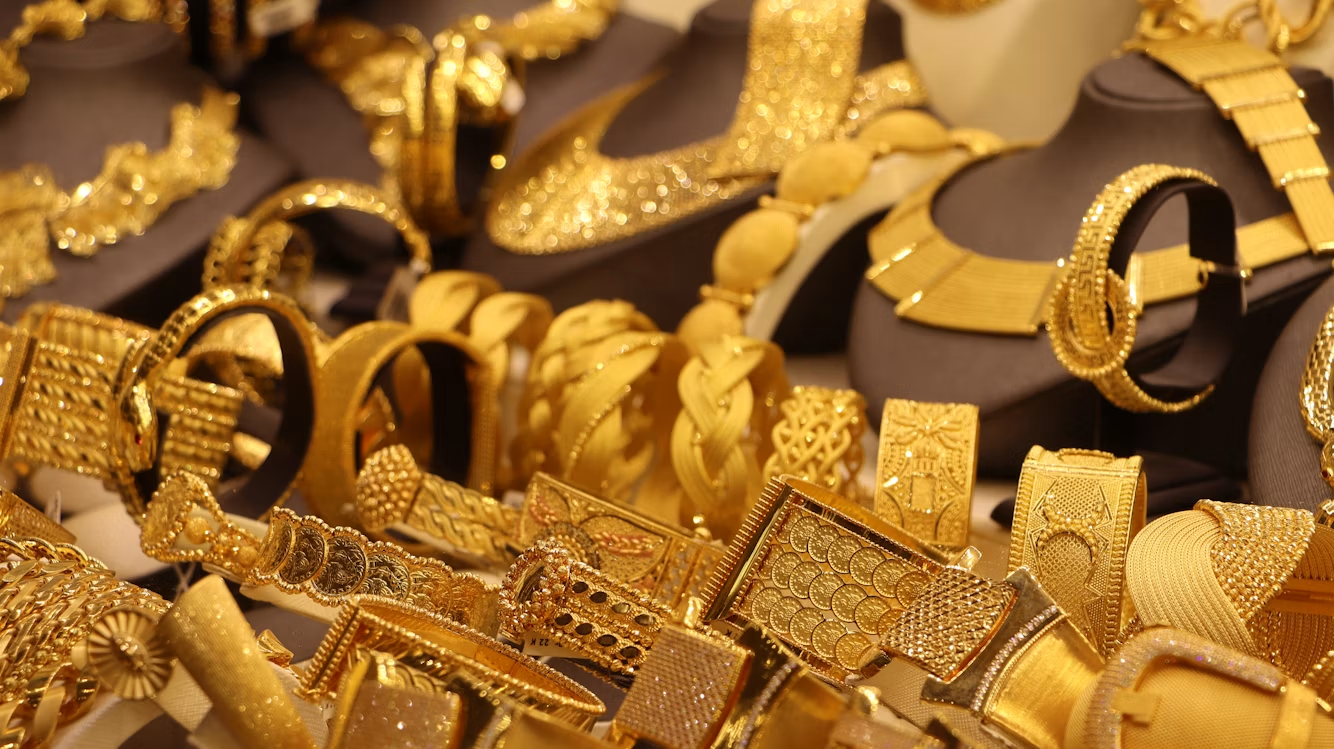
Gold holds above the World Gold Council's $4,000 threshold as Fed rate expectations and geopolitical risks shape the outlook ahead of key Fed meetings
- Spot gold traded at $4,018.75 per ounce on July 20, little changed as US strikes on Iran entered a ninth consecutive night.
- Iran said two oil tankers had exploded and been immobilized near the Strait of Hormuz, raising oil supply risks that support higher inflation expectations and Fed rate hikes.
- The World Gold Council's base case projects gold between $3,895 and $4,305 through year-end if the Fed raises rates by October.
- CME FedWatch implied an 85.6% probability the Fed would hold rates on July 29, followed by an 80% chance of a rate hike by December.
- The Council identifies sustained trading below $4,000 as the threshold for further selling, while a strong economic deceleration could lift gold above $4,500.
Geopolitical Risk Supports Gold & Leaves the $4,000 Downside Threshold in Focus
Spot gold traded at $4,018.75 per ounce on July 20, little changed on the session, while US gold futures for August delivery rose 0.1% to $4,023.20 per ounce. Gold held steady as US strikes on Iran entered a ninth consecutive night after Iran said two oil tankers had exploded and been immobilized near the Strait of Hormuz.

The price remained just $18.75 above the World Gold Council's $4,000 threshold for sustained selling, its smallest cushion since gold touched $4,002 in June after a 7% year-to-date decline and 30-day volatility climbed to 30%.
Strait of Hormuz Risk Lifts Inflation Expectations & Raises Gold's Opportunity Cost
The transmission mechanism begins in the Strait of Hormuz. Iran said two oil tankers had exploded and been immobilized as US strikes on Iran continued for a ninth consecutive night. Brent crude briefly rose above $90 a barrel before easing to $88.16 after Iran's foreign ministry said negotiations with the US remained possible. Higher oil prices lift inflation expectations, increasing the likelihood of tighter Fed policy.
Cleveland Fed President Beth Hammack said rates may need to rise further to curb inflation. Because gold generates no yield, expectations of higher interest rates increase the opportunity cost of holding bullion relative to interest-bearing assets.
Fed Policy Outlook Frames Gold's Base, Bull & Bear Scenarios & Defines the Next Catalyst
World Gold Council research head Juan Carlos Artigas said gold reflects global macroeconomic and geopolitical forces, with demand from central banks, institutions, and consumers supporting rebounds near $4,000. The Council's base case assumes a Fed rate hike by October and tighter global monetary policy, keeping gold between $3,895 and $4,305 through year-end. Its bull case sees a sharp global slowdown lifting gold above $4,500, while its bear case sees sustained trading below $4,000 triggering further selling before declines of more than 10% attract long-term buyers.
The July 29 and December Fed meetings remain the key catalysts, with CME FedWatch implying an 85.6% probability of a July hold and an 80% chance of a December rate hike.
Higher Interest Rates Raise Gold's Opportunity Cost & Shape Precious Metals Allocation
Gold exposure through bullion, coins, or mining investments depends on the Fed's opportunity cost because higher interest rates reduce the appeal of non-yielding assets. Spot silver, platinum, and palladium rose 1.6%, 0.2%, and 1.3%, respectively, indicating the precious metals market did not move in unison. Artigas said demand from central banks, institutions, and consumers has kept gold near $4,000 despite hawkish Fed rhetoric.
Iran's foreign ministry said negotiations with the US remained possible even as strikes continued into a ninth consecutive night. The World Gold Council's base case still depends on monetary policy decisions rather than daily geopolitical developments.
85% Odds of a Fed Hold: Here's What Breaks Gold's $4,000 Floor
Gold continues to trade between the World Gold Council's $4,000 downside threshold and its $4,100 base case as geopolitical risk supports prices while expectations of higher Fed rates cap further gains. That balance would shift if a Fed rate hike coincides with sustained trading below $4,000, supporting the Council's bear case and increasing the risk of further selling. Conversely, the Council identifies a sharp global economic slowdown as the catalyst needed for gold to break above $4,500.
The next major test comes at the Fed's July 29 meeting, where CME FedWatch implies an 85.6% probability that rates remain unchanged, while still assigning an 80% probability to a December rate hike.
Analyst's Notes





Subscribe to Our Channel



Stay Informed


