Golden Pursuit Eyes Access and Partner for Staged 200,000 m Gold Drill Programme at Gordon Lake Gold District


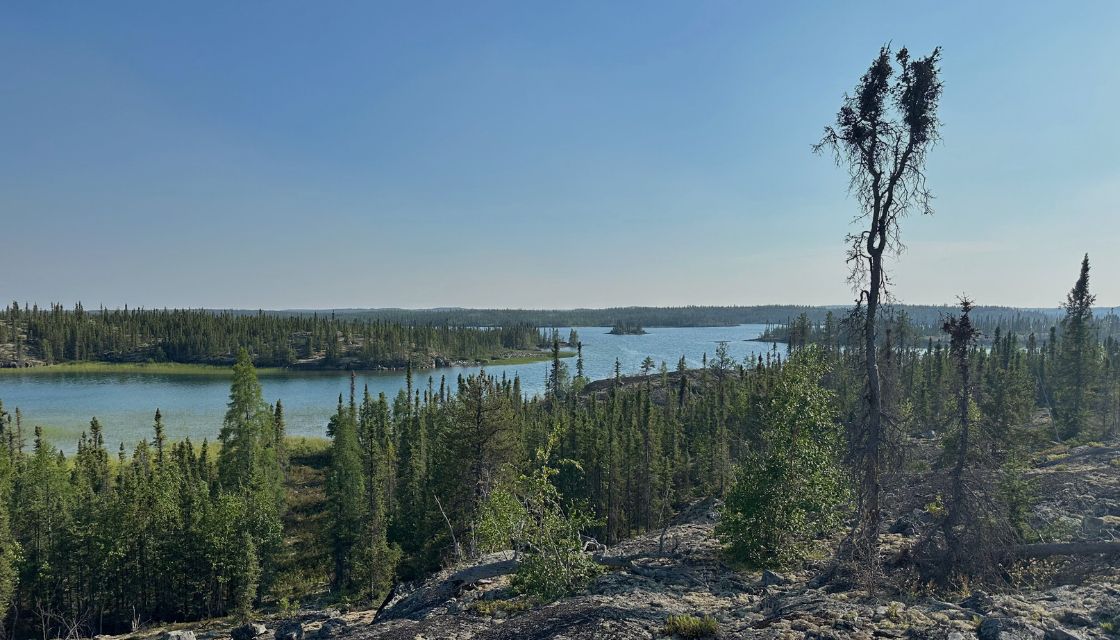
Golden Pursuit (TSXV:GDP) has consolidated the high-grade Gordon Lake gold district in the NWT and is preparing to drill once road access arrives.
- Golden Pursuit owns 100% of the consolidated Gordon Lake district in the Northwest Territories (NWT), Canada., which hosts six historic mines and around 10 royalty-free deposits.
- Historic grades once treated as waste would qualify as high grade at gold prices above $4,000 per ounce, although none of the data is NI 43-101 compliant yet.
- Drilling currently costs 1,000- 1,200 per metre, and a planned all-weather road is the key catalyst for cutting that cost.
- With fewer than 50 million shares outstanding, management is avoiding dilution until the road brings serious partners to the table.
- McClay is seeking a partner for a staged drill programme of around 200,000 m with the next step costing up to $20 million.
Gold above $4,000 per ounce has changed the arithmetic for old mining districts across Canada. Grades that earlier operators treated as waste can now support modern economics. Districts abandoned in a low-price era are being reassessed with fresh eyes. Golden Pursuit Resources (TSXV:GDP) is betting that the Gordon Lake district in the Northwest Territories (NWT) is one of them. The company has brought a historically fragmented district under single, 100% ownership. President Brian McClay says the ground hosts six historic mines and around 10 deposits, all free of royalties. The missing piece is an all-weather road. McClay expects that road to lower drilling costs and draw in larger funders. Until it arrives, the company is spending modestly on geophysics, sampling and data work rather than issuing large volumes of shares to drill at today’s costs.
The Gordon Lake District Scale
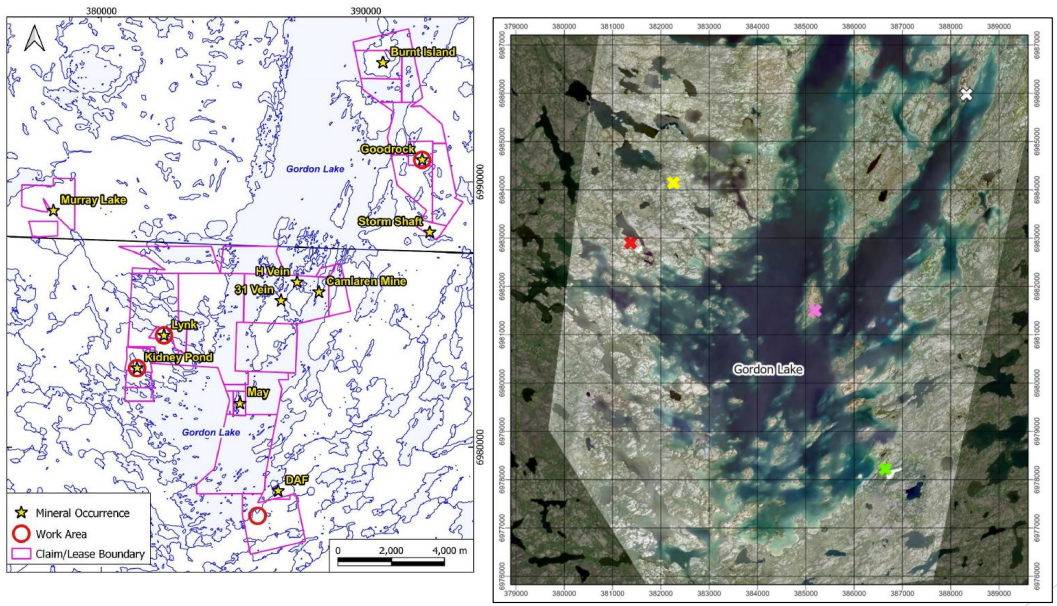
McClay describes the Gordon Lake package as a district roughly 41 km long and 3.5 km wide, with an exploration history stretching back around 80 years. The area was the subject of two gold rushes. In the 1980s, about 1,600 people lived around Gordon Lake year-round. Today nobody does. According to McClay, the district suffered for decades from fragmented ownership and inconsistent exploration strategies. Golden Pursuit now holds all of it outright. The company carries no third-party debt, and its only borrowings are owed to McClay and his family. It has explored the ground aggressively for the past three or four years. The inherited database includes historic drill intersections, geological mapping and sampling, underground plans and documented metallurgical results.
McClay, now 80, has spent his working life in the industry. He started underground at 15 and went on to work as a diamond drill contractor, prospector and mining contractor. He has sold more than 100 mining properties,and ran Mosquito Consolidated Gold Mines for 22 years during that time the company held the Barkerville project in British Columbia. He is candid that his own role is to assemble the team. He expects technical leadership to take over the project at some point.
Grades Built for a Different Gold Price
The district was explored and developed when gold sold for $35 an ounce, and later for $300 to $400. McClay says historic operators mined at around an ounce per ton. Anything under half an ounce was treated as waste. At today’s prices, he argues, that rejected material is high grade.
He points to historic holes at Kidney Pond that returned around 150 feet (about 46 m) grading between 4.5 g/t and 6 g/t. Those intervals were sub-ect. Breccia zones, stockworks and parallel veins were never properly assessed, because earlier operators focused on single high-grade veins.
On the east side of the lake, a historic shaft reached roughly 1,000 feet. Operators then hit the limit of their hoist capacity and a gold price correction at the same time. Before leaving, they drilled three holes beneath the known workings. McClay cites results of 21.5 feet (about 6.6 m) at 2.6 ounces per ton (around 90 g/t), 14 feet (about 4.3 m) at 80 g/t and 20 feet (about 6.1 m) at 17 g/t. He draws comparisons with Australia’s Fosterville mine, where orogenic gold became coarser and more concentrated at depth. He points to the same host rock, geological setting and style of mineralisation yet all of these results are historic and none comply with (NI) 43-101.
Interview with Brian McClay, President & CEO of Golden Pursuit Resources
Modern Geophysics on an 80-Year Database
Golden Pursuit’s current work aims to apply modern tools to old data. The company has catalogued about 35,000 feet (roughly 10,700 m) of archived drill core and plans to scan it using AI-assisted methods. This year it collected around 500 rock samples and measured their magnetic susceptibility so that geophysical surveys can be interpreted more reliably. Drone-based geophysics now allows surveys to be flown quickly and cheaply, and those results are being processed. A full-time geophysicist on the team is completing her PhD thesis on the district. The company also reports finding a new zone with visible free gold this year.
McClay argues that earlier miners were focused on finding ore for the next day’s production and rarely looked beyond the active workings. With around 10 deposits and more than 30 historic shafts in the district, the immediate task is prioritisation. Kidney Pond is the most advanced target, while Myrt Lake, which has historic declines, is described as a very compelling story with the Lynk deposit nearby. One geologist on this year’s programme favours Burnt Island, where McClay says historic operators produced around 3,800 tons at just over an ounce per ton.
The Road as the Key Catalyst
Drilling at Gordon Lake today costs between $1,000 and $1,200 per metre because crews and equipment must be flown in. McClay says road access would cut that by about $200 per metre. He is blunt about what the gap means for the company.
“I tell people we’re a Ferrari sitting on the side of the road with three wheels on it. The missing wheel is a road access.”
According to McClay, the territorial government has spent $50 million on engineering, surveying and permitting the route. He says the territory’s premier has named the road a first priority. He also points to federal announcements on high Arctic infrastructure spending. Construction has not yet begun, and no start date has been confirmed. McClay expects the build to take only a few months once under way. Because the property sits next to the planned route, the company would then need only an internal access network.
McClay says one of the world’s largest mining funds has followed the project and expressed interest, conditional on the road. He has told interested parties the project is not for sale at present.
A Capital Strategy Built Around Avoiding Dilution
Golden Pursuit has fewer than 50 million shares outstanding. McClay’s priority is keeping it that way until the road changes the cost of drilling. He refuses to spend shareholder equity duplicating historic holes that the market already knows about. He also recounts watching peers dilute too early, ending up with hundreds of millions of shares and repeated share consolidations.
The scale he has in mind is significant. McClay wants a funding partner to commit to a staged programme of around 200,000 m of drilling. He puts the next step at $10 million to $20 million. Any partner commitment, he says, would need to be at least $10 million. He expects that negotiation to begin in earnest once the road is built or formally announced. The most likely outcome is a joint venture, or possibly a sale.
His description of what investors would be funding is not grassroots exploration.
“We’re not trying to discover anything. This is known mineralization that’s clearly economic, make it bigger and better, and then combine those different satellite deposits into one cohesive plant, one central plant.”
The hurdle is converting historic results into NI 43-101-compliant resources that institutional investors can fund. McClay acknowledges that only modern drilling will achieve that.
Investment Thesis for Golden Pursuit Resources
- Golden Pursuit owns 100% of a consolidated district with six historic mines and around 10 deposits, with no royalties and no third-party debt.
- Historic grades at Kidney Pond and beneath the east-side workings would be considered high grade at current gold prices, although none of the data is NI 43-101 compliant.
- The capital structure is tight, with fewer than 50 million shares outstanding, which gives management room to negotiate a partnership from a position of control.
- The main risk is road timing, drilling costs of $1,000 to $1,200 per metre make a large programme expensive without access.
- A secondary risk is execution, since the plan relies on attracting a partner willing to commit at least $10 million and on building a technical team to lead development.
- Investors should monitor any formal territorial construction announcement for the road, which management has identified as the trigger for partnership talks.
- Investors should also watch for results from this year’s drone geophysics and magnetic susceptibility work, which will shape how the company ranks its targets.
Macro Thematic Analysis
The rise in gold to more than $4,000 per ounce has created a quiet re-rating opportunity for historic Canadian districts. Many northern camps were explored and mined when gold was priced in the tens or low hundreds of dollars. Operators of that era selected only the richest veins and left lower-grade halos, breccias and stockworks untested. McClay captures the shift in economics directly.
“Anything under a half an ounce was during that era, the previous era was considered waste. So if you had a half an ounce mine in Canada now, it’d be the richest mine in Canada.”
This dynamic is not unique to Gordon Lake. McClay points to multi-billion-dollar deposits in Nunavut operating at grades similar to those historically rejected in the NWT. He also cites Yellowknife, around 80 km to 90 km away, as a reminder of the wider region’s gold endowment. Orogenic gold systems can extend to considerable depth. Modern operators elsewhere have found richer ore below historic workings.
Infrastructure remains the binding constraint across Canada’s north. Remote projects carry a heavy cost penalty when drills, fuel and crews must be flown in. Government commitments to northern and Arctic infrastructure therefore matter as much to project economics as gold prices do. For junior explorers in these regions, all-weather access can transform a project’s cost base and its appeal to institutional capital.
Institutional capital itself sets the final filter. Large funds generally cannot invest in projects without NI 43-101-compliant data. That makes the conversion of historic results into modern resources the critical step for any revived district. The companies best placed to benefit are those that control whole districts, carry little debt and have kept their share structures tight enough to negotiate from strength.
TL;DR
Golden Pursuit Resources owns 100% of the Gordon Lake district in the NWT, consolidating six historic mines and around 10 deposits with no royalties or third-party debt. President Brian McClay says historic grades once treated as waste are high grade at gold above $4,000 per ounce. Examples include historic Kidney Pond intervals of 4.5-6 g/t and deep holes up to around 90 g/t. None of the data is NI 43-101 compliant. Drilling currently costs $1,000-1,200 per metre without road access. McClay is holding back dilution, with fewer than 50 million shares outstanding, until a planned all-weather road brings in a partner for a staged 200,000 m programme.
FAQ (AI-generated)
Analyst's Notes





Subscribe to Our Channel





.jpg)


Stay Informed