Capex Inflation Shifts Developer Value Toward Faster Payback


Capex inflation is pushing developers toward high-grade starter pits and mine plans that repay capital faster to secure construction financing.
- Gold and copper developers are redesigning the first years of their mine plans around grade rather than scale, as higher construction costs make the time needed to recover capital the deciding factor for financing.
- Shallow, higher-grade starter pits bring cash flow forward, so near-surface grade and the conversion of pit waste into ore now determine whether a mine's early years can repay construction capital.
- Mine plans put the richest production year first, together with capital-light process designs such as heap leaching, compress payback and cushion developers against further build-cost inflation.
- Front-loading grade preserves value only when sequencing keeps later phases above cut-off and accessible, cut-offs stay high enough to protect recoveries, and drilling converts later-year resources into reserves rather than leaving mine life unscheduled.
- Developers re-rate as studies convert inferred tonnes into scheduled, financeable ore, making study progression and resource confidence more important than headline ounces.
Rising Costs Shift Investor Focus From Resource Size to Fundable Capex
A deposit can contain substantial gold or copper and still fail to attract construction capital. Lenders weigh the capital required before production against how quickly operating cash flow recovers it.
Equipment Inflation Has Reset the Cost of Building a Mine
Capital expenditure covers the upfront spending on equipment, steel, labor, power infrastructure and contractors required to build a mine. US mining equipment prices have risen 51% since January 2020, raising the capital a developer must secure before first production.
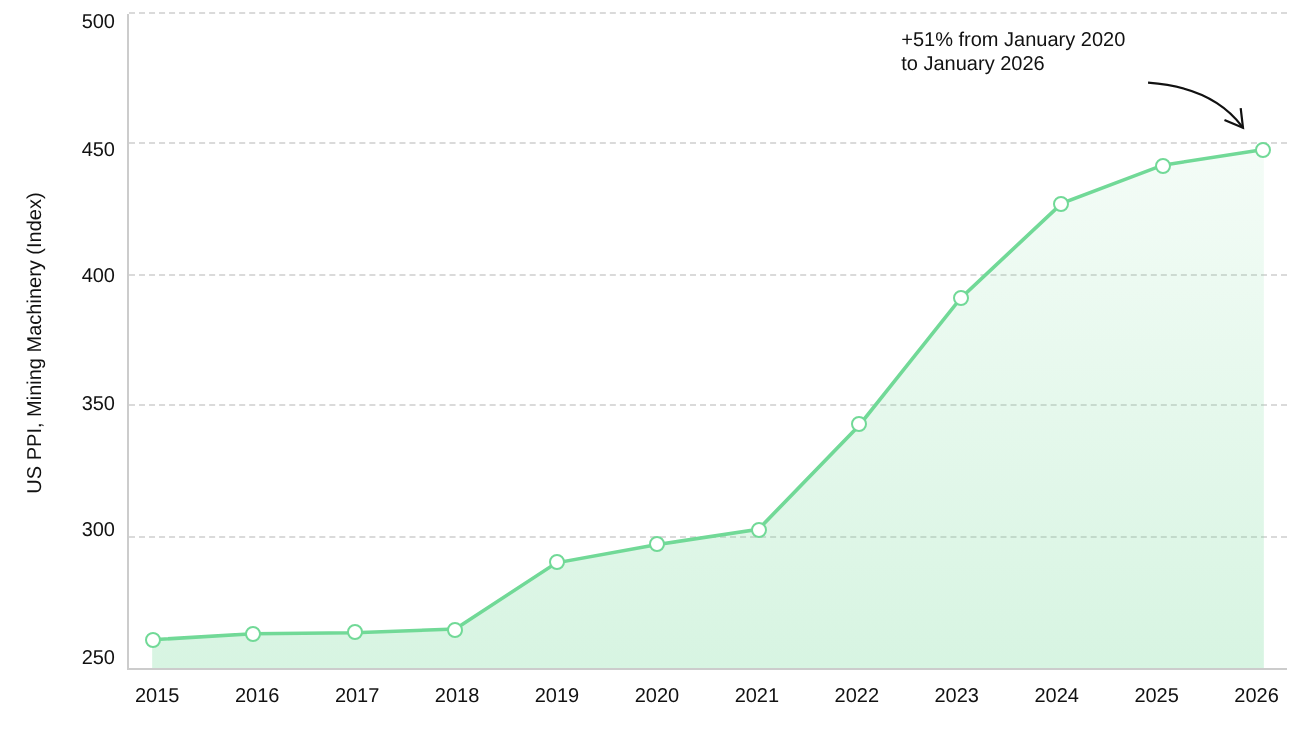
Higher required returns from lenders and shareholders compound the effect by reducing the present value of distant cash flows. Together, higher capex and higher discount rates favor mine plans, which recover capital quickly.
Resource Scale Must Translate Into Shareholder Value
Enterprise value, or EV, equals market capitalization plus debt less cash. EV per resource ounce, or EV/oz, is a screening metric, but a low figure can reflect weak metallurgy, costly access or an unfunded build rather than mispricing. The relevant question is which portion of a deposit can support a credible first mine.
Starter Pits Shorten Payback Through Richer Ore & Less Waste
A starter pit is an initial mining phase designed to reach economically attractive ore early. Its value depends on pit geometry, recovery and sequencing, not grade alone, and it changes the mining schedule rather than plant size.
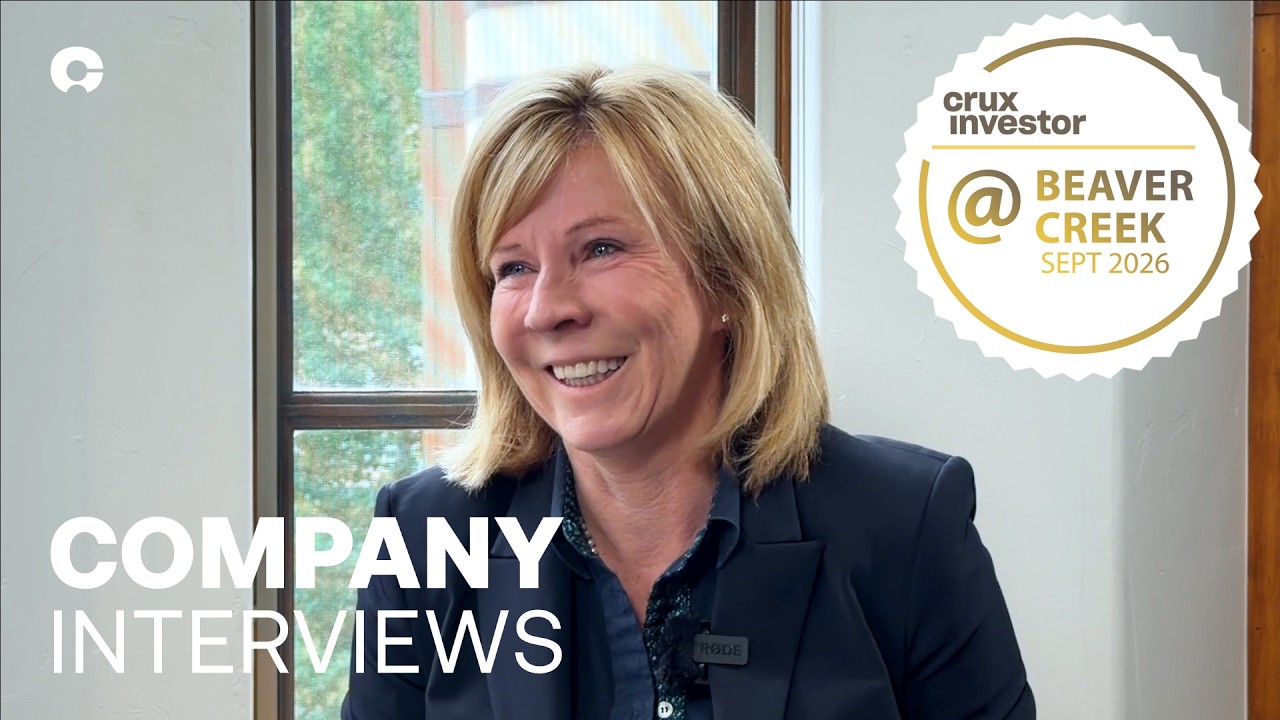
Kodiak Copper's MPD porphyry in southern British Columbia averages 0.39% copper equivalent (CuEq) in indicated resources, yet near-surface drilling at Ketchan returned 1.02% CuEq over 108 meters, 2.6 times the indicated average. Claudia Tornquist, President and Chief Executive Officer, explains how a starter pit can repay capex:
"You need mineralization that gives you a starter pit that makes the early economics of a future mine, and that really is high-grade mineralization near surface. You need enough of that so you can make these initial economics of a mine pay back your capex."
Visionary Copper and Gold Mines is expanding the massive sulfide resource and defining Kraken, a copper-rich stringer system in the deposit footwall, for evaluation within a constrained pit shell. Mineralization inside a future pit reduces scheduled waste if it qualifies as economic ore. Max Porterfield, President and Chief Executive Officer, describes how drilling Kraken could convert pit waste into ore:
"What we're looking to achieve, aside from growing the resource significantly over the next six to eight months, is positive implications in terms of the overall strip ratio of the deposit. A lot of what would be previously waste rock in the pit design will then be potentially money-making rock."
Metal prices set where the line between ore and waste falls: higher prices lower the economic cutoff grade, so mineralized rock once considered as waste can be processed at a profit.
Richest-Year-First Mine Plans Compress Payback
Payback measures how long modeled cash flows take to recover the initial investment. It indicates exposure to financing and price risk but omits lifetime value, so it belongs alongside valuation metrics.
U.S. Gold Corp reports a feasibility case at $3,250/oz gold, $4.50/lb copper and $40/oz silver, producing an after-tax NPV5 of $632 million, an IRR of 27% and a 2.5-year payback. High-grade mineralization exposed at surface improves early access, although pre-production spending and commissioning still precede commercial cash generation. Luke Norman, Chairman and co-founder, explains how the deposit's geometry reverses the typical development profile:
"You got a lot of runway when your richest production year is your first year... Our richest part of the deposit is outcropping at surface."
Low Capex-to-NPV Ratios Shield Developers From Build-Cost Inflation
Capex-to-NPV measures how much project value each dollar of construction capital buys, and a low ratio cushions developers against further build-cost inflation. Heap-leach designs typically avoid the grinding mill that a conventional plant requires, lowering capital per tonne processed.
Revival Gold is advancing the Mercur heap-leach project in Utah, reports a May 2025 PEA with $208 million in initial capital, comprising $194 million pre-production capital and $14 million working capital. At $3,000/oz gold, the PEA delivers an after-tax NPV5 of $741 million and an IRR of 56%; at $4,000/oz, after-tax NPV5 rises to $1,270 million.
A 33% higher gold price lifts Mercur's NPV5 by 71%, showing how heavily development economics depends on the price deck. Mercur's $208 million capital requirement equals roughly 28% of its base-case NPV5.
High-Grading Early Must Not Strand the Later Mine
Bringing cash forward raises present value, but mining richer material first lowers the grade of the ore left behind and can push waste stripping into later years. Sound sequencing schedules richer ore early while keeping later phases above cutoff and physically accessible. High-grading sacrifices both for a shorter payback, converting part of the resource into material that is uneconomic at realistic prices.
Markets Discount Mine Life Beyond the First Plan
Initial studies schedule only the highest-confidence ore, so a first mine plan often runs shorter than the resource could support, and markets assign little value to unscheduled years whose grades, recoveries, strip ratios and sustaining capex remain unproven. Front-loaded plans widen the gap, since strong early years lift NPV, while the subsequent declining grade caps credit for extensions. Lenders likewise size debt on scheduled reserves rather than resource potential, and stockpiled low-grade material becomes economic only if prices or recoveries improve. Mine life beyond the first plan therefore carries value only once drilling and reserve conversion bring it into the schedule.
Conservative Cutoffs Protect Heap-Leach Recoveries
Heap leaching recovers gold by trickling a solution through ore stacked on lined pads, and oxide ore leaches more readily than sulfide ore. Lowering the cutoff grade adds tonnes, but marginal material does not always release enough gold to cover the cost of stacking it.
Mercur's PEA applies a 0.17 g/t gold cutoff and a 75% average gold recovery. Hugh Agro, Chief Executive Officer and Director of Revival Gold, explains the cutoff discipline applied at Mercur:
"When we start reducing cutoff grades in heap leach projects... we start to cut into the deliverability on recoveries because at some level the gold just won't come out of the rock... Our choice is to be at a healthy grade, choose a conservative cutoff, and deliver for our investors."
Markets Re-Rate Developers Only After Economics Are Demonstrated
Developers trade at a discount to project value until studies convert geological potential into scheduled, financeable ore. Each study stage narrows the discount for a distinct reason: a preliminary economic assessment, which may include inferred resources, indicates potential economics; a pre-feasibility study requires indicated or measured resources and can define probable reserves; a feasibility study sets the capex, schedule and payback lenders use to size project debt. Re-rating, therefore, tracks study progression and resource confidence rather than tonnage.
Indicated and measured resources represent progressively higher geological confidence, and only indicated and measured material can convert to mineral reserves. A deposit dominated by inferred tonnes cannot support a funded payback schedule until infill drilling upgrades the material planned for its first mining phase, making early-year resource conversion the shortest route to a valuation step-up. Copper and gold equivalent grades combine metal values under assumed prices and recoveries, so reported equivalent grades shift with the price deck even without new drilling.
Faster payback becomes investable when each assumption traces to a disclosed document and study, permitting and financing milestones carry identifiable completion criteria.
The Investment Thesis for Developers in a High-Capex Market
- Grade within the first mining phase merits more weight than total resource ounces when comparing developers at a similar stage.
- Drilling that adds near-surface grade or converts pit waste into ore can shorten payback without a larger plant, making early-year drill results a leading indicator of study economics.
- Projects with a low ratio of initial capex to after-tax NPV offer the strongest protection against further inflation in equipment and construction costs.
- Payback estimates carry weight only when they hold at metal prices below the study base case and under higher capex and operating costs.
- Infill drilling, which upgrades inferred material within the starter pit, typically precedes the largest valuation step-ups, making resource-conversion milestones the nearest re-rating catalysts.
- Conservative cutoff grades backed by representative metallurgical testing signal deliverable recoveries, while aggressive cutoffs inflate tonnage at the expense of payback.
Construction inflation has raised the capital required to reach first production, and the funding constraint now separates financeable deposits from merely large ones. Starter pits strengthen financeability when lower early waste movement and higher recoverable grades bring cash flow forward. Capex reductions require identifiable design changes, and payback estimates carry weight only when they hold under conservative price and operating assumptions. Value accrues where the first mining phase repays construction capital while leaving a viable mine and meaningful cash flow for shareholders.
TL;DR
Rising construction costs, with US mining equipment prices up 51% since January 2020, have made the speed of capital recovery the deciding factor in financing gold and copper mines. Developers are responding by redesigning early mine years around grade rather than scale. Their tools are shallow, higher-grade starter pits; conversion of pit waste into ore; mine plans prioritising the richest production year first; and capital-light heap-leach designs. Front-loading grade preserves value only when sequencing protects later phases, cutoffs stay disciplined, and drilling converts later resources into reserves. Markets re-rate developers as studies turn inferred tonnes into scheduled, financeable ore. First-phase grade, capex-to-NPV ratios and payback under conservative prices now matter more than headline resource size.
FAQs (AI-Generated)
Analyst's Notes





Subscribe to Our Channel















Stay Informed