




Hawk Resources Drills Historic Copper District As Scandium Project Advances In Parallel


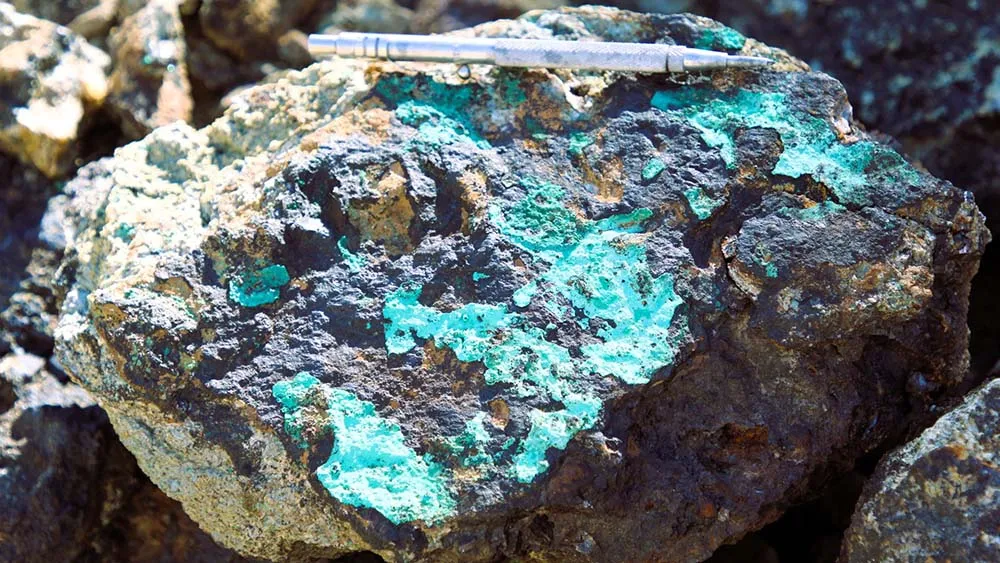
Hawk Resources advances high-grade Utah copper drilling (results from March) and transformational WA scandium opportunity (4km x 7km anomaly) following A$5M raise.
- Hawk Resources raised A$5 million in capital (oversubscribed within an hour) to fund drilling at its Cactus copper-gold project in Utah and advance its newly acquired scandium project in Western Australia
- The company commenced 4,000 meters of drilling across six untested targets at Cactus, with results expected from March 2026, focusing on high-grade breccia pipes and potential intrusive stocks containing copper mineralisation
- Historical mining at Cactus extracted ore at 2% copper with significant gold credits (0.3-0.4 g/t), while recent drilling intersected 30m at 0.8% copper, confirming the project's high-grade potential
- The scandium project features a 4km x 7km soil anomaly with grades exceeding 500 ppm, with some samples reaching 1,200 ppm - potentially representing a near-surface, shallow drilling opportunity in a commodity worth $3,400 per kilogram
- Managing Director Scott Caithness emphasises Hawk's positioning as a critical metals company with copper focus, offering near-term catalyst potential at Cactus and transformational upside through the scandium asset
Hawk Resources has successfully completed a A$5 million capital raising to advance its diversified portfolio of critical minerals projects, with Managing Director Scott Caithness confirming the company is now drilling its flagship Cactus copper-gold project in Utah while progressing community engagement for its newly acquired scandium asset in Western Australia. The capital raise closed within an hour of opening and was significantly oversubscribed, demonstrating strong institutional and retail support for the company's strategy. Approximately A$3 million of the raised capital has been allocated to drilling targets around Cactus, with A$1-1.5 million reserved for advancing the scandium project.
The timing of the capital raise coincided with copper prices reaching approximately US$6.13 per pound (US$13,000 per tonne) before Christmas, though Caithness emphasised that investor interest was driven primarily by the quality of the underlying projects rather than commodity price movements alone. Interestingly, despite operating copper projects in Utah for several years, the company only recently began marketing efforts in the United States, conducting its first investor presentations in New York and Toronto just before Christmas. Caithness noted that several existing Hawk shareholders unexpectedly attended these meetings, revealing previously unknown US investor participation despite the company's lack of formal US marketing.
Cactus Copper-Gold Project: Historical Context and Geological Framework
The Cactus project represents a historically significant copper-gold mining district that was actively mined between approximately 1905 and 1920 at grades of 2% copper with gold credits ranging from 0.3 to 0.4 grams per tonne and approximately 7 grams per tonne silver. Various exploration campaigns have occurred since the late 1950s, including work by Rio Tinto, which farmed into the project at a district scale searching for large porphyry copper deposits. However, Hawk's exploration model differs fundamentally from Rio Tinto's approach - the company is targeting smaller, higher-grade breccia pipe systems rather than large-scale, lower-grade porphyry deposits.
The geological model centers on brecciated tonalite and breccia rock, with copper mineralisation sitting within the matrix of these structures.
The company is pursuing two distinct target types: breccia pipes that theoretically emanated from an intrusive stock at depth under pressure, and the deeper intrusive stock itself, which may contain disseminated copper mineralisation representing a larger-scale target.
Historical drilling has produced spectacular intersections, including 40 meters at 1.9% copper and 0.6 grams per tonne gold, with smaller high-grade zones ranging between 5-10 meters at 3-6% copper. More recently, Hawk drilled two verification holes at the New Year's prospect in late 2024, intersecting 30 meters at 0.8% copper and 26 meters at 1.3% copper from surface, confirming the presence of near-surface, high-grade mineralisation.
Integrated Targeting Methodology Addresses Data Integration Challenges
Hawk's targeting approach integrates multiple data sets across several exploration generations spanning from the 1960s to recent work by Rio Tinto and Hawk itself. This disjointed historical data presents significant challenges - most drilling from the 1960s consisted of vertical holes averaging only 75 meters depth with copper assays only (no gold), and critically, without preserved drill logs documenting downhole geology. Caithness described the process as "trying to put a jigsaw puzzle together where you're missing a few pieces."
The company has addressed these data gaps by conducting systematic soil sampling across the project area - remarkably, the first project-wide soil sampling program ever completed at Cactus. This work has proven effective, with soil samples returning up to 0.9% copper and 1.2 grams per tonne gold directly above known mineralisation at Cactus, and up to 0.3% copper at the New Year's prospect where drilling subsequently confirmed significant mineralisation.
Geophysical surveys form the foundation of Hawk's targeting strategy, particularly high-quality drone magnetic surveys flown by Rio Tinto and induced polarisation (IP) surveys measuring chargeability anomalies. These chargeability anomalies indicate disseminated sulfide mineralisation, which could represent pyrite, chalcopyrite (copper-bearing), or other sulfides. The company has identified six primary drill targets by meshing historical drill hole locations and mineralisation with subsurface geophysical signatures, then identifying similar signatures in undrilled areas.
Current Drilling Campaign With Expected Results Timeline
Drilling commenced last week on a 4,000-meter program designed to test six targets with approximately two holes per target. The primary objective for each hole is determining what causes the geophysical anomaly. Caithness states:
"My worst case scenario is I drill a hole and I go through the modelled target and I come away and we've got no idea what caused the anomaly."
Even intersecting pyrite rather than copper-bearing sulfides would validate the geological model and provide encouragement for follow-up drilling. The company will employ handheld XRF analysis on core to provide rapid indicative results before laboratory assays are returned.
Market updates are planned approximately every three weeks throughout the drilling program, with drilling expected to continue through March. Laboratory assay results should begin flowing in March and continue through the second quarter of 2026. The Copperopolis target exemplifies Hawk's targeting confidence - this large chargeability anomaly ranks third-highest in soil geochemistry results (up to 0.1% copper in soils) and has never been drilled. Significantly, a 1974 drill hole located 100-200 meters off the main geophysical anomaly intersected 30 meters at 2% copper at the depth of the geophysical target, providing strong encouragement that copper mineralisation exists but was simply not accurately targeted by historical drilling.
Interview with Scott Caithness, Managing Director of Hawk Resources Ltd.
Scandium Project: Near-Surface Critical Minerals Opportunity
Hawk's recently acquired scandium project in Western Australia represents a potentially transformational asset discovered through reinterpretation of historical nickel-copper-PGE exploration data from 20 years ago. The project features a 4 kilometer by 7 kilometer soil geochemistry anomaly with scandium grades exceeding 500 parts per million (ppm), including individual samples reaching 1,200 ppm. Historical RAB (rotary air blast) drilling, conducted for base metals rather than scandium, intersected significant shallow scandium mineralisation, with best results including 11 meters at 930 ppm and 5 meters at 948 ppm.
The commodity economics are compelling. Scandium currently trades at approximately $3,300-3,400 per kilogram, equating to roughly $3.4-4 million per tonne. Caithness provides helpful context:
"It's twice as much as silver. So if you have a silver deposit that's sitting there that goes 500-600 parts per million, you got a silver deposit that's going up 15 to 20 ounces per ton open-pitable, that's incredible, that's a world-leading deposit."
Critically, all historical soil and drilling results were obtained using handheld portable XRF (pXRF) rather than laboratory assays, introducing verification risk. However, Caithness finds confidence in the data quality because numerous samples showed no scandium elevation, indicating genuine zonation rather than systematic analytical errors. The company's immediate priority is verification sampling to confirm the anomaly through laboratory assays.
Scandium Exploration Pathway With Development Timeline
The exploration program for scandium follows a systematic three-stage approach. First, verification sampling will replicate historical results at locations where pXRF indicated elevated scandium. The historical soil lines were widely spaced at 1.6 kilometers apart with sample intervals of 200-400 meters, providing only broad-scale coverage. Upon successful verification, Hawk will conduct detailed infill soil sampling to define higher-grade zones within the broader anomaly, as Caithness acknowledges the 4km x 7km area will likely contain grade variations.
The third stage involves shallow drilling, likely only 20-30 meters deep, to define a resource. This approach resembles bauxite or mineral sands deposit evaluation - relatively straightforward and rapid once permitting and access are secured. Metallurgical testwork would accompany this drilling to understand extraction processes, which typically involve high-pressure acid leaching and solvent extraction-electrowinning (SX-EW) for scandium recovery.
Caithness estimates that purely from a technical perspective, the exploration program could be completed rapidly:
"If I had the opportunity to just do the technical side of the job without any other issues, the actual exploration program itself, I think you could do it in 6 months."
However, he emphasises that this timeline assumes unimpeded technical work, while reality requires careful community engagement, environmental approvals, and other regulatory processes.
Risk Profile Within Investor Expectation Management
Caithness provides candid assessment of exploration risk, acknowledging that junior mineral exploration is inherently high-risk with few projects ultimately reaching production. He notes that successful discoveries by junior companies are often the third, fourth, or fifth company to work on a project, with each successive explorer learning from previous drilling that missed targets by 100-200 meters. This contrasts sharply with major companies like Rio Tinto or BHP, which can commit to drilling five to ten holes into a single target based on early encouragement signals such as mineralisation, alteration, or favourable geochemistry.
Junior companies face additional challenges from impatient shareholders who lack tolerance for extended vectoring-in drilling programs that may produce multiple holes with sub-economic grades before successfully intersecting high-grade mineralisation.
Consequently, Hawk's drilling strategy focuses primarily on discovery holes rather than systematic derisking holes. While some companies successfully execute longer-term technical exploration programs, these typically require backing from one or two wealthy individuals willing to support patient exploration styles similar to those employed by major mining companies. Hawk's approach necessarily balances technical rigor with market expectations for relatively rapid results that demonstrate value.
Portfolio Strategy and Capital Allocation
Hawk positions itself as a critical metals company with copper focus, offering both near-term catalysts through Cactus drilling results and medium-term transformational potential through scandium. The company also maintains early-stage lithium projects in Brazil, though these currently sit further back in the development queue. The strategic rationale for maintaining multiple projects reflects the high-risk nature of exploration - not every project will succeed, so maintaining optionality provides shareholders with multiple pathways to value creation.
Of the A$5 million raised (approximately A$4.7 million net of costs), roughly A$3 million is allocated to Cactus drilling and A$1-1.5 million to scandium advancement. This allocation prioritises the near-term copper catalyst while preserving sufficient funding to progress scandium verification and potentially advance toward resource definition if verification proves successful. Caithness acknowledges that if both projects deliver strong results, Hawk will face strategic decisions about company focus and capital allocation between opportunities.
The company maintains an active business development posture, continually evaluating new opportunities that could add shareholder value - an approach that led to the scandium acquisition. This reflects pragmatic recognition that exploration success is uncertain and maintaining a pipeline of quality opportunities provides the best risk-adjusted path to value creation for shareholders.
The Investment Thesis for Hawk Resources
- Near-term catalyst: 4,000m drilling program underway at Cactus copper-gold project with results expected from March 2026, targeting high-grade breccia pipes with historical mining at 2% copper and recent drilling confirming 30m at 0.8% copper from surface
- Favorable copper macro: Drilling commenced with copper trading near US$6.13/lb, supporting project economics and potential market rerating as high-grade intersections could attract strategic interest in a structurally tight copper market
- Transformational scandium upside: 4km x 7km scandium soil anomaly (>500 ppm, peaking at 1,200 ppm) in a commodity worth $3,400/kg represents potential company-maker if verification sampling confirms historical pXRF results through laboratory assays
- Systematic exploration methodology: Integration of geophysics, geochemistry, and historical data targeting six previously undrilled anomalies with validated geological model demonstrated by recent successful drilling at New Year's prospect
- Capital efficiency: A$5 million raise (oversubscribed in one hour) provides 12-18 months runway with clear allocation: A$3 million for copper drilling, A$1-1.5 million for scandium verification and advancement
- Management track record: Managing Director Scott Caithness brings 20 years Rio Tinto experience and proven junior company expertise, demonstrating pragmatic risk management and understanding of investor expectations
- Derisked technical approach: Cactus targets benefit from 100+ years exploration history, validated soil sampling methodology, and high-quality geophysical data, while scandium opportunity offers simple, shallow drilling path to resource definition
- Multiple value inflection points: Regular drilling updates every 3-4 weeks through Q1-Q2 2026, laboratory results from March, scandium verification sampling Q1 2026, and potential resource definition within 6-12 months if verification successful
- Strategic optionality: Portfolio includes early-stage Brazilian lithium projects providing additional exposure to energy transition metals, while maintaining focused capital allocation on highest-probability copper and scandium opportunities
- Market positioning: Small-cap critical minerals exposure with copper focus differentiates from lithium-heavy junior sector, offering investors direct exposure to supply-constrained commodities essential for electrification and defense applications
Macro Thematic Analysis
Global copper markets face structural supply deficits as electrification, grid infrastructure, and data center expansion drive consumption growth while new mine development lags decades behind demand projections. Scandium, essential for aerospace alloys and emerging fuel cell applications, remains critically undersupplied with limited global production.
Junior explorers like Hawk Resources targeting high-grade copper deposits in established mining jurisdictions and near-surface scandium occurrences offer investors leveraged exposure to tightening critical minerals markets. Historical precedent demonstrates that quality discoveries in supply-constrained commodities generate significant value creation even for small-cap explorers. As Caithness notes:
"Scandium's a very high value commodity. There's a couple of companies doing extremely well with Scandium projects, so we see it as being a real upside in terms of that as a commodity and project going forward."
TL;DR: Executive Summary
Hawk Resources offers dual-pathway value creation through near-term copper-gold drilling catalysts at its Cactus project in Utah (4,000m program underway, results from March 2026) targeting high-grade breccia pipes with historical grades of 2% copper, alongside transformational scandium potential in Western Australia featuring a 4km x 7km soil anomaly (>500 ppm) in a commodity worth $3,400/kg. The A$5 million capital raise (oversubscribed within one hour) provides 12-18 months runway with systematic exploration methodology validated by recent drilling success (30m at 0.8% copper). Managing Director Scott Caithness's 20-year Rio Tinto background and pragmatic risk management approach positions the company to deliver regular market updates throughout 2026 while advancing both projects toward value inflection points.
FAQ's (AI Generated)
As a junior exploration company with limited capital, Hawk must balance discovery potential with financial constraints. Shareholders often lack patience for extensive vectoring-in programs, so the strategy prioritises discovery holes targeting geophysical anomaly sweet spots informed by historical data and systematic geochemistry.
Rio Tinto targeted large-scale, lower-grade porphyry copper deposits at district scale. Hawk focuses on smaller, higher-grade breccia pipe systems and potential intrusive stocks, utilising integrated geophysics and project-wide soil sampling that was never previously conducted to identify six priority targets.
Both projects remain in exploration stage with no near-term production timeline. Cactus requires defining resources, feasibility studies, permitting, and financing (5-10+ years if successful). Scandium could progress faster given simpler shallow geology, but still requires verification, resource definition, metallurgy, and development (3-7+ years minimum).
Management acknowledges this would necessitate strategic decisions about company focus and prioritisation. Options include sequential development, joint ventures, or additional capital raises. The scandium opportunity particularly could attract strategic partners given its potential to be "a real company maker" per Caithness.
Caithness candidly acknowledges exploration is inherently high-risk with few projects reaching production. However, Hawk benefits from historical mining at Cactus validating mineralisation existence, systematic data integration reducing blind drilling risk, and dual-asset strategy providing portfolio diversification versus single-project juniors.
Analyst's Notes





Subscribe to Our Channel









.png)

Stay Informed


