




Visionary Copper & Gold Targets 2027 PEA for Confirmed 20Mt VMS deposit at Point Leamington


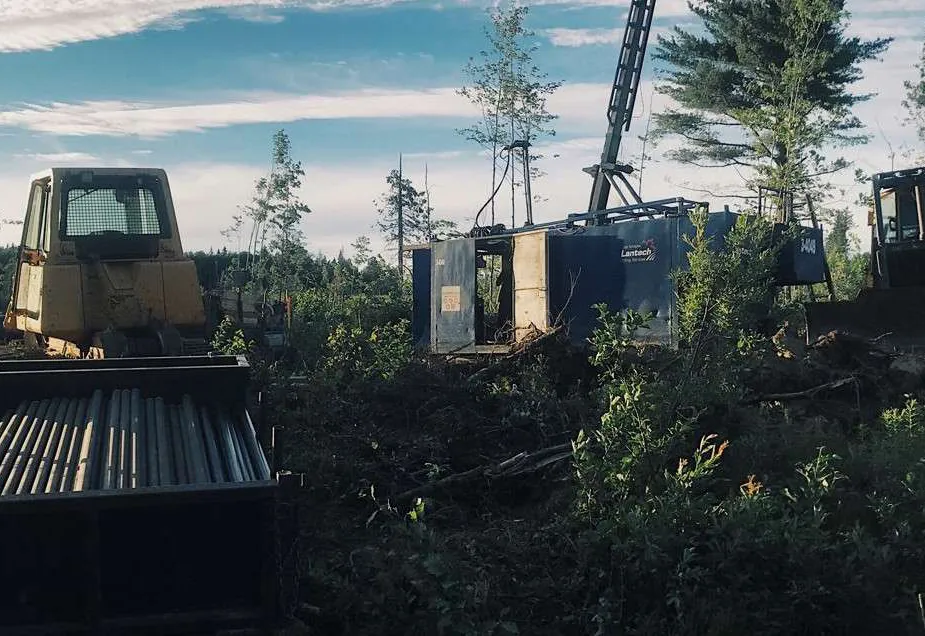
Visionary Copper & Gold confirms new footwall copper zone at 20Mt Point Leamington VMS deposit in Newfoundland, targeting resource growth and PEA in 2026.
- Visionary Copper & Gold is advancing Point Leamington with an existing resource of over 20 million tonnes containing approximately 500,000 ounces of gold, 8 million ounces of silver, 170 million pounds of copper, and 700 million pounds of zinc.
- The company's Phase 1 drilling has confirmed a new footwall copper zone named Kraken, returning a 76-metre interval at 0.45% copper and a secondary intersection of 23 metres at 1.5% copper, consistent with the copper stringer zones that define the world's largest VMS systems including Ming and Flin Flon Bay.
- Point Leamington's confirmed strike length has been extended to over one kilometre, placing it in a rare category of VMS systems where lateral extent has historically been associated with the highest total deposit tonnages globally.
- The company holds a second copper asset in Manitoba, Rainbow/Pine Bay, where an advanced exploration permit is pending and an Environmental Act licence is being prepared, with the project sitting within trucking distance of three concentrators and approximately 30 minutes from a rail line connected to Canada's proposed Churchill port corridor.
- The entire Eastern Canada portfolio was acquired in 2016 with gold up over 50% since the company refocused on Newfoundland and structural copper deficits widening. Management is targeting an updated resource estimate and PEA at Point Leamington in 2027.
Visionary Copper & Gold's Point Leamington sits in the province of Newfoundland, Canada, and carries a distinction that has attracted renewed investor attention as the largest unmined volcanogenic massive sulphide (VMS) deposit in the province outside of the Ming deposit being advanced by Firefly Metals. Despite hosting over 20 million tonnes of polymetallic mineralisation including gold, silver, copper, and zinc, the deposit has seen no modern exploration activity since 2004. That two-decade gap is now the central opportunity Visionary Copper & Gold is pursuing.
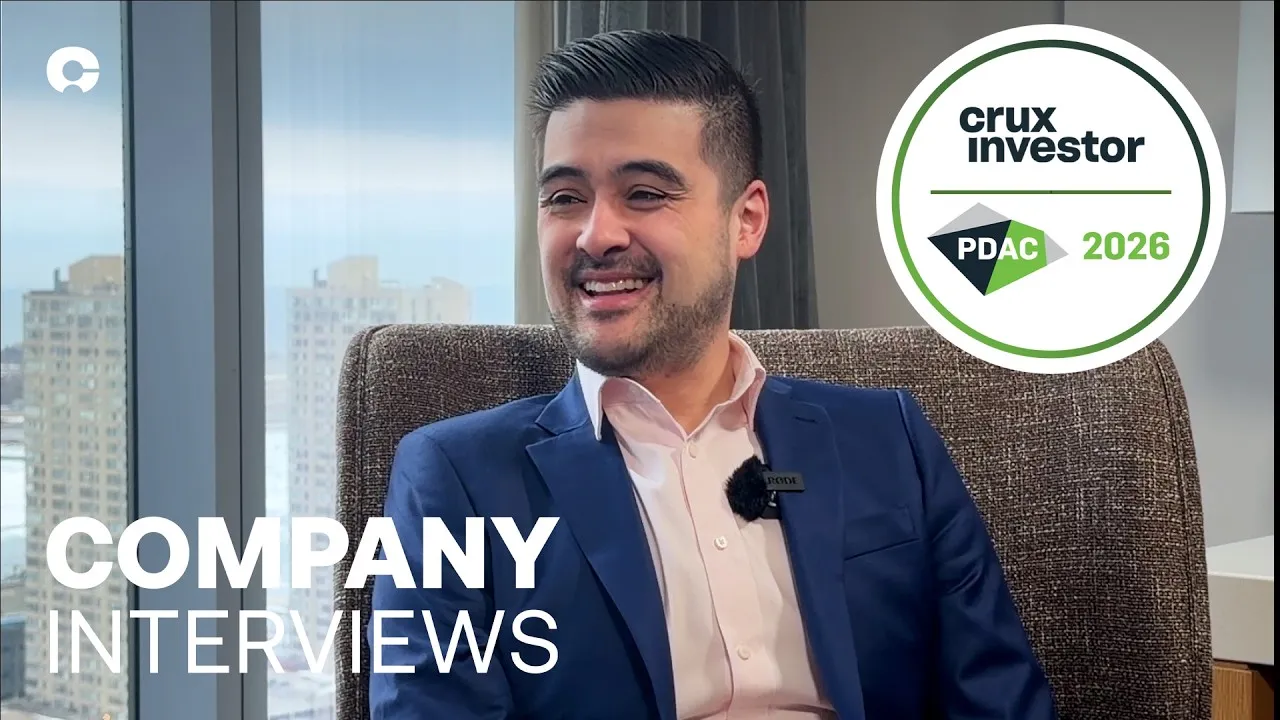
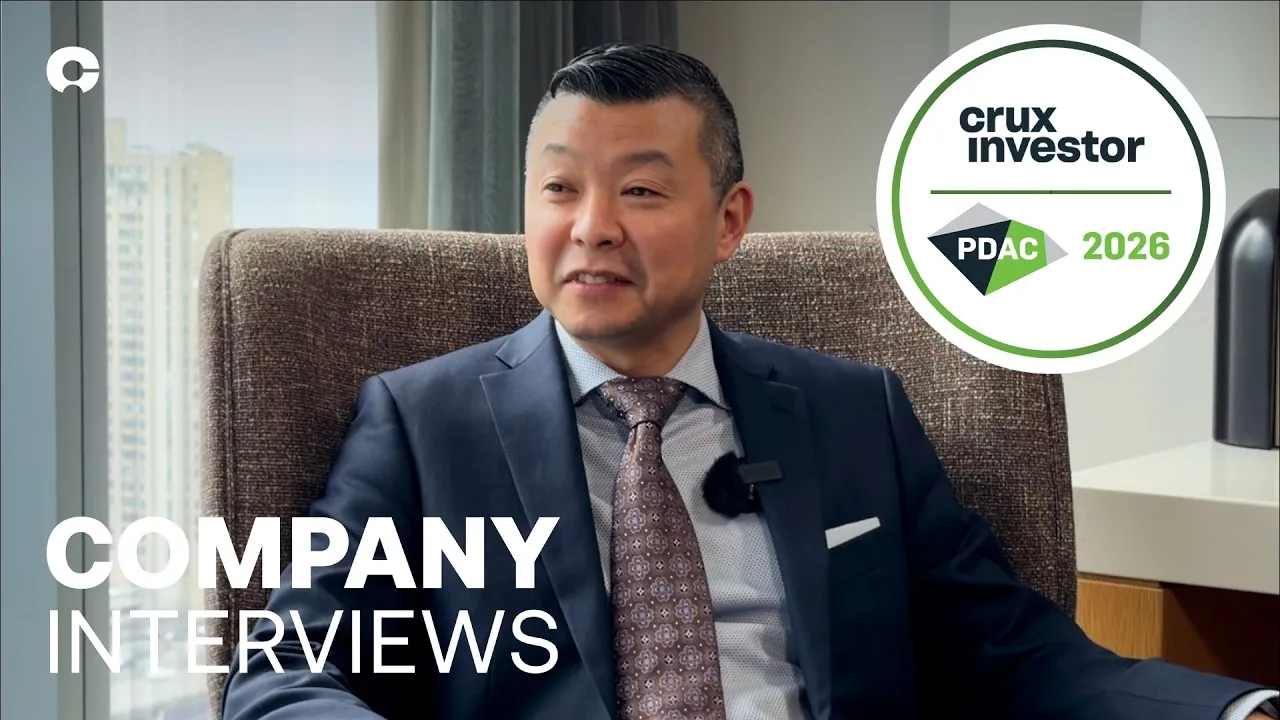
Speaking at PDAC 2026, Max Porterfield, President and CEO of Visionary Copper & Gold, outlined how the company is approaching Point Leamington's resource potential, what early drilling results are showing, and how the asset fits into a broader portfolio that also includes a copper project in Manitoba.
The Eastern Canada Portfolio
The origins of Visionary's position in Newfoundland trace back to 2016, when the company acquired a portfolio of Eastern Canadian assets across two transactions at what Porterfield described as the bottom of the cycle. The total consideration for the portfolio was $1.1 million for a package including the Nash Creek and Superjack zinc-dominant VMS projects in New Brunswick. The company subsequently drilled, doubled in size, and advanced to a preliminary economic assessment in 2018 as well as Point Leamington.
The decision to shift resources to Newfoundland was made at gold prices around $3,000 per ounce. Gold has since risen by more than 66% in the period that followed, and base metal sentiment has improved materially alongside it, underpinned by structural demand from the energy transition and supply deficits in copper.
Interview with Max Porterfield, President & CEO of Visionary Copper & Gold
What the Existing Resource Contains
The Point Leamington resource includes both an open-pit component and an out-of-pit component. Within the pit-constrained envelope, the resource stands at roughly 20 million tonnes, containing approximately 500,000 ounces of gold, 8 million ounces of silver, 170 million pounds of copper, and 700 million pounds of zinc. By metal value, gold currently represents approximately 55% of the contained metal value, with copper and silver making up a significant proportion of the remainder.
The deposit remains open at depth, having been drilled only to a vertical depth of approximately 350 metres. Porterfield noted this is relatively shallow by VMS standards, particularly when compared to systems such as Ming, where the resource extends along a plunge depth of approximately two kilometres.
The Kraken Discovery: A New Copper Zone
The most significant development was the confirmation of a new copper zone in the footwall to Point Leamington's main lens, which the company has named Kraken. Footwall copper zones are a characteristic feature of large VMS systems globally often hosting a disproportionate share of a system's copper mineralisation and can materially increase overall resource tonnage.
Porterfield pointed to direct analogies at Ming, where a large copper stringer zone sits below the main massive sulphide lens, and at Flin Flon Bay, where approximately 10 million tonnes of zinc mineralisation in the main horizon is accompanied by a copper-rich footwall zone. At Point Leamington, only a handful of historical holes had tested the footwall, and those were limited in depth. Visionary's initial Kraken hole returned a 76-metre interval in the footwall grading approximately 0.45% copper, along with a secondary intersection of 23 metres at 1.5% copper. These are the first results of a 3,000-metre Phase 1 programme.
The company is now stepping out from this initial Kraken intersection in multiple directions to define the zone's geometry and scale. This work is expected to continue through the current phase before a more intensive Phase 2 programme begins after ground conditions improve.
The Development and Value Creation Pathway
Visionary's near-term plan centres on completing Phase 1 drilling, followed by a more comprehensive Phase 2 programme designed to both upgrade resource confidence in the existing deposit and delineate the Kraken zone. The company also plans to collect material for a two-phase metallurgical programme, with an updated resource estimate and a preliminary economic assessment targeted for 2027.
"The money is there to fund great opportunities like that, and money will always flow where money is respected," Porterfield said. "We are one of the unique opportunities within the base metal space...for significant resource growth, an untouched opportunity, being at the size that we are without having any modern exploration since 2004."
The company is not positioning Point Leamington as a resource that needs to rush toward production decisions prematurely. Porterfield acknowledged that with a Kraken zone still in early confirmation stage, it would be premature to advance a development study before the full scale of the system is understood. The focus for the next twelve months is resource growth, metallurgical data, and a PEA that reflects the updated deposit.
Manitoba: The Rainbow/Pine Bay Asset
Visionary's second core asset is the Rainbow and Pine Bay copper deposit in Manitoba. The company has consolidated the land package, identified exploration targets, and submitted an advanced exploration permit application that is currently pending with a typical a twelve-month review process. In parallel, the company is preparing an Environmental Act licence application, which would authorise full-scale production.
The strategic appeal of Rainbow/Pine Bay is its logistics. The asset sits within trucking distance of three separate concentrators: a facility previously operated by Hudbay at Flin Flon, Hudbay's Snow Lake facility where Lalor ore is currently processed, and a concentrator being developed by what will become Eldorado's operations. The deposit also sits approximately 30 minutes from a rail line that connects to the proposed Churchill port corridor, an infrastructure that Canadian Prime Minister Mark Carney and Manitoba Premier Wab Kinew have discussed in the context of critical mineral export access.
VMS Clustering: The District Exploration Case
Porterfield also raised the longer-term prospect of district-scale exploration around Point Leamington. VMS deposits characteristically occur in clusters along known productive horizons. He pointed to the Ming/Roberts Arm district in Newfoundland, where multiple deposits have been identified along the same corridor, and to the Flin Flon camp in Manitoba, where a series of mines collectively fed into shared infrastructure.
At Point Leamington, no other VMS deposit has yet been discovered along the known horizon. The company has outlined targets based on airborne electromagnetic anomalies at regular intervals along strike. These represent exploration upside that management views as additive to the primary Point Leamington value proposition.
The Investment Thesis for Visionary Copper & Gold
- Underexplored Tier-1 Scale VMS Asset: Point Leamington is already at 20 million tonnes, a threshold for a sizeable VMS deposit, yet has had no modern exploration since 2004. The combination of existing scale and unexplored upside is uncommon in the junior mining space.
- Kraken Copper Zone Adds Resource Expansion Potential: The confirmation of a footwall copper zone consistent with large-scale VMS analogues at Ming and Flin Flon Bay introduces the possibility of materially higher contained copper and total tonnage as drilling progresses.
- Strike Extent Differentiates Point Leamington: A confirmed kilometre-plus strike length positions Point Leamington in the category of VMS systems that have historically produced the largest total tonnage outcomes globally.
- Near-Term Catalysts: The Phase 1 and Phase 2 drilling programmes, a two-phase metallurgical study, and a targeted PEA within 2027 provide a structured sequence of potential positive news flow for investors over the next twelve months.
- Copper and Gold Macro Tailwinds: With copper demand underpinned by electrification and grid infrastructure, and gold at multi-year highs, the metal mix at Point Leamington aligns with the most favoured commodity themes in the current investment environment.
- Manitoba Asset Optionality: Rainbow/Pine Bay adds a second copper asset with active permitting, proximity to existing processing infrastructure, and strategic positioning along a proposed critical mineral export corridor.
- Low Historical Acquisition Cost: The entire Eastern Canada portfolio, including Point Leamington acquired for $1.1 million in 2016, reflecting a disciplined counter-cyclical entry that leaves the company with significant leverage to any resource growth.
- District Exploration Upside: The presence of airborne anomalies along strike from Point Leamington introduces the possibility of additional discoveries within the same productive horizon, consistent with VMS camp-scale outcomes at comparable districts.
Critical Metals, Western Supply Chains, and the New Geology of Capital
The global mining industry is operating in a capital environment defined by a structural contradiction: demand for copper, gold, and critical metals is rising faster than new supply can be permitted, financed, and brought to production. This gap is not primarily technical but also is jurisdictional and cyclical. The junior mining sector underinvested during a prolonged bear market, and the pipeline of advanced exploration projects capable of satisfying growing institutional and sovereign demand remains thin.
Copper sits at the centre of this dynamic. The electrification of transport, the expansion of power grid infrastructure, and the proliferation of data centres, all of which are accelerating in response to AI buildout and decarbonisation commitments, require copper at volumes that existing mine supply cannot readily address. The International Energy Agency and major commodity desks have consistently flagged a structural deficit scenario for copper through the 2030s. Meanwhile, the concentration of processing capacity in China has prompted Western governments to prioritise the development of domestic and allied-nation supply chains, attaching strategic value to projects in stable jurisdictions such as Canada.
Gold has provided additional context for the current environment having broken through $3,000 per ounce, gold's move reflects a combination of central bank accumulation, geopolitical risk hedging, and dollar-denominated asset diversification. For polymetallic VMS deposits like Point Leamington, where gold contributes approximately 55% of current metal value, this move has materially improved project economics before a single new tonne of resource has been defined.
As Porterfield summarised the moment:
"The Visionary brand, the Visionary name, we put the portfolio together with the long-term vision of the market that's here today. Time to take advantage of it for sure."
The macro backdrop is also reshaping M&A. Major producers are under-replaced on reserves and are increasingly targeting exploration-stage assets in stable jurisdictions to rebuild pipelines. Junior companies with credible scale, favourable metallurgy, and modern exploration upside are precisely the acquisition targets that this environment produces.
TL;DR
Visionary Copper & Gold is advancing Point Leamington, a 20-million-tonne polymetallic VMS deposit in Newfoundland with no modern exploration since 2004. Phase 1 drilling has confirmed a new footwall copper zone called Kraken, a structural feature that defines the world's largest VMS mines and extended the deposit's strike to over one kilometre. The company also holds a second copper asset in Manitoba with active permitting and proximity to three existing concentrators. The portfolio was assembled for $1.1 million in 2016, and current gold and copper market conditions are the most favourable since acquisition. With a PEA targeted in 2027, active permitting at the Manitoba asset, and commodity markets favouring both gold and copper, the company is operationally and financially positioned to convert its exploration momentum into defined resource value over the next twelve months.
Frequently Asked Questions (FAQs) AI-Generated
A volcanogenic massive sulphide (VMS) deposit is a type of polymetallic mineral system formed on ancient seafloors, typically containing a combination of copper, zinc, gold, and silver. They are among the most economically significant deposit types in mining history, with large examples including Kidd Creek in Ontario and the Flin Flon camp in Manitoba. Point Leamington is the largest unmined VMS deposit in Newfoundland outside of Firefly's Ming deposit. Its scale, near-surface position, and confirmed kilometre-plus strike length place it in a category shared with some of the most productive VMS systems ever mined.
Kraken is the name Visionary has given to a footwall copper zone identified adjacent to Point Leamington's main massive sulphide lens. In large VMS systems, footwall copper zones frequently host a disproportionate share of total copper mineralisation and can add substantially to overall resource tonnage. The first Kraken hole returned a 76-metre interval at 0.45% copper and a secondary hit of 23 metres at 1.5% copper. Analogues at Ming and Flin Flon Bay, where footwall copper zones sit alongside zinc-dominant main lenses, suggest Kraken could materially shift Point Leamington's resource toward copper dominance as drilling progresses.
The key milestones over the next twelve months include continued Phase 1 step-out drilling around the initial Kraken intersection, a Phase 2 programme to upgrade resource confidence and further delineate Kraken after ground conditions improve, a two-phase metallurgical study, and an updated resource estimate followed by a preliminary economic assessment in 2027. At the Manitoba asset, investors should also watch for a decision on the advanced exploration permit application, which is approximately twelve months in the review process.
Ming is the most direct comparable in Newfoundland and serves as a key reference point for management's resource growth thesis. Ming's main deposit began at approximately 4 million tonnes and has grown to over 60 million tonnes. Its strike extent is approximately 210 metres, with the resource extending down a two-kilometre plunge. Point Leamington, by contrast, already sits at over 20 million tonnes at surface with a confirmed strike of over one kilometre — a structural configuration that, if depth potential and Kraken addition materialise as management expects, suggests a materially different scale outcome than a plunge-dominated system like Ming.
The deposit was identified and partially drilled prior to 2004, but subsequent years coincided with a prolonged downturn in base metal and mining investment cycles that depressed appetite for advancing exploration-stage VMS assets. Visionary acquired Point Leamington as part of its Eastern Canada portfolio in 2016 for a combined consideration of $1.1 million. The company initially prioritised its New Brunswick zinc assets before redirecting focus to Newfoundland as gold and copper markets improved. The two-decade exploration gap is now the central opportunity the company is pursuing with its current drilling programmes.
Analyst's Notes





Subscribe to Our Channel










.png)

Stay Informed


