




Nyanzaga Reserve Expansion Positions Perseus Mining For Annual Production Growth by 2028


Perseus Mining's Nyanzaga reserve expands by 73% to 4.0Moz, extending the mine life to 2041 and positioning the annual production growth by 2028.
- Perseus Mining's Nyanzaga Gold Project Ore Reserve increased 73% to 4.0 million ounces (90.9 million tonnes at 1.38 grams per tonne of gold), extending mine life to 16 years with annual production exceeding 200,000 ounces from fiscal year 2028 (FY28) through FY41.
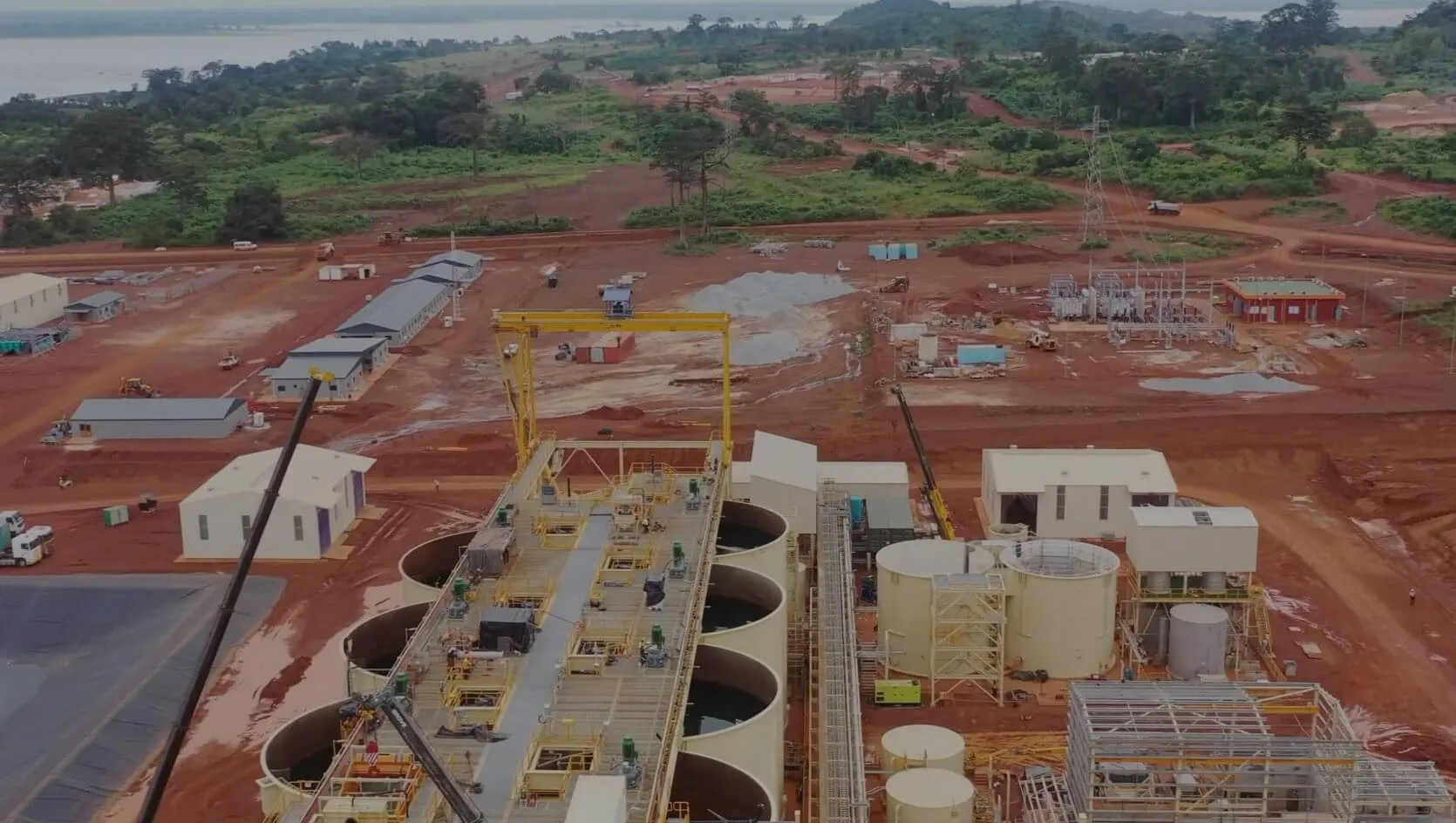
- Construction at Nyanzaga is on time and on budget, with processing facility earthworks complete, ball mill and Semi-Autogenous Grinding (SAG) mill fabrication running ahead of schedule, and the first gold pour targeted for January 2027, making it Tanzania's first new major gold mine development in 17 years.
- Group annual production is positioned to reach 515,000 to 535,000 ounces per year as Nyanzaga layers onto a 3-mine operating base, currently guided at 400,000 to 440,000 ounces for FY26, at an all-in site cost (AISC) of US$1,600 to US$1,760 per ounce.
- The approximately US$523 million Nyanzaga capital commitment is self-funded from Perseus' US$755 million net cash and bullion position, with no external debt or equity issuance required, while the board simultaneously authorized a 100% dividend increase and an approximately A$100 million share buy-back.
- Execution risk centers on adherence to the Nyanzaga construction timeline, sequencing of mine transitions across 3 West African operations, and an unresolved royalty framework in Côte d'Ivoire that resulted in approximately US$20 million in additional royalty payments during the first half of FY26, contributing to a 28% increase in group cost of sales during the first half of FY26.
Nyanzaga Reserve Expansion & Production Profile
Perseus Mining announced a 73% increase in the Nyanzaga Gold Project Ore Reserve in February 2026, bringing the total to 4.0 million ounces. The updated reserve stands at 90.9 million tonnes grading 1.38 grams per tonne (g/t) of gold, supported by approximately 82,700 metres of reverse circulation and diamond drilling across the Tusker and Kilimani deposit areas since Perseus acquired the project in May 2024.
The expanded reserve extends mine life to 16 years, from fiscal year 2028 (FY28) through FY41. Total life-of-mine gold production is estimated at 3.5 million ounces, with annual output exceeding 200,000 ounces in 14 of 16 mine years from FY28. At Perseus' assumed long-term gold price of US$3,000 per ounce, the project delivers a post-tax net present value (NPV) of US$864 million at a 10% discount rate, a post-tax internal rate of return (IRR) of 28.8%, life-of-mine pre-tax all-in site cost (AISC) of US$1,621 per ounce, and undiscounted post-tax free cash flow of US$2,651 million. With gold trading at US$5,099 per ounce, realized economics would be materially higher. The pit optimization was based on US$2,300 per ounce of gold, providing substantial pricing conservatism.
Managing Director and Chief Executive Officer of Perseus Mining, Craig Jones, confirmed that further resource growth remains in focus:
“We're seeing very promising results out of that additional drilling, and we're actually looking to potentially release another reserve and resource update later this year because we're seeing some positive results."
Construction Timeline & First Gold Path
Nyanzaga's construction is advancing on time and on budget, with the first gold pour targeted for January 2027. The project will be Tanzania's first new major gold mine development in 17 years. Earthworks for the processing facilities and infrastructure areas are complete, with bulk earthworks progressing into the tailings storage facility. Concrete works for the ball mill, semi-autogenous grinding (SAG) mill, and crusher foundations are underway. Perseus has awarded the contract for the permanent power line and transformer. Total capital commitment stands at US$523 million, including contingency.
Jones is direct about where critical-path items stand:
"The fabrication of the ball mills and the SAG mills is progressing well. They're actually ahead of schedule, which is good."
Ball mill and SAG mill fabrication sit on the project's critical path. Running ahead of schedule provides a buffer against potential delays in other construction elements. Perseus holds an 80% contributing interest, with the Government of Tanzania retaining a 20% free-carried interest.
Existing Operations Enter Transition Phase Ahead of Nyanzaga Ramp-Up
All 3 of Perseus's producing mines are undergoing ore source transitions that introduce near-term grade variability but are sequenced to improve output in the second half of FY26.
Yaouré in Côte d'Ivoire completed mining in the CMA open pit and shifted to the lower-grade Yaouré pit, temporarily reducing quarterly output to 32,045 ounces (down approximately 42%). CMA underground mine is Côte d'Ivoire's first mechanized underground gold operation. Contractor Byrnecut has mobilized, and as of the December 2025 quarter, development had reached approximately 800 metres across four declines, with first ore delivered in January 2026. Commercial underground production targets are set for March 2027. Meanwhile, Edikan in Ghana is transitioning to the higher-grade Nkosuo pit after completing prior sources, with production expected to increase as the mine returns to sequence. Sissingué in Côte d'Ivoire is preparing to mine the higher-grade Antoinette deposit within the Bagoé complex.
Jones framed the production outlook in terms of the reserve base:
"What we have in our 5-year outlook is the ore that we have in our current reserve. It's not based on imagined ounces. They're the ounces that we know are there."
Capital Position & Margin Environment
Perseus reported net cash and bullion of US$755 million as of December 2025, with US$400 million in undrawn debt facilities and US$228.7 million in marketable securities, bringing total available liquidity above US$1.15 billion. The approximately US$523 million Nyanzaga commitment is funded entirely from existing cash. Investing outflows in the first half of FY26 reached US$166.9 million, up 127% year-on-year, reflecting accelerated development spending at Nyanzaga and CMA Underground.
The board authorized an interim dividend of AUD 5.0 cents per share (a 100% increase, US$47.3 million) and an A$100 million buyback for FY26, while funding growth investments without equity issuance. Perseus realized an average gold price of US$3,241 per ounce during the first half of FY26, 38% above the prior year, against an AISC of US$1,649 per ounce. Revenue reached US$608.5 million, earnings before interest, taxes, depreciation, and amortization (EBITDA) were US$315.5 million, and net profit after tax was US$185.5 million. With gold trading at US$5,099 per ounce, the second half of FY26 margins are positioned to expand substantially beyond the first half.
Risk Factors & Execution Checkpoints
Nyanzaga's January 2027 first gold target carries standard construction-stage risks: equipment delivery delays, contractor constraints, weather disruptions, and commissioning complications. Critical-path items are ahead of schedule.
Perseus paid an additional 2% royalty in Côte d'Ivoire during the first half of FY26, approximately US$20 million, as part of ongoing industry fiscal discussions. This contributed to a 28% increase in group cost of sales, alongside lower grades and higher waste ratios at transitioning ore sources, and added upward pressure on AISC. The negotiation outcome remains unresolved and directly affects both Yaouré and Sissingué. A gold price reversal is the primary macro risk; a stronger US dollar, reduced central bank purchases, or hawkish Federal Reserve guidance could compress margins.
The Investment Thesis for Perseus Mining
Perseus Mining enters a defined catalyst sequence that will determine whether its transition from a mid-tier West African producer to a diversified 500,000+ ounce operation justifies current valuation levels.
- The 73% reserve expansion at Nyanzaga to 4.0 million ounces, supported by 16 years of mine life and projected annual output exceeding 200,000 ounces, provides a rare production growth profile among self-funded mid-tier developers.
- Balance sheet strength of US$755 million in net cash and bullion eliminates equity dilution risk during peak capital deployment and preserves per-share value through the construction period.
- Simultaneous execution of a 100% dividend increase, an A$100 million buyback program, and self-funded development capital demonstrates capital allocation discipline that few mid-tier producers maintain during a construction phase.
- The all-in site cost range of US$1,600 to US$1,760 per ounce, set against gold trading at US$5,099 per ounce, generates cash margins that fund operations, shareholder returns, and growth from a single cash flow stream.
- Parallel development of CMA Underground at Yaouré, targeting commercial production in March 2027, extends mine life at the flagship West African asset and adds a higher-grade ore source to the group profile.
- Execution risk is concentrated rather than dispersed, with the January 2027 first gold pour at Nyanzaga functioning as the single most significant catalyst for valuation re-rating.
Perseus's catalyst timeline is defined: Nyanzaga first gold in January 2027, CMA Underground commercial production in March 2027, group production reaching 515,000 to 535,000 ounces per year by FY28. The financial architecture to deliver that timeline is in place. Whether execution matches the schedule will determine if the current premium to discounted cash flow narrows or widens.
Jones is direct about the company's strategic identity:
"You have to stick to your knitting. We are an African gold mining company, that's where our strengths really lie, and so that's where our focus will continue to be."
TL;DR
Perseus Mining expanded the Nyanzaga Gold Project Ore Reserve by 73% to 4.0 million ounces, extending mine life to 2041 and supporting more than 200,000 ounces of annual production. With construction on schedule and fully funded from a US$755 million net cash position, the project targets first gold in 2027 and positions group production to exceed 500,000 ounces annually by 2028.
FAQs (AI-Generated)
The reserve expansion to 4.0 million ounces extends Nyanzaga's mine life to 16 years with annual production exceeding 200,000 ounces from FY28. Layered onto Perseus's existing 3-mine base (guided at 400,000 to 440,000 ounces for FY26), group production is positioned to reach 515,000 to 535,000 ounces annually, consistent with the company's five-year outlook.
The entire US$523 million capital commitment is self-funded from Perseus's US$755 million net cash position. With US$400 million in undrawn credit facilities, no external debt or equity issuance is required.
First gold pour targets January 2027, with commercial production ramp-up to follow. As of the December 2025 quarter, construction was on time and on budget, with critical-path fabrication running ahead of schedule.
Key risks include Nyanzaga construction delays at historically elevated gold prices, mine transition execution at Yaouré and Edikan, unresolved royalty negotiations in Côte d'Ivoire, and potential gold price reversal from a stronger US dollar or hawkish monetary policy.
Nyanzaga was modeled at US$3,000 per ounce gold, producing a post-tax NPV of US$864 million. With gold trading at US$5,099 per ounce, realized economics would be substantially higher. The pit optimization used US$2,300 per ounce of gold, providing significant conservatism relative to the current spot.
Analyst's Notes





Subscribe to Our Channel




.png)
Stay Informed






















