




Higher Fed Rate Expectations Outweigh Iran Safe-Haven Demand, Pressuring Gold Despite Escalating Conflict


Fed rate expectations outweighed Iran safe-haven demand, pressuring gold as ETF outflows persisted. Key catalysts are Fed odds and any Iran de-escalation.
- Spot gold fell 0.7% to $4,032.19/oz, and US gold futures lost 0.4% to $4,037.20, showing that rising rate expectations outweighed safe-haven demand despite escalating US strikes on Iran.
- CME FedWatch priced September rate-hike odds at 51%, increasing the opportunity cost of holding non-yielding gold and outweighing demand for safe-haven assets.
- Iran de-escalation could resume gold ETF buying toward H1's $8 billion net inflow. Continued strikes could keep December rate-hike odds near 70% and prolong ETF outflows after June's $8.9 billion withdrawal.
- Iran's next policy or military move cannot be forecast with confidence. Position sizing should reflect the 51% to 70% range in Fed rate-hike odds rather than a single gold price target.
- Confirmed de-escalation between Iran and Israel or the resumption of peace talks, which Tradu.com's Niko Tzabouras identified as gold's most supportive near-term catalyst.
Geopolitical Risk & Gold ETF Outflows Keep Gold Under Pressure
Spot gold fell 0.7% to $4,032.19/oz, while US gold futures dropped 0.4% to $4,037.20. The decline came after Washington reimposed a naval blockade on Iranian ports, followed by US strikes on Iran's coastal defenses and missile sites and Iranian retaliation against US military sites.
June's $8.9 billion in gold ETF outflows showed weaker demand before the latest price decline. Every region recorded net withdrawals, with North America leading at $5.5 billion and H1 outflows reaching $7.7 billion, the region's weakest first half since 2013. Silver fell 1.7%, platinum 1.2%, and palladium 1.5%, indicating broad selling across precious metals.
Higher Inflation Risk & Gold Holding Costs Keep Safe-Haven Demand in Check
Washington's reimposed naval blockade on Iranian ports and subsequent strikes on Iran's coastal defenses and missile sites kept crude near a one-month high. Higher oil prices increase inflation risk, supporting expectations that the Fed will keep interest rates higher for longer. As Niko Tzabouras, senior market analyst at Jefferies-owned Tradu.com, said, "Gold continues to be dictated by inflation and geopolitics."
Higher inflation risk raises rate-hike expectations, increasing the opportunity cost of holding non-yielding gold. CME FedWatch priced September rate-hike odds at 51%, while LSEG priced December odds at 70%, down from 80% despite softer CPI and PPI data. The absence of a confirmed diplomatic channel between Washington and Tehran leaves geopolitical risks elevated.
Fed Policy & Gold Outlook: Base and Bear Cases to Watch
Rate markets may be underestimating how long the Fed will keep policy restrictive. Fed Chair Kevin Warsh said the Fed would not tolerate inflation above target, reinforcing its commitment to price stability. December rate-hike odds held at 70%, down from 80% but still signaling markets expect tighter policy. Gold price exposure extends beyond bullion to gold ETFs and other precious-metals holdings. Silver fell 1.7%, platinum 1.2%, and palladium 1.5%, showing broad selling across precious metals.
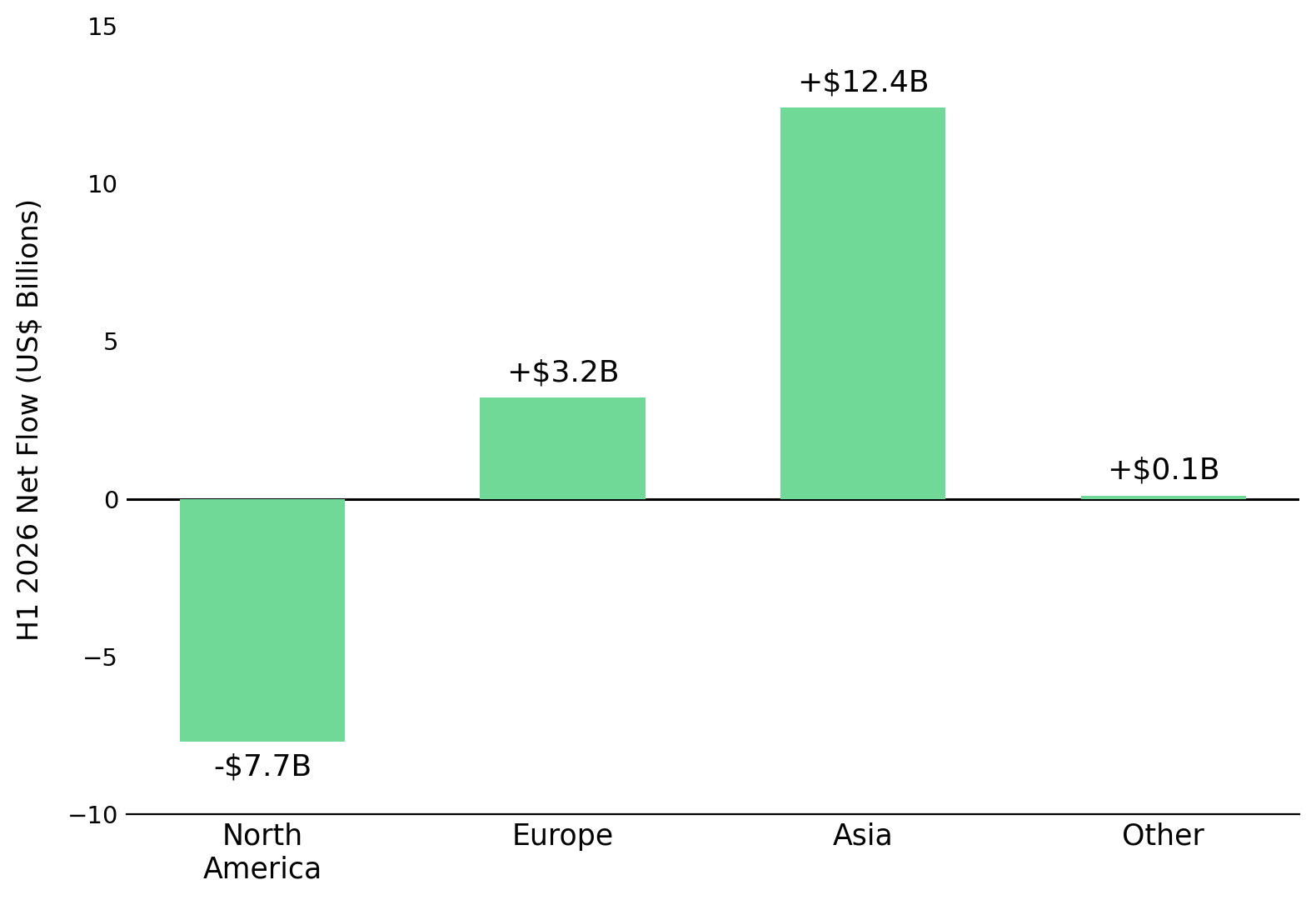
North American gold ETFs recorded $7.7 billion in H1 net outflows, the region's weakest first half since 2013, while Indian investors added to gold ETFs during June's price decline. The timing of any Iran de-escalation remains uncertain, leaving September and December rate-hike odds as the key indicators for gold.
Track Fed Rate Odds & Iran Headlines Before Increasing Gold Exposure
Gold is likely to remain under pressure while September Fed rate-hike odds remain at or above 51% and crude trades near a one-month high on Strait of Hormuz risks. Under those conditions, higher-yielding cash and short-duration bonds remain more attractive than non-yielding gold.
Before increasing gold exposure, monitor two indicators: CME FedWatch rate-hike probabilities and developments in Iran. A sustained decline in September rate-hike odds below 51%, combined with confirmed Iran de-escalation or renewed peace talks, would reduce the opportunity cost of holding gold and could support renewed ETF buying toward H1's $8 billion net inflow.
Comments from Dallas Fed President Lorie Logan and Fed Vice Chair Philip Jefferson could shift market expectations ahead of the September and December Fed meetings. Tracking those signals alongside geopolitical developments provides a clearer framework for adjusting gold exposure than relying on short-term price moves alone.
Analyst's Notes





Subscribe to Our Channel



Stay Informed


