




US-Iran Strikes Lift Oil Prices, Raising Diesel Costs Across Mining Operations



US-Iran strikes and shipping disruptions lifted oil prices and diesel costs, increasing operating cost pressure for energy-intensive mining operations.
- The US struck Iran's coastal defenses and missile sites after reimposing a naval blockade on Iranian ports. Brent climbed to a one-month high of $85.78 before settling at $84.95.
- Vessel transits through the Strait of Hormuz fell to seven from 13 after the US reimposed a naval blockade on Iranian ports. The waterway carries about one-fifth of global oil and LNG trade, increasing supply disruption risks.
- Goldman Sachs projects Brent above $110 by Q4 2026 if Gulf export recovery stalls. If tensions de-escalate and production exceeds forecasts, it sees Brent falling into the $60s by year-end.
- US retail diesel reached $4.796 a gallon, up 27.6% year over year. Higher fuel prices increase operating costs for diesel-reliant open-pit mining fleets.
- A bear case depends on neighboring-country mediation, the Bab el-Mandeb remaining open to shipping, and signs of recovering oil flows in EIA inventory data and Hormuz vessel transit counts.
Regional Conflict Supports Higher Crude Prices as Shipping Risks Tighten Supply
The US struck Iran's coastal defenses and missile sites after reimposing a naval blockade on Iranian ports, escalating military tensions in the Gulf. Brent rose 1.2% to a one-month high of $85.78, while WTI gained 1.1% to $80.19. Brent later slipped 0.28% to $84.95 as traders took profits after four consecutive gains, while WTI eased to $79.45.
Oil prices remain supported as the market assesses whether shipping disruptions through the Strait of Hormuz will worsen and how the US and Iran respond. The Strait of Hormuz carries about one-fifth of global oil and LNG trade, and vessel transits fell to seven from 13 after the US reinstated its naval blockade on Iranian ports.
Naval Blockade Extends Shipping Risks, Supporting Higher Energy Prices
Shipping disruption began before the US reinstated its naval blockade on Iranian ports. Iran's attacks on three crude supertankers halted Gulf shuttle runs, increasing operating risks for vessels serving regional export terminals. The US then reinstated its naval blockade on Iranian ports and struck coastal defenses and missile sites, while dropping a proposed 20% fee on ships transiting the Strait of Hormuz under US protection.
Iran has signaled it could activate Houthi forces in Yemen to disrupt shipping through the Bab el-Mandeb, threatening another major route for global energy exports. US officials said the strikes could expand military operations against Iran after the June ceasefire collapsed, increasing the risk of a wider regional conflict.
Supply Risks Keep Oil Outlook Uncertain: What Could Shift the Price Path?
John Deal of Post Oak Group said both sides appear to be seeking an outcome they can present as a domestic victory, reducing the likelihood of an immediate escalation. Ritterbusch & Associates said oil markets have returned to conditions seen before the June ceasefire rather than the early-war spike toward $120 a barrel. Even without a broader bombing campaign, it sees another 8% to 10% upside in oil prices.
Nissan Securities' Hiroyuki Kikukawa said WTI is likely to trade between $85 and $87 if mediation holds and enforcement remains partial. Goldman Sachs sees Brent rising above $110 if Gulf export recovery stalls into Q4 but falling into the $60s by year-end if tensions de-escalate and production exceeds forecasts.
Higher Fuel Prices Pressure Mine Margins Through Operating Cost Inflation
For mining companies, the immediate impact of this conflict comes through fuel costs, not metal prices. US retail diesel reached $4.796 a gallon, up $1.038, or 27.6%, year over year and $0.218 from the previous week. Diesel is one of the largest operating costs in open-pit mining, powering haul trucks and generators, so sustained fuel price increases compress margins even if metal prices remain unchanged.
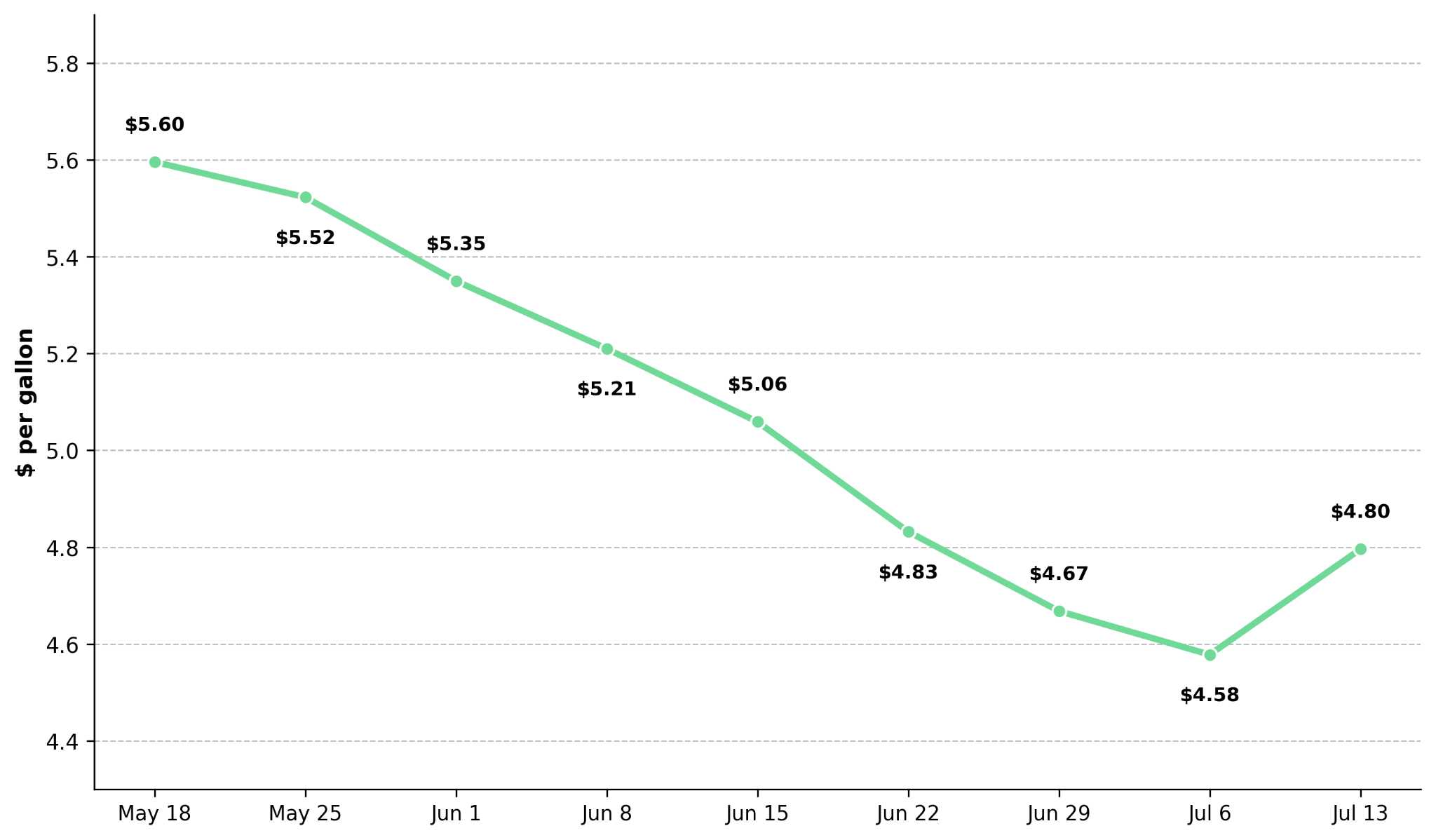
Whether diesel costs remain elevated depends on how long shipping disruptions continue. Ritterbusch & Associates said oil markets have returned to conditions seen before the June ceasefire rather than the early-war spike, indicating fuel prices may stay above pre-conflict levels unless military operations widen. As a result, mining cost exposure is driven more by fleet fuel efficiency, diesel hedging, and diesel's share of all-in sustaining costs than by day-to-day moves in Brent crude.
Goldman Sachs's scenarios of Brent above $110 or in the $60s depend on how the conflict develops, making either outcome difficult to price today. Diesel and WTI prices feed directly into quarterly all-in sustaining cost guidance, so company disclosures on fuel cost sensitivity provide a more reliable measure of mining cost pressure than day-to-day geopolitical developments.
What to Monitor: EIA Inventory Data & Hormuz Shipping
The next change in mining fuel costs depends on whether geopolitical disruption begins reducing physical oil supply. The EIA's Weekly Petroleum Status Report and daily Strait of Hormuz vessel transit data provide the earliest confirmation of that shift. US commercial crude inventories stood at 409.7 million barrels for the week ending July 10, 2026, 6% below the five-year seasonal average, leaving less inventory available if Gulf exports decline further.
Another decline in US crude inventories, fewer vessel transits through the Strait of Hormuz, or disruption extending into the Bab el-Mandeb would support higher diesel prices and increase operating costs for diesel-intensive mining operations. Higher Gulf exports, recovering vessel traffic, and consecutive inventory builds would instead support Goldman Sachs' lower Brent price scenario, reducing fuel-cost pressure on mining companies.
Analyst's Notes





Subscribe to Our Channel




Stay Informed


