




How Platinum's Inventory Crisis & Hybrid Vehicle Growth Offers High-Leverage Exposure



Platinum faces structural deficits through 2030 as supply constraints meet industrial demand growth, jewelry substitution, and emerging investment markets.
- Platinum markets shifted fundamentally in 2025 as prices nearly doubled in the second half of the year, driven by structural supply-demand imbalances that market forecasts project will persist as deficits through 2030 despite accounting for all known development projects.
- Extreme geological concentration creates supply constraints that cannot respond to price signals, with 90% of global reserves located in South Africa's aging deep-level mines while production elsewhere occurs primarily as a mining byproduct rather than as an economic driver.
- Industrial demand is strengthening contrary to earlier electric vehicle projections, as hybrid vehicles - which consume more platinum and palladium than conventional engines - have become the fastest-growing automotive segment globally due to infrastructure limitations and manufacturer profit margins.
- Investment demand is maturing across physical, ETF, and equity channels while new market infrastructure develops in China, creating potential for significant price impacts given that above-ground inventories have fallen below six months of supply and total market capitalization remains modest.
- Multiple independent demand vectors across automotive, jewelry substitution, and investment sectors are converging simultaneously against constrained supply, creating conditions that industry executives describe as a rare fundamental inflection point for the precious metals complex.
Platinum Group: An Overlooked Investent Opportunity
While gold & silver dominate precious metals investment conversations, platinum group elements (PGEs) - particularly platinum & palladium - have emerged from a prolonged period of undervaluation into what industry executives describe as a fundamental supply-demand inflection point. The second half of 2025 witnessed platinum prices nearly double, driven by structural changes across industrial, jewelry, and investment demand against constrained supply. For investors seeking exposure to precious metals with distinct fundamentals from gold, the platinum story presents a compelling case rooted in scarcity, industrial necessity, and market imbalances that appear poised to persist through the remainder of the decade.
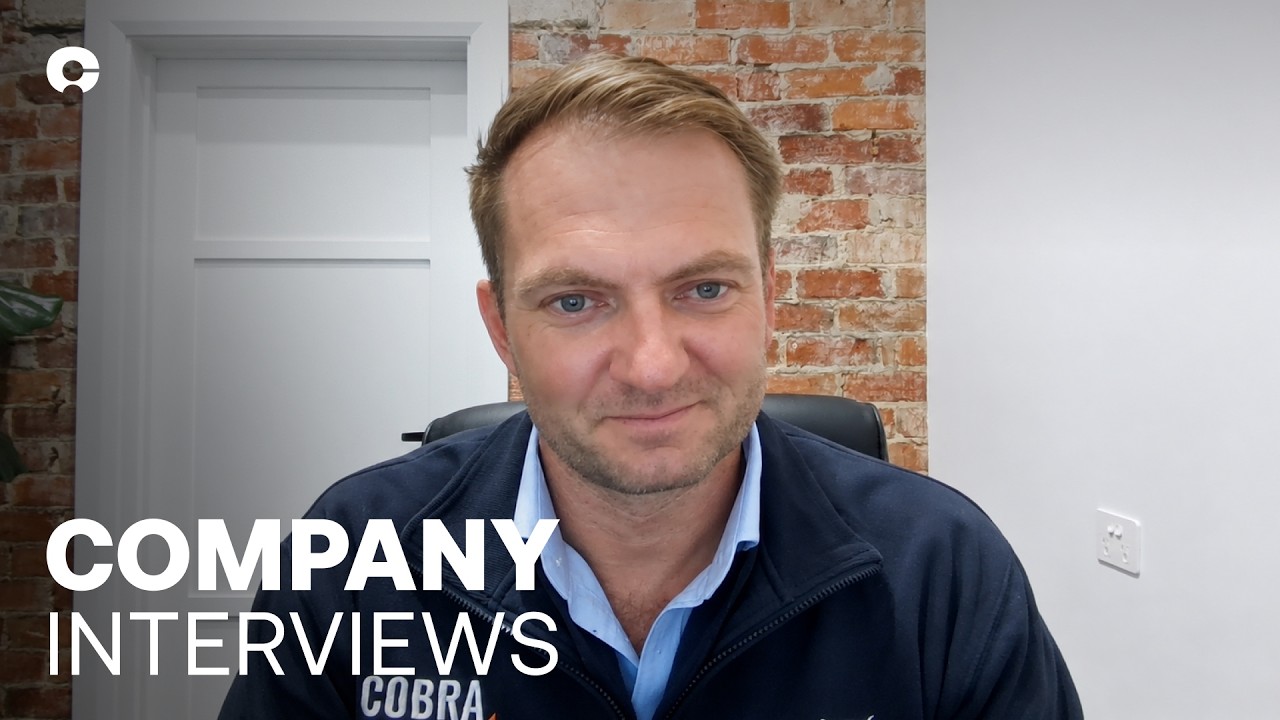
Nick Smart, CEO of ValOre Metals and a 21-year veteran of Anglo American - the world's largest platinum-palladium producer - characterizes the current environment as reflecting fundamental changes on the demand landscape:
"If we look at demand for platinum & palladium, perhaps broken into three segments: one being the industrial demand particularly driven by auto catalysts, number two being the jewelry demand, and number three being the investment demand. We see changes in all three of those spaces.
"That's the backdrop of multiple years now where platinum has been at lows, in terms of pricing at sub-$1,000 an ounce. It's very difficult to develop a new platinum mine. You've got a historic underinvestment in supply and a takeoff in demand. That's what's driving this delta now."
The Supply Challenge: Geological Scarcity Meets Economic Reality
Understanding platinum's supply dynamics requires appreciating both geological rarity and economic constraints. Smart explains,
"Platinum is not particularly much more rare than gold. Both have an average distribution in the earth's crust in the order of a few parts per billion. But what really puts platinum & palladium apart is the ability to find it in a concentrated deposit."
The scale of this concentration challenge becomes evident in the numbers, with the global primary production of platinum at 6 million ounces per year in contrast with gold production of 120-130 million ounces. The practical implications of this concentration extend beyond geology.
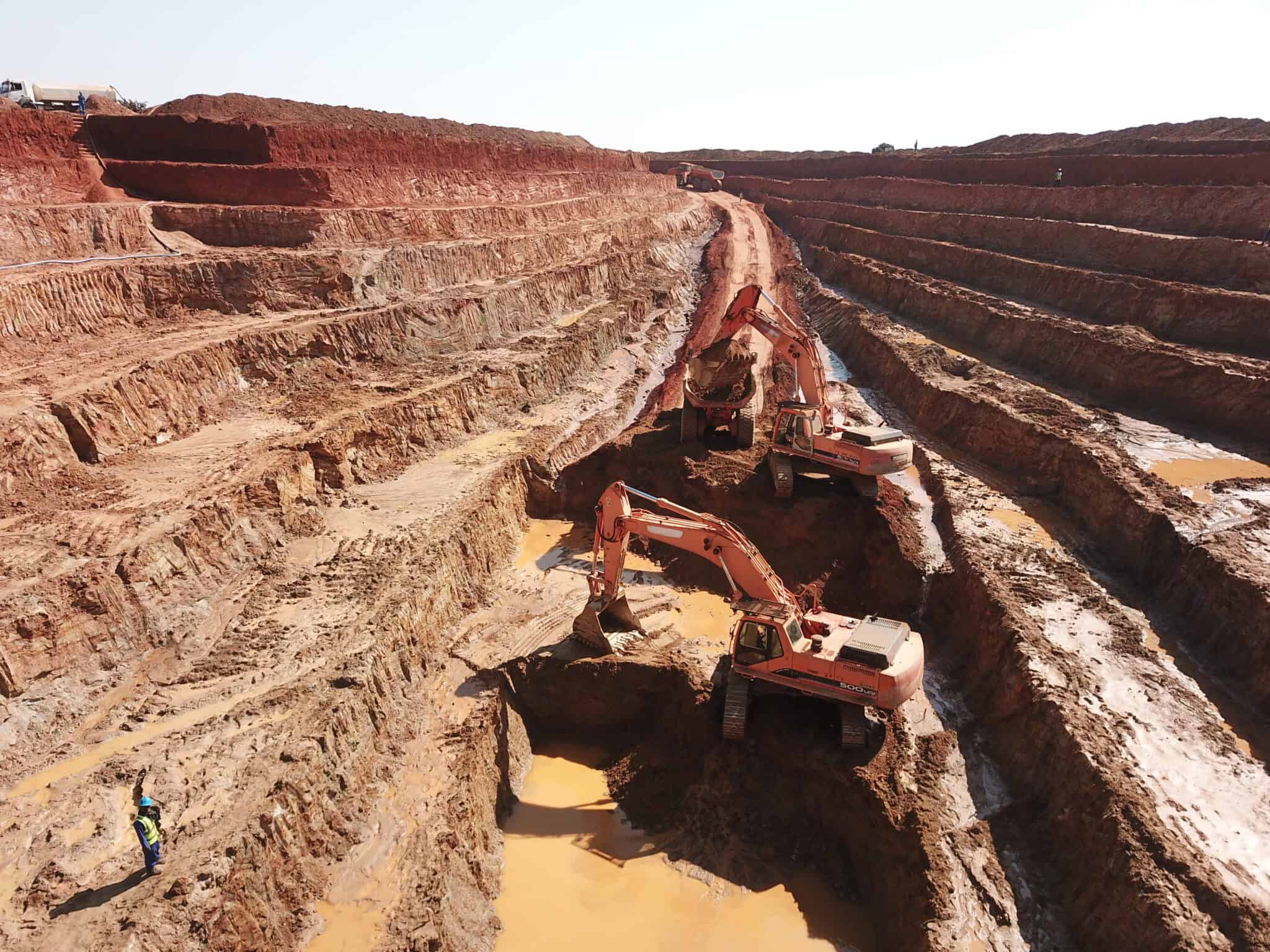
"Many platinum deposits tend to be deep level underground mines," Smart explains. "You're looking at very significant investment in terms of infrastructure to get into those or bodies. You need the right conditions to invest that kind of capital. And as we mentioned, those market conditions just haven't existed now for a number of years."
The result has been a declining supply situation, with existing South African operations getting older, getting deeper, getting more costly and difficult to run. This fundamental scarcity is compounded by extreme geographical concentration as 90% of the world's platinum group element reserves sit within South Africa, specifically concentrated in the Bushveld Complex.
Stefan Gleason, President and CEO of Money Metals Exchange emphasizes the supply inelasticity that creates explosive potential:
"Most of platinum, at least outside of South Africa, is a byproduct that is not even a primary metal driving the economics of a mine. Two, three or 10 times higher prices does not necessarily result in a supply response and especially considering the massive underinvestment and the geopolitical issues."
"South Africa isn't even the greatest jurisdiction and that's where most of you know there's power issues. A metal that's hard to substitute, a metal that doesn't result in more supply even if prices are are way way higher and that's kind of an explosive combination. On the investment side, people are starting to see that opportunity."
Nick Smart, CEO of ValOre Metals & Stefan Gleason, CEO of Money Metals Exchange
Demand Dynamics: Investment Convergence
The demand picture for platinum has evolved significantly, with changes across three primary sectors creating cumulative pressure on available supply.
Industrial Demand: The Hybrid Vehicle Revolution
The most significant shift has occurred in automotive demand, driven by a reality that diverged sharply from earlier forecasts. Smart notes,
"If you fast forward to today in 2025, 75% of new vehicles sold in the US are still internal combustion engine vehicles. The biggest category of growth globally in terms of new vehicle sales is actually hybrids [...] If you look at where major automotive manufacturers are actually making their money, they're not making a lot of margin in EVs. They're making a much higher profit margin in hybrid vehicles."
This shift matters enormously for platinum demand because as the drivers behind this trend appear durable, rooted in customer acceptance, lack of infrastructure for charging and critically, automotive manufacturer economics. Smart explains, pointing to production line shifts at Ford and Volkswagen toward hybrid focus.
"So both platinum & palladium have a very significant use in the auto catalyst which sits in the exhaust systems of internal combustion engines and also in hybrids. So hybrids actually actually use more platinum & palladium than internal combustion engines."
Jewelry Demand
The jewelry sector presents another growth vector, particularly as gold prices have surged. Gleason observes
"Gold is twice the price of platinum. People are moving from gold jewelry to platinum jewelry and gold is getting so outpriced. Even at Money Metals, we have a platinum jewelry line, It's a bullion-based platinum jewelry line and it's very popular and again cheaper than gold at less than half the price of gold."
Smart elaborates on the jewelry manufacturer perspective:
"If you imagine yourself in the position of a jewelry manufacturer, your cost for gold has just skyrocketed, you've got an inventory cost that you're holding and you've got a cost of goods. Potentially your products are becoming unaffordable to a certain category of consumers because the gold content is so much more expensive."
Platinum offers manufacturers a solution with that luxury cache while providing cost relief, particularly for white gold substitution as a resistant metal. Growth is particularly notable in Asian markets, with a lot of growth in China in terms of demand for platinum jewelry as Smart notes, reflecting both the price advantage and platinum's historical prestige.
Investment Financing Strains & Inventory Depletion
While currently small, investment demand represents a sector with significant growth potential. Gleason reports that at Money Metals Exchange,
"1% of our sales has been platinum. Less than 1% has been palladium. The investment market is maturing in platinum. It's becoming at least something that people talk about or interested in hearing about."
More significantly, new investment infrastructure is developing. As Gleason notes. This creates "a three-way pull" in the platinum market between London (facing shortages), the US (experiencing inventory builds from tariff concerns), and China's new market:
"China has just opened up the hedging market for platinum and they're building a pretty significant new investment class of platinum investors in China. So you have basically a three-way pull in the platinum market, you add the transportation issues, the financing issues and it's just becoming very interesting combined with the dwindling supplies."
The physical market is showing acute stress signals, as the inventory depletion has created cascading effects. Gleason highlights:
"We have less than a half year of above ground supply and it's gotten to a totally unsustainable level. For example there's a shortage of platinum in London, and that's the large that historically was the largest financing market for all the precious metals."
The financing shortage has driven lease rates to unprecedented levels. The financing costs have had a cascading effect across refineries, across users and producers for hedging creating difficulties to build out the infrastructure even though the prices are higher. Gleason puts the market size in stark perspective:
"The cost of borrowing platinum has become much higher than ever. It's like 12 to 15% annualized. There have been times when it's been way more than that when there are periods of tightness."
The Supply-Demand Deficit: A Structural Imbalance
Looking forward, market forecasts indicate persistent deficits.
Gleason notes, "The World Platinum Investment Council thinks that the market may be at paroty this year in terms of supply versus demand. 2026 may not actually have a deficit this year although they still forecast deficits going out to 2030 in terms of more demand versus supply."
Smart explains that forward projections:
"Forward forecasts which go deficit out to 2030 with most of the known projects built into it already. You're looking at depending on your sources, you're looking at a deficit of 700,000 ounces within the context of a total global production of six million ounces. So, it's a significant deficit."
The challenge of closing this gap appears formidable as Smart notes Ivanhoe's Platreef Mine as the only recently commissioned platinum PGE project which took decades to come to fruition with a phase one at circa 300,000 ounces. Despite the power issue and jurisdictional concerns, Smart emphasizes the importance of geographical diversification beyond South Africa:
"Developing projects outside of South Africa is a key part of diversifying and strengthening that supply chain of the primary metals. There are only a handful of them that have significant projects in that space."
Market Access, Risk Factors & Downside Scenarios
The limited number of pure-play platinum development companies creates concentration but also opportunity, as Gleason notes regarding investment market development. For investors interested in platinum exposure, several vehicles exist across the risk-return spectrum. Gleason outlines the primary options:
"There's a maturation or a development of investment markets that is now allowing people to find more ways to play platinum and they're wanting to do so. One of them is physical, another is futures, another is mining stocks that are producing, another is exploration stocks. There's ETFs, but it's still a very new market and it's developing and I think money's coming in and that's going to have an outsized impact on on the metal price and also building out infrastructure and interest in platinum.
Smart acknowledges the difficulty of envisioning a resolution as the reality remains,
"So we need multiple of those scale projects to close that gap. It's very difficult to see how that deficit gets bridged. There's going to be an acceleration in terms of the projects, those companies who do have resources in the ground be looking to push those forward on a development pathway as fast as possible," Smart states.
Both executives acknowledge potential headwinds. Gleason identifies economic downturn as the primary concern:
"The only real downside concern I would have would be a huge economic slowdown or recession or worse for platinum, but it would actually hurt palladium more because platinum has a more diversified demand picture because of the use in hydrogen fuel cells the jewelry is bigger the investment is bigger."
Investment Thesis for Platinum Group Metals
- Structural deficit of 700,000 ounces annually through 2030 against 6 million ounces total production, with above-ground inventories fallen below six months of supply creating acute vulnerability to demand shifts or supply disruptions.
- Supply inelasticity due to geological concentration: 90% of reserves in South Africa's aging, deepening mines; outside South Africa, platinum is primarily a byproduct where even 10x price increases won't trigger meaningful supply responses.
- Hybrid vehicle growth drives unexpected industrial demand: 75% of new US vehicles remain internal combustion engines while hybrids—using more PGEs than conventional vehicles—represent the fastest-growing global segment as manufacturers prioritize profitability.
- Jewelry substitution accelerating as gold reaches 2x platinum prices: manufacturers and consumers in India and China shifting to platinum for cost relief and luxury appeal, reversing the historical price relationship of the past decade.
- Emerging investment infrastructure in China plus London financing stress: new Chinese hedging markets, lease rates at 12-15% annualized, and less than $6 billion required to absorb all above-ground supply create conditions for outsized price impacts from modest capital inflows.
- Portfolio positioning: 1-2% allocation after establishing gold/silver base: physical platinum for long-term holding; mining equities outside South Africa for geographical diversification and potential rerating as supply constraints tighten.
- Primary risk is severe deflationary recession: though platinum's diversified demand across industrial, jewelry, and investment sectors provides buffering versus palladium's heavier automotive concentration.
TL;DR
Platinum prices doubled in late 2025 as structural deficits emerged from years of underinvestment in supply meeting accelerating demand across automotive (hybrid vehicle growth), jewelry (gold price substitution), and investment (emerging Chinese markets) sectors. With 90% of reserves concentrated in South Africa's aging mines, above-ground inventories below six months of consumption, and forecasts showing 700,000-ounce annual deficits through 2030, the market faces supply constraints that won't respond even to significantly higher prices. The combination of geological scarcity, industrial necessity, and emerging investment infrastructure creates conditions for sustained revaluation, offering investors precious metals exposure with fundamentals distinct from gold and silver through physical holdings, ETFs, or mining equities focused on projects outside South Africa.
Frequently Asked Questions (FAQs) AI-Generated
Platinum traded below $1,000/oz for multiple years due to expectations that electric vehicle adoption would eliminate automotive catalyst demand, which represents the largest industrial use case. However, 2025 revealed that 75% of new US vehicles remain internal combustion engines while hybrids—which use more platinum than conventional vehicles—became the fastest-growing segment globally. This demand reality, combined with years of supply underinvestment and depleting above-ground inventories, created the inflection point that drove prices to nearly double in the second half of 2025.
While platinum is not more geologically rare than gold in earth's crust abundance, concentrated economic deposits are far scarcer, resulting in only 6 million ounces of annual production versus 120-130 million ounces for gold. Additionally, 90% of platinum reserves are concentrated in South Africa's Bushveld Complex in deep-level underground mines requiring massive infrastructure investment. Outside South Africa, most platinum is produced as a byproduct rather than primary economic driver, meaning supply cannot respond to price signals the way gold mining can—even 10x higher prices won't trigger significant new production.
The primary downside scenario is a severe deflationary economic recession that destroys industrial demand, though platinum's diversified demand across automotive, jewelry, and investment sectors provides some buffering compared to more industrially-concentrated metals like palladium. Additional risks include faster-than-expected electric vehicle adoption undermining hybrid growth, though current infrastructure limitations and manufacturer economics suggest this transition will be gradual. South Africa's power issues and jurisdictional challenges also present ongoing supply risks, though these primarily constrain supply rather than represent price headwinds.
Industry guidance suggests establishing gold and silver positions first, then adding platinum as a diversifier representing 1-2% of precious metals holdings. Physical platinum is recommended for long-term holding rather than trading due to wider bid-ask spreads compared to gold and silver. Investors can also access exposure through platinum ETFs for liquidity or mining equities focused on development projects outside South Africa for geographical diversification. The key is recognizing platinum's economic sensitivity differs from gold's monetary characteristics while offering distinct supply-demand fundamentals.
Key metrics include hybrid vehicle adoption rates as a leading indicator of industrial demand strength, jewelry demand growth in China and India as gold prices remain elevated, development of Chinese investment market infrastructure and hedging volumes, London lease rates (currently 12-15% annualized) as signals of physical market tightness, and above-ground inventory levels relative to consumption. Additionally, track new mine development announcements and timelines, particularly projects outside South Africa, as these represent the only potential supply responses to close the forecast 700,000-ounce annual deficit through 2030.
Analyst's Notes





Subscribe to Our Channel









Stay Informed


