




ValOre Metals Aiming to Fill Massive Supply Gap for Platinum & Palladium



ValOre Metals advances Brazil's Pedra Branca PGE project with 2.2M oz resources, targeting year-end PEA as rare non-South Africa/Russia development opportunity.
- ValOre Metals is advancing its Pedra Branca project in northeastern Brazil toward a year-end 2026 preliminary economic assessment, with 2.2 million ounces of palladium and platinum resources positioning the company as one of the few PGE development projects outside South Africa, Russia, and Zimbabwe.
- The company has appointed Lycopodium as lead engineering consultant and partnered with University of Cape Town's Centre for Minerals Research to establish optimal processing routes for both weathered oxidised material and fresh sulphide ore.
- The project benefits from near-surface, high-grade mineralisation accessible through open-pit mining, with core deposits containing 1.1 million ounces providing the foundation for initial operations targeting 150,000-200,000 ounces annually over a 10-15 year mine life, whilst established infrastructure includes paved highway access and four-hour proximity to Fortaleza's deep-water port.
- Brazil's federal classification of platinum and palladium as critical minerals provides governmental support, whilst the company is pursuing fast-track trial mining licenses enabling early-stage demonstration plant production to prove project viability before full-scale development and licensing applications.
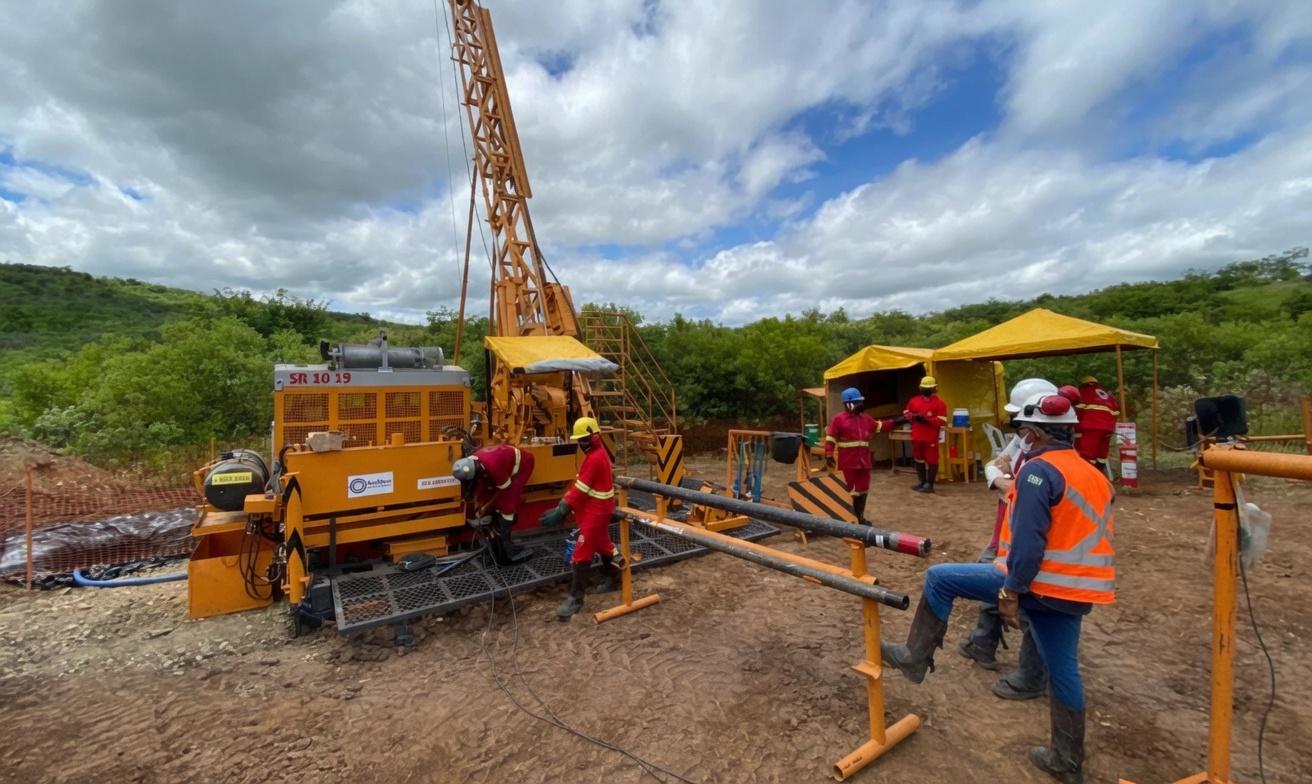
- ValOre has doubled the Pedra Branca resource from 1 million to 2.2 million ounces since its 2019 acquisition through 20,000 metres of drilling, with mineralisation extending along an 80-kilometre trend within a 50,000-hectare land package representing significant expansion potential beyond the current resource base.
ValOre Metals' Pedra Branca project represents a compelling investment opportunity at the intersection of structural supply constraints, growing demand fundamentals, and jurisdictional scarcity in the platinum group elements sector. With CEO Nick Smart bringing proven PGE development credentials from Anglo American Platinum and De Beers, the company is transitioning from exploration to development with clear milestones designed to unlock substantial asset value.
The company controls 2.2 million ounces of palladium and platinum resources in northeastern Brazil, a jurisdiction outside the traditional PGE-producing regions that dominate global supply. Smart emphasised the significance of this positioning:
"Finding an ore body outside of those jurisdictions is challenge number one and we're obviously fortunate to be sitting on one of those assets at the moment in Brazil."
This geographical advantage becomes increasingly relevant as geopolitical considerations influence supply chain security for critical minerals.
Strategic Development Timeline & Technical De-risking
ValOre is executing a structured pathway toward production, with 2026 positioned as a transformational year. The company has engaged Lycopodium, a specialised minerals processing engineering firm, to lead preliminary economic assessment work targeting completion by year-end. Simultaneously, metallurgical test work through University of Cape Town's Centre for Minerals Research is advancing to establish optimal processing routes for Pedra Branca's ore characteristics.
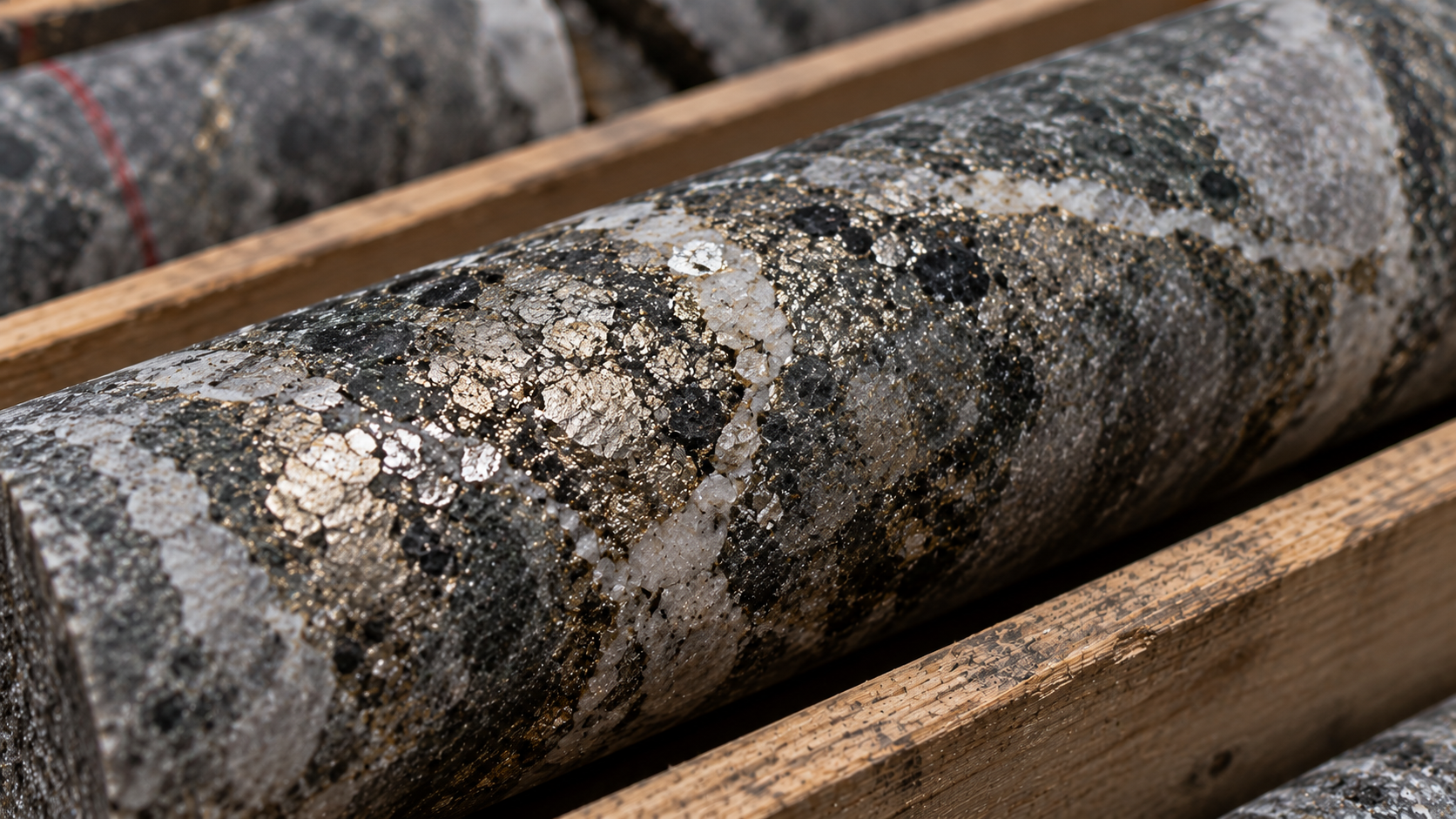
The deposit's geological structure provides inherent economic advantages. Near-surface mineralisation in the first 30 metres represents weathered, oxidised material that tends toward higher grades, whilst deeper fresh rock contains more standard sulphide material amenable to conventional flotation processing. Smart noted:
"Our deposit is structured such that most of the high-grade material is the near surface material. So it is right up at surface. We get into it early. Obviously that's a benefit in terms of economics. So you get your cash flow up front and helps the project economics for sure."
This geological configuration enables open-pit mining rather than complex underground development, reducing capital intensity and execution risk. The core deposits contain approximately 1.1 million ounces within a concentrated area, providing the foundation for initial mining operations and processing plant location.
Institutional-Grade Technical Partnerships
ValOre's selection of technical partners reflects Smart's commitment to institutional-standard development processes. University of Cape Town represents the premier global centre for PGE processing expertise, drawing on South Africa's concentration of 90% of global PGE reserves and the associated technical knowledge base. Smart explained the rationale:
"University of Cape Town through their centre of minerals research has got some of the best experts in the world for platinum & palladium processing. So we are very happy with the team that we're working with there."
Lycopodium's engagement brings minerals processing project development experience across multiple jurisdictions, with particular expertise in concept-level studies examining plant sizing, processing techniques, mining economics, and market routes. The preliminary economic assessment (PEA), followed by pre-feasibility and feasibility studies in 2027-2028 incorporating infill drilling to upgrade resource classification. This will evaluate optionality across these parameters to determine optimal project configuration, with accuracy typically in the plus-or-minus 30-40% range appropriate for concept-stage evaluations.
The metallurgical programme is advancing on two parallel tracks corresponding to the deposit's ore characteristics. Weathered material requires oxidised ore processing routes, whilst fresh rock utilises standard flotation concentration. Large-scale sample campaigns have been dispatched to University of Cape Town for expanded test work, with results expected through 2026 to inform the engineering basis for plant throughput, power requirements, and water consumption.
Interview with Chief Executive Officer, Nick Smart
Resource Scale & Production Potential
The 2.2 million ounce resource represents conservative estimation given drilling density. ValOre has completed 20,000 metres of drilling since acquisition, supplementing approximately $50 million in historical expenditure by previous owner Anglo American Platinum. The resource has doubled from the 1 million ounces present at acquisition, with mineralisation extending along an 80-kilometre trend within the 50,000-hectare land package suggesting further expansion potential.
Smart characterised current resource definition as a relatively small part of the total mineralised system, whilst emphasising sufficiency for engineering study purposes:
"Even at 2.2 million ounces, we're pretty comfortable with the size of that resource to be able to take that forward for the engineering study."
Additional exploration drilling is budgeted for 2026 to test prospective targets along the mineralisation trend. At current platinum prices exceeding $2,000 per ounce, the 2.2 million ounce resource represents approximately $4 billion in contained metal value. Smart indicated production potential of 150,000-200,000 ounces annually over a 10-15 year mine life, representing significant operating scale for a PGE development project outside traditional producing regions.
Jurisdictional Advantages & Permitting Strategy
Brazil's classification of platinum and palladium as critical minerals provides federal-level support for Pedra Branca's advancement. The state of Ceará, whilst not traditionally a major mining jurisdiction, has demonstrated receptiveness to the project's development. Smart observed supportive engagement from local government seeking federally backed critical minerals projects meeting national guidelines.
Brazil has introduced trial mining licensing processes enabling early-stage production through demonstration plants before full-scale operations. ValOre is examining this fast-track permitting route, which would allow proof-of-concept production from high-grade near-surface material whilst advancing full licensing applications. Smart explained:
"It's a route to be able to get early stage production and in many ways it helps a company like ours. You can prove that the project works. You prove the impact of the work that you're doing, even before you go up to full scale."
Market Fundamentals & Supply-Demand Dynamics
The PGE sector faces structural supply constraints concurrent with sustained demand. Smart emphasised multi-year fundamentals:
"We see growing demand for platinum & palladium. There are some real structural constraints to bringing more supply on. So we see multi-year gap in terms of that balance between demand & supply."
This supply-demand imbalance stems from geological concentration in South Africa, Russia, and Zimbabwe, combined with the difficulty of finding economic deposits elsewhere.
Contrary to earlier narratives of declining relevance for PGE metals, particularly as electric vehicle adoption challenges internal combustion engine demand for autocatalysts, Smart noted changing perspectives as the automotive transition timeline has moderated expectations, whilst platinum demand from jewellery and investment products continues growing. The scarcity of development-stage assets positions Pedra Branca favourably as investors and end-users seek supply diversification outside geopolitically concentrated traditional sources.
The Investment Thesis for ValOre Metals
- Pedra Branca represents rare jurisdictional diversification with 2.2 million ounces of PGE resources in Brazil outside the South Africa-Russia-Zimbabwe concentration that controls over 95% of global reserves, addressing critical minerals supply chain security concerns as federal classification provides governmental support and established infrastructure reduces development costs.
- The year-end 2026 preliminary economic assessment represents a major value inflection catalyst that will establish project economics and development pathway, whilst ongoing metallurgical test work through University of Cape Town addresses key technical risks and Brazil's trial mining licensing enables potential early-stage production before full-scale operations.
- Production potential of 150,000-200,000 ounces annually over a 10-15 year mine life from $4 billion in contained metal value demonstrates significant operating scale, with near-surface high-grade weathered material enabling early cash flow generation.
- Multi-year structural gaps between constrained PGE supply and sustained demand across automotive, industrial, and investment applications support pricing fundamentals, whilst the limited global pipeline of development-stage projects outside traditional jurisdictions positions Pedra Branca favourably for investor capital and strategic offtake partnerships.
- Mineralisation extending along an 80-kilometre trend within a 50,000-hectare land package provides substantial exploration upside, with management characterising the current 2.2 million ounce resource as representing a relatively small part of the total system whilst core deposits of 1.1 million ounces provide sufficient foundation for initial mining operations.
- Conservative resource estimation reflects 20,000 metres of ValOre drilling supplementing approximately $50 million in historical expenditure whilst strong community support and federal government engagement minimises permitting execution risk.
Macro Thematic Analysis: The PGE Supply Deficit
The platinum group elements sector faces a fundamental structural challenge: concentrated geological endowment in jurisdictions experiencing declining production coinciding with sustained demand across automotive, industrial, and investment applications. South Africa holds approximately 90% of global PGE reserves, with Russia occupying the second position and Zimbabwe third. This concentration creates supply chain vulnerabilities as geopolitical considerations increasingly influence critical minerals sourcing decisions.
Traditional PGE-producing regions face operational challenges limiting supply growth. South African operations contend with aging infrastructure, increasing depths, rising costs, and periodic labour disruptions. Russian supply faces sanctions risk and market access constraints. This production concentration, combined with geological scarcity of economic deposits elsewhere, creates a structural supply deficit as existing mines deplete without sufficient replacement projects advancing through development pipelines.
Against this backdrop, development-stage PGE projects outside traditional jurisdictions command strategic premium. Brazil's positioning as a mining-friendly jurisdiction with established legal frameworks, whilst lacking current PGE production infrastructure, creates opportunity for first-mover developments to establish processing routes and market relationships. Federal classification of platinum and palladium as critical minerals signals governmental recognition of strategic value, potentially facilitating permitting processes and attracting development capital. The combination of geological prospectivity, regulatory support, and established mining sector expertise positions Brazil favourably for PGE sector growth as global supply diversification accelerates.
TL;DR
ValOre Metals is advancing Brazil's Pedra Branca project with 2.2 million ounces of palladium and platinum resources toward a year-end 2026 preliminary economic assessment. Having engaged University of Cape Town for metallurgical test work and Lycopodium for engineering studies, the project offers rare jurisdictional diversification outside South Africa-Russia-Zimbabwe concentration, with near-surface open-pit mining targeting 150,000-200,000 ounces annually over 10-15 years. Brazil's critical minerals classification and trial mining licensing provide governmental support and fast-track permitting pathways. Production potential from $4 billion contained metal value addresses structural supply deficits in a market with limited development-stage projects, whilst 80-kilometre mineralised trend provides exploration upside beyond current resource base.
FAQs (AI-Generated)
Pedra Branca represents one of the few platinum and palladium development projects advancing outside South Africa, Russia, and Zimbabwe—jurisdictions that control over 95% of global PGE reserves. This jurisdictional diversification addresses critical minerals supply chain security concerns as traditional producing regions face operational challenges including aging infrastructure, increasing depths, geopolitical risks, and sanctions exposure. With only a handful of PGE development projects globally, Pedra Branca's 2.2 million ounce resource in mining-friendly Brazil positions ValOre uniquely to address structural supply deficits as existing mines deplete without sufficient replacement capacity.
The primary catalyst is delivery of a preliminary economic assessment by year-end 2026, which will establish project economics, production parameters, and development pathway. This study builds on ongoing metallurgical test work through University of Cape Town addressing processing routes for both weathered oxidised material and fresh sulphide ore, with results expected through 2026. Lycopodium's engineering work will define optimal plant sizing, throughput requirements, and infrastructure needs. Parallel to the PEA, ValOre is advancing trial mining license applications enabling potential early-stage demonstration plant production whilst progressing full permitting processes. Additional exploration drilling is budgeted to test targets along the 80-kilometre mineralised trend.
Brazil's trial mining licensing provides a fast-track permitting pathway enabling early-stage production through demonstration plants before full-scale operations commence. This allows ValOre to prove project viability and processing routes using high-grade near-surface material whilst advancing comprehensive licensing applications for full production. The approach reduces technical risk by validating metallurgical assumptions at commercial scale, generates early cash flow to support development costs, and demonstrates project impact to regulators and communities before large-scale capital deployment. CEO Nick Smart noted company's scaling to full production targeting 150,000-200,000 ounces annually.
The 2.2 million ounce resource at current platinum prices exceeding $2,000 per ounce represents approximately $4 billion in contained metal value. Management indicates production potential of 150,000-200,000 ounces annually over a 10-15 year mine life, representing significant operating scale for a PGE project outside traditional jurisdictions. Core deposits containing 1.1 million ounces provide sufficient foundation for initial operations, whilst near-surface high-grade weathered material enables early cash flow generation supporting project economics. Open-pit mining configuration reduces capital intensity compared to underground development, whilst established infrastructure including paved highway access and four-hour proximity to Fortaleza's deep-water port minimises development costs.
Mineralisation extends along an 80-kilometre trend within ValOre's 50,000-hectare land package, with CEO Nick Smart characterising the current resource as representing a relatively small part of the total mineralised system. ValOre has doubled the resource from 1 million ounces at 2019 acquisition through 20,000 metres of drilling, supplementing approximately $50 million in historical expenditure by previous owner Anglo American Platinum. Additional drilling budgeted for 2026 targets prospective areas along strike, with resource expansion potential beyond the core deposits that form the basis for initial mining operations. The combination of proven exploration success and substantial land position provides meaningful upside beyond the current resource supporting the preliminary economic assessment.
Analyst's Notes





Subscribe to Our Channel


.jpg)




Stay Informed


