




Magna Mining Reports Multi-Metal Drill Intercepts at Levack Mine as Restart Preparations Advance



Magna Mining reports high-grade copper intercepts at Levack Mine while advancing underground development ahead of a planned H2 2026 production restart.
- Drill hole MLV-26-14A W1 returned 23.2% copper, 5.6% nickel, 21.4 g/t (grams per tonne) of platinum, palladium, and gold combined, and 225.0 g/t silver over 2.4 metres at approximately 976 metres of drilling depth.
- Multiple copper-rich massive sulphide veins (densely packed zones of metal-bearing minerals) were intersected over roughly 175 metres of drilling depth within the R2 Footwall Zone.
- The new drill results are consistent with Magna's structural model and interpreted similarities with the nearby Morrison Footwall Copper-Platinum Group Metals Deposit, located 600 metres to the southwest.
- Underground development has reached key milestones, including a completed 540-foot ramp connection linking the 3900 Level to the 3600 Level drift, reopening approximately 1.4 kilometres of previously inaccessible underground access.
- A Preliminary Economic Assessment (PEA) for the Levack Mine, a study that estimates the economic potential of a mining project, is targeted for completion in Q3 2026, with a restart decision anticipated in the second half of 2026.
Magna Mining Inc. (TSXV: NICU | OTCQX: MGMNF | FSE: 8YD) is a Canadian-based producing copper, nickel, and Platinum Group Metals mining company with assets located in the world-class Sudbury mining district of Ontario, Canada. The company's primary producing asset is the McCreedy West Mine, supported by a portfolio of fully permitted, past-producing properties including Levack, Crean Hill, Podolsky, and Shakespeare. Magna is focused on continued production, exploration, and near-term development across its asset base to unlock long-term shareholder value.
High-Grade Copper-Rich Massive Sulphide Vein Intersections
The most notable result from Magna's latest drilling at Levack comes from drill hole MLV-26-14A W1, which returned 23.2% copper, 5.6% nickel, 21.4 g/t of platinum, palladium, and gold combined, and 225.0 g/t silver over 2.4 metres at approximately 976 metres of depth. The same hole also intersected a second interval returning 10.7% copper, 1.5% nickel, 14.7 g/t platinum-palladium-gold, and 67.1 g/t silver over 2.1 metres, with a higher-grade sub-interval of 29.6% copper over 0.7 metres contained within it. These intervals are described as massive sulphide veins, naturally occurring concentrations of sulphide minerals that carry commercially meaningful quantities of metal.
A separate drill hole, FNX6083-W5, returned 5.7% copper, 13.7% nickel, 11.2 g/t platinum-palladium-gold, and 28.0 g/t silver over 0.4 metres at approximately 1,118 metres of depth. While narrower in width, the result adds to the multi-metal character of the R2 Footwall Zone and complements the additional assay results from this hole first reported in February 2026.
Drill hole MLV-26-14A W1 was drilled above and to the east of the earlier hole MLV-25-14A, which had previously intersected nickel-rich mineralisation in the upper levels of the R2 Footwall Zone. The vein widths in MLV-26-14A W1 ranged from 0.7 to 2.4 metres in downhole width, and together with the earlier hole, the results are contributing to a clearer picture of how mineralisation is distributed across the R2 Footwall Zone.
R2 Footwall Zone Exploration and Structural Model Development
Drill hole MLV-26-14A W1 was designed to test the eastern boundary of the R2 Footwall Zone, targeting steeply angled veins along an interpreted north-south oriented geological structure. By intersecting multiple copper-rich veins across approximately 175 metres of drilling depth, the results support Magna's structural model for the zone.
Dave King, SVP Exploration and Geoscience at Magna, stated:
"The new drillhole intersected multiple copper rich veins over approximately 175 metres downhole and supports Magna's structural model and interpreted similarities with the controlling structures within the Morrison Footwall Cu-PGE Deposit. Understanding the structural controls is key to efficiently delineating footwall vein deposits in Sudbury's North Range and identifying areas where more significant mineralization can occur within thicker vein orientations."
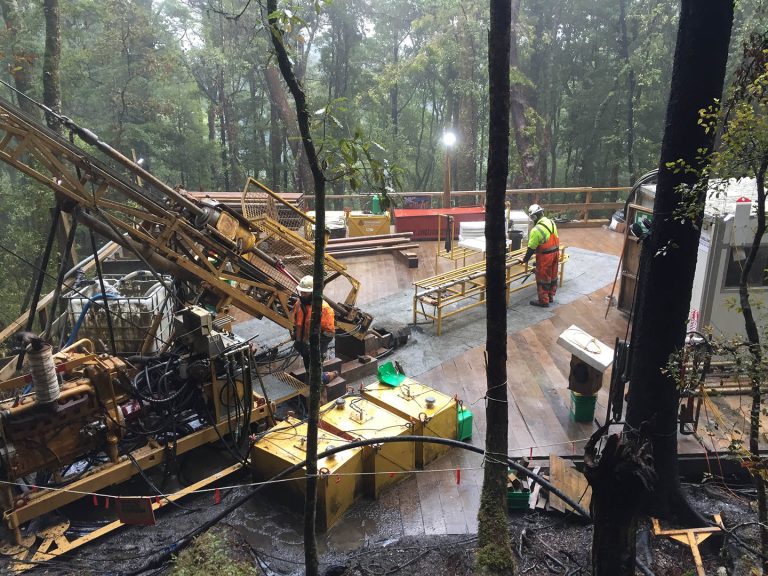
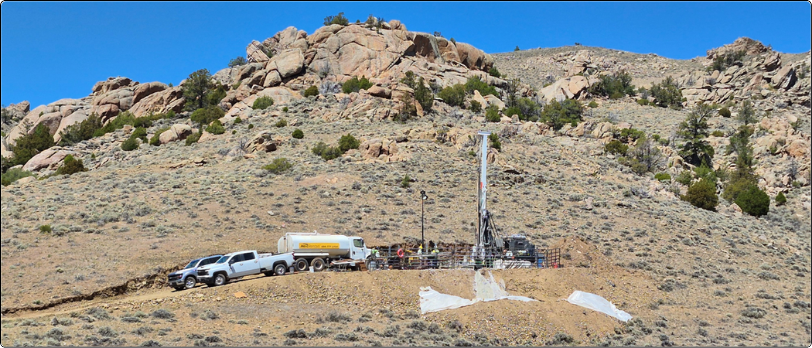
At the Morrison Deposit, located 600 metres to the southwest, thicker, higher-grade massive sulphide veins are typically found in the extensional spaces (areas where rock stretches and opens up) between north-south oriented bounding structures. Magna's current interpretation is that the R2 Footwall Zone may follow similar structural controls, as suggested by the multiple veins encountered in MLV-26-14A W1. A follow-up surface drill hole is now underway to test what is interpreted to be a comparable extensional environment approximately 25 to 30 metres west of the intercepts in MLV-26-14A W1.
Underground drilling from a newly established platform on the 1800 Level has also commenced to test the R2 Footwall Zone from more direct angles. Once rehabilitation of the 2650 Level is complete, a diamond drill will be mobilised near the No. 3 shaft to define the upper portion of the R2 Zone and test additional targets within the footwall of the No. 3 Orebody. Magna has indicated it will continue both surface and underground drilling at Levack through the remainder of 2026.
Levack Mine Development Progress and Restart Preparations
Site activity at the Levack Mine has scaled up over the past six months, with additional personnel and equipment deployed across exploration and development activities.
Jeff Huffman, Chief Operating Officer at Magna, stated:
"Site activity at the Levack Mine has increased significantly over the past six months, with additional personnel and equipment deployed to support project advancement. During this time, notable progress has been made, including the restart of underground mine development as part of preparations for a future return to production. Project and maintenance teams have been actively assessing site infrastructure, defining project scopes, and developing execution plans for 2026."
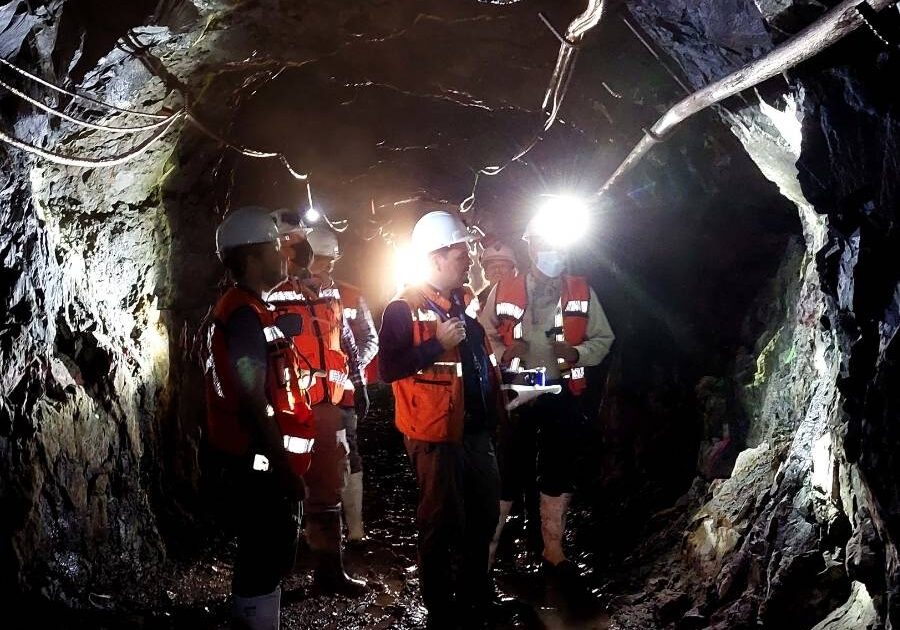
A key development milestone was reached in late February when 540 feet (165 metres) of underground tunnelling resulted in a completed connection between the 3900 Level ramp and the 3600 Level drift, which links Levack's No. 2 shaft to Vale's adjacent Coleman Mine to the east. This connection provides Vale with secondary emergency access through Levack's infrastructure and re-establishes Magna's access to over 4,500 feet (approximately 1.4 kilometres) of underground workings to the east. Separately, 360 feet (110 metres) of new development on the 1800 Level is providing access into the Intermediate Orebody, with a ramp connection now within 688 feet (210 metres) of the 1600 Level. Other mineralised zones including the Main Orebody and the No. 7 Zones are proximal to the 1800 Level.
On the infrastructure side, a comprehensive assessment of the production hoist plant for the No. 2 shaft has been completed and recommissioning work has commenced. The company has stated it will prioritise and accelerate work to bring the hoist back into service to support the hoisting of ore and waste upon the anticipated restart of the Levack Mine. A PEA based on the NI 43-101 Mineral Resource Estimate (an independently verified estimate of in-ground mineral quantities) published for Levack in November 2025 is currently underway, with completion targeted for Q3 2026.
Outlook
Magna's near-term activity at Levack is focused on several concurrent workstreams. On the exploration side, a follow-up surface drill hole testing the extensional environment west of the MLV-26-14A W1 intercepts is underway, underground drilling from the 1800 Level has commenced, and rehabilitation of the 2650 Level will provide an additional platform near the No. 3 shaft. On the development side, crews will mobilise to the 2950 Level to commence a 1,140-foot (347-metre) exploration drift toward the R2 Footwall Zone upon completion of the 1800 Level work. The PEA expected in Q3 2026 represents the next formal milestone for the project, with a production restart decision anticipated in the second half of 2026.
Analyst's Notes





Subscribe to Our Channel





Stay Informed


