Valkea Targets Lapland's Next Gold Discovery With January 2027 Drilling


Valkea Resources applies the Ikkari team's base of till method to 50 km of Lapland structure, with C$9.6M cash and January 2027 drilling on 5 gold targets.
- Valkea Resources is applying the base of till drilling method behind Rupert Resources' 2020 Ikkari discovery to a 350 km² land package in Finland's Central Lapland Greenstone Belt.
- Management estimates only about 800 m of roughly 50 km of regional structure on Valkea's licenses has been drilled.
- Metallurgical tests at Aarnivalkea West returned 93.5% to 96% gold leach extractions, but the roughly 1 g/t composite is below the 1.5 g/t grade the company is pursuing.
- C$9.6 million in cash funds base of till drilling and diamond drilling on at least 5 targets, starting around January 5, 2027, with first assays targeted for February.
- While Valkea has no resource base at Kari, the winter programme is the first test of the new targeting data.
Finland's Central Lapland Greenstone Belt has not produced a new gold discovery since Rupert Resources drilled Ikkari in 2020. Valkea Resources (TSXV:OZ) is targeting the next one with members of the team behind that find, applying the same base of till (BoT) drilling method to a 350 square kilometer (km²) land package pegged before Ikkari was found. The company holds C$9.6 million in cash, has diamond drilling scheduled to restart in the first week of January 2027, and has metallurgical test work showing its most advanced prospect is non-refractory.
The investment case is a probability argument. Valkea's licenses contain an estimated 50 kilometers (km) of regional structure, and management estimates that only about 800 meters (m) of that structure has been drilled. The company plans to test at least 5 new targets this winter, allocating capital by evidence of grade and structural scale.
Base of Till Drilling as the Targeting Filter
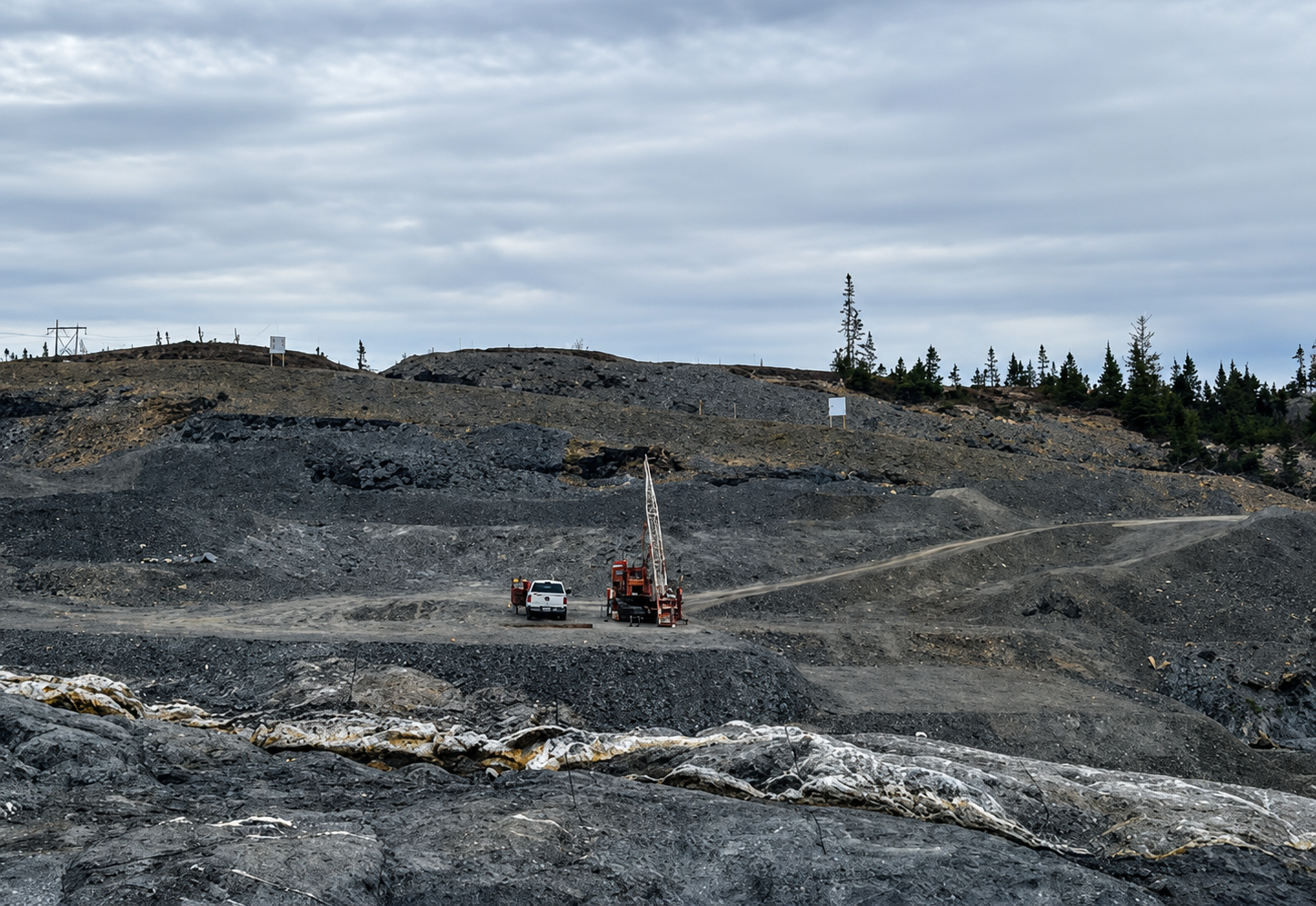
Glacial till between roughly 5 m and 40 m thick covers bedrock across the district, and it carries little information about what lies beneath it. BoT drilling penetrates that cover and samples the eroded bedrock interface, ideally 5 to 10 centimeters above the point where the reconnaissance rig reaches refusal. The samples contain chips of weathered rock, which distinguishes them from the till above.
Chief Executive Officer of Valkea Resources, Thomas Credland, attributed the district's dry spell to sampling quality:
"I think one of the reasons that there's been no discoveries since 2020 is that there hasn't been the same kind of focus, attention to detail and quality control on these base of till programmes."
Credland estimated that a BoT hole costs about one-tenth of a diamond hole. At Rupert, roughly 10,000 BoT points preceded the discovery, and Ikkari was the sixth target drilled. Valkea plans at least 5,000 BoT points this season on 400 m centers. High-resolution drone magnetic surveys flown in September, interpreted by the in-house team, are being used to narrow the target list before diamond drilling.
Rupert's Discovery Team Regroups
Credland was involved in assembling Rupert Resources' property package in northern Finland and in the financings and work programmes that led to Ikkari. Dr. Charlotte Seabrook, Rupert's former Group Exploration Manager, joined Valkea as Technical Advisor in January, at the same time as Credland. Dr. Chris Bonson, a structural geologist with more than 25 years of consulting experience who worked on Ikkari and other Central Lapland deposits, is Vice President Exploration. Credland said the field team is being built with Finnish geologists who worked at Rupert, the same setup used there.
Valkea's ground was pegged in 2015 and 2016, ahead of the Ikkari discovery and the land rush that followed. The company reports the second-largest landholding in the district after Agnico Eagle, across 6 principal project areas.
Credland linked the district's slowdown to land tenure. Rupert could not secure more ground to repeat its methodology elsewhere, and after a few years, he said, companies stopped exploring and focused on dividing up the ground around Ikkari.
Interview with Thomas Credland, President & CEO of Valkea Resources
Kari Results Reset the Data Set
Kari, the first new target, was selected for its all-season access and a BoT anomaly from a historic survey. Valkea completed 1,275 m in 5 holes in August, 2.5 km south of known mineralization at Aarnivalkea West. Of the 5 holes, 3 intersected disseminated sulfide mineralization in deformed host rocks, but no significant gold was assayed.
The drilling showed that historic BoT sampling had been collected above the true bedrock interface. The previous BoT sampling was 3 m shallower than target depth on average. Credland said the result confirms the need for a new BoT data set. The BoT rigs have been running for almost 3 months, and the targets drilled from January will come from that new data. Kari is one of 12 prospects on the Paana project, which covers 4 license areas totalling 93 km².
Aarnivalkea West: Non-Refractory Metallurgy & a Grade Hurdle
Aarnivalkea West is Valkea's most advanced prospect, with gold mineralization drilled over about 1.3 km of strike. Previous owner S2 Resources made the initial discovery around the time Ikkari was drilled, then withdrew its expatriate team during COVID. Credland said the prospect has only been drilled to about 200 m vertical depth, and the company holds 10,000 to 15,000 m of existing core for its in-house structural geologist to reinterpret.
Alfred H Knight (UK) tested a roughly 60-kilogram composite grading about 1.0 grams per tonne (g/t) gold. Whole ore leach testing returned extractions of 93.5% to 96%, including 95% at a grind size of 106 microns (µm). Batch flotation at coarser grinds of 75 to 150 µm recovered about 93% to 96%. The Bond Ball Mill Index of 10.8 kilowatt-hours per tonne classifies the material as soft to medium hardness.
Credland recalled being told early in his time in Finland that local mineralization would be low grade and double refractory, as at Agnico Eagle's Kittilä mine. Ikkari proved to have straightforward metallurgy, and the Aarnivalkea West results point the same way. Credland said 1 g/t is now roughly industry-average grade, and Valkea is pushing for material above 1.5 g/t.
Winter Drilling Catalysts
New BoT results began arriving the week before the interview, and another month of data is expected before the first diamond hole is sited. Diamond drilling is scheduled to start around January 5, 2027, with first assays targeted for February. Each target receives up to 1,500 m, and a second 1,500 m follows only if assays justify it. The company plans up to 10,000 m of diamond drilling on new targets, initially at Paana.
Credland said grade is the first test, but he also looks for structural complexity, deformation, and broad zones of mineralization in host rocks that can trap gold at scale. He pointed to early Ikkari holes that showed 50 to 60 m of trace mineralization within heavily deformed rock. Those holes lacked headline numbers but indicated the larger system.
The Investment Thesis for Valkea Resources
- Valkea's leadership and technical team include contributors to the Ikkari discovery, and they are applying the same base of till methodology to ground pegged before that discovery.
- The licenses contain an estimated 50 kilometers of regional structure, of which management estimates only about 800 meters has been drilled.
- Metallurgical test work on a composite of about 1 gram per tonne from Aarnivalkea West returned leach extractions of 93.5% to 96%, indicating non-refractory mineralization.
- Cash of C$9.6 million at the end of September 2026 funds the base of till programme and drilling on the first 5 targets this winter.
- Investors can monitor first assays from the January 2027 diamond drilling, targeted for February, as the first test of the new targeting data.
Valkea offers exposure to a team with a discovery record in a belt that has not yielded a new discovery since 2020. Results from the first quarter of 2027 will show whether the new base of till data produces drill targets of meaningful size.
Macro Thematic Analysis
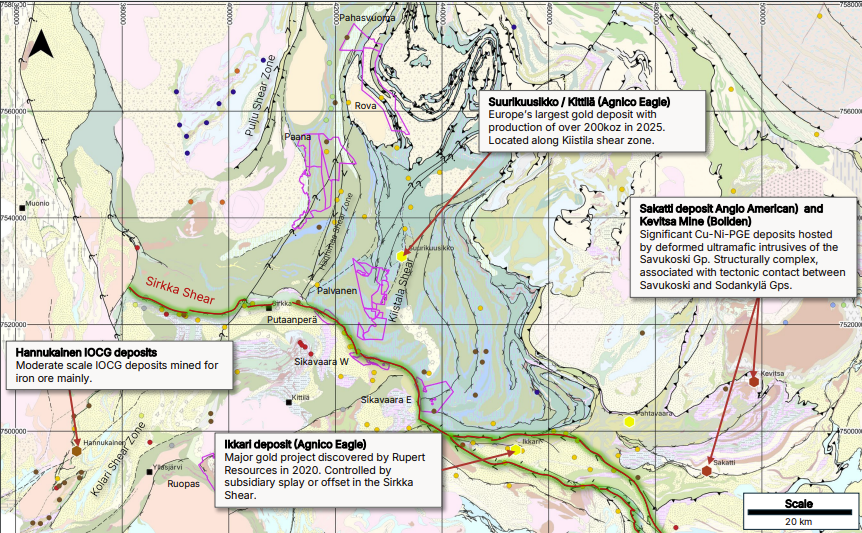
Central Lapland has a recent precedent for how a discovery gets valued. In April 2026, Agnico Eagle agreed to acquire Rupert Resources for 0.0401 of an Agnico share per Rupert share, representing approximately C$12.00, plus a contingent value right of up to C$3.00 in cash tied to milestones over a 10-year term. Agnico pointed to more than 20 years of operating experience in Finland, including the nearby Kittilä mine, and described the deal as part of a comprehensive consolidation of the broader Central Lapland Greenstone Belt. Valkea says that during Credland's tenure at Rupert, the company's market capitalisation increased from approximately C$4 million to more than C$1.2 billion. A belt with an active major buyer, few recent discoveries and straightforward metallurgy is the setting Valkea's winter programme will be judged against.
TL;DR
Valkea Resources is applying the base of till drilling method behind Rupert Resources' 2020 Ikkari discovery to a 350 km² land package in Finland's Central Lapland Greenstone Belt, pegged before Ikkari was found. Management estimates only about 800 m of roughly 50 km of regional structure has been drilled. Metallurgical tests at Aarnivalkea West returned 93.5% to 96% gold leach extractions, but the roughly 1 g/t composite is below the 1.5 g/t grade the company is targeting. With C$9.6 million in cash, Valkea plans diamond drilling on at least 5 new targets from around January 2027, with first assays targeted for February.
FAQs (AI-Generated)
Analyst's Notes





Subscribe to Our Channel






Stay Informed