North American Permit Reforms Create a Faster Path to New Gold Supply



Shorter mining approval timelines in Canada and the US could accelerate gold project development, improve cash flow timing, and increase project valuations.
- British Columbia cut major mine application timelines by 35% and preliminary screening from 89 to 31 days, shortening the regulatory pathway toward construction.
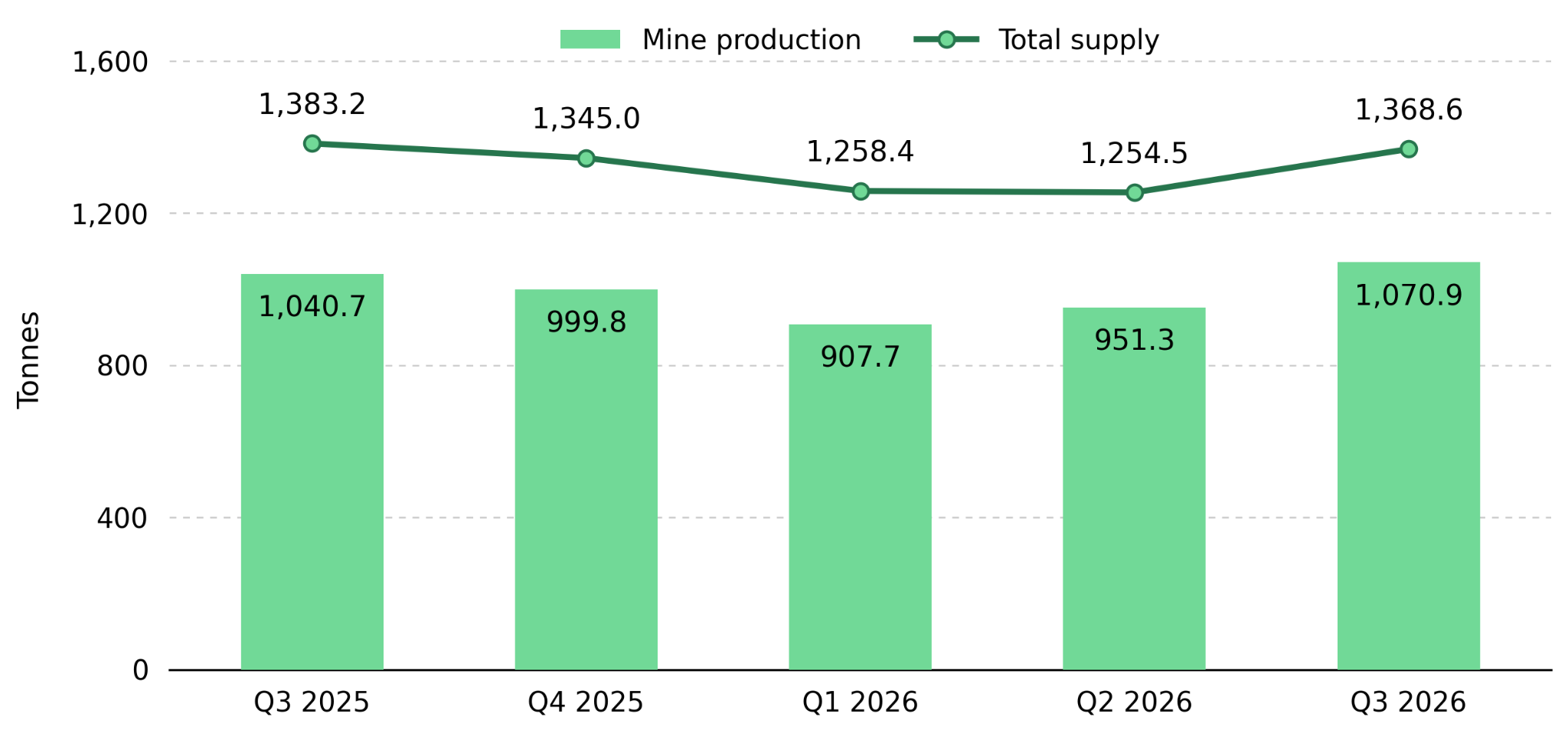
- Global gold mine production rose 3% year over year to a third-quarter record of 1,071 tonnes in 2026, but an 8% decline in recycling contributed to a 1% fall in total supply.
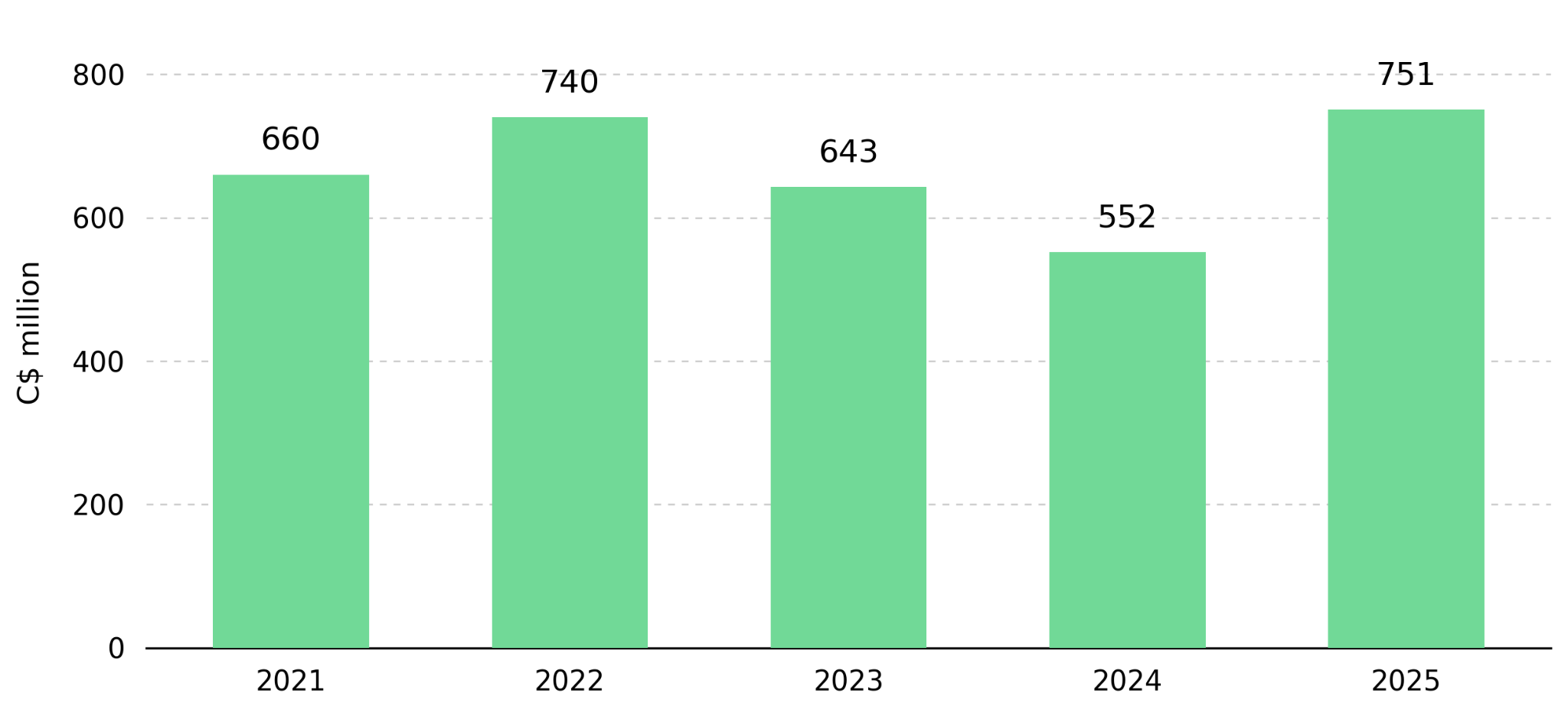
- Following record mineral exploration spending of C$751 million in 2025, British Columbia introduced 40-, 90-, and 140-day permitting timelines in April 2026, enabling drilling programs to be scheduled around defined regulatory deadlines.
- Nevada accounted for approximately 64% of US gold mine production in 2025, making coordinated federal permitting within the state particularly relevant to future domestic gold supply.
- Global gold demand reached 3,881 tonnes in the first nine months of 2026, nearly matching the 2025 record of 3,884 tonnes, while central bank purchases rose 6% to 675 tonnes, sustaining the demand rationale for new mine development.
North American Permit Reforms Could Shorten 16-Year Mine Lead Times
British Columbia's April 2026 Look West progress report recorded a 35% reduction in major mining application timelines through coordinated environmental assessments and permitting reviews. The province also completed permitting for a gold-silver mine reopening within nine months, more than 40% faster than previous processes, under a consent-based decision-making agreement with the Tahltan Nation. In the US, Executive Order 14241, issued in March 2025, explicitly included gold among minerals eligible for expedited federal permitting, creating opportunities to shorten approval timelines for qualifying projects.
S&P Global's July 2026 analysis of 232 mining assets places the average discovery-to-production timeline at 16 years, with 203 operating mines averaging 14 years and 29 nonoperating projects facing estimated timelines of nearly 30 years. Permitting delays and permit revocations were the leading causes of production postponements for mines scheduled to commence operations from 2026 onward, pushing projected start dates back by up to five years for some projects. Shorter approval periods could bring established gold deposits into commercial production sooner, reducing the time between development expenditure and revenue generation.
The World Gold Council's (WGC) Gold Demand Trends report for the third quarter of 2026 recorded a 3% year-over-year increase in global mine production to 1,070.9 tonnes, while recycled gold supply fell 8% to 314.5 tonnes. Combined with net producer de-hedging of 16.8 tonnes, lower recycling volumes contributed to a 1% decline in total gold supply to 1,368.6 tonnes despite record third-quarter mine production.
British Columbia's Permit Timelines Could Advance Resource Expansion
British Columbia's mineral exploration expenditure reached a record C$751 million in 2025, increasing 36% year over year. The province issued nearly 35% more exploration permits than in 2024 and allocated an additional C$3 million to expand permitting staff and First Nations consultation capacity. Its 2025/26 Annual Service Plan Report recorded a reduction in major mine application screening from 89 to 31 days, allowing projects with complete applications to enter formal regulatory reviews sooner.
The province's Mineral Exploration Permitting Improvements framework, effective April 1, 2026, establishes decision timelines of 40 days for qualifying surface exploration, 90 days for more extensive programs, and 140 days for complex activities, including underground exploration. Applications exceeding these timelines are escalated to the Chief Permitting Officer, who has 14 calendar days to issue a decision or discuss subsequent steps. Defined review periods allow drilling expenditure to be scheduled around regulatory decisions.
Tudor Gold announced its maiden Preliminary Economic Assessment for the Goldstorm Deposit at its 80%-owned Treaty Creek Project, outlining projected production of 4.68 million ounces of gold over a 28.25-year mine life. The study estimates a base-case after-tax Net Present Value at a 5% discount rate (NPV5%) of US$2.3 billion and an Internal Rate of Return (IRR) of 20%. The company is targeting receipt of its underground exploration permit to begin excavation in 2027, potentially enabling more efficient drilling to expand higher-grade mineralization.
US Permit Coordination Could Shorten the Path From Drilling to Construction
The US Geological Survey (USGS) estimates US gold mine production at 160 tonnes in 2025, with Nevada accounting for approximately 64% and Alaska contributing another 22%. Approximately 7% of domestic gold production came from processing base metal ores, primarily copper. Federal permitting reforms covering both gold and base metal projects could therefore expand domestic gold supply beyond primary gold mining operations.
The Federal Permitting Improvement Steering Council is expanding coordinated regulatory reviews under Title 41 of the Fixing America's Surface Transportation Act (FAST-41), with a Nevada gold exploration project becoming the 13th mining project to complete federal permitting on March 31, 2026. By July 30, an Alaska gold project became the 61st mining and mineral processing project listed on the Federal Permitting Dashboard under the current administration. Coordinating regulatory reviews across established US mining jurisdictions could reduce delays between resource definition and construction.
P2 Gold expanded the Sullivan Zone southwest through drilling at its Gabbs Gold-Copper Project in Nevada, identifying additional mineralization in areas previously modeled as waste. The company is targeting an updated Mineral Resource Estimate in the fourth quarter of 2026 and completion of its Feasibility Study in the first quarter of 2027, with targeted annual gold production of 150,000 ounces and construction commencement in early 2028.
Joseph Ovsenek, President and Chief Executive Officer of P2 Gold, explains the parallel pursuit of federal and state permits:
"We need our federal permit. Plus, we also need some permits out of the state of Nevada. We're trying to move those all forward in parallel so that everything comes together by the end of 2027."
Completed Mine Permits Reduce Barriers to Construction Financing
The USGS estimates gold reserves of 3,200 tonnes in Canada and 3,000 tonnes in the US, establishing a substantial reserve base for future mine development. According to the WGC and Metals Focus, global average All-In Sustaining Costs (AISC) reached US$1,930/oz in the second quarter of 2026, increasing 22% year over year, the fastest annual increase since the first quarter of 2013. Rising mining costs increase the importance of limiting pre-construction delays, while completed regulatory approvals allow capital commitments to focus on equipment procurement and construction financing.
U.S. Gold Corp. has secured all major permits for its CK Gold Project in Wyoming, with initial construction activities commencing in January 2026. Its March 2026 Feasibility Study estimates a base-case after-tax NPV5% of US$632 million and an after-tax IRR of 27%, with initial capital expenditure of US$394 million. The company is soliciting bids for major equipment and evaluating financing options for further construction.
George Bee, President and Chief Executive Officer of U.S. Gold Corp., discusses the geographic appeal of fully permitted projects:
"We have got a project fully permitted in a jurisdiction where we know the rules of the game. From a geographical and geopolitical standpoint, somebody with assets in a dodgy neighborhood may well want to diversify and have something in a known neighborhood."
Earlier Mine Approvals Could Lift Gold Project Valuations
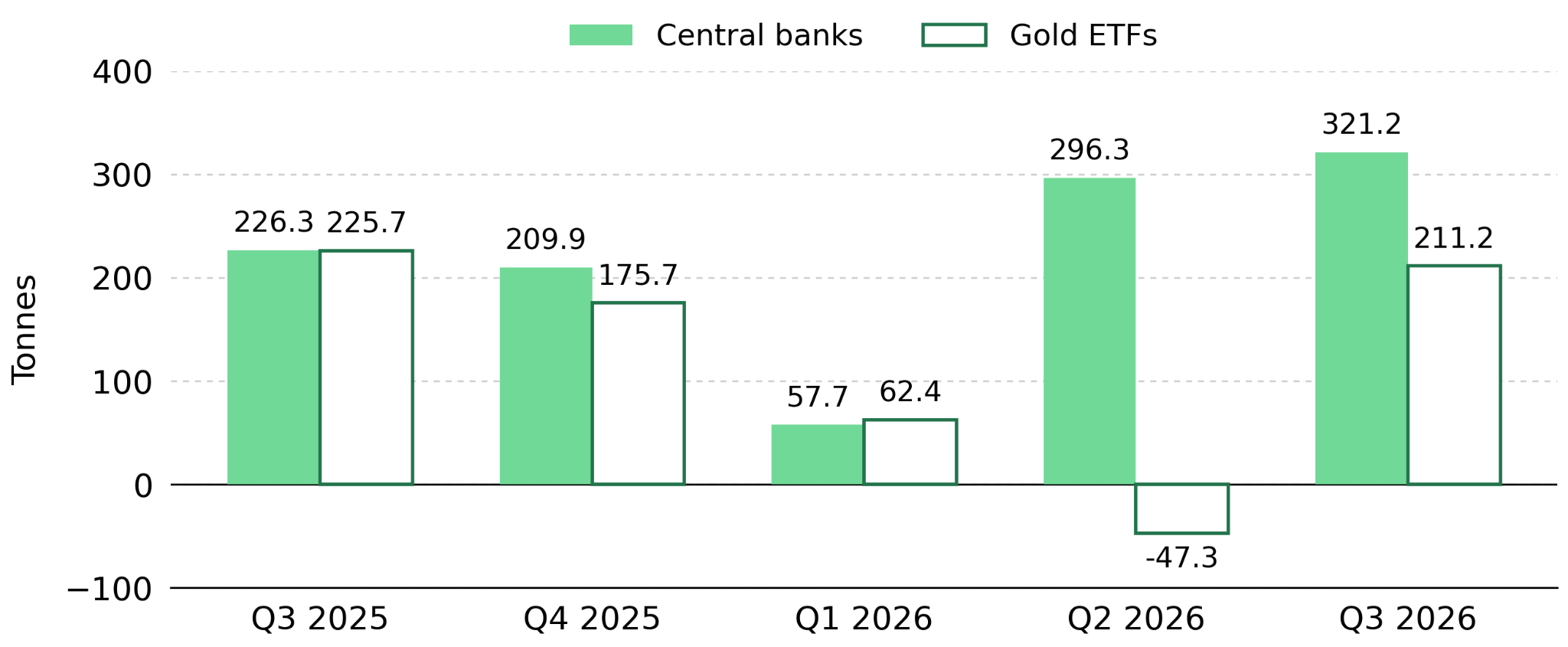
Global gold demand reached 3,881 tonnes during the first nine months of 2026, nearly matching the 2025 record of 3,884 tonnes, while its value reached a record US$566 billion. Central bank purchases increased 42% year over year to 321 tonnes in the third quarter, while demand for physically backed gold Exchange-Traded Funds (ETFs) rebounded, generating US$31 billion in net inflows. Continued demand from central banks and investment funds provides a commercial rationale for committing capital to additional gold production capacity.
Canada's gold mine production increased 22% year over year in the third quarter of 2026, driven by recently commissioned mines and higher output from existing operations, while global mine production grew just 2% during the first nine months of the year. With recycled gold supply remaining subdued, advancing North American gold projects toward production could expand the region's contribution to future global supply.
Against an average mine discovery-to-production timeline of 16 years, British Columbia's 35% reduction in major mine application timelines and expanded US federal permitting coordination address a documented cause of production delays. While gold can provide diversification beyond equities, earlier regulatory approvals could increase gold project valuations by bringing commercial production and positive net cash flows forward without requiring further gold price appreciation.
The Investment Thesis for Gold
- Explorers operating under defined permitting timelines can better coordinate drilling expenditure with regulatory decisions, reducing the risk of capital remaining committed to delayed exploration programs.
- Developers with established project economics and completed regulatory approvals face fewer regulatory barriers to securing construction financing.
- Jurisdictions that coordinate permitting reviews while maintaining environmental protections and Indigenous consultation can reduce regulatory uncertainty surrounding long-term mining investments.
- Shorter development schedules can improve discounted project valuations by bringing potential cash flows forward, introducing a source of economic value beyond exposure to gold price appreciation.
- Sustained institutional gold demand and limited growth in recycled supply create a commercial rationale for advancing economically viable gold projects toward production.
North American permitting reforms introduce a potential source of value in gold mining beyond commodity price appreciation. Sustained institutional demand and limited supply growth create a compelling rationale for advancing established gold projects, while shorter regulatory review periods could reduce the time between capital investment and commercial production. Exposure to North American gold assets therefore offers the opportunity to benefit from both gold's enduring role as a reserve and investment asset and the potential valuation gains associated with earlier cash flow generation.
TL;DR
North American permitting reforms could shorten mine development timelines and unlock additional value in gold projects beyond bullion price appreciation. British Columbia has reduced major mine application timelines by 35% and introduced defined exploration review periods, while US federal permitting coordination is expanding across established mining jurisdictions. With average mine development timelines reaching 16 years and global gold supply declining despite record third-quarter mine production, regulatory efficiency offers a potential pathway to earlier commercial production. Sustained central bank demand and institutional investment strengthen the rationale for new mining capacity, while earlier positive cash flows could improve project valuations under unchanged economic assumptions.
FAQs (AI-Generated)
Analyst's Notes





Subscribe to Our Channel








Stay Informed