




Vizsla Silver's Geotechnical Validation & De-Risking Strengthen Investment Case


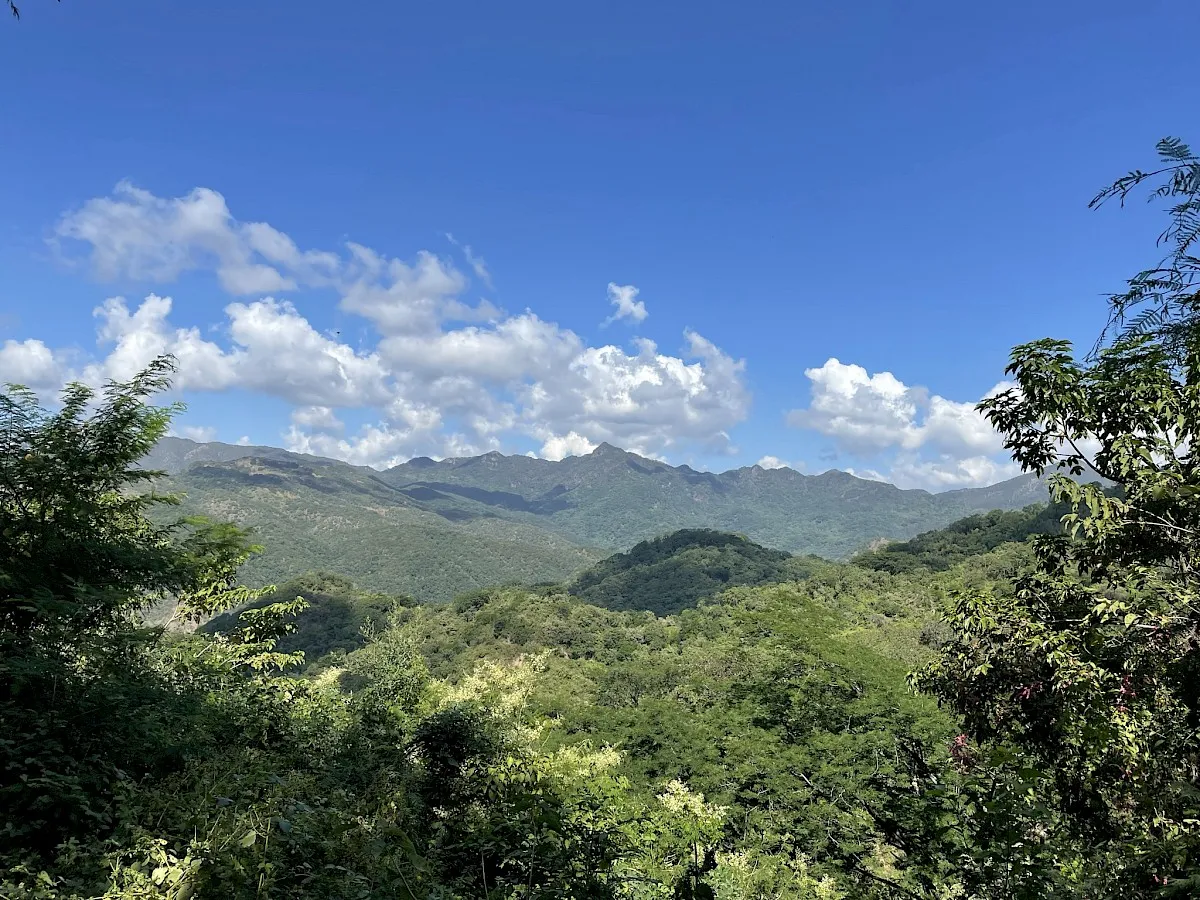
Vizsla Silver's dual-purpose drilling campaign de-risks Panuco with 41.4 Moz AgEq measured resources, $450M cash, and engineering data supporting 2026 production.
- Vizsla Silver’s dual-purpose geotechnical and infill drilling campaign materially reduces underground construction and early production risk.
- 29 oriented holes totaling 10,578 metres provide critical rock mechanics and structural data for the Morgan ramp and 460-level access, directly supporting mine design and sequencing.
- Infill drilling validates 41.4 Moz AgEq at 684 g/t AgEq in the Copala high-grade zone, underpinning early production assumptions with measured resources rather than inferred estimates.
- Strong financial reserves eliminate near-term financing and dilution risk, allowing parallel development and exploration while maintaining execution flexibility.
- Integrated technical, financial, and regulatory de-risking positions Panuco as a tier-1 silver development project entering production during a structurally tight silver market.
Why De-Risking Still Matters at This Stage of the Cycle
De-risking is not a one-time milestone, it is a continuous process that determines whether a project can transition from theoretical economics to repeatable execution. As projects approach construction decisions, the focus for investors shifts decisively away from resource growth headlines toward engineering certainty, cost control, and delivery risk.
For underground mines in particular, unresolved geotechnical uncertainty remains one of the most persistent causes of cost overruns, schedule slippage, and capital destruction. Investors increasingly demand evidence that mine designs are grounded in measured data rather than assumptions, especially for assets slated to deliver early cash flow.
Vizsla Silver’s Panuco project in Sinaloa, Mexico, reflects how late-stage de-risking still adds material value, even after a feasibility study has been completed. The company’s recent dual-purpose drilling campaign goes beyond incremental resource confirmation. It directly supports engineering design, mine planning, and reserves confidence in the areas that matter most in the first years of production.
Rather than treating geotechnical drilling as a regulatory or engineering formality, Vizsla has positioned it as a value-creating exercise, one that simultaneously reduces construction risk and validates grade assumptions embedded in the project’s economic model.
Vice President of Exploration at Vizsla Silver Jesus Velador said:
“We are supporting the construction and mining teams in different ways. We support them obviously with the core logging of geotechnical holes and also with generating geotechnical information for the tailings facility area.”
Baseline Risk Profile: What Needed to Be De-Risked
Prior to recent work, the Panuco project carried several development-stage risks typical of underground epithermal systems. These included uncertainty around underground conditions, rock mechanics, and ramp stability along the proposed Morgan ramp and 460-level access, factors that, without adequate geotechnical data, can lead to construction delays, design changes, or structural failures.
Resource risk was also present. Reliance on inferred and indicated resources introduced grade and tonnage uncertainty, particularly in the high-grade Copala vein targeted for early production. Dense infill drilling was required to upgrade resources to the measured category and validate production assumptions.
From a capital markets perspective, back at this stage, Vizsla faced the standard execution risk of development-stage miners: funding capital-intensive infrastructure without excessive dilution. In parallel, regulatory risk centered on securing the MIA environmental permit in Sinaloa, a key milestone that directly influences construction sequencing and financing certainty. Velador noted:
“We started focusing on de-risking the mineral resource,particularly in the Copala area, where we envision the first years of production for the Panuco project. There was a substantial increase of 43% in the measured and indicated category, and for the first time, we put out a measured resource in the core of the high-grade central portion of Copala”
Technical & Resource De-Risking: Engineering Validation Meets Grade Confirmation
In January 2026, Vizsla completed a 29-hole oriented geotechnical drilling campaign totaling 10,578 metres. This program directly addressed engineering risk by providing critical rock mass characterization data, including RQD, geomechanical parameters, structural orientation, and ground support requirements, for the Morgan ramp and 460-level access. These datasets underpin mine design optimization, safety planning, and construction scheduling.
Importantly, the campaign was deliberately designed as dual-purpose. Nine of the 11 reported holes also functioned as infill drilling, intercepting the Copala vein at 15-50 metre spacing and validating high-grade continuity in early production areas. This integrated approach reduced drilling costs while accelerating both engineering validation and resource upgrades. Velador said:
“Now that the development of the ramp is ongoing to access the Copala high-grade deposit, we are also supporting geologic mapping of the ramp and sampling where we encounter structures or veins along the development.”
Evidence of Technical Mitigation: From Data to Design
The geotechnical and infill results directly anchor assumptions in the November 2025 Feasibility Study, including ore body geometry, grade distribution, and mining method selection. The delineation of 41.4 Moz AgEq in measured resources at 684 g/t AgEq reflects a level of geological confidence typically associated with projects approaching production decisions.
Early identification of ground conditions enables proactive engineering, optimizing ground support systems, ramp gradients, ventilation design, and equipment selection, reducing execution risk and improving cost control. The data also supports tailings facility planning, including foundation stability and seepage control.
Financial De-Risking: Funding Certainty & Execution Flexibility
Vizsla’s financial position materially alters the project risk profile. With US$450 million in cash, the company holds nearly twice the initial capital required in the feasibility study. This eliminates near-term financing risk, avoids dilutive equity raises, and provides a substantial buffer against construction cost inflation, supply chain disruptions, or schedule variability.
Capital adequacy also supports 60,000 metres of exploration drilling in 2026 without compromising construction timelines, allowing simultaneous development and exploration and creating upside optionality funded entirely from existing treasury.
Regulatory & Operational Progress: Predictability & Parallel Advancement
The Manifestación de Impacto Ambiental (MIA environmental permit) expected in mid-2026, remains the critical regulatory milestone. Vizsla operates in Sinaloa, a mining-friendly jurisdiction with established regulatory frameworks and predictable permitting processes. The company’s track record of environmental compliance and community engagement supports confidence in timely approval.
Operationally, Vizsla is executing a dual-track strategy: advancing mine development at Copala-Napoleon while pursuing district-scale exploration.
With 150+ mapped vein targets and only ~30 drilled to date, the Panuco district retains substantial exploration upside that could materially expand project scale and mine life.
Comparative Context - Benchmarking De-Risking Progress
Benchmarking Vizsla Silver against peer development-stage silver projects highlights several differentiators that materially reduce execution risk. Few undeveloped silver assets globally combine measured resources exceeding 40 Moz AgEq at grades above 600 g/t AgEq, placing Panuco in the upper tier of development-stage projects. Vizsla’s 43% year-over-year growth in measured and indicated resources, driven by systematic infill drilling rather than headline resource expansion, reflects a deliberate focus on validating production assumptions that directly support feasibility-level mine planning.
The dual-purpose geotechnical drilling approach represents a methodological differentiator. While many developers conduct geotechnical programs as separate initiatives from resource drilling, Vizsla's integrated design extracts maximum value from each metre drilled. This efficiency advantage compounds over large drilling campaigns, accelerating de-risking timelines while optimizing capital deployment.
From a capital and execution perspective, maintaining cash reserves equivalent to approximately twice initial capital requirements provides a level of financial flexibility that is uncommon among development-stage peers, reducing refinancing and dilution risk while supporting disciplined construction planning. Vizsla’s framework allows residual uncertainty to be addressed methodically as underground access advances, aligning Panuco’s risk profile more closely with Tier-1 development standards.
The Investment Thesis for Vizsla Silver
- Late-Stage De-Risking: Dual-purpose geotechnical drilling materially reduces underground construction risk while validating grade continuity in early production areas, directly supporting mine design and sequencing.
- High-Confidence Early Production: Measured resources of 41.4 Moz AgEq at 684 g/t AgEq at Copala underpin feasibility assumptions around grade, costs, and early cash flow generation.
- Funding Certainty: With $450M in cash, Vizsla eliminates near-term financing and dilution risk, providing flexibility to absorb construction variability while advancing development and exploration in parallel.
- Permitting and Jurisdictional Visibility: Operating in Sinaloa, Mexico, with the MIA permit expected mid-2026, supports predictable development timelines.
- Silver Market Leverage: As silver supply remains constrained, fully funded projects moving toward production planning are positioned to benefit from favorable market conditions.
TL;DR
Vizsla Silver has shifted from development risk to execution readiness. Dual-purpose geotechnical and infill drilling validates high-grade measured resources and reduces underground construction risk, while a fully funded balance sheet eliminates near-term financing and dilution concerns. Combined with predictable permitting in Sinaloa, Panuco is a de-risked silver development project well-positioned for early production in a tight silver market.
FAQ's (AI-Generated)
Vizsla’s dual-purpose geotechnical and infill drilling reduces construction and resource continuity risk. 29 oriented holes totaling 10,578 metres provided critical rock mechanics and structural data, validating 41.4 Moz AgEq measured resources at 684 g/t AgEq. This gives confidence in early production grades and supports engineering design.
With $450M cash, nearly twice the initial capital required, Vizsla avoids near-term financing risk and equity dilution. This allows simultaneous development and exploration programs without compromising schedules, providing investors with execution certainty.
The key milestone is the MIA environmental permit in Sinaloa, expected mid-2026. Vizsla operates in a mining-friendly jurisdiction with stable permitting processes, reducing regulatory uncertainty and supporting timely construction sequencing.
Geotechnical and infill drilling informs ramp design, ground support, ventilation, and tailings facility planning. High-grade continuity confirmation allows production planning based on measured resources rather than inferred estimates, mitigating early-stage operational risk.
Few projects globally combine >40 Moz AgEq measured resources at grades above 600 g/t AgEq, systematic resource upgrading, dual-purpose drilling efficiency, and substantial cash reserves. These factors align Panuco with Tier-1 standards, reducing execution and financing risk compared to peers.
Analyst's Notes





Subscribe to Our Channel





Stay Informed


