




What Simulus Actually Does & Why It Matters to Lifezone's Growth Strategy


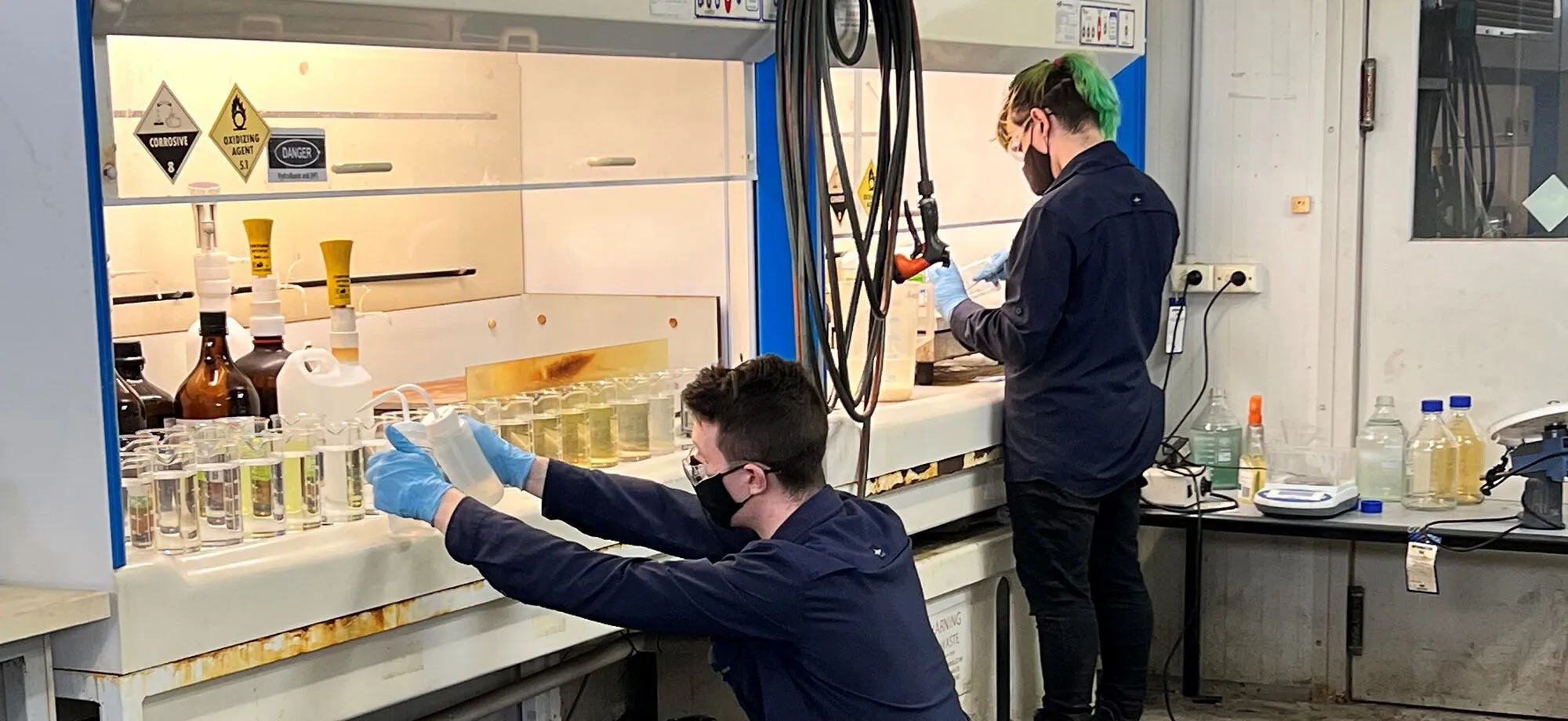
Lifezone's Simulus Laboratory is evolving beyond internal testing, generating third-party revenue while validating Hydromet technology and recycling projects.
- Lifezone Metals’ Simulus Laboratories shifted focus to external revenue-generating third-party technical work during the First Quarter of 2026 while simultaneously completing a 1-tonne pilot test campaign for the US-based PGM recycling project.
- Glencore holds a 6% stake in the PGM Recycling Project with an option to fund 50% of capital expenditure, per Lifezone's January 10, 2024 news release referenced in the company's April 2026 presentation.
- Net cash used in operating activities improved by US$2.0 million year-on-year during the First Quarter of 2026, driven by increased Simulus revenue and lower corporate expenses.
- Lifezone's April 2026 registered direct offering, which raised US$23.3 million in net proceeds, explicitly lists Hydromet research and development at Simulus as a use of proceeds, signalling that the facility's expanded scope is budgeted and planned.
- A final investment decision (FID) for the PGM Recycling Project is targeting the Second Quarter of 2026, with 2 US Department of Energy grant applications submitted in January 2026, totalling a combined federal funding request of US$41.5 million.
What Simulus Actually Does
Simulus Laboratories is Lifezone Metals’ (NYSE: LZM) proprietary hydrometallurgical testing and research facility. Its primary role has been to support engineering, test work, and feasibility processes across Lifezone's project portfolio, most notably the Kabanga Nickel Project in Tanzania and the US-based PGM Recycling Project conducted in partnership with Glencore.
According to the First Quarter 2026 press release, Simulus shifted focus to external revenue-generating third-party technical work, producing US$1.2 million in external sales during the quarter. That figure corresponds directly to the company's total First Quarter revenue line, as disclosed in the financial results summary released on April 30, 2026. The revenue improvement was explicitly attributed to increased third-party technical and laboratory services at Simulus.
The distinction matters for investors. Laboratory revenue at a pre-production mining company is structurally unusual: most junior miners treat research facilities as cost centres rather than revenue contributors. Simulus generating material external income in a single quarter reframes the facility as a semi-independent business unit, not merely a line item under exploration expenditure.
The PGM Recycling Milestone at Simulus
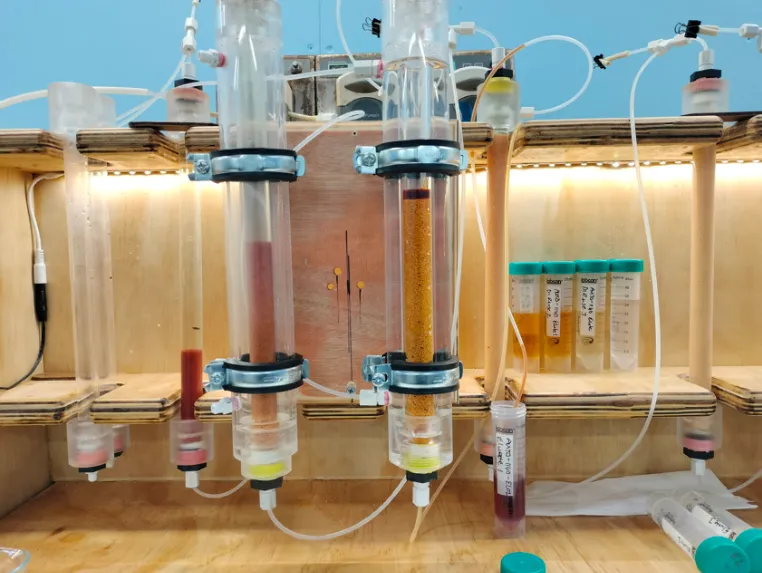
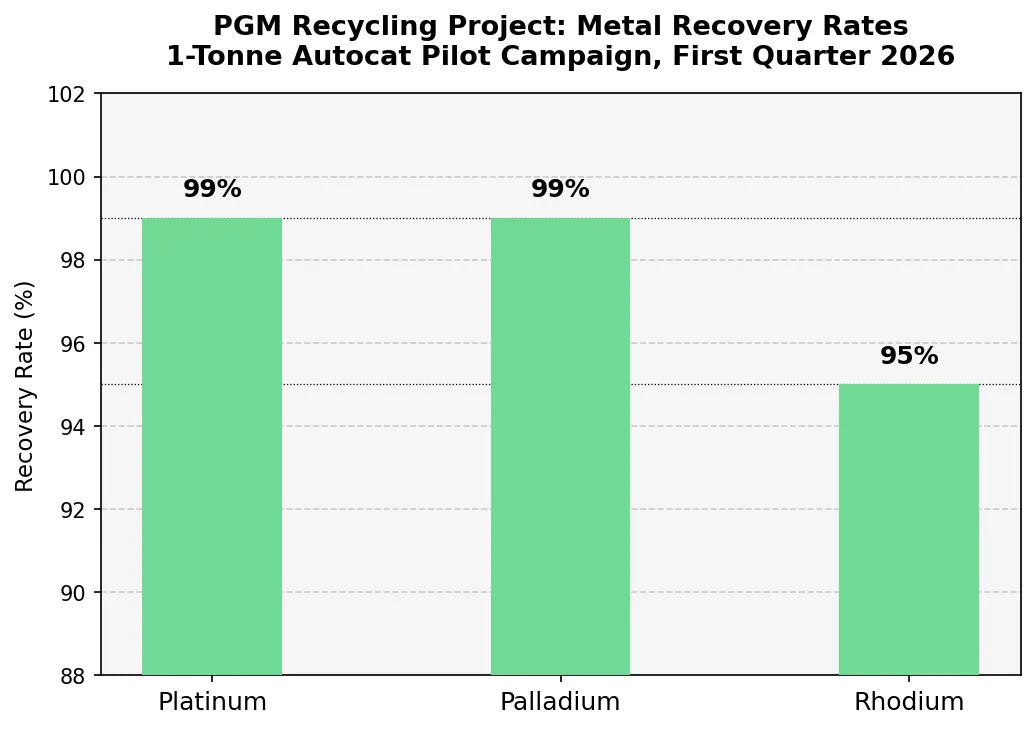
The First Quarter also saw the culmination of a batch locked-cycle and pilot test campaign for the PGM Recycling Project, hosted at Simulus. The campaign involved 1 tonne of US-sourced Autocat material and demonstrated recovery of up to 99% platinum and palladium, and 95% rhodium, with ongoing engineering design and feasibility study (FS) nearing completion, per the First Quarter 2026 press release.
These results carry weight beyond the laboratory. Glencore holds an existing financial stake in the PGM Recycling Project, having invested US$1.5 million for a 6% stake, with an option to fund 50% of project capital expenditure, per Lifezone's January 10, 2024, news release referenced in the company's April 2026 presentation. Pilot results at this scale represent the technical foundation on which any future Glencore option exercise would be assessed. In January 2026, Lifezone Recycling US, LLC submitted 2 non-duplicative applications to the US Department of Energy, targeting a combined US$41.5 million in federal funding, supported by a private cost-share commitment of US$24 million.
The Chief Financial Officer of Lifezone Metals, Ingo Hofmaier, contextualised the breadth of activity during the quarter:
"First Quarter 2026 was another period of disciplined execution as we advanced the Kabanga Nickel Project, opened up new avenues with the Musongati Nickel Project Exclusivity Agreement and produced our first ever Platinum, Palladium and Rhodium from the US PGM Recycling Project from pilot testwork at Simulus, while maintaining focus on capital efficiency, liquidity and long-term value creation."
That framing places the Simulus milestone alongside Kabanga project progress and the Musongati exclusivity agreement as a coordinated set of strategic advances, rather than treating it as a standalone laboratory result.
Revenue Contribution in the Context of Lifezone's Liquidity Position
The Simulus revenue figure carries more weight when viewed in the context of Lifezone's broader financial position. As of March 31, 2026, the company reported a cash balance of US$15.3 million, down from US$20.1 million at the end of 2025. Net cash used in operating activities was US$1.2 million in the First Quarter of 2026, a US$2.0 million improvement over the First Quarter of 2025, driven by increased Simulus revenue and lower corporate expenses, as stated in the First Quarter 2026 financial results summary.
Since the quarter closed, Lifezone has materially strengthened its liquidity position. As of April 29, 2026, the company reported total liquidity of approximately US$68 million, comprising approximately US$50 million in cash and US$18.3 million in undrawn amounts under the Taurus Mining Finance senior secured bridge loan facility. The US$25 million registered direct offering, which closed on April 23, 2026, at US$4.40 per share, generated net proceeds of US$23.3 million, with stated uses including Hydromet research and development at Simulus, exploration activities in Burundi and Tanzania, the PGM Recycling Project, and general working capital.
Hofmaier noted the capital management approach:
"Also in April, we further strengthened our cash position by closing a registered direct offering that raised $25.0 million in gross proceeds. These funds will help us to position the business for the next stage of growth while remaining mindful of market conditions and disciplined capital allocation."
A Dual-Purpose Asset: Cost Offset & Technology Validation
The Simulus activity during the First Quarter of 2026 illustrates a layered function within Lifezone's development model. On one level, it is a test and validation facility for Lifezone's proprietary Hydromet Technology, most recently demonstrated through the 1-tonne pilot test campaign involving US-sourced Autocat material for the PGM Recycling Project. In parallel, it is generating incremental external revenue by shifting its focus toward third-party technical work, with external sales reaching US$1.2 million during the quarter, compared to US$0.2 million in the same period in 2025. The explicit inclusion of Hydromet research and development at Simulus in the stated use of proceeds from the April 2026 registered direct offering confirms that the facility's expanded scope is budgeted and planned, not incidental.
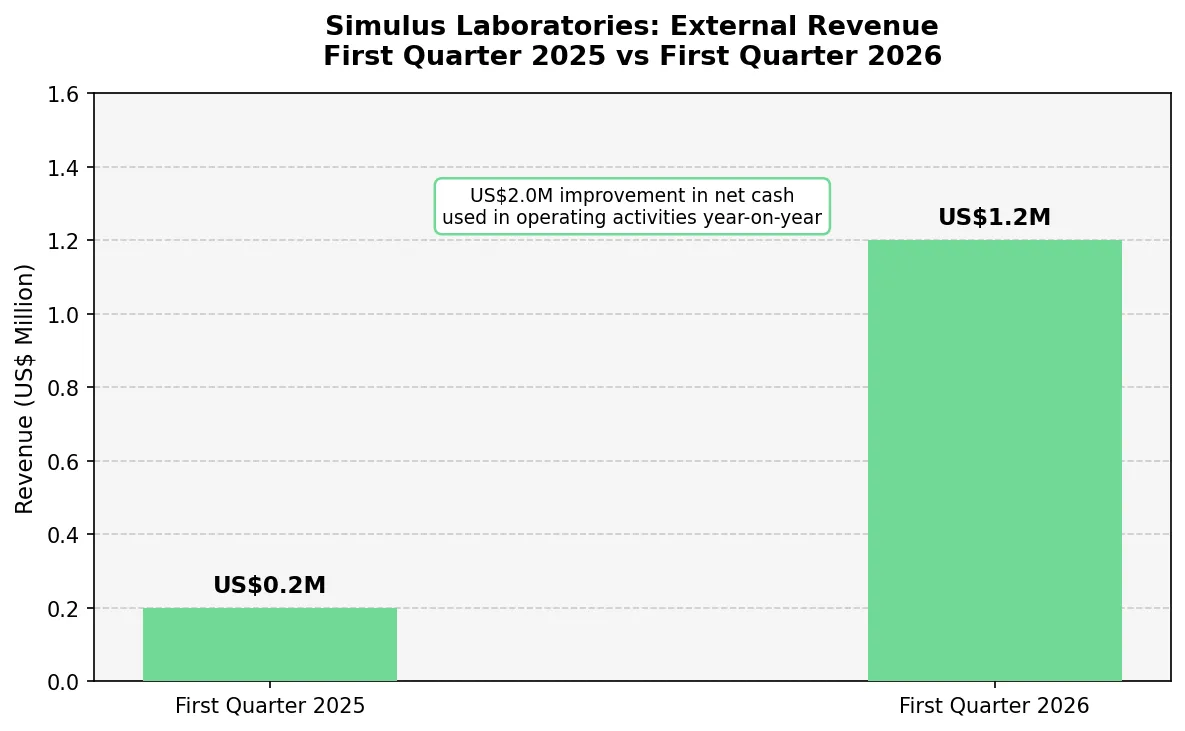
For a company that is pre-final investment decision (FID) on its flagship project and actively managing runway to a Kabanga FID, a laboratory generating US$1.2 million in a single quarter through external work represents a measurable offset to operating expenses.
What to Watch Next
The engineering design and FS for the PGM Recycling Project were described as nearing completion in the First Quarter 2026 disclosure, with FID targeting the Second Quarter of 2026. Confirmation of that decision, along with any update on the Glencore option exercise, would represent a concrete step from pilot-scale validation toward committed capital deployment, given that Glencore holds an option to fund 50% of the project's capital expenditure.
The outcome of the 2 US Department of Energy grant applications, totalling a combined federal request of US$41.5 million, supported by a private cost share of US$24 million, remains a material variable. Given the scale of the federal funding request relative to the project's development requirements, a successful award would materially reduce the capital Lifezone and Glencore would need to deploy from their own balance sheets to advance the project toward commercial activities.
Simulus revenue for the Second Quarter of 2026 will also indicate whether the First Quarter figure represents a sustainable run-rate and whether external revenue continues alongside the Hydromet research and development activity funded through the April 2026 registered direct offering, a useful signal of how the facility's dual function evolves as the PGM Recycling Project approaches a financing decision.
FAQs (AI-Generated)
Analyst's Notes





Subscribe to Our Channel



.png)
.png)




Stay Informed


