




New Listing ICG Silver & Gold Targets Dual Epithermal System in Nevada With June 2026 Drill Program


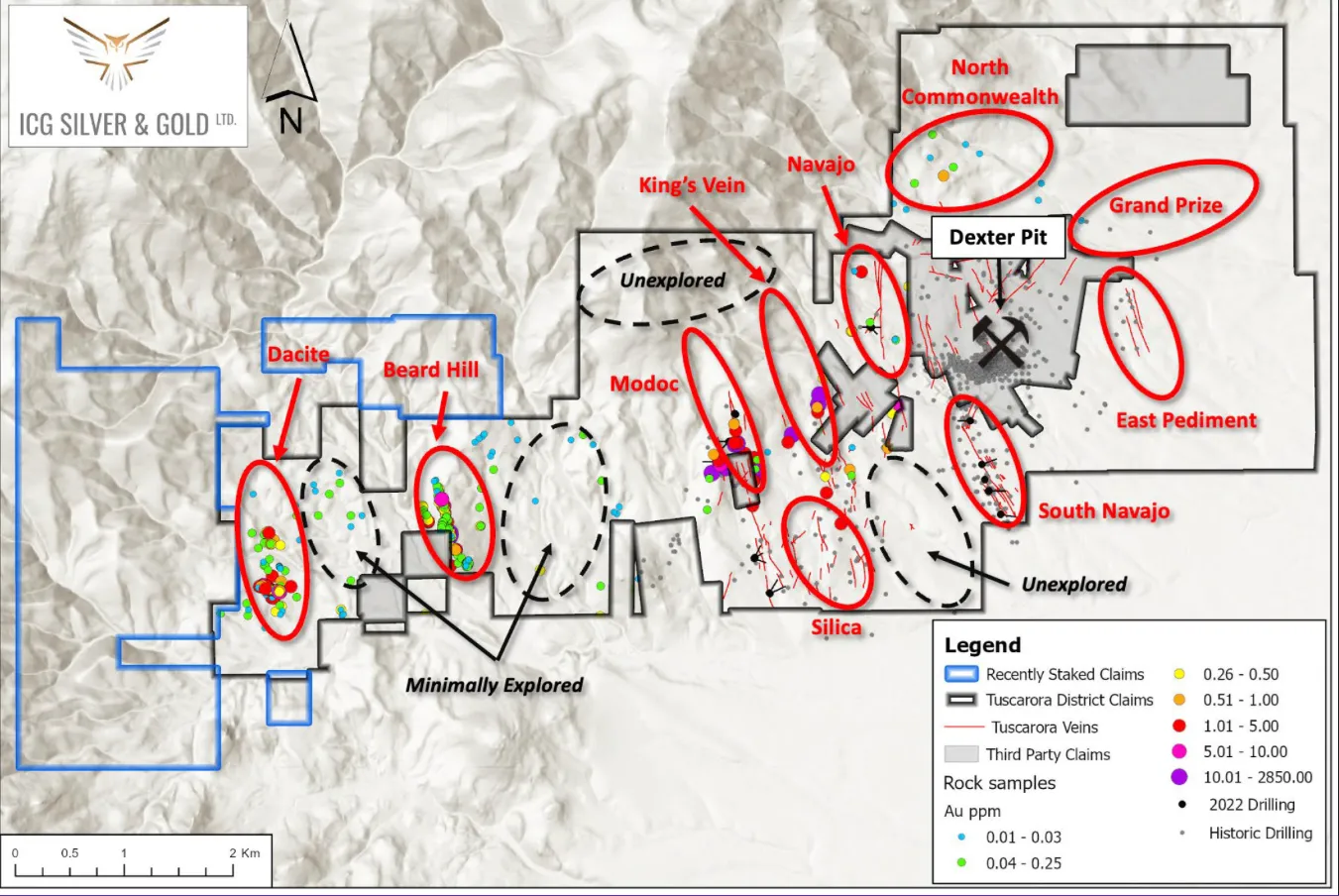
ICG Silver & Gold lists on the CSE with a 10,000-acre Nevada project, dual gold-silver epithermal thesis, and a Phase 1 drill program set to begin June 2026.
- ICG Silver & Gold listed on the CSE on March 31, 2026, as a spin-out from American Pacific Mining, which retained just under 10% of the company while American Pacific shareholders received approximately 18% of ICG, giving the newly listed explorer a clear structural foundation and built-in shareholder base from day one.
- The company's flagship Tuscarora District project in northeastern Nevada covers 10,000 contiguous acres at the intersection of the Independence and Carlin Trends, supported by an inherited dataset of 5,000 samples, 25,000 metres of historical drilling, and 130 line-kilometres of geophysics completed by previous operators.
- ICG's core geological thesis proposes a dual-system interpretation that previous operators did not pursue, supported by rock samples returning up to approximately 38,000 g/t silver at certain targets.
- A Phase 1 RC drill program of between 3,000 to 6,000 metres is scheduled to commence in June 2026, targeting both known zones at South Navajo and Modoc and previously undrilled blue-sky targets including East Pediment, Grand Prize, and King's Vein, with assay results expected in August 2026.
- ICG entered the market with ~C$6.2 million raised, sufficient to fund the full Phase 1 program with management citing capital efficiency and return on invested capital as guiding principles for drill targeting.
ICG Silver & Gold Corp. (CSE:ICG) is a newly listed exploration company focused on silver and gold in northeastern Nevada. Having completed its CSE listing on March 31, 2026, the company is now preparing to drill its flagship Tuscarora District project, a 10,000-acre land package at the intersection of two of Nevada's most significant mineralized trends. With a Phase 1 drill program set to begin in June 2026, ICG is entering the market at a time of sustained institutional and retail interest in precious metals exploration, particularly in established North American mining jurisdictions.
Project Overview: The Tuscarora District
The Tuscarora District is located approximately one hour north of Elko in northeastern Nevada at the intersection of the Independence and Carlin Trends which are two geological corridors known for significant gold mineralisation. Nearby reference points include Jerritt Canyon, Midas, and Goldstrike, all of which represent active or historical mining operations in the immediate region.
The project covers 10,000 contiguous acres and benefits from a substantial body of historical work: 5,000 samples, 25,000 metres of drilling, and 130 line-kilometres of geophysics. Previous operators include Novo Resources and American Pacific Mining, both of which generated meaningful drill results. Novo Resources intersected just over 4 metres grading 127 g/t gold at the South Navajo target. American Pacific followed with additional high-grade intercepts at the same zone.
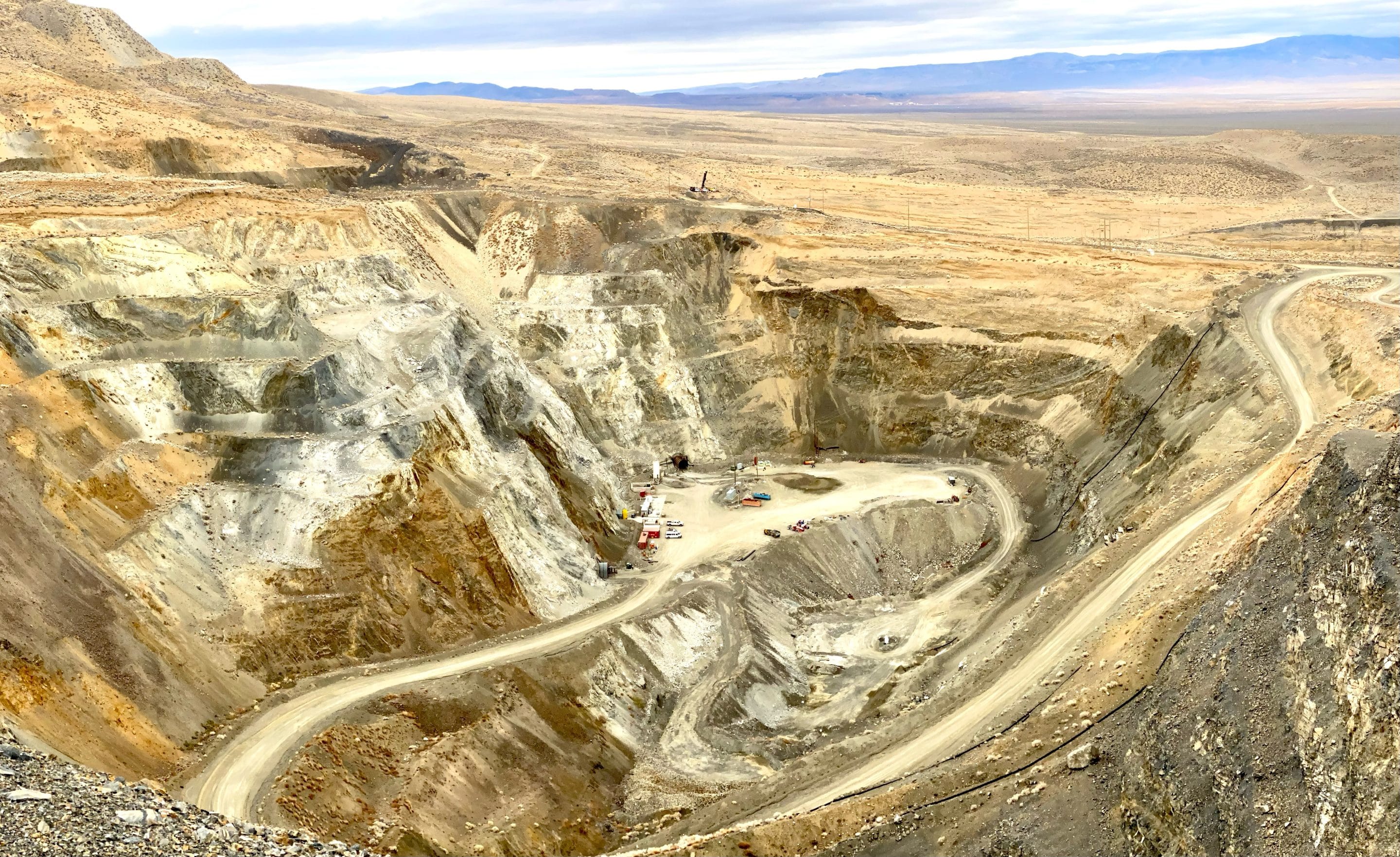
Just off the property boundary sits the former Dexter open-pit mine, which produced approximately 50,000 ounces of gold and 250,000 ounces of silver in the early 1990s. Management views the Dexter pit as an analogue for the style of mineralisation they expect to find on the Tuscarora property, and it sits on trend with the South Navajo and Modoc targets.
The Dual Epithermal Thesis
The defining feature of ICG's geological interpretation is the hypothesis that Tuscarora hosts two distinct but spatially overlapping epithermal systems: one gold-dominant and one silver-dominant, arranged in a layered or convergent configuration. Steven Sirbovan, President & CEO of ICG Silver & Gold, explained:
"We think the system, it's a bit of a layer cake. There's different systems converging on the project. We have a higher-grade gold system and a higher-grade silver system on the project that are converging, in different layers."
Previous operators treated the project primarily as a gold system. ICG's management believes this framing understated the silver potential. Rock samples collected at certain targets have returned values approaching 38,000 g/t silver, a result that management points to alongside geophysical anomalies near surface as evidence for a discrete silver system.
Phase 1 Drill Program: Targets and Timeline
ICG plans to commence a Phase 1 RC drill program at Tuscarora in June 2026. The program is scoped at a minimum of 3,000 metres and up to 6,000 metres, with drill pads currently in the permitting process. The company has noted that all necessary permits are already in place for the program to proceed while management is also considering whether to incorporate a core drilling component, which would increase cost per metre but provide additional geological data.
The program has two primary objectives: first is confirmation and infill drilling at South Navajo and Modoc zones where historical drilling has already returned meaningful results to establish a foundation for an eventual mineral resource, and second and arguably more significant objective is exploration of previously undrilled or under-drilled targets across the district, including East Pediment, Grand Prize, King's Vein, and North Navajo. These targets have been identified through surface sampling and geophysics but have not yet been tested with systematic drilling.
Hole depths are expected to range between 200-300 metres, targeting shallow mineralisation consistent with the open-pittable model the company is evaluating. Assay results are anticipated in August 2026. A more detailed exploration plan is expected to be released to the market within weeks of the interview.
Interview with Steven Sirbovan, President & CEO of ICG Silver & Gold
Corporate Background and Team
ICG Silver & Gold was formed as a spin-out from American Pacific Mining, which has retained just under 10% of the company. American Pacific's shareholders received approximately 18% of ICG as part of the transaction. The company is led by Steven Sirbovan, President, CEO, and Director, who brings 13 years of capital markets experience including roles in investment banking at Echelon Capital Markets (now Ventum) and earlier work at Waterton Global Resource Management, a private equity firm with a focus on Nevada mining assets.
The board and advisory structure includes Jeff Swinoga, a capital markets professional with senior finance experience at Barrick Gold and board roles at multiple mining companies including Torex Gold and Hudbay Minerals; Gary Baschuk, an independent director with over 40 years of industry experience including time at Barrick's Gold Strike operation in Nevada; and Korbon McCall, VP of Exploration, a US geologist who has worked with American Pacific on the Tuscarora project and provides direct continuity with the historical dataset.
Capital Position and Path to Resource
ICG raised approximately C$6.2 million in connection with its listing. At an RC cost of approximately US$250 per metre, the company has sufficient capital to complete the full Phase 1 program with funds remaining for ongoing corporate and geological work. Management has stated clearly that capital efficiency is a priority and that drill targeting has been designed with return on invested capital in mind.
Sirbovan described the company's near-term priorities with a focus on tangible market re-rating:
"We believe that with our Phase 1 program we can certainly accomplish that, and then we can really start to pave the way for that mineral resource, which is also going to be the next leg."
The path to a mineral resource is expected to draw primarily on the South Navajo and Modoc datasets, supplemented by Phase 1 results. Management has framed the mineral resource as a medium-to-long-term objective, with Phase 1 results expected to shape both the scope and sequencing of that work.
The Investment Thesis for ICG Silver & Gold
- Funded near-term catalyst: The Phase 1 drill program (3,000–6,000 metres RC) commences June 2026 with assays expected in August, providing a defined newsflow window within the current calendar year.
- Underexplored silver angle in an established gold district: Previous operators focused on gold; ICG's dual epithermal thesis introduces a silver exploration dimension that is supported by rock samples returning up to ~38,000 g/t silver at surface — a dimension that has not previously been drilled systematically.
- Substantial inherited dataset reduces early-stage risk: 25,000 metres of historical drilling, 5,000 samples, and 130 line-kilometres of geophysics provide a meaningful geological foundation before a single dollar of Phase 1 capital is spent.
- Proximity to past-producing mines: The Dexter pit (50,000 oz Au, 250,000 oz Ag) sits just off the property boundary on trend with key targets — a direct analogue for the style and scale of mineralisation being pursued.
- Nevada jurisdiction: Nevada consistently ranks among the top mining jurisdictions globally for regulatory stability, infrastructure access, and permitting predictability.
- Capital efficiency is a stated priority: At ~US$250/m for RC drilling and a C$6.2 million cash position, ICG has sufficient runway to complete Phase 1 and generate meaningful results without immediate dilution pressure.
- District-scale optionality: The 10,000-acre consolidated land package provides exploration runway well beyond Phase 1, with multiple named targets — East Pediment, Grand Prize, King's Vein, North Navajo — that have geophysical and sampling support but remain undrilled.
- Actionable consideration: Investors with appetite for early-stage precious metals exploration should monitor Phase 1 drill results closely. The August 2026 assay window represents a near-term re-rating opportunity if results confirm the dual-system thesis. Position sizing should reflect the binary nature of exploration-stage drilling outcomes.
Nevada Precious Metals Exploration in a High-Price Environment
The case for silver and gold exploration in Nevada is currently supported by a convergence of macro factors that have rarely aligned so clearly. Gold prices have sustained levels well above US$4,000 per ounce for an extended period, while silver has drawn increasing investor attention both as a monetary metal and as a critical input in solar panel manufacturing and electrical infrastructure. This dual demand profile for silver in industrial and investment is a structurally different dynamic than the one that defined the metal through much of the previous decade, and it has materially altered the economics of silver-focused exploration projects.
Nevada itself remains one of the world's premier mining jurisdictions. The Carlin Trend and the broader Battle Mountain–Eureka corridor have collectively yielded tens of millions of ounces of gold, and the state's established infrastructure, experienced workforce, and relatively predictable regulatory environment continue to attract both major producers and junior explorers. For companies like ICG Silver & Gold, operating in this environment means that the geological risk — rather than jurisdictional risk — dominates the risk profile, which is the more manageable of the two.
Sirbovan encapsulated the opportunity:
"This is an advanced exploration asset that has had a lot of work done on it in the past. The capital we are raising is going into the ground to get us to places where we can materially rerate this stock."
In a market where gold majors are facing grade decline at aging assets and where M&A appetite for quality exploration projects in tier-one jurisdictions remains strong, advanced exploration assets with district-scale potential are increasingly well-positioned to attract attention. For investors, the current macro backdrop — elevated gold and silver prices, renewed institutional interest in North American exploration assets, and constrained major-producer pipelines — creates a favourable environment in which well-targeted junior drilling programs can generate meaningful market response.
TL;DR
ICG Silver and Gold is a newly listed Nevada explorer with a 10,000-acre project at the intersection of the Independence and Carlin Trends. The company's thesis is that the Tuscarora District hosts two overlapping gold and silver epithermal systems that previous operators underexplored, with surface samples returning up to approximately 38,000 g/t silver at certain targets. Backed by 25,000 metres of historical drilling and a C$6.2 million treasury, ICG plans to drill 3,000 to 6,000 metres starting June 2026 with assays expected in August. The key near-term question is whether Phase 1 drilling validates the dual-system interpretation across the district's undrilled targets.
Frequently Asked Questions (FAQs) AI-Generated
ICG Silver and Gold Corp. is a CSE-listed precious metals exploration company focused on the Tuscarora District in northeastern Nevada. It completed its listing on March 31, 2026, as a spin-out from American Pacific Mining.
Management's interpretation is that the project hosts two overlapping epithermal systems — one gold-dominant and one silver-dominant — arranged in a layered configuration. Previous operators focused almost exclusively on gold, leaving the silver system largely untested. Surface rock samples at certain targets have returned values approaching 38,000 g/t silver, supported by geophysical anomalies near surface.
ICG plans to drill between 3,000 and 6,000 metres of RC holes commencing June 2026, targeting both established zones (South Navajo and Modoc) and previously undrilled targets (East Pediment, Grand Prize, King's Vein, North Navajo) at depths of 200 to 300 metres per hole. Assay results are expected in August 2026.
ICG raised approximately C$6.2 million at listing. With RC drilling costs estimated at approximately US$250 per metre, the company has sufficient capital to fund the full Phase 1 program with funds remaining for corporate and geological activities, without immediate need for additional financing.
Management has identified South Navajo and Modoc as the primary foundation for an initial mineral resource, with Phase 1 results expected to inform both the scope and sequencing of that work. The mineral resource is framed as a medium-to-long-term objective, with Phase 1 exploration of district-scale targets forming the next near-term value-creation step.
Analyst's Notes





Subscribe to Our Channel

%20(1)%20(1).jpg)




Stay Informed






