




From PFS to DFS: How Kasiya's Engineering Evolution Closed the Gap to a Bankable Project


Sovereign Metals’ Kasiya DFS swaps hydro-mining for draglines and grid hydropower, cutting graphite costs while boosting finance readiness.
- Sovereign Metals Kasiya rutile and graphite project Definitive Feasibility Study (DFS) confirms dry mechanical dragline extraction as the operating method, replacing the hydro-mining approach from the Preliminary Feasibility Study (PFS), with the transition validated by a Pilot Mining Programme completed with Rio Tinto technical input.
- The conventional tailings storage facility is eliminated in favour of hydraulic in-pit co-disposal backfilling at a 50:50 fines-to-sand ratio, bringing the tailings approach into compliance with the Global Industry Standard on Tailings Management and reducing the surface mining footprint.
- Power supply is sourced from Malawi's national hydropower grid via a 132kV overhead line, replacing the independent power producer assumption from the 2023 PFS at substantially lower cost, with the Electricity Supply Corporation of Malawi Limited's confirmed grid expansion programme supporting long-term reliability.
- Capital expenditure (capex) to first production rises from US$665 million to US$727 million against the optimised PFS, while incremental graphite production cost falls from US$241 per tonne to US$216 per tonne, with staged two-plant construction distributing capital exposure across a phased development profile.
- With rutile and graphite concentrate prices simultaneously 25% below DFS-selected levels, the project retains a positive pre-tax net present value at an 8% discount rate (NPV8%) of US$913 million and a pre-tax internal rate of return (IRR) of 15.2%.
The Kasiya rutile and graphite project Definitive Feasibility Study (DFS) is not a standard advancement from the prior stage. Sovereign Metals (ASX: SVM | AIM: SVML | OTCQX: SVMLF) structured the study to address three categories of execution risk embedded in the Preliminary Feasibility Study (PFS): the mining method, tailings infrastructure, and power supply basis were each replaced. Each decision addressed a structural constraint on the prior design's financing profile. The combined effect is a project with a reduced operational footprint, lower environmental exposure, and a per-unit cost structure that improved despite a modest increase in initial capital.
Project Baseline & DFS Scope
The DFS builds on the outcomes of the earlier pre-feasibility studies by implementing significant de-risking steps across three key workstreams: mining method, tailings infrastructure, and power supply. All workstreams were aligned with International Finance Corporation (IFC) Performance Standards as a baseline requirement for institutional financing engagement.
A Mineral Resource Estimate upgrade delivered the classification standard required for a bankable study and for project financing. The DFS confirms a staged development comprising two 12 million tonnes per annum processing plants: the South Plant operating from Year 1 and the North Plant commencing production from Year 5. Phase 1 construction spans 30 months prior to first production, and Phase 2 expansion capital construction commences immediately following first production, distributing total capital exposure across a phased development profile.
Each of the three workstream changes removes a category of risk that represented a structural barrier to project financing under the PFS design. Evaluating the DFS requires attributing each material cost and compliance outcome to the specific engineering substitution that produced it.
Mining Method: Dry Mechanical Extraction
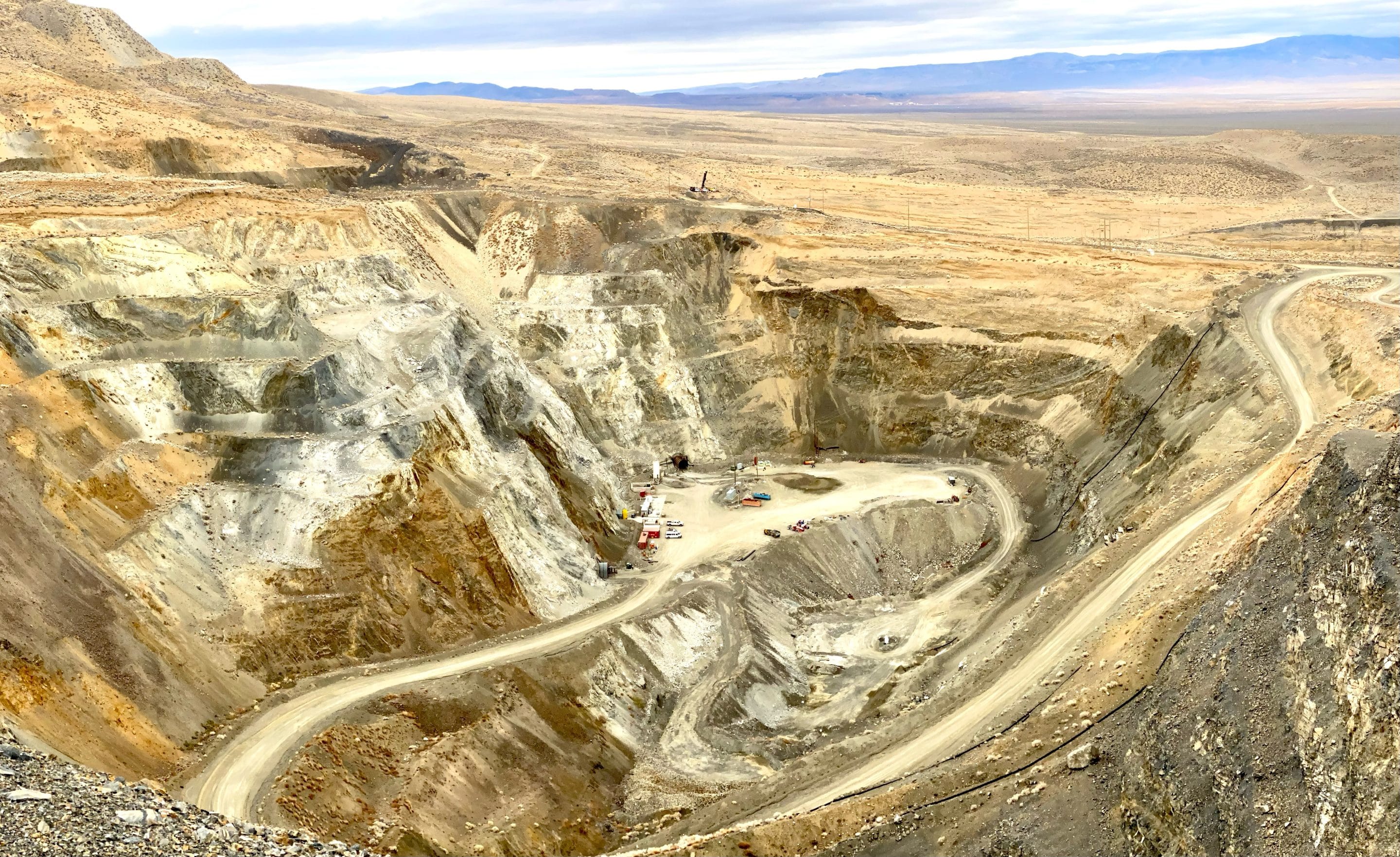
The replacement of hydro-mining with dry mechanical extraction is the most consequential single engineering change between the two studies. Kasiya's soft, free-dig saprolite orebody requires no drilling, blasting, crushing, or milling, making it suited to a dragline-and-truck fleet comprising 12.7m³ draglines and 100-tonne rigid dump trucks operating in open-cut conditions. A two-bench approach comprising a five-metre top cut and a fifteen-metre bottom cut keeps draglines operating above the water table at all times, eliminating the need for production equipment below groundwater level.
The method change required a scrubber at the front of the processing circuit, a defined addition rather than a broader redesign, and eliminated the requirement for equipment operating below the water table.
The transition was validated by a Pilot Mining Programme completed with Rio Tinto technical input. A test pit measuring 120 metres by 110 metres was excavated to a depth of 20 metres, mining 170,000 m³ of material using a conventional excavator fleet. The programme validated geology, mining, and rehabilitation assumptions ahead of the DFS, removing the execution uncertainty that accompanies unvalidated mining method transitions between feasibility stages.
Tailings Management: In-Pit Co-Disposal
Eliminating the conventional tailings storage facility delivers the largest reduction in surface footprint and the most direct improvement in the project's environmental compliance profile. Under the DFS design, tailings are stored by hydraulic co-disposal backfilling of mined-out pits using a 50:50 fines-to-sand ratio. The PFS used a 65:35 ratio; the adjustment to 50:50 increases annual water demand to 17.3 million cubic metres from 16.7 million cubic metres under the 2023 PFS, a contained trade-off against the removal of above-surface tailings infrastructure.
The in-pit design is built to comply with the Global Industry Standard on Tailings Management (GISTM). A twelve-month consolidation period is incorporated in the backfill schedule to manage the trafficability of backfilled areas. These features bring the tailings approach into the compliance framework that institutional project lenders apply as a condition of financing, a standard that has become a consistent requirement following the sector-wide adoption of the GISTM.
Post-mining rehabilitation trials provide empirical rather than modelled support for the in-pit approach. Maize yields of 5.2 tonnes per hectare were achieved within 6 months of backfilling, compared with a local community average of approximately 1 tonne per hectare. This outcome provides site-specific rehabilitation data to support lender due diligence on land productivity and engages local stakeholders in the project's post-mining land-use profile.
Power & Site Infrastructure
Connecting to Malawi's national hydropower grid via a 132kV overhead line running 97 kilometres to the Nkhoma substation replaces the independent power producer assumption from the 2023 PFS at substantially lower power cost, removing the operational and financing complexity of a project-specific generation facility. The switch eliminates a risk category embedded in the prior design while improving the long-term energy cost position in the operating cost structure.
Long-term supply reliability rests on the Electricity Supply Corporation of Malawi Limited's confirmed grid expansion programme. The 375MW Mpatamanga hydropower station, funded by the IFC and the World Bank, is targeted for 2030 and represents committed national infrastructure investment rather than a speculative capacity addition. The project's sensitivity to fuel costs is contained: a 10% increase in diesel prices reduces pre-tax net present value at an 8% discount rate (NPV8%) from US$2,204 million to US$2,186 million, a change of less than 1%.
Capital & Operating Cost Profile
Capital expenditure (capex) to first production rises from US$665 million in the optimised PFS to US$727 million in the DFS, but the per-unit cost trajectory runs in the opposite direction. The US$62 million increase includes a contingency of US$43 million and reflects engineering changes across mining method, tailings infrastructure, and site layout, including the addition of a scrubber at the front of the processing circuit. Total Life-of-Mine sustaining capital is US$431 million: US$289 million allocated to the southern area and US$142 million to the northern area.
The per-unit improvement is concentrated in incremental graphite production cost, which falls from US$241 per tonne under the optimised PFS to US$216 per tonne in the DFS. Operating costs are US$450 per tonne of product free-on-board Nacala, compared with US$423 per tonne under the optimised PFS. The reduction in incremental graphite cost reflects lower power costs from grid connection and the operational simplification achieved by replacing the hydro-mining method.
The DFS life-of-mine average graphite price of US$1,288 per tonne is effectively unchanged from the optimised PFS assumption of US$1,290 per tonne, confirming that the per-unit cost improvement is a product of engineering decisions rather than revised price inputs.
Project Economics & Financing Alignment
Kasiya's DFS economics includes a commodity price resilience margin that positions the project within the risk tolerance of institutional project lenders. Pre-tax NPV8% is US$2,204 million, with a pre-tax internal rate of return (IRR) of 23%. Payback period, measured from the start of production on an unlevered basis, is 6.2 years per the DFS, with the financial model returning 6.4 years.
Under a simultaneous 25% reduction in both rutile and graphite concentrate prices relative to DFS-selected levels, the project retains a positive pre-tax NPV8% of US$913 million and a pre-tax IRR of 15.2%. This stress test outcome confirms that the project's financing case does not depend on commodity prices at or above the base case to remain within institutional lending thresholds.
Two institutional arrangements provide the project with a formal structure for its path toward debt capital. A Collaboration Agreement is in place with the IFC as a potential co-lead and mandated lead arranger. A non-binding memorandum of understanding with a European-backed Private Equity Fund to fund the 132kV transmission line development for approximately US$40 million effectively separates the power infrastructure capital from the main project financing package, reducing the headline financing requirement presented to lenders.
Residual Risks & Permitting
Acid mine drainage risk and the pending Environmental and Social Impact Assessment (ESIA) represent the two open items with the most direct bearing on the project's path to financing approval and construction authorisation. The drainage risk is classified as intermediate: sulphide content sits below the 0.3% threshold, but near-zero neutralising capacity in the host rock means the classification cannot be closed on threshold analysis alone. Long-term kinetic leach testing is required to verify the models on which that intermediate determination rests.
The ESIA submission to the Malawi Environmental Protection Agency is targeted for the second quarter of 2026. This is the primary permitting milestone on the critical path to construction authorisation, and the IFC Performance Standards-aligned workstreams established during the DFS process provide the supporting documentation framework for that submission.
The progressive rehabilitation approach incorporates Giant Bamboo and maize intercropping, with an estimated potential to sequester 12 to 50 tonnes of carbon dioxide per hectare per annum. Combined with the empirical rehabilitation yields documented at the pilot site, this provides a site-specific climate and land management profile that reduces the open environmental exposure entering the permitting process and supports the land productivity assessments required in financing due diligence.
Investment Thesis for Sovereign Metals
- Dry mechanical mining validated through a 170,000m³ pilot programme with Rio Tinto technical input eliminates hydraulic complexity from the operational footprint and removes the requirement for production equipment below the water table, directly addressing the operational execution risk inherent in the Preliminary Feasibility Study design.
- In-pit co-disposal backfilling at a 50:50 fines-to-sand ratio eliminates the conventional tailings storage facility, brings the tailings approach into compliance with the Global Industry Standard on Tailings Management, and contracts the surface mining footprint, with direct bearing on both permitting risk and the environmental conditionality applied by institutional project lenders.
- Grid hydropower connection via a 132kV line to the Nkhoma substation replaces the independent power producer assumption at substantially lower power cost, with the Electricity Supply Corporation of Malawi Limited's confirmed expansion programme adding two material capacity increments to the national grid supply basis through 2030.
- Incremental graphite production cost falls from US$241 per tonne to US$216 per tonne between the optimised Preliminary Feasibility Study and the Definitive Feasibility Study, confirming that the engineering substitutions deliver per-unit efficiency gains that partially offset the US$62 million increase in capital expenditure to first production.
- Pre-tax net present value at an 8% discount rate of US$2,204 million, with a 23% internal rate of return, and retaining US$913 million in net present value under a simultaneous 25% commodity price reduction, positions Kasiya within the risk parameters applied by institutional lenders aligned with International Finance Corporation Performance Standards.
- A Collaboration Agreement with the International Finance Corporation as a potential co-lead mandated lead arranger, and a non-binding memorandum of understanding with a European-backed Private Equity Fund for approximately US$40 million in funding for the 132kV transmission line, demonstrate that the project's financing structure is advancing in parallel with its technical de-risking.
Kasiya's pre-tax NPV8% of US$2,204 million retains US$913 million under a simultaneous 25% commodity price reduction, confirming that the financing case does not depend on base-case prices. The IFC Collaboration Agreement as potential co-lead and mandated lead arranger, with the ESIA submission targeted for the second quarter of 2026, converts that stress-tested economics profile into a formal institutional financing pathway.
TL;DR
Sovereign Metals' Kasiya DFS confirms a project design built around three engineering substitutions: dry mechanical mining replaces hydro-mining, in-pit co-disposal eliminates the conventional tailings storage facility, and grid hydropower replaces the independent power producer. The combined effect is a reduction in operational complexity and surface footprint, and an incremental graphite production cost of US$216 per tonne, compared with US$241 per tonne in the optimised PFS, despite capex rising to US$727 million. The project delivers a pre-tax NPV8% of US$2,204 million with a 23% IRR, retaining US$913 million NPV and a 15.2% IRR under a simultaneous 25% commodity price reduction. A Collaboration Agreement with the IFC, as a potential co-lead and mandated lead arranger, anchors the financing structure to a project design aligned with the IFC Performance Standards throughout.
FAQs (AI-Generated)
Analyst's Notes





Subscribe to Our Channel




Stay Informed


