




%20(1).png)










Catalyst Metals
NYSE: CLOSED
TSE: CLOSED
LSE: CLOSED
HKE: CLOSED
NSE: CLOSED
BM&F: CLOSED
ASX: CLOSED
FWB: CLOSED
MOEX: CLOSED
JSE: CLOSED
DIFX: CLOSED
SSE: CLOSED
NZSX: CLOSED
TSX: CLOSED
SGX: CLOSED
NYSE: CLOSED
TSE: CLOSED
LSE: CLOSED
HKE: CLOSED
NSE: CLOSED
BM&F: CLOSED
ASX: CLOSED
FWB: CLOSED
MOEX: CLOSED
JSE: CLOSED
DIFX: CLOSED
SSE: CLOSED
NZSX: CLOSED
TSX: CLOSED
SGX: CLOSED

By Metal or Resource

By Project Stage
By Exchange
By Geography
By Investment Theme


Cobra Resources

Crux Investor Index
6
–
Market Cap (USD)
61600000
Symbol
LSE:COBR
Stage of development
Development
Primary COMMODITY
Gold
Additional commodities
Copper
Company Overview
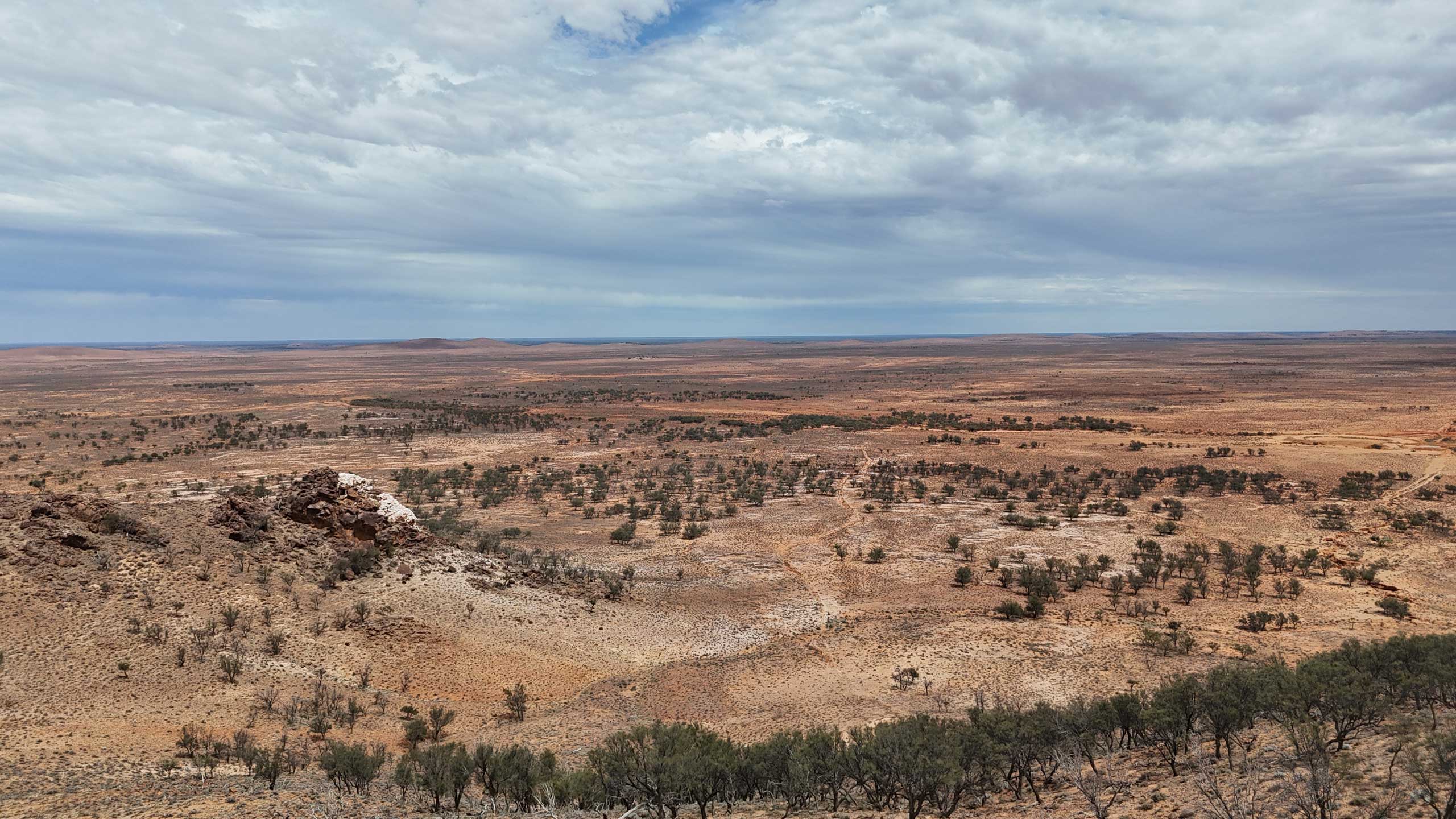
Cobra Resources plc is a South Australian critical minerals developer listed on the London Stock Exchange under the ticker COBR. The company holds two principal assets: the Manna Hill Copper Project and the Boland ISR (in situ recovery) Dysprosium and Terbium Project, both located in South Australia. As of August 2026, Cobra has a share price of 3.95p, approximately 1.09 billion ordinary shares on issue, and a market capitalisation of £42.88 million. The company also holds 214 million warrants outstanding at exercise prices of 2.0p, 2.3p, and 6.0p respectively. Upon final settlement of its gold asset divestment, Cobra will receive 6.45 million shares in BGD.AX plus A$9.5 million in further future payments, providing additional balance sheet optionality.
The four largest shareholders are Bruce Parncutt (10.24%), Craig and Suzanne Ball (9.97%), David Clarke (9.87%), and Ausum Pty Ltd (6.86%), reflecting meaningful insider and institutional alignment. Cobra's strategy is to develop both a copper-gold discovery in a proven porphyry province and a large-scale rare earth project capable of supplying dysprosium and terbium outside of China's current dominance of that supply chain.
Opportunity
The investment case for Cobra rests on two distinct but complementary opportunities, each addressing commodity markets with structural supply constraints.
At Manna Hill, Cobra is advancing exploration across a porphyry copper province in South Australia. Drilling at the Blue Rose skarn and porphyry target has returned a series of significant intersections, including 74m at 1.02% Cu and 0.25 g/t Au from 70m (MHRC0018) and 86m at 0.60% Cu and 0.14 g/t Au from 18m (MHRC0017). Mineralisation has now been defined across 1.6 kilometres of strike, with shallow depths and broad widths consistent with economic-scale potential. Diamond drilling targeting the primary porphyry source commenced in May 2026, with up to 1,800m of drilling designed to test the porphyry plug interpreted from geophysics and the depth continuity of the skarn system. Visual observations from that programme have reported a shift from chalcopyrite to higher-grade bornite mineralisation, sulfide continuity extending to approximately 300 metres depth, and an unexpected copper oxide extension south of the known skarn footprint. The geological model identifies multiple porphyry occurrences across the broader tenement package, with copper mineralisation associated with a reversely magnetised diorite intrusion. This reversed magnetism means copper-bearing intrusions appear as deep magnetic lows, providing a distinctive exploration tool for identifying additional targets across the 1,855 km2 tenure package.
The Boland project addresses a different but arguably more commercially sensitive market. Dysprosium and terbium are heavy rare earth elements with no viable substitutes in high-performance permanent magnets used in electric vehicle motors and wind turbine generators. The global supply of these elements is dominated by China through ionic clay deposits processed using in situ recovery. Cobra's Boland project hosts rare earth mineralisation within a confined palaeochannel aquifer system covering 3,200 km2, and the company has demonstrated that its geology enables a technically superior variant of ISR. The confined aquifer eliminates the lixiviant loss and environmental risks associated with the unconfined, gravity-driven methods used in southern China, while retaining the low-cost, low-capital-intensity profile of ISR generally. Bench-scale metallurgical testing achieved 66% heavy REO (HREO) recovery in 17 days with acid consumption of 3.88 kg/t and permeability exceeding 8m/day. Field hydrology studies have validated laboratory results, demonstrating excellent lateral connectivity and uniform drawdown across the ore-bearing sand aquifer. All assay results from the 74-hole sonic core drilling programme have now been received across the Boland and Head prospects, confirming continuous ISR-recoverable REE mineralisation at both targets at a scale sufficient to support a maiden mineral resource estimate. ERM has been engaged to complete that estimate, with a scoping study to follow. Hydrological assessment of 50 samples from across both prospects has determined that 70% show comparable or greater permeability than the installed Boland wellfield. Preliminary engineering design has been completed for a small-scale production plant at the existing Boland wellfield, targeting H1 2027, combining the ISR field trial with government-backed pilot facilities at ANSTO. The field component is anticipated to take approximately 60 days and target production of between 400 and 600 kg of mixed rare earth oxides.
Cobra's flowsheet further differentiates Boland from comparable ionic clay projects. Through a cerium removal step, the company increases the heavy REE proportion of its mixed rare earth carbonate (MREC) product from approximately 32% to 43%, a change the company calculates represents a 170% increase in product value. The resulting MREC basket price of US$65.22 per kg TREO compares favourably with a peer group including BCM.AX at US$55.07, RDM.AX at US$54.48, and MEI.AX at US$43.00.
Management
Cobra's board combines operational mining experience, geological expertise, and capital markets knowledge suited to a company advancing two technically distinct assets in parallel.
Andrew Michelmore AO serves as Non-Executive Chairman, bringing over 35 years of senior mining leadership including CEO roles at MMG Limited, Zinifex Limited, OZ Minerals Limited, and EN+. He currently chairs the Minerals Council of Australia and NASDAQ-listed Century Aluminium Company. Rupert Verco serves as CEO, with over 17 years of experience across resource definition, mine planning, and operations covering gold, copper, uranium, tin, and iron ore. He is a Fellow of the Australasian Institute of Mining and Metallurgy and holds a First Class Honours degree in Geology. David Clarke, Director of Business Development and Asset Marketing, is a geologist with over 55 years of professional experience and holds a 9.87% shareholding, directly aligning his interests with those of outside investors. Dan Maling rounds out the board as Non-Executive Director, contributing over 25 years of corporate finance experience across AIM, ASX, and TSX-listed resource companies. At the operational level, Exploration Manager Robert Blythman has over 16 years of on-ground experience in South Australian geology across gold, copper, uranium, and rare earths, with direct responsibility for delivering field programmes at both Manna Hill and Boland.
The team's coverage of large-scale mine operations, South Australian exploration geology, and listed company capital markets is broadly appropriate for Cobra's current stage. The relevant question for investors is whether the organisation has sufficient depth to advance two technically different programmes simultaneously without one being deprioritised, particularly as both move toward resource estimation and, eventually, feasibility-level work.
Growth Strategy
Cobra's growth strategy operates on two parallel tracks that share a common jurisdictional base in South Australia.
For Manna Hill, the near-term priority is converting the current RC drilling programme into a maiden resource estimate while simultaneously testing the porphyry source with diamond drilling. The geological thesis holds that Blue Rose represents only one of multiple porphyry centres identifiable across the tenure via magnetic low anomalies, and follow-up RC drilling is planned to test strike extensions beyond the currently drilled 1.6 km corridor. A successful porphyry intersection would substantially upgrade the scale of the potential discovery and could attract partner or acquirer interest given the proximity to established copper infrastructure in South Australia, including Olympic Dam and Carrapateena.
For Boland, the growth roadmap draws an explicit parallel with Kazatomprom's transformation of the uranium market. In roughly eight years, Kazatomprom increased its share of global uranium production from approximately 8% to 40%, primarily through the application of low-cost ISR. Cobra's ambition is to replicate this trajectory in the dysprosium and terbium supply chain, targeting a collective maiden resource of 200 to 400 Mt at greater than 1,000 ppm TREO across its palaeochannel system. The company has secured a landholding extending across multiple exploration licences covering the broader channel system, with M&A identified as a further growth lever. Installed wellfields, completed baseline environmental and hydrology studies, and 3,200m of core drilled for acid generation and permeability modelling represent meaningful de-risking work ahead of a formal resource estimate. Two additional target areas, Stokes and Gillespie, are shown on the landholding map as priority exploration zones.
Financial Overview
As of August 2026, Cobra has a share price of 3.95p, approximately 1.09 billion ordinary shares on issue, and a market capitalisation of £42.88 million. The fully diluted share count incorporates 214 million warrants outstanding at exercise prices of 2.0p, 2.3p, and 6.0p. The company is pre-revenue and pre-resource at both projects, so no independent economic projections are available at this stage.
Near-term liquidity is supported by the £4.5 million fundraise in March 2026 and the divestment of its gold assets, through which the company will receive 6.45 million shares in BGD.AX at final settlement plus A$9.5 million in further deferred cash payments. This provides meaningful runway for the current exploration programmes at both Manna Hill and Boland without immediate recourse to equity markets.
No scoping study has been published for either project, though the financial cases for the two assets are at different stages of maturity. At Boland, the company has moved beyond pure exploration: the project's financial case is increasingly centred on the economics of ISR, the lowest capital and operating cost form of mining, applied to a deposit where metallurgy, hydrology, and resource continuity have all been systematically de-risked. At Manna Hill, the financial case rests on exploration upside, with resource definition drilling ongoing and a maiden estimate not yet established. Future programmes at both projects, and any move toward feasibility, will require additional capital. At the current market capitalisation, material equity issuance to fund those programmes would be dilutive unless accompanied by a re-rating of the underlying assets.
Risk Factors and Mitigation
- Commodity Price Volatility: Dysprosium and terbium prices are set primarily in China and have historically been subject to significant swings driven by Chinese export policy rather than global supply and demand fundamentals. Copper, while more liquid and internationally priced, is similarly sensitive to macroeconomic cycles. Cobra has no producing assets at present, meaning the company carries full commodity price exposure without the offset of operating cash flow. The strategic importance of heavy rare earths to Western defence and clean energy supply chains provides some structural demand support, but this does not insulate project economics from near-term price weakness.
- Regulatory & Permitting Risks: South Australia operates a well-established regulatory framework for both hard rock mining and ISR operations, and the state government has been active in supporting critical minerals development. South Australia has a long history of ISR uranium operations, making it the only Australian jurisdiction with direct regulatory familiarity with and support for in situ recovery mining. This meaningfully lowers permitting risk for Cobra's ISR rare earth application relative to other jurisdictions. While ISR for rare earths is a novel application of the method, the underlying process and its environmental management are well understood by South Australian regulators. Any changes to state or federal policy on groundwater use, acid application, or rare earth processing could still affect project timelines, though the July 2026 RNS confirms the company has fulfilled regulatory guidelines for a baseline hydrological assessment and has engaged environmental consultants to advance permitting for its planned small-scale production demonstration.
- Technical & Operational Risks: At Manna Hill, the porphyry source remains untested by drilling. Existing intersections are confined to the skarn and transitional mineralisation environment, and while geochemical and geophysical data support a target at depth, there is no certainty the planned diamond drilling will intercept economic grades in the primary porphyry zone. At Boland, a maiden resource has not yet been established. Current drilling covers two areas representing less than 5% of the total prospective landholding, and recovery rates vary between targets, with the Head target returning 52% at pH3 compared with 80% at the Boland wellfield. This variability will need to be systematically characterised before resource and feasibility work can proceed with confidence.
- Environmental & Social Risks: ISR operations carry inherent groundwater management obligations, and any lixiviant migration beyond the confined aquifer zone would represent both an environmental liability and a regulatory issue. Cobra's confined palaeochannel geology is specifically designed to mitigate the lixiviant loss risks associated with the unconfined methods used in southern China, and baseline hydrology and environmental studies have been completed. Nonetheless, community and regulatory scrutiny of in-ground acid injection will be a feature of any approvals process, and social licence will need to be actively maintained with landholders and local communities across a large tenement footprint.
- Financing Risk: Cobra is pre-revenue and pre-resource at both projects. The current share count of 1.09 billion and 214 million warrants outstanding at prices between 2.0p and 6.0p indicate a capital structure that has already absorbed substantial dilution. Further exploration programmes, resource drilling, and any move toward feasibility will require additional funding. At the current market capitalisation of £50 million, equity issuance to fund material work programmes will be dilutive unless accompanied by a significant re-rating. The forthcoming receipt of BGD.AX shares and A$9.5 million from the gold asset divestment provides near-term runway, but a commercial-scale ISR operation would require financing well beyond what exploration cash flows can support.
- Execution Risk: Translating geological promise into a development-ready project across two technically distinct asset types simultaneously places significant demands on management bandwidth and technical resources. The Kazatomprom analogy used to frame Boland's ambition is instructive but should be treated with caution: Kazatomprom operated within a state-backed framework in Kazakhstan, while Cobra must navigate commercial financing, offtake negotiations, and approvals as an independent listed junior. Securing strategic partnerships or government-backed financing for a commercial wellfield is a credible pathway but not a straightforward one, and the timeline to production remains undefined.
Conclusion
Cobra Resources offers exposure to two structurally relevant commodity themes through a single LSE-listed vehicle at an early stage of development. The Manna Hill copper project is generating drill results consistent with the early-stage definition of a potentially significant porphyry system in a proven copper province. The Boland rare earth project combines an advantaged ISR geology, demonstrated metallurgy, and a large prospective landholding in a commodity sub-segment where supply chain diversification is a recognised geopolitical priority. The company is pre-resource at both projects and carries commensurate development risk. The near-term newsflow from diamond drilling at Blue Rose and from a Mineral Resource Estimate and field and economic studies at Boland represent the principal catalysts for re-rating. For investors with a tolerance for junior mining risk and an interest in critical minerals development outside of China, Cobra merits attention at its current valuation relative to the scale of the potential opportunity at both assets.
Article
Cobra Resources Analyst Notes

No analyst notes
Charts
Similar Companies


.png)

Stay Informed
Sign up for our FREE Monthly Newsletter, used by +45,000 investors
By clicking send you'll receive occasional emails from Crux Investor. You always have the choice to unsubscribe within every email you receive.

