





Energy Fuels



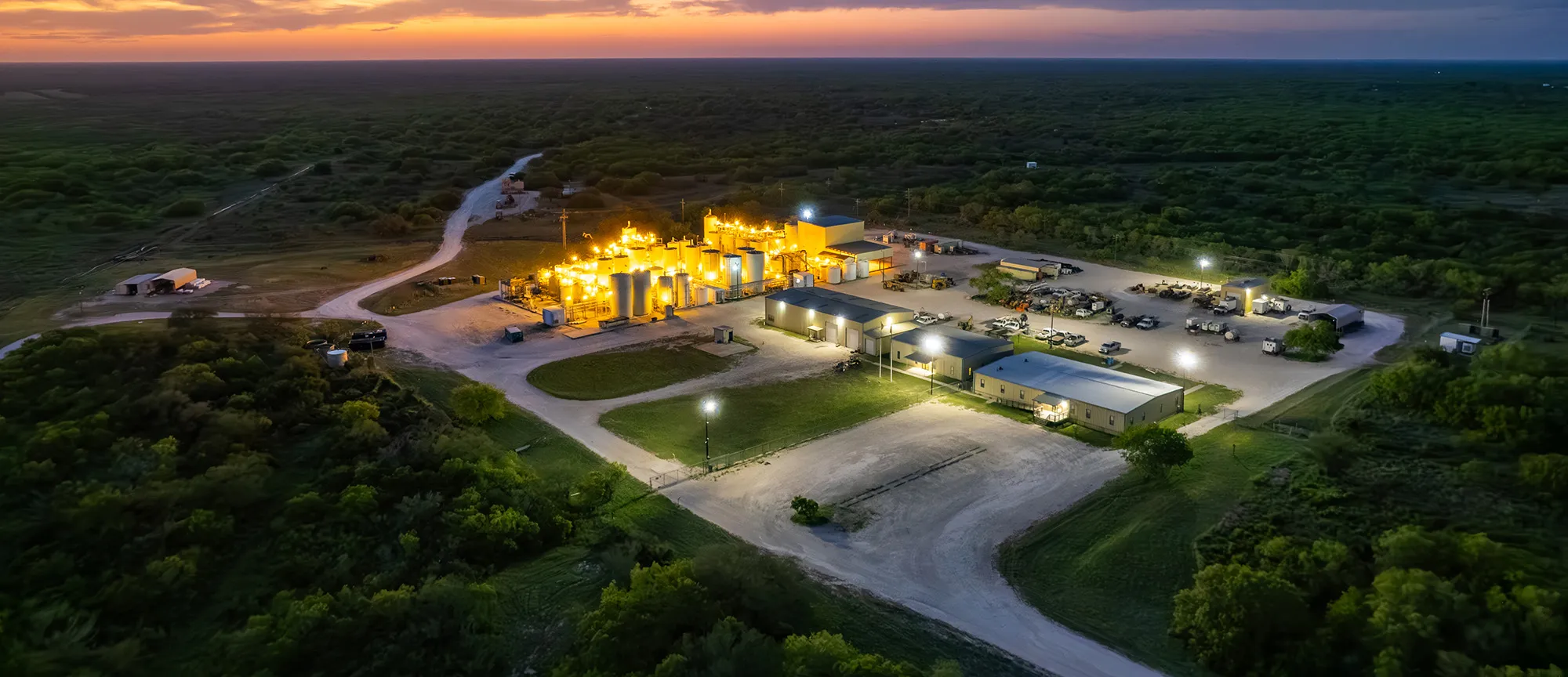


enCore Energy Corp. (NASDAQ: EU, TSX-V: EU), America’s Clean Energy Company™, operates as the largest in-situ recovery (ISR) uranium producer in the United States (U.S.), with active operations at two processing facilities in South Texas. The company holds 30.94 million pounds of measured and indicated uranium resources and 20.54 million pounds of inferred resources under S-K 1300 standards, with operations centered on the Alta Mesa and Rosita central processing plants. With a market capitalization of approximately $496 million USD as of December 2025 and 187.3 million shares outstanding, enCore represents a direct investment in domestic uranium production during a period of structural supply deficit and renewed policy support for nuclear energy.
The company's asset base spans Texas, South Dakota, and Wyoming, positioning it across three of America's most productive uranium districts. The Alta Mesa facility commenced operations in Q2 2024 through a 70/30 joint venture with Boss Energy Limited, with enCore serving as managing partner, while production averaged 2,678 pounds per day in June 2025. The Rosita facility operates independently, processing uranium through satellite ion exchange plants that capture mineralized solution from remote wellfields before trucking loaded resin to the central processing facility.
enCore completed a $115 million convertible note offering in 2025 that bears a 5.5% coupon and matures in 2030, providing financial flexibility alongside redemption provisions that minimize dilution below $4.52 per share through a capped-call structure. The company's operational focus distinguishes it from peers engaged primarily in exploration or development activities, with both processing plants utilizing in-situ recovery methodology that offers economic and environmental advantages over conventional mining techniques.
Global uranium markets face a structural imbalance with current demand approximating 200 million pounds annually while primary mine supply reaches only 70 million pounds, creating a persistent deficit as approximately 70 nuclear reactors advance through construction globally with an additional 100 units in planning stages. The United States imports 44% of its uranium from Russia, Kazakhstan, and Uzbekistan, but has implemented Russian import restrictions effective 2025, creating acute demand for domestic production capacity. Federal policy initiatives provide substantial tailwinds, with the Nuclear Fuel Supply Act authorizing $1.6 billion in 2024 funding for uranium production, while recent executive orders declared a national energy emergency and streamlined regulatory frameworks to accelerate domestic energy infrastructure development.
South Texas, where enCore concentrates its near-term production, hosts historic extraction totalling approximately 80 million pounds with the U.S. Geological Survey estimating an additional 220 million pounds of undiscovered potential. The region benefits from established regulatory frameworks under Texas Commission on Environmental Quality oversight, private land access minimizing permitting complications, and proven geology across multiple sandstone-hosted roll-front deposits. enCore controls approximately 200,000 acres across the Alta Mesa project area, providing multi-decade resource potential to support sustained production growth, with 52 linear miles of stacked uranium redox fronts identified at the Mesteña Grande exploration project alone.
Uranium spot pricing stabilized in the $60-80 range through 2025 after reaching $104 per pound in early 2024, while term contracting activity continues at elevated levels as utilities seek supply security. enCore's contracted position covers less than 38% of planned production through 2033, providing substantial spot price exposure while maintaining floor pricing protection through inflation-adjusted collar structures in existing agreements. The company's positioning within the in-situ recovery segment provides operational advantages with ISR accounting for approximately 60% of global uranium production and average capital expenditures less than 15% of traditional underground or open-pit operations.
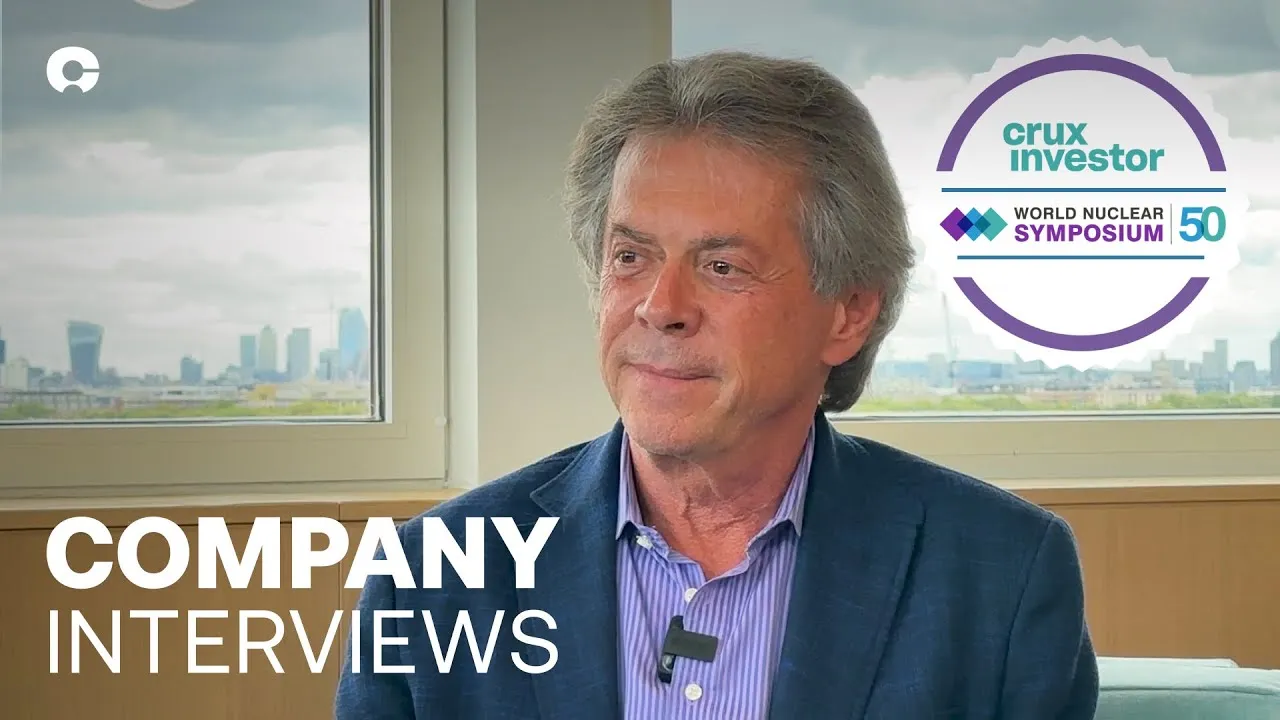
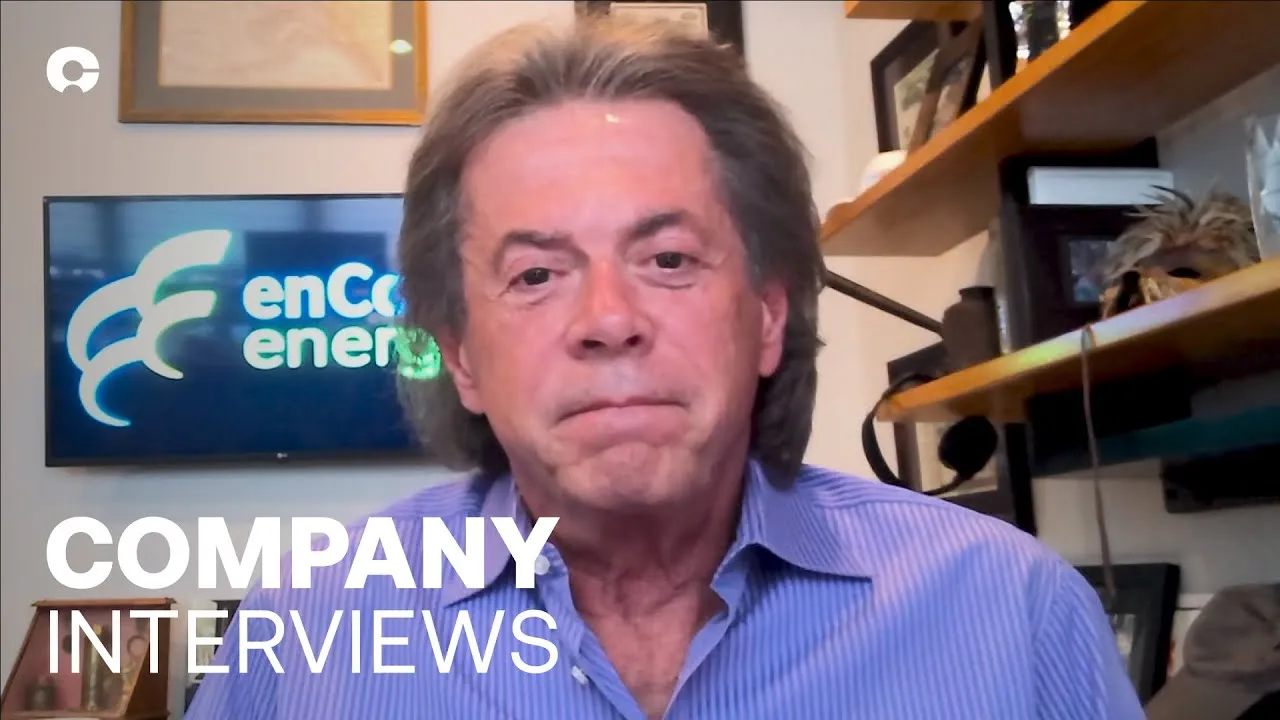
William M. Sheriff serves as Executive Chairman and Chief Investment Officer, bringing extensive uranium sector experience including co-founding Energy Metals Corp., which was acquired in 2008 for $1.8 billion during the prior uranium cycle. Mr. Sheriff has raised over $500 million in public markets and maintains one of the industry's most comprehensive domestic uranium resource databases, with his involvement since the company's inception providing continuity and strategic vision. Robert Willette, Director and Chief Executive Officer, contributes two decades of general counsel and business executive experience across industrial, manufacturing, transportation, and energy sectors, supporting enCore's regulatory compliance requirements and commercial contracting activities as the company scales production.
The management team includes Kevin Kremke as Chief Financial Officer, a seasoned finance executive and strategic operator, where he has guided organizations through periods of rapid expansion, restructuring, and complex capital-raising initiatives. His work includes leading large-scale budgeting and forecasting processes, executing merger and acquisitions transactions, and optimizing capital structures to strengthen shareholder value. Dain McCoig as Chief Operating Officer with 18 years in mining, mineral processing, and facility development overseeing all South Texas operations. As well as John M. Seeley, Vice President, Exploration and Development, holding qualifications as a Qualified Person under both S-K 1300 and NI 43-101 standards with 35 years in geological sciences and resource management. And Robbie Hudson as General Counsel & Corporate Secretary who brings almost 20 years of corporate legal experience, advising companies in matters related to securities, corporate governance, mergers & acquisitions, executive compensation, and human capital management.
Board composition includes Mark Pelizza as Lead Director with over 40 years in uranium including direct ISR project experience across multiple Texas operations. William B. Harris who previously served as CEO of Hoechst Fibers Worldwide, a $5 billion operation and Susan Hoxie-Key contributing four decades of nuclear industry engineering experience from Southern Nuclear Operating Company. Nathan Tewalt, an economic geologist with 40 years across uranium and precious metals, co-led the merger with Energy Metals Corp. and founded Standard Uranium. In December 2025, enCore appointed Wayne Heili to the Board of Directors, bringing 35 years of specialized uranium recovery experience as a metallurgical engineer across both major corporate and junior development companies in South Texas and Wyoming.
enCore's growth strategy centers on systematic production expansion across its South Texas platform, with the Alta Mesa facility configured for one million pounds annual capacity and designed for 2 million pounds with satellite feeds, currently operating at approximately 60% utilization. The company maintains 30 drill rigs across South Texas operations as of Q4 2025 with plans to increase accordingly as it reaches full operational capacity by mid-2026. Exploration success at the Alta Mesa East Property comprising over 5,900 acres immediately adjacent to existing wellfields has identified uranium mineralized roll fronts in at least three areas through October 2025, with projected continuation of productive horizons from existing Alta Mesa wellfields suggesting substantial resource expansion potential without significant infrastructure investment.
The Mesteña Grande Project, covering approximately 30 miles east-west and 35 miles north-south within the broader 200,000-acre land position, hosts 52 linear miles of identified stacked uranium redox fronts with only 5 miles explored to date, designed specifically to feed the Alta Mesa central processing plant. At Rosita, operations continue from existing satellite IX plants with the radioactive materials license amendment now including the Upper Spring Creek project, enabling wellfield installation and IX plant construction with four drill rigs operating on site and facility foundations under construction. The satellite IX plant model allows modular, capital-efficient expansion across multiple deposit areas within trucking distance of the Rosita central processing facility, which maintains 800,000 pounds annual licensed capacity.
The company received approval for U.S. Government Fast Track Permitting at the Dewey Burdock Project in South Dakota in August 2025, potentially accelerating development of this 14.1 million pound resource with preliminary economics indicating 750,000 pounds annual production over 21 years with $105 million initial capital and 39% pre-tax internal rate of return at $87 per pound uranium. The Gas Hills Project in Wyoming contains 7.7 million pounds of measured and indicated resources supporting 880,000 pounds annual production over 11 years with $55.2 million initial capital and 54.8% pre-tax IRR at $87 per pound.
enCore reported Q3 2025 financial results reflecting the early production phase at Alta Mesa and ongoing operations at Rosita, maintaining cash resources supported by the $115 million convertible note issued in 2025 with redemption rights forcing convertibility at $4.28 USD per share for 20 out of 30 trading days from August 21, 2028, onward. Outstanding warrants total 19.8 million including 3.8 million at CAD$4.05 expiring February 8, 2026, and 15.9 million at CAD$3.75 expiring February 14, 2026, with stock options and restricted stock units totaling 7.1 million and 4.0 million respectively, bringing fully diluted shares to 218.1 million. The near-term warrant expirations provide potential balance sheet strengthening if exercised given strike prices relative to recent trading levels, while the capped-call arrangement on the convertible notes minimizes dilution until the stock price exceeds approximately $4.52.
Revenue generation commenced at Alta Mesa in Q2 2024 with sequential production increases demonstrating phased ramp-up trajectory, as daily production averaged 1,904 pounds in 2025.At current production levels, annualized output approximates 600,000-700,000 pounds, generating revenue of $36-70 million at uranium prices between $60-100 per pound before accounting for the 70/30 joint venture split with Boss Energy. Capital expenditure focuses on wellfield development, with 75 wells added in Q2 2025 comprising 35 extraction wells and 40 injection wells, representing the primary capital requirement for production growth with costs substantially lower than conventional mine development given the absence of shaft sinking, mill construction, or tailings facilities.
Operating cost structure for ISR operations typically ranges from $20-30 per pound covering plant and wellfield operations, restoration provisions, and site overhead, with enCore's operations benefiting from private land access eliminating royalty payments to government entities. The company's preliminary economic assessments for Dewey Burdock and Gas Hills indicate cash operating costs of $23.81 and $15.51 per pound respectively, providing substantial margins at current uranium prices even after accounting for local taxes and royalties. Production generates increasing cash flow as operations scale, transitioning the company toward self-funding of wellfield development and reducing external capital needs over time.
enCore Energy represents a direct investment in domestic uranium production during a period of structural supply deficit and strengthening policy support for nuclear energy, operating two processing facilities in South Texas with production underway and expanding. With 30.94 million pounds of measured and indicated resources and 20.54 million pounds of inferred resources, enCore controls a multi-decade inventory of uranium deposits amenable to low-cost in-situ recovery extraction, with recent exploration success at Alta Mesa East demonstrating resource expansion potential within the existing permitted footprint. The investment case centers on the company's ability to scale production from current levels approaching 600,000-700,000 pounds annually to multi-million pound output as additional wellfields are permitted and developed across the Alta Mesa and Rosita projects, supported by management combining uranium sector experience spanning multiple decades with operational expertise specific to ISR production in Texas.
Financial structure provides flexibility through the $115 million convertible note while the capped-call arrangement minimizes dilution risk, with revenue generation having commenced and growing with production to transition the company toward self-funding of wellfield development as operations scale. The balanced sales strategy maintains significant spot exposure while providing floor price protection, positioning the company to benefit from potential price appreciation driven by the structural supply deficit, with near-term catalysts including continued production ramp at Alta Mesa, advancement of Upper Spring Creek development at Rosita, potential conversion of Alta Mesa East discoveries into wellfield development plans, and progression of Dewey Burdock permitting following Fast Track approval. The company operates in a favorable policy environment with federal support for domestic uranium production intensifying through supply chain security concerns and nuclear energy expansion initiatives.
Risks include uranium price volatility, execution challenges in production ramp-up, potential regulatory or permitting delays, environmental obligations, and capital requirements for growth, though mitigation strategies include contracted floor pricing, experienced operational management, established Texas regulatory frameworks, lower-impact ISR methodology, and existing financing providing runway for expansion. The company's operational status, resource inventory, management experience, and strategic positioning in domestic production during a supply deficit period support the investment thesis for exposure to uranium sector fundamentals through a producing asset base rather than pre-production development risk, with the combination of immediate production revenue, near-term growth catalysts, and longer-term development optionality across multiple jurisdictions providing a differentiated risk-return profile within the uranium sector.