enCore Energy: America's Best-Positioned Uranium Play


enCore Energy operates two U.S. uranium plants, holds 51M lbs of resources, and is backed by rising nuclear demand, federal policy, and a $489M market cap as of February 2026.
- enCore Energy is one of the few U.S. uranium companies with processing plants already in active operation, producing at two South Texas facilities.
- The company holds 30.94 million lbs of Measured and Indicated uranium resources and 20.54 million lbs Inferred across multiple U.S. states.
- U.S. uranium reactor fuel loadings reached 50.6 million lbs in 2024, up 10% from 2023, while domestic supply covered just 8% of total deliveries that year.
- The DOE awarded $2.7 billion in domestic enrichment contracts on January 6, 2026, with $900 million each to three companies, signaling committed federal investment in the nuclear fuel chain.
- enCore's collared contract strategy locks in revenue floors while preserving full upside exposure to uranium spot prices, which hit $101.50 per pound in January 2026.
Nuclear Is the Trade of the Decade & the Clock Is Already Ticking
Nuclear power is no longer a controversial footnote in the clean energy debate. It has become central to it. Governments from Washington to Brussels are treating atomic power not as an aging industrial artifact, but as one of the few technologies capable of delivering reliable, carbon-free baseload electricity at the scale the modern economy demands. The drivers are familiar: AI data centers consuming unprecedented quantities of electricity, industrial electrification, and the relentless pressure to decarbonize power grids without sacrificing reliability.
The scale of the revival is documented and verified. According to the World Nuclear Association, approximately 440 nuclear power reactors operate in 31 countries, delivering around 9% of the world's electricity, totaling 2,667 terawatt hours in 2024, an all-time high. As of March 2026, the WNA Reactor Database counts 76 reactors under construction worldwide, with about 115 additional reactors planned carrying a combined capacity of approximately 110 gigawatts. That pipeline of new capacity will require uranium, and it will require it for decades.
"In the 1980s, the U.S. had enough domestic uranium supply to be self-sufficient, and it is possible to achieve this again."
That statement is not promotional optimism. It reflects a genuine structural reality: the United States has allowed its domestic uranium production capacity to atrophy for 40 years and is now rebuilding it under significant policy pressure and urgency.
This is not an Explorer: This is a Producer with Uranium Already in the Drum
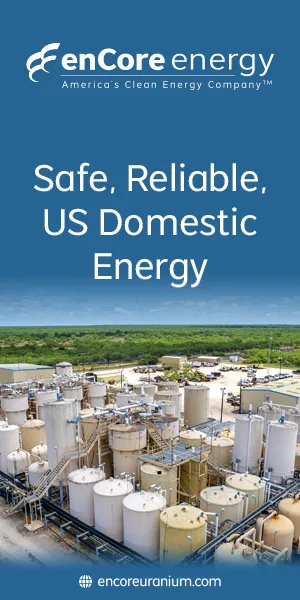
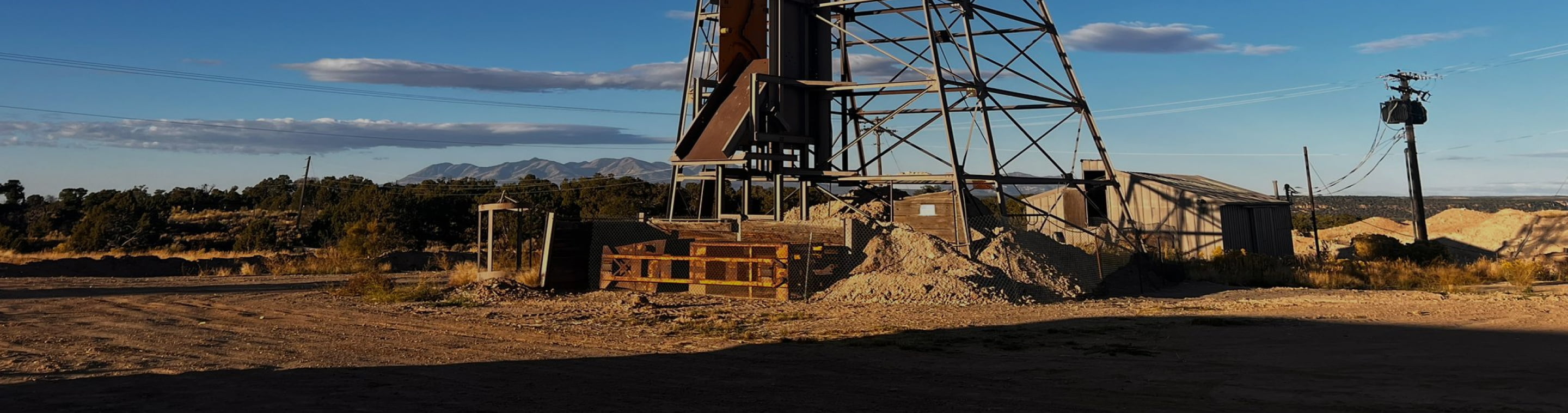
enCore Energy Corp., listed on the NASDAQ as EU and on the TSX Venture Exchange as EU, occupies a distinct position in the uranium investment landscape. It is not an explorer with a promising map. It is a functioning producer, with two licensed Central Processing Plants actively running in South Texas: the Alta Mesa CPP and the Rosita CPP. Alta Mesa commenced operations in Q2 2024, operated under a 70/30 joint venture with Boss Energy Limited, with enCore holding the managing partner role.
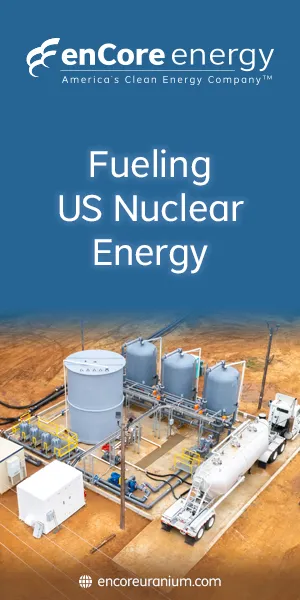
Both plants use In-Situ Recovery, a uranium extraction method that dissolves uranium underground using oxygenated groundwater and pumps it to the surface for processing. According to the World Nuclear Association, approximately 60% of global uranium is already produced through ISR, and the average capital expenditure for ISR operations runs at less than 15% of conventional mines. That cost structure is the foundation of enCore's competitive edge in a commodity business where margins and capital discipline determine long-term survival.
"America's Clean Energy Company: Reliable and Responsible Domestic Uranium Extraction."
Lead Director Mark Pelizza has spent more than 40 years in the uranium industry with direct ISR project experience in Texas. Technical Advisory Chairman Dennis Stover brings a 50-plus-year career in commercial uranium exploration and is described by the company as an early contributor to the commercialization of ISR technology itself. This is not a management team learning the business. They helped build it.
The U.S. Imports 92% of Its Own Uranium: That is the Opportunity
The United States is the world's largest consumer of uranium and one of its smallest domestic producers. Per the EIA's 2024 Uranium Marketing Annual Report, released September 2025, U.S. nuclear reactors loaded 50.6 million pounds of uranium fuel in 2024, 10% more than in 2023. Yet domestic supply accounted for just 8% of total U.S. deliveries in 2024. The gap is filled by imports, with Canada the largest source at 36%, followed by Kazakhstan at 24%, Australia at 17%, Uzbekistan at 9%, and Russia at 4%. Combined, Kazakhstan, Uzbekistan, and Russia supplied 37% of total U.S. deliveries, all countries whose supply reliability carries geopolitical risk.
Washington has responded with unusual speed. The U.S. banned Russian uranium imports effective August 2024. Executive orders have prioritized domestic nuclear energy expansion and streamlined regulations. On January 6, 2026, the Department of Energy announced $2.7 billion in contracts, awarding $900 million each to American Centrifuge Operating, General Matter, and Orano Federal Services to build domestic enrichment capacity over the next ten years, with an additional $28 million to Global Laser Enrichment for next-generation technology development. Uranium was also reinstated to the USGS Critical Minerals list for 2025.
"Dependency on supply from State Owned Enterprises creates vulnerabilities and is not in the best interest of national security."
For enCore, this policy environment is not background context. It is the commercial backdrop that makes every pound of uranium extracted in Texas or South Dakota strategically valuable in ways that extend well beyond the spot price chart.
Three States, Three Projects & A Production Runway Into the 2030s
enCore's growth pipeline is methodical and geographically diversified. In South Texas, 270 new production wells were turned on in 2025, averaging 22 per month. The Wellfield 3 Extension at Alta Mesa is nearing completion, pending final permitting for a target production start in 2026. The Upper Spring Creek satellite project at Rosita has its first two Remote Ion Exchange plant trains completed and capable of operations, with two additional trains underway that will double processing capacity from 1,600 to 3,200 gallons per minute.
The Dewey Burdock project in southwest South Dakota received approval for U.S. Government Fast Track Permitting in August 2025. Its economics are compelling: pre-tax IRR of 39% at a long-term uranium price of $86.34 per lb, initial capital costs of $264.2 million, a 28-year mine life, and annual production of 750,000 lbs. In Wyoming, the Gas Hills project carries initial capital of just $55.2 million, a pre-tax IRR of 54.8% at $87 per lb, and annual production projected at 880,000 lbs over an 11-year mine life.
"Wyoming has a long history of successful ISR operations and is an Agreement State with positive permitting timelines."
The combination of active Texas operations, an advanced South Dakota project, and a capital-efficient Wyoming asset creates a layered production growth story spanning the current decade through the 2030s.
Built-In Protection on the Downside: Full Exposure on the Upside.
Uranium pricing is notoriously volatile. The spot price peaked above $130 per pound in 2007, collapsed after Fukushima, and only began its sustained recovery in the early 2020s. According to Trading Economics and UxC-referenced futures data, uranium futures reached $101.50 per pound in January 2026, the highest level since February 2024, before pulling back to approximately $92 per pound by early February 2026. For uranium producers, price volatility is a strategic variable that must be actively managed, not passively accepted.
enCore's response is a collared contract structure, with agreements setting minimum price floors and maximum price ceilings, both adjusted for inflation. Current contracts represent less than 38% of planned extraction through 2033, deliberately preserving substantial spot market exposure. The company plans to contract less than 50% of annual planned extraction at current price levels, with contracting expected to increase if spot prices spike further.
"Inflation adjusted floor and ceiling prices provide base levels of revenue assuring an operating margin while providing significant upside exposure to spot market pricing."
Combined with a market capitalization of approximately $489 million at $2.52 USD per share as of February 18, 2026, enCore occupies the mid-cap space where institutional capital is increasingly focused as the uranium narrative matures into a verified, policy-backed investment theme.
The Investment Thesis for enCore Energy
- enCore is producing today at two licensed facilities, eliminating exploration-stage risk that characterizes most uranium equities at comparable market capitalizations.
- The 2024 EIA Uranium Marketing Annual Report confirms U.S. reactors loaded 50.6 million lbs of uranium fuel in 2024, with domestic production covering just 8% of that demand, creating durable pricing pressure for domestic ISR producers.
- Federal fast-track permitting at Dewey Burdock and the January 2026 DOE enrichment investment reduce regulatory and supply-chain timeline risk for enCore's next development phase.
- Collared contracts with inflation-adjusted floors protect revenue during uranium price pullbacks while preserving full spot market upside above contract ceilings.
- The Gas Hills project shows a pre-tax IRR of 54.8% at $87 per lb, meaning even modest uranium price appreciation materially strengthens project returns relative to its $55.2 million initial capital cost.
- With uranium reinstated to the USGS Critical Minerals list for 2025 and $2.7 billion in DOE enrichment contracts formally awarded on January 6, 2026, institutional capital flows into the domestic uranium sector are intensifying.
The Deficit Is Verified, the Producer Is Ready & the Window Is Open
enCore Energy represents one of the clearest and most operationally grounded ways to invest in the structural uranium demand cycle now underway in the United States. The company is producing, its pipeline is advancing on multiple fronts, and the policy environment has shifted decisively in its favor. Risks remain: uranium prices are volatile, the $115 million convertible note requires active management, and permitting delays can always emerge. But for investors seeking direct exposure to the domestic nuclear fuel cycle, backed by a management team with genuine sector depth and a contract strategy designed to capture price upside while protecting the downside, enCore Energy warrants serious consideration.
"Nuclear is carbon-free and it is the largest source of carbon-free electricity in the United States."
The uranium supply deficit is not a forecast. It is a documented present reality. enCore Energy is already on the field.
TL;DR
enCore Energy (NASDAQ: EU) is one of the only U.S. uranium companies already producing, with two active processing plants in South Texas. The U.S. imports 92% of its uranium, reactors loaded 50.6 million lbs of fuel in 2024, and domestic supply covered just 8% of that demand. Uranium futures hit $101.50 per pound in January 2026. The DOE committed $2.7 billion to domestic enrichment on January 6, 2026. enCore holds 30.94 million lbs of Measured and Indicated resources, runs a collared contract strategy that protects revenue while capturing spot price upside, and has a project pipeline stretching from Texas to Wyoming through the 2030s. The supply deficit is real, the policy tailwind is strong, and enCore is already in production while most competitors are still in the ground.
FAQs (AI-Generated)
Yes, enCore operates two active ISR uranium processing plants in South Texas: Alta Mesa and Rosita.
The company holds 30.94 million lbs Measured and Indicated, and 20.54 million lbs Inferred, per its March 2026 corporate presentation.
The 2024 EIA Uranium Marketing Annual Report shows domestic supply covered just 8% of U.S. deliveries in 2024, with 36% from Canada, 24% Kazakhstan, 17% Australia, 9% Uzbekistan, and 4% Russia.
Uranium futures reached $101.50 per pound in January 2026, per Trading Economics and UxC-referenced data, the highest level since February 2024.
On January 6, 2026, the DOE awarded $900 million each to American Centrifuge Operating, General Matter, and Orano Federal Services, plus $28 million to Global Laser Enrichment, totaling $2.728 billion.
Analyst's Notes





Subscribe to Our Channel




.png)

Stay Informed