







Shanta Gold
NYSE: CLOSED
TSE: CLOSED
LSE: CLOSED
HKE: CLOSED
NSE: CLOSED
BM&F: CLOSED
ASX: CLOSED
FWB: CLOSED
MOEX: CLOSED
JSE: CLOSED
DIFX: CLOSED
SSE: CLOSED
NZSX: CLOSED
TSX: CLOSED
SGX: CLOSED
NYSE: CLOSED
TSE: CLOSED
LSE: CLOSED
HKE: CLOSED
NSE: CLOSED
BM&F: CLOSED
ASX: CLOSED
FWB: CLOSED
MOEX: CLOSED
JSE: CLOSED
DIFX: CLOSED
SSE: CLOSED
NZSX: CLOSED
TSX: CLOSED
SGX: CLOSED

By Metal or Resource

By Project Stage
By Exchange
By Geography
By Investment Theme

TRX Gold

Crux Investor Index
4
–
Market Cap (USD)
371010000
Symbol
TSX:TRX
TSX:TNX
Stage of development
Production
Primary COMMODITY
Gold
Additional commodities
No items found.
Company Overview
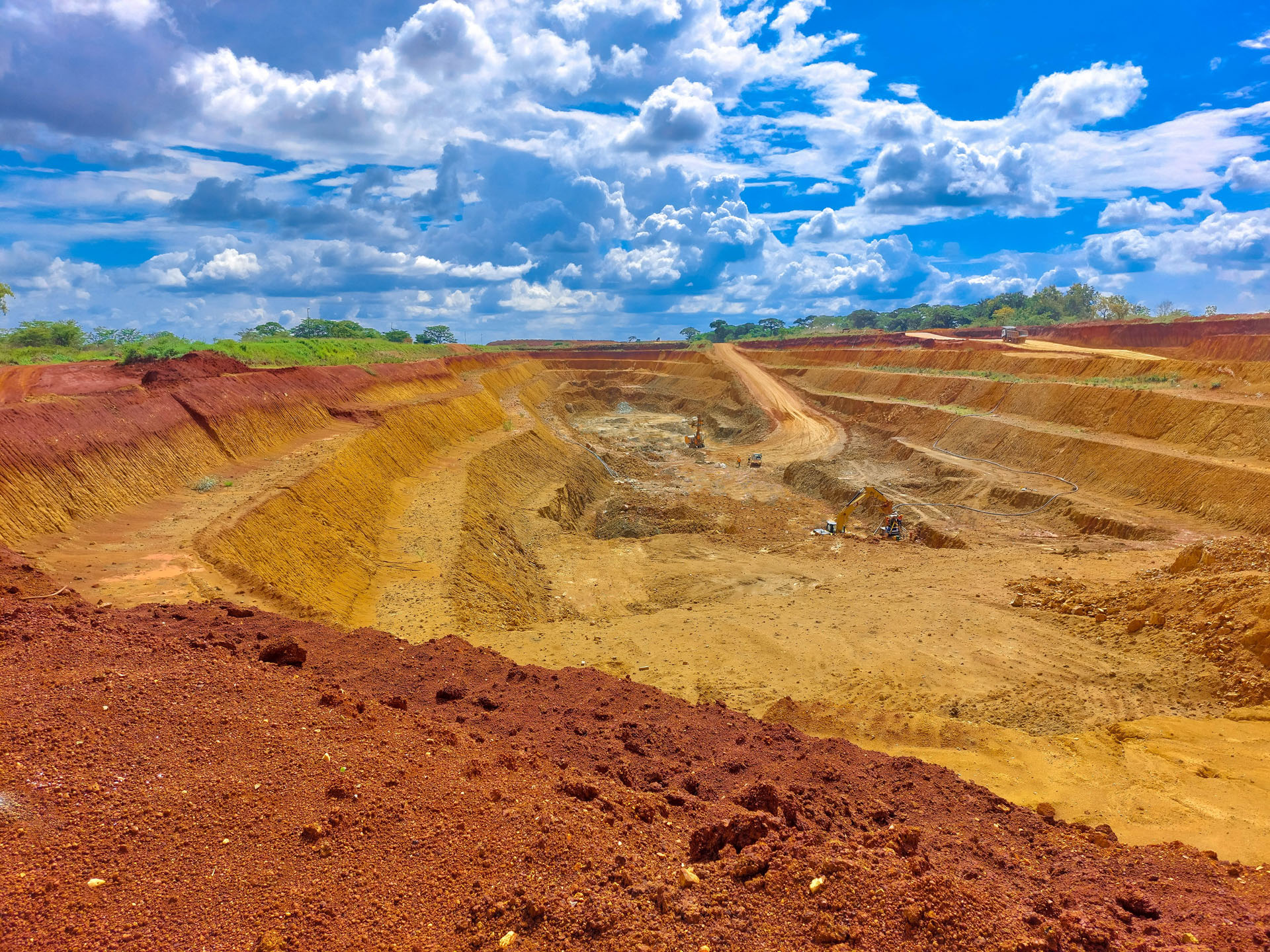
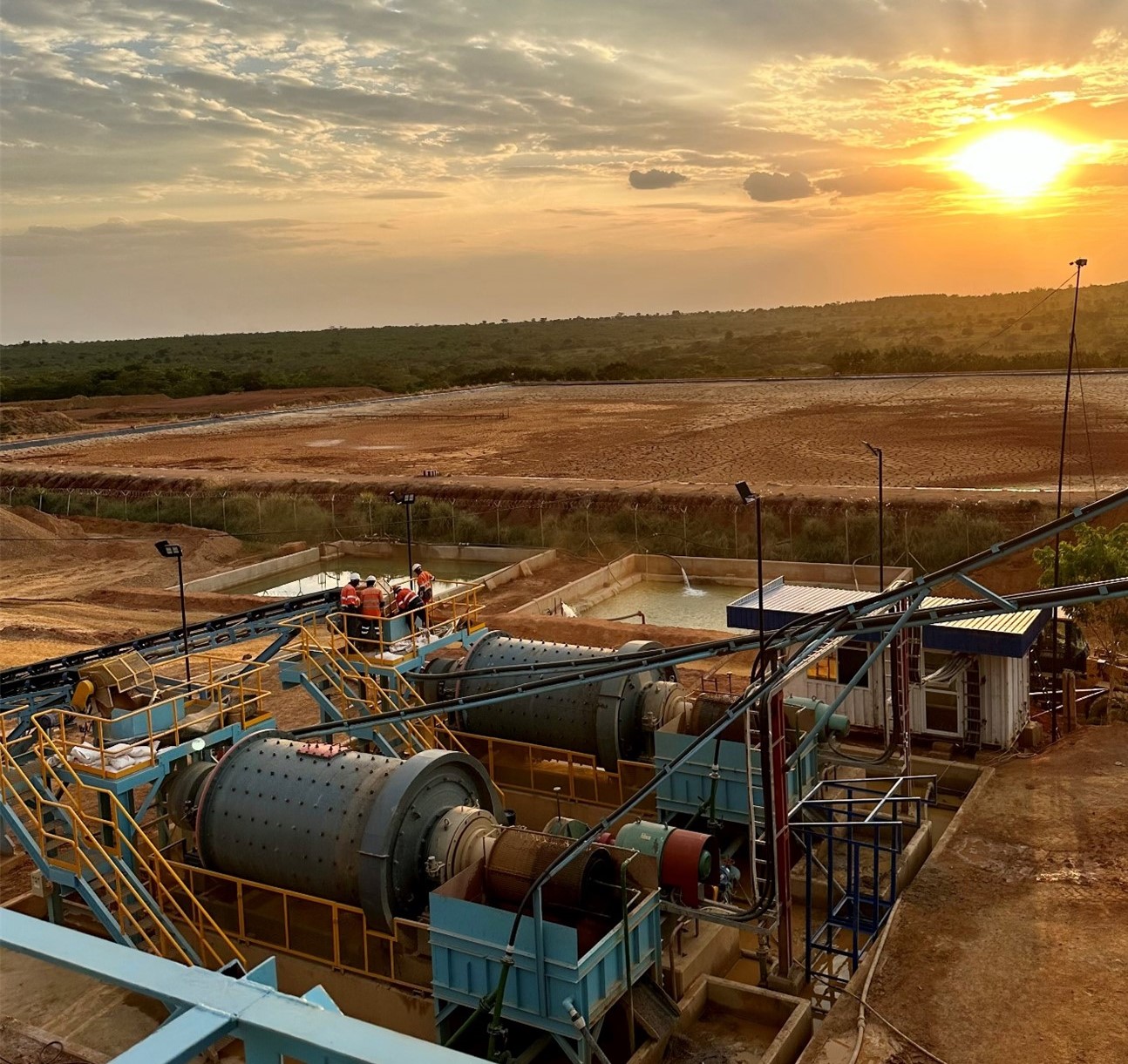
TRX Gold Corporation (NYSE American: TRX; TSX: TRX) is a producing gold company focused on the Buckreef Gold Project in the Geita District of Tanzania, roughly 110 kilometres southwest of Mwanza and south of Lake Victoria. The project is a shear zone hosted orogenic gold deposit operated under a joint venture structure in which TRX Gold holds 55% and STAMICO, the state mining corporation of Tanzania, holds the remaining 45%. Buckreef is an open pit operation supported by a carbon-in-leach processing plant currently running at 2,000 tonnes per day. As of the most recent corporate update, the company reported basic shares outstanding of 327.5 million, a market capitalization of approximately US$259 million, cash of US$26.8 million, and borrowings of just US$2.9 million. The Buckreef Gold Project carries measured and indicated resources of 893,000 ounces of gold at 2.57 g/t and inferred resources of 726,000 ounces at 2.47 g/t. The company has scaled production through three incremental mill expansions since 2021, moving from a 120 tonne per day test plant to the current 2,000 tonne per day facility, with a further expansion to 3,500 or more tonnes per day underway.
Opportunity
The central opportunity in TRX Gold rests on the combination of an already cash-generative operation, a low starting valuation relative to peers, and a credible pathway to materially higher production. In the trailing twelve months to Q3 2026, the company generated 27,880 ounces of gold production, US$115.5 million of revenue, and US$66.8 million of adjusted EBITDA, implying a margin in the high 50% range. Quarterly results for Q3 2026 showed record throughput of 1,690 tonnes per day, a 16% increase year over year, alongside a recovery rate improvement to 84.9% from 67% in the prior-year period. Gold production of 7,426 ounces in the quarter was up 58% year over year, while realized gold prices of approximately US$4,703 per ounce, a 51% increase from the prior year, contributed to revenue of US$32.8 million and net income of US$8.4 million. On a trading multiple basis, TRX Gold's EV/EBITDA (2027E) of 2.1x compares to a producer peer average of 2.4x, its price-to-NAV of 0.39x compares to a producer and developer average of 0.50x, and its EV per ounce of gold equivalent of approximately US$162 sits close to, though modestly above, the peer average of US$152. Combined with the company's small market capitalization relative to its resource base and cash flow generation, this suggests the market has not yet fully credited the operational momentum evident in recent quarters.
Management
TRX Gold's executive team combines finance, operating, and government relations experience relevant to a company scaling production in an African jurisdiction. CEO Stephen Mullowney was formerly a Partner and Managing Director at PwC, where he led the firm's Deals Mining Group, giving him experience advising mining companies and governments on financings, M&A, and operational improvements. COO Richard Boffey, who joined in December 2024, brings more than 35 years of experience in open-pit and underground mining, including process plant commissioning and the establishment of technical and operating teams at multiple multinational mining companies, including prior roles in Africa. CFO Michael P. Leonard has a background in gold industry investor relations and corporate finance, including more than 17 years in financial leadership roles at Barrick Gold Corporation. SVP and Managing Director for Tanzania, Khalaf Rashid, has a background in Tanzanian business, politics, and government relations, and has advised the Government of Tanzania on policy matters. The team's blend of deal-making, operational, and in-country relationship experience is directly relevant to a company whose growth plan depends on sequential plant expansions, disciplined capital allocation, and an ongoing commercial relationship with its state joint venture partner.
Growth Strategy
TRX Gold's growth strategy centers on three parallel workstreams: EBITDA growth through processing capacity expansion, net asset value expansion through an updated economic study, and resource base growth through exploration. On the operating side, the company has a track record of three successful low-cost mill expansions completed on time and on budget since 2021, and is now executing a fourth expansion that would add 3,500 or more tonnes per day of new SAG/ball mill capacity alongside the existing, upgraded 2,000 tonne per day plant. The April 2025 Preliminary Economic Assessment, based on a 3,000 tonne per day scenario, outlined average annual gold production of 61,700 ounces over a 17.6-year mine life, average annual free cash flow of US$102.6 million, and growth capital of US$88.7 million over the first four years, funded from operating cash flow. At a US$4,000 per ounce gold price, the PEA generates a pre-tax NPV at a 5% discount rate of US$1,878.5 million and an after-tax NPV of US$1,238.6 million. An updated PEA expected in the fourth quarter of 2026 is scoped to increase nameplate capacity from 3,000 to 5,500 tonnes per day, incorporating the plant upgrade and extension of open pit mining with underground optionality. On the exploration side, the company has identified the Stamford Bridge shear zone approximately 250 metres from the Buckreef Main Pit, with drill results including 37 metres at 6.86 g/t gold and 35.5 metres at 5.48 g/t gold, both described as among the best intercepts in the project's history. Additional targets at the Anfield zone and Eastern Porphyry deposit, together with a completed 810 line-kilometre magnetic survey that identified ten priority targets, support a fiscal 2026 exploration budget of US$3 million to US$5 million aimed at converting inferred resources and extending known mineralized trends.
Financial Overview
TRX Gold's balance sheet has strengthened materially alongside its production growth. As of the most recent reporting date, the company held US$26.8 million in cash against borrowings of only US$2.9 million, with working capital of US$36.3 million, a coverage ratio of 2.2 times current liabilities. Supplemental liquidity includes a US$40 million facility comprising a US$25 million at-the-market equity program, a US$15 million credit facility, and a gold pre-payment facility, providing additional flexibility beyond internally generated cash flow. Revenue and adjusted EBITDA have both grown consistently on a fiscal-year basis, from US$2.5 million of revenue and negative US$7.3 million of adjusted EBITDA in fiscal 2021 to US$92.0 million of revenue and US$54.1 million of adjusted EBITDA in the year-to-date fiscal 2026 period. Cumulatively since 2021, the company has raised US$19.1 million of net capital, excluding warrant exercise proceeds, generated US$65.9 million of operating cash flow, and invested US$90.5 million of capital, indicating that a meaningful share of its expansion has been internally funded rather than reliant on external financing. Full-year 2026 production guidance of 25,000 to 30,000 ounces of gold and cash cost guidance of US$1,400 to US$1,600 per ounce have both been reaffirmed, with management noting the company has effectively achieved its full-year guidance as of the most recent update. Analyst coverage includes price targets from Alliance Global Partners at US$2.50, H.C. Wainwright & Co. at US$2.30, Roth Capital Partners at US$2.25, and Zacks Small-Cap Research at US$1.80, against a July 10, 2026 share price of US$0.79, implying a wide gap between current trading levels and published targets, though such targets should be treated as one input among several rather than a guaranteed outcome.
Risk Factors and Mitigation
- Commodity Price Volatility: TRX Gold's cash flow and reported valuation metrics are directly exposed to the price of gold, and its PEA economics are sensitive to price assumptions, with pre-tax NPV at a 5% discount rate ranging from US$482.4 million at US$2,000 per ounce gold to US$2,576.5 million at US$5,000 per ounce. The company's relatively low operating and capital cost structure, evidenced by LOM average cash costs of US$1,017 per ounce and AISC of US$1,199 per ounce in the base case PEA, provides a degree of resilience to price declines relative to higher-cost producers.
- Regulatory & Permitting Risks: As a company operating in Tanzania through a joint venture with a state entity, TRX Gold is subject to Tanzanian mining and foreign investment policy, and the company has disclosed ongoing commercial negotiations with the Government of Tanzania regarding terms and agreements. Mitigating this, the company has cited demonstrated government backing for mining and foreign investment in the country, over US$2 billion in mining-related M&A and IPO transactions in Tanzania over the prior 24 months, and maintains active institutional relationships and regulatory advocacy through industry associations.
- Technical & Operational Risks: Plant expansions and grade or recovery variability carry execution risk, as reflected in fluctuating average head grades (from 2.89 g/t in fiscal 2022 to 1.53 g/t in fiscal 2025) and processing costs per tonne over the company's operating history. This is partly offset by a demonstrated track record of three prior mill expansions completed on time and on budget, and by year-over-year improvement in gold recovery to 84.9% in the most recent quarter.
- Environmental & Social Risks: Mining operations in proximity to local communities carry social license risk. The company has outlined ongoing community development initiatives delivered with the District Authority under a regulatory memorandum of understanding, covering health and education projects across four neighbouring wards, along with a stated preference for local and in-country procurement exceeding 80% of spend.
- Financing Risk: While growth capital of approximately US$88.7 million over four years is intended to be self-funded from operating cash flow, unexpected cost overruns or a sustained gold price decline could require external financing. The company's supplemental liquidity facilities, including an at-the-market program, credit facility, and gold pre-payment facility, along with minimal current borrowings, provide contingency capacity.
- Execution Risk: The updated PEA, expected in the fourth quarter of 2026 and targeting a nameplate capacity increase to 5,500 tonnes per day, represents a significant scope increase relative to the current 3,000 tonne per day base case, and delivery against this timeline and specification is not guaranteed. The company's history of sequential, self-funded expansions provides some precedent for successful execution, though each stage of scale-up carries its own commissioning and ramp-up risk.
Conclusion
TRX Gold presents a producing gold company whose operating metrics, including revenue, adjusted EBITDA, and net income, have grown substantially over the past several fiscal years, supported by a low-debt balance sheet and multiple layers of committed liquidity. Differentiating factors include a demonstrated three-stage plant expansion track record executed largely without external capital, a resource base exceeding 1.6 million ounces across measured, indicated, and inferred categories, and recent high-grade drill results at the Stamford Bridge shear zone that point to further resource growth potential near existing infrastructure. Looking forward, the case for continued re-rating depends on the company converting its updated PEA into a credible larger-scale development plan, maintaining its recent trajectory of recovery and throughput improvement, and continuing to manage its relationship with the Tanzanian government and STAMICO as commercial negotiations progress. Should these elements come together as outlined, the current valuation gap relative to producer and developer peers on EV/EBITDA, price-to-NAV, and EV per ounce metrics would be expected to narrow.
Article
TRX Gold Analyst Notes

No analyst notes
Charts
Similar Companies




Stay Informed
Sign up for our FREE Monthly Newsletter, used by +45,000 investors
By clicking send you'll receive occasional emails from Crux Investor. You always have the choice to unsubscribe within every email you receive.

