




24-Year Treasury Yield High Strengthens Gold Producers’ Cash-Flow Advantage



Higher Treasury yields raise gold-mining funding costs, increasing the value of strong cash flow, existing infrastructure, and disciplined reinvestment.
- The US 10-year Treasury yield reached an intraday high of 5.342% on October 1, its highest level since early 2002, raising the risk-free benchmark used to price long-duration capital.
- Corporate borrowing costs rose alongside Treasury yields, with the ICE BofA BBB US Corporate Index reaching 6.19% and the ICE BofA US High Yield Index reaching 8.22% on October 1.
- Gold near US$4,140/oz stood about US$2,601/oz above S&P Global’s estimated 2026 global average all-in sustaining cost (AISC) of US$1,539/oz, preserving a wide sector cost cushion despite higher financing costs.
- Producers that convert gold prices above sustaining costs into operating cash flow can reduce reliance on higher-cost debt or dilutive equity while continuing to fund mine development, exploration, and processing improvements.
- Existing infrastructure can lower incremental capital requirements, while lower leverage and disciplined brownfield reinvestment preserve financing flexibility as external capital costs rise.
24-Year Treasury High Raises Gold-Sector Funding Costs
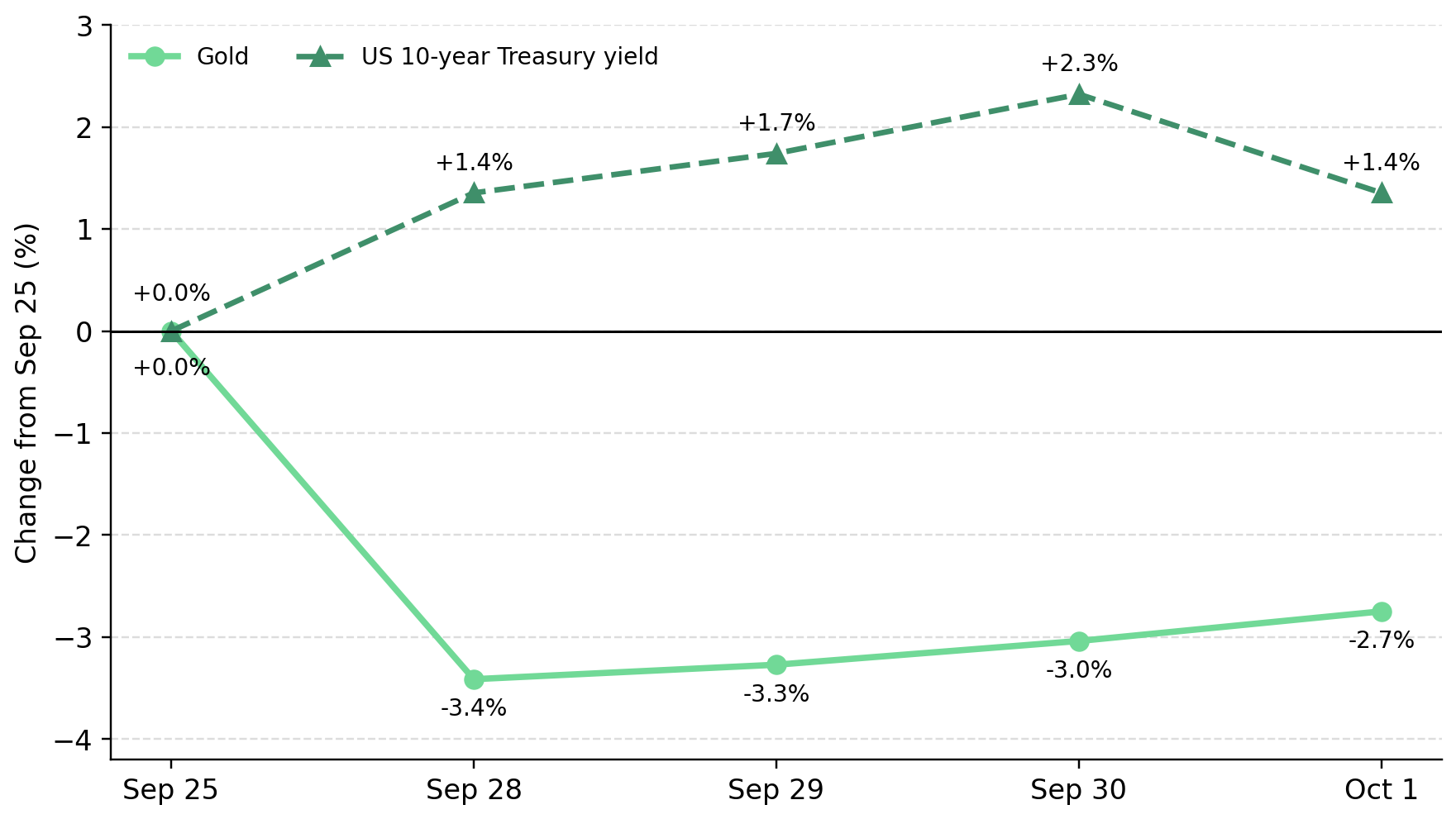
The US 10-year Treasury yield reached an intraday high of 5.342% on October 1, 2026, its highest level since early 2002, after rising by almost 90 basis points during the third quarter. Because Treasury yields provide a benchmark for the cost of capital, the increase raises required returns on long-duration investments, including mine development projects that depend on cash flows generated over many years.
The ICE BofA BBB US Corporate Index rose from 5.05% on January 2 to 6.19% on October 1, while the ICE BofA US High Yield Index increased from 6.55% to 8.22%. As borrowing costs rise, producers with operating cash flow and existing infrastructure gain greater flexibility to fund incremental growth with less reliance on new external capital.
Gold Above US$4,100 Preserves Producer Margins
Higher interest rates raise financing costs for capital-intensive mining projects, but wide gold margins can offset part of that pressure through stronger operating cash flow. S&P Global estimates average global AISC at US$1,539/oz in 2026, while sector margins reached approximately US$2,800/oz during the first half of the year. AISC captures the recurring expenditures required to sustain existing production, providing a broader measure of operating economics than direct mine costs alone.
Spot gold stood around US$4,140/oz on October 2, leaving an illustrative US$2,601/oz spread above S&P Global’s estimated 2026 average AISC of US$1,539/oz. While this does not represent an actual corporate margin, the wide price cushion can support stronger cash generation and greater operating flexibility. During production ramp-ups, that flexibility can also expand the range of material that remains economic to mine.
West Red Lake Gold Mines is advancing the ramp-up at Madsen, with second-quarter gold production and mined tonnage increasing by 50% and grade rising by 20%. The company also moved from approximately break-even conditions in the first quarter to building cash on its balance sheet. Higher gold prices are allowing lower cut-off grades, increasing the amount of material that can enter the mine plan and supporting a higher-tonnage operating profile.
Internal Cash Flow Reduces External Funding Dependence
Wide gold margins become most valuable when they translate into deployable cash. That cash can fund sustaining capital, mine development, exploration, processing improvements, or debt repayment internally as external financing becomes more expensive. Stronger cash generation and lower leverage therefore provide greater control over how growth is funded.
Producer Cash Generation Strengthens Financing Flexibility
Serabi Gold increased first-half 2026 production to 23,049 oz from 20,545 oz a year earlier, while cash reached US$65.7 million. The company remained debt-free after repaying its Santander facility and generated US$34.8 million in net operating cash flow after US$5.3 million of mine-development spending. The stronger cash position provides greater capacity to fund resource growth and mine expansion internally.
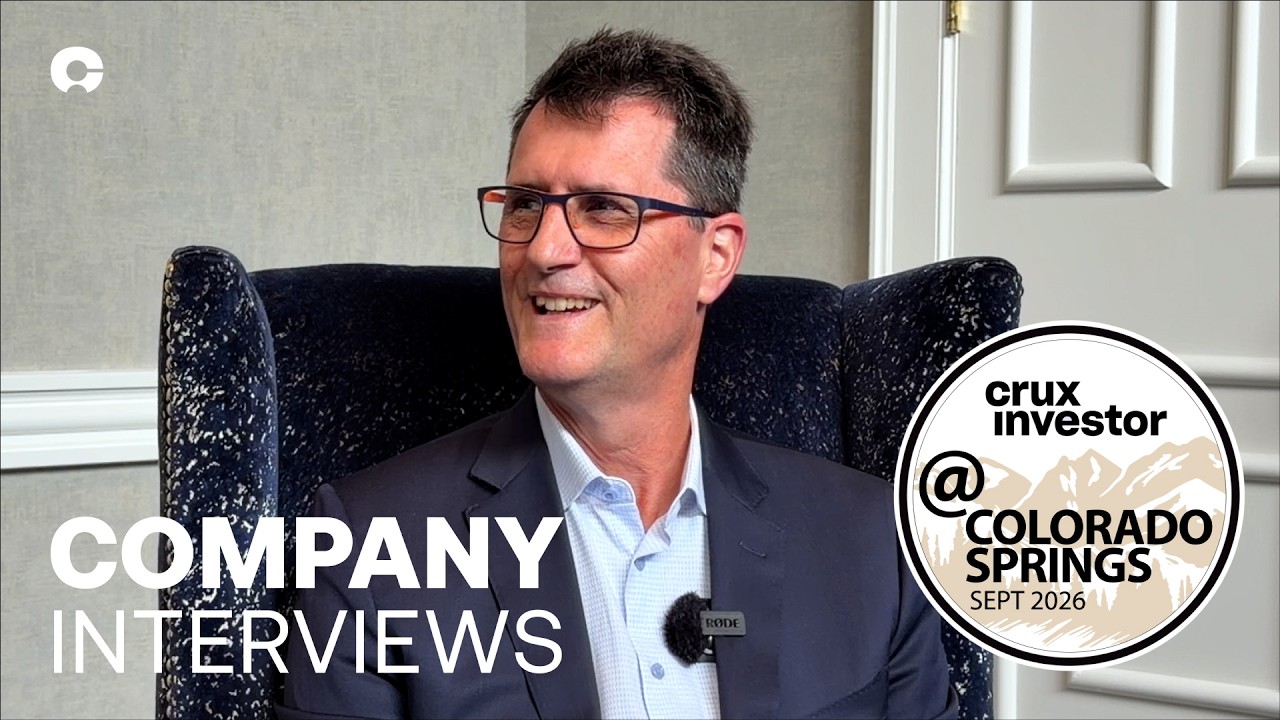
Michael Hodgson, Chief Executive Officer of Serabi Gold, explains how cash generation supports organic growth:
“We've been a one-asset producer, and now we're a two-asset producer. With that cash flow generation, we've been focusing on resource growth across the two mines to maximize production and expand our plant.”
The funding flexibility becomes more valuable as external capital costs rise. Internally generated cash avoids interest expense and immediate equity dilution, while allowing management to choose when and where to reinvest. Companies able to fund expansion from free cash flow therefore retain greater control over project timing and capital allocation.
TRX Gold is expanding Buckreef from its current 2,000-tonne-per-day operation while funding growth from free cash flow. Management estimates the expansion will require about US$50 million over 12 to 18 months and targets a production profile of 80,000 to 100,000 oz annually. Higher production alongside stronger gold prices provides additional cash-generation capacity to support continued expansion.
Operating cash flow provides an internal source of capital alongside debt and equity, giving management greater control over how expansion is funded. With US high-yield corporate borrowing costs up 167 basis points from January 2 to October 1, internally generated cash can reduce reliance on higher-cost external financing.
Existing Infrastructure Lowers the Capital Needed for Growth
Capital efficiency also depends on what has already been built. Existing mills, roads, power connections, and site infrastructure can reduce the capital required to add incremental production. That advantage becomes more important as higher financing costs raise the hurdle for entirely new development.
New Found Gold reached commercial production at Hammerdown in August 2026, establishing an expected production rate of 20,000 to 25,000 oz annually at approximately US$2,500/oz AISC. With Queensway Phase 1 fully funded and Hammerdown now generating operating cash flow, the company has a producing asset supporting its next stage of growth while leveraging existing Pine Cove processing infrastructure.
Existing processing infrastructure can lower the capital required to add incremental production because mills, roads, utilities, permitting, and site services are already in place. That advantage becomes more important as higher Treasury yields raise the cost of external financing and increase project hurdle rates. Brownfield expansion can therefore preserve capital flexibility by adding capacity without requiring the funding burden of a fully new development.
Higher Treasury Yields Favor Capital-Efficient Growth
The other side of self-funding is capital allocation. Strong gold prices can generate cash, but value depends on whether that capital is reinvested at attractive returns. Internal funding therefore provides the greatest flexibility when relatively modest spending can unlock meaningful production growth.
Mineros SA has approximately US$230 million in liquid assets, including gold bullion, alongside minimal debt. At its Nicaragua operations, about US$25 million of processing-capacity investment is expected to add roughly 30,000 oz of annual production. The update highlights how targeted expansion spending can increase output while preserving balance-sheet flexibility.
Daniel Henao, President and Chief Executive Officer of Mineros SA, quantifies how modest capital unlocks additional gold production:
“We're deploying about $25 million this year to expand processing capacity in Nicaragua, with returns on that investment. We're getting about 30,000 ounces of extra production from a $25 million investment.”
As Treasury yields rise, capital projects must generate higher returns to maintain an adequate premium above the cost of capital. That favors projects that can add production with relatively modest spending, such as debottlenecking or processing upgrades. High gold prices can provide the funding, but disciplined project selection determines whether reinvestment earns a sufficient return.
Higher Treasury Yields Pressure Gold Margins
Higher Treasury yields raise financing costs while also increasing the opportunity cost of holding non-yielding gold relative to interest-bearing assets. Gold declined approximately 3.4% during the week through October 2, showing that the same rise in yields that increases funding costs can also weaken the gold-price cushion supporting operating margins.
Cost control determines how much of a high realized gold price becomes free cash flow, while expansion spending must still generate returns that justify the capital committed. Higher operating costs or weak reinvestment returns can absorb part of the benefit from stronger gold prices.
Existing infrastructure can lower expansion costs, while lower leverage can preserve borrowing capacity when external financing becomes more expensive. Brownfield growth can further reduce capital requirements by using assets already in place. If gold margins remain wide while financing costs stay high, stronger cash conversion and disciplined reinvestment can provide greater control over growth, leverage, and dilution.
The Investment Thesis for Gold
- Recurring operating cash flow can fund sustaining capital, drilling, and expansion internally, reducing reliance on higher-cost debt or equity as corporate borrowing costs rise.
- Wide gold margins can absorb part of the pressure from higher interest rates, rising operating costs, and temporary production variability when AISC remains well below realized gold prices.
- Existing mines and processing infrastructure can reduce incremental capital requirements because brownfield growth can use assets that are already built and permitted.
- Lower leverage preserves access to internal cash, selective borrowing, and equity, reducing dependence on any single source of capital.
- Higher benchmark yields raise project return thresholds, increasing the importance of incremental investments that can generate returns above the cost of capital.
- Production growth creates greater financial value when higher gold prices translate into sustainable free cash flow rather than being absorbed by rising operating costs or heavy expansion spending.
Higher Treasury yields raise the cost of external capital, increasing the value of businesses that can fund growth from operating cash flow. In gold mining, strong margins, existing infrastructure, lower leverage, and disciplined reinvestment can reduce dependence on debt or equity while preserving control over project timing. The broader investment case therefore rests not only on gold-price exposure, but on how efficiently cash is converted into sustainable production growth.
TL;DR
The US 10-year Treasury yield reaching a 24-year high has raised borrowing costs and project return thresholds across the gold sector. Gold prices remain well above average sustaining costs, supporting operating cash flow that can fund development without relying as heavily on debt or equity. Existing infrastructure can further reduce capital requirements, while lower leverage preserves financing flexibility. The advantage depends on disciplined reinvestment because higher yields can also pressure gold prices. Companies that convert strong margins into sustainable free cash flow while controlling expansion costs retain greater control over growth, financing, and dilution.
FAQs (AI-Generated)
Analyst's Notes





Subscribe to Our Channel








Stay Informed






















