




70-Tonne ETF Inflows Reinforce Current Gold Output Advantage



Gold ETF inflows stayed positive through September’s correction, while gold above US$4,000/oz supported current mine revenue and cash flow.
- Global gold exchange-traded funds (ETFs) added more than 70 metric tons in September despite an 8%+ gold-price decline, showing that ETF investment demand remained positive through the correction.
- Futures positioning helps explain the ETF-price disconnect. COMEX Managed Money positions declined by 84 metric tons equivalent during September, while spreading positions fell by 156 metric tons equivalent, contributing to the price decline despite ETF accumulation.
- Gold remained above US$4,000/oz after the pullback, preserving elevated revenue per ounce for mines already producing and selling gold.
- Higher gold prices can increase mine revenue and make lower-grade material economic, while all-in sustaining costs (AISC), grade, recovery, royalties, taxation, and throughput determine how much revenue converts into cash flow.
- Global mine production is increasing slowly relative to changes in investment flows, giving current operations and brownfield expansions a timing advantage when demand remains resilient.
ETF Inflows Persist Through Pullback, Showing Resilient Gold Demand
Gold fell more than 8% in September, yet global gold ETFs added more than 70 metric tons, showing that ETF demand remained positive through the correction. World Gold Council (WGC) ranked the price decline in the 93rd percentile of monthly falls and the ETF increase in the 77th percentile of monthly inflows. In WGC data extending from January 2004 through September 2026, no prior month combined price and ETF moves of this magnitude.
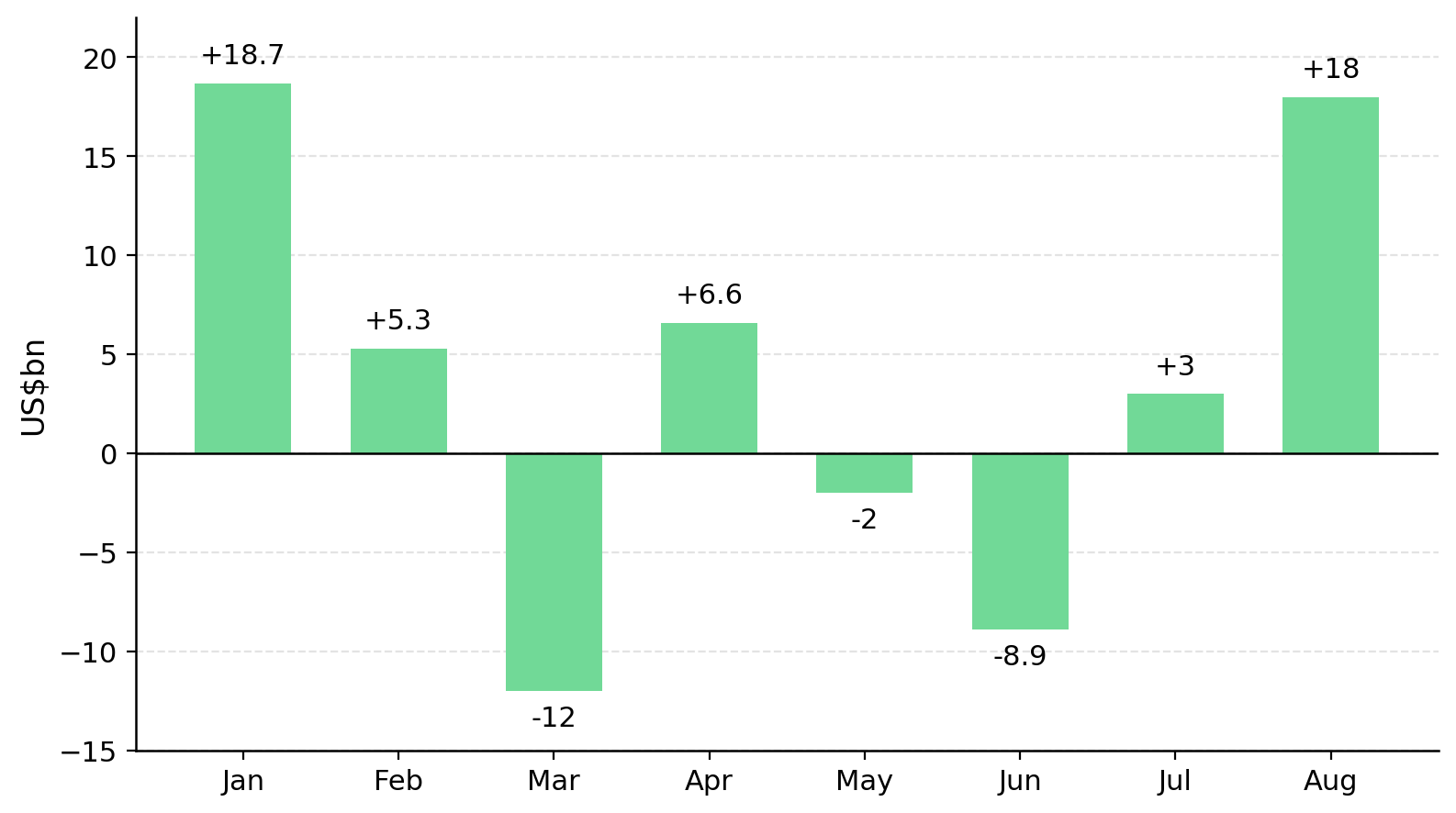
Futures positioning helps explain why gold prices declined while ETF holdings increased. COMEX Managed Money positions declined by 83.7 metric tons equivalent during September, while spreading positions fell by 156.2 metric tons equivalent. Those reductions help explain the price decline even as physically backed ETF holdings increased.
The September price decline did not coincide with a withdrawal of ETF investment demand, as ETF holdings increased while futures positioning contracted. August had already delivered 121 metric tons of ETF inflows, taking global holdings to 4,189 metric tons, so September extended a period of physically backed ETF accumulation rather than reversing it. Continued ETF buying through the correction shows that this investment channel remained active despite short-term gold-price volatility.
Gold Above $4,000 Expands Revenue Potential for Current Production
Gold remained above US$4,000/oz after September’s 8%+ correction, with WGC reporting a Friday close of US$4,190/oz. For producing mines, realized gold prices determine revenue per ounce, making the prevailing price level more financially relevant than the percentage decline from previous highs.
Realized Prices Outpace Costs, Expanding Mine Margins
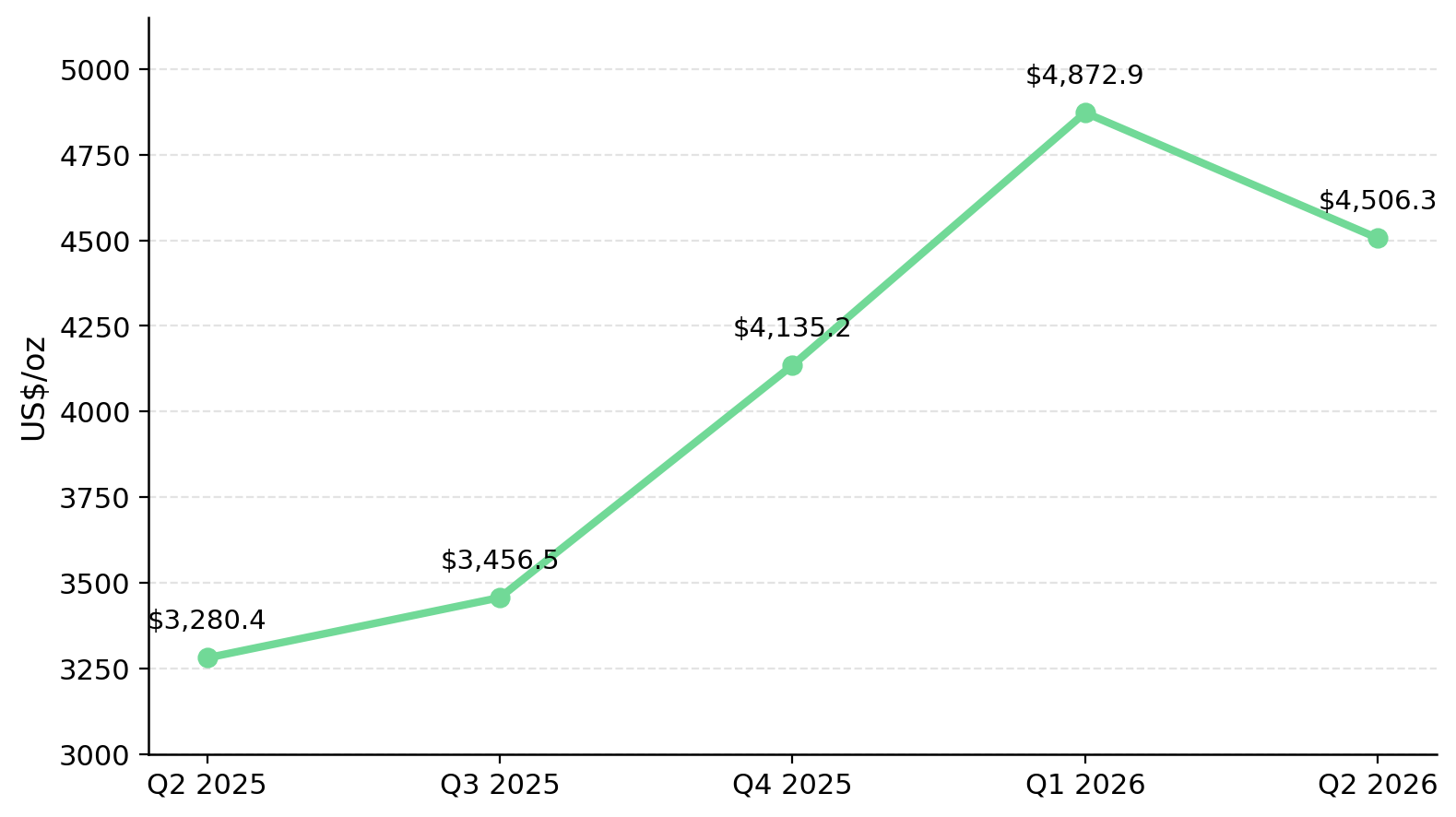
Industry data show that higher gold prices can expand producer margins when realized prices rise faster than operating costs. WGC reported average producer AISC of US$1,785/oz in the first quarter of 2026, up 16% year over year, while stronger gold prices lifted average AISC margins to a record level. That effect is clearest among producers already selling meaningful volumes, where higher realized prices can translate quickly into stronger earnings and liquidity.
Mineros S.A. reported first-half 2026 revenue of US$558.8 million, up 63% year over year, as its average realized gold price increased 46% and gold ounces sold rose 9%. Adjusted earnings before interest, taxes, depreciation, and amortization (EBITDA) increased 70% to US$260.5 million, while cash equivalents and gold-backed assets totaled US$228.8 million. The stronger earnings and liquidity provide greater capacity to fund production growth and portfolio development from internal resources.
Current Production Converts Strong Realized Prices Into Internal Funding
Higher realized prices create the greatest financial leverage when existing production is already generating cash after operating and capital spending. That shifts attention from headline gold prices toward realized pricing, sales volume, and retained cash, particularly when internal cash generation can support further development.
Serabi Gold sold 21,348 ounces in the first half of 2026, up 6% year over year, at an average realized gold price of US$4,687/oz, lifting EBITDA 69% to US$44.4 million. Net cash inflow from operations after US$5.3 million of mine development expenditure reached US$34.8 million, while cash increased to US$65.7 million and the company remained debt-free. The stronger cash position provides greater capacity to fund ongoing mine development and resource growth from internal cash generation.
Elevated Prices Lift Cash Flow From New Production
Elevated gold prices also increase the value of ounces entering commercial production today. Operations that reach production while realized prices remain high can begin generating revenue and cash flow immediately, rather than depending on a future increase in the gold price.
New Found Gold reached commercial production at Hammerdown on August 19, producing 9,140 ounces through the first eight months of 2026 at an average realized gold price of approximately US$4,532/oz. The company is targeting an annual production run rate of 20,000 to 25,000 ounces at an AISC of approximately US$2,500/oz. Commercial production establishes a near-term production and cash-generation base while the company advances its larger Queensway Gold Project.
Keith Boyle, Director and Chief Executive Officer of New Found Gold, links commercial gold production directly to cash generation:
“We’re in commercial production at 20,000 to 25,000 oz a year with all-in sustaining costs of $2,500/oz, and we’re generating cash flow targeting an annualized $40 million.”
Lower Cut-Off Grades Expand Economic Tonnes From Existing Resources
Higher gold prices can also expand the amount of underground material that meets an operation’s economic cut-off. When lower-grade material becomes economic, existing mines can increase the tonnes available for processing and support higher output from established infrastructure.
West Red Lake Gold Mines increased second-quarter gold production 51% sequentially to 8,576 ounces, while gold sales rose 34% to 8,260 ounces. Higher output helped reduce AISC 30% to US$3,284/oz and generate C$9.7 million of positive free cash flow. This supports continued underground development and infrastructure investment at Madsen.
Shane Williams, President and Chief Executive Officer of West Red Lake Gold Mines, explains the link between gold prices and the mine plan:
“With the increasing gold price, cut-off grade can come down a lot more, which allows a lot more material and allows us to switch to long-hole mining.”
Operating Cash Flow Funds Expansion, Raising Production Capacity
Operating cash flow from current production can fund the next stage of mine growth internally. Reinvesting that cash into expansion can reduce near-term reliance on external equity while increasing future production capacity.
TRX Gold produced a record 8,173 ounces in its fiscal fourth quarter, bringing full-year production to 29,650 ounces, up 57% year over year. The company is advancing a new 3,500-tonne-per-day processing circuit at Buckreef using operating cash flow, which is intended to more than double processing capacity. Funding the expansion internally reduces near-term reliance on external equity while increasing capacity for future gold production.
Stephen Mullowney, Chief Executive Officer of TRX Gold, explains how gold cash flow funds mine expansion:
“Self-funded means gold comes out of the ground, creates a profit, and you use that profit to fund your operations and expansion. Right now, we have an US$80 million run-rate EBITDA at US$4,000 gold, and that run-rate EBITDA will go to US$200 million to US$250 million in two to three years as we execute that business plan.”
Higher-Grade Ore Lowers Unit Costs, Strengthening Cash Flow
The value of current production depends not only on realized gold prices but also on how efficiently each ounce is produced. Higher-grade ore can support greater output at lower unit costs, increasing the amount of revenue converted into cash flow.
Integra Resources sold 15,794 ounces from Florida Canyon during the second quarter at an average realized gold price of US$4,426/oz, generating US$70.8 million of revenue. The company is transitioning toward higher-grade central ore bodies, which management says should support lower costs and an annual production run rate of 80,000 to 85,000 ounces. Higher output combined with lower unit costs would strengthen cash generation from the existing operation.
Slow Mine Supply Growth Favors Existing Production
Mine supply responds more slowly than financial demand because new production requires drilling, reserve conversion, permitting, equipment, labor, development, and processing capacity. WGC reported second-quarter global mine production of approximately 966 metric tons, up 2% year over year, while first-half production increased 3% to a record 1,867 metric tons. Its outlook points to only modest growth from mine production and recycling, limiting how quickly additional supply can reach the market.
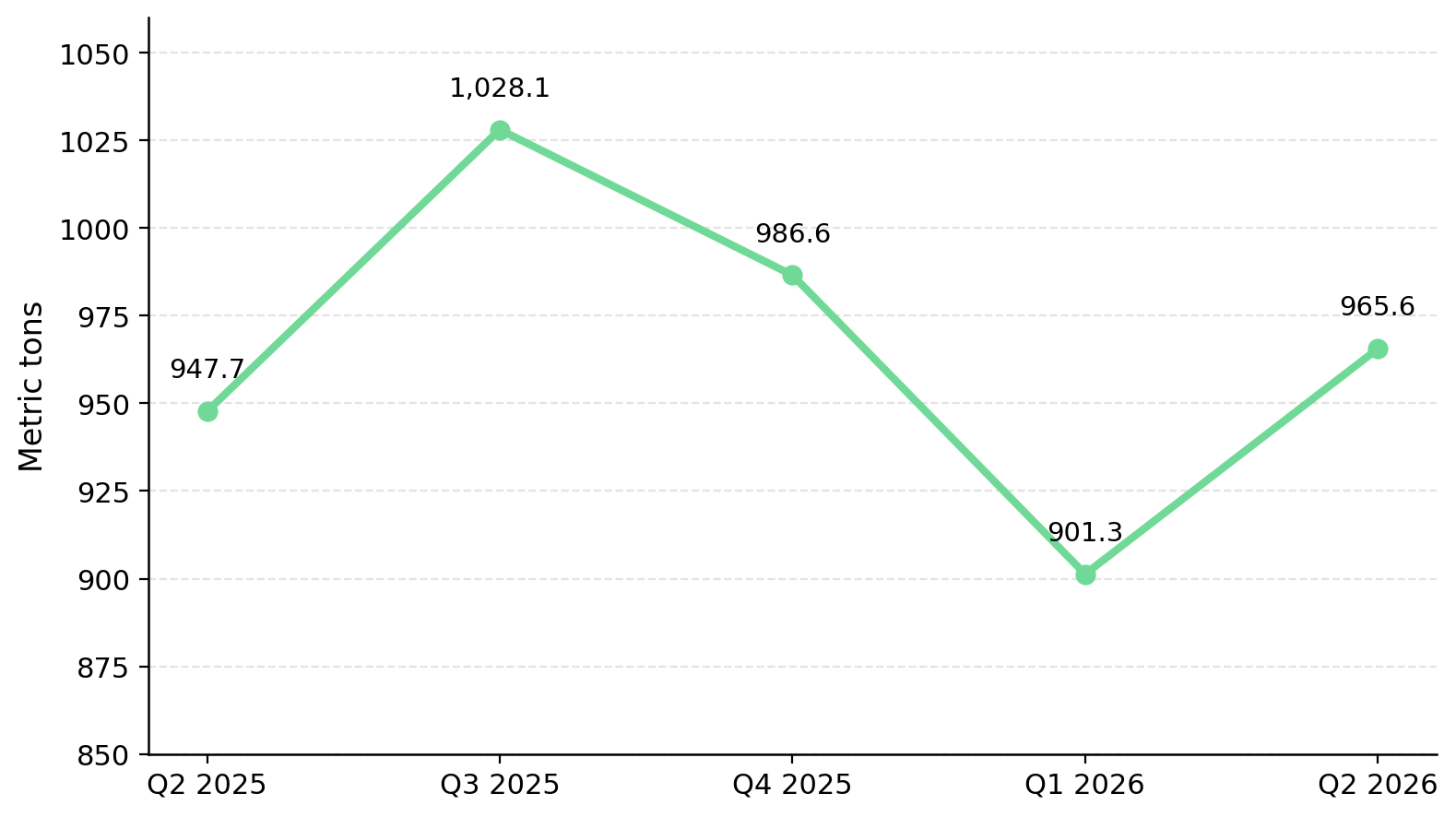
More than 70 metric tons entered global gold ETFs during September even as gold prices fell, showing that financial demand can change far faster than mine output. Existing mines can respond sooner through higher throughput, lower cut-off grades, brownfield additions, or improved recovery, while large increases in global supply require longer development cycles. That timing allows current operations to convert elevated gold prices into revenue before broader mine supply expands.
ETF demand does not guarantee a higher near-term gold price, and gold can remain volatile as real yields and the US dollar move. However, ETF buying remained positive through an 8%+ correction, gold stayed above US$4,000/oz, and global mine production increased only gradually. That combination favors operations already producing gold or adding output through existing infrastructure because they can monetize current prices before new supply reaches the market.
The Investment Thesis for Gold
- Persistent ETF inflows through an 8%+ correction indicate that physically backed gold investment demand can remain positive even when futures positioning pressures short-term prices.
- Gold above US$4,000/oz keeps revenue per ounce elevated for current production, while AISC, royalties, taxation, grade, recovery, and throughput determine how much of that revenue becomes cash flow.
- Producing operations can monetize elevated gold prices immediately, giving current ounces a timing advantage over supply that still requires construction, permitting, financing, or additional technical work.
- Higher gold prices can lower economic cut-off grades and increase mineable material, although operating discipline remains necessary to preserve margins when lower-grade tonnes enter the mine plan.
- Brownfield expansion and additional processing capacity provide a shorter path to incremental production than new greenfield construction because existing infrastructure can absorb part of the growth requirement.
- Slow global mine-supply growth increases the value of execution because financial demand can change much faster than the industry can add new production.
Gold’s outlook remains supported by resilient investment demand and a mine-supply response that develops over longer timeframes. This favors operations already producing gold or expanding through existing infrastructure, where current pricing can support revenue, internal funding, and additional mineable ounces without waiting for new greenfield supply. The strongest investment implication is that execution at existing operations can convert today’s gold-price strength into cash flow and production growth before broader supply catches up.
TL;DR
Gold ETF demand remained positive despite an 8%+ September correction, while reduced futures positioning helped explain the simultaneous price weakness. Gold nevertheless stayed above US$4,000/oz, preserving elevated revenue per ounce for current production. Higher realized prices can expand margins, support internal funding, lower economic cut-off grades, and strengthen the economics of brownfield expansion when costs remain controlled. Meanwhile, global mine production is increasing gradually, giving existing operations a timing advantage because they can monetize current prices before substantial new supply reaches the market.
FAQs (AI-Generated)
Analyst's Notes





Subscribe to Our Channel












Stay Informed






















