Rising Government Debt Extends Gold’s Appeal Beyond Fed Rate Cuts


Gold ETFs attracted US$10 billion despite an 8.5% September price decline, while mine expansions create opportunities for higher output and sales.
- French 30-year government bond term premiums have reached their highest level since the early 2000s, strengthening gold's diversification appeal as concerns over sovereign debt sustainability increase.
- The US fiscal 2026 deficit reached an estimated US$2 trillion, up US$218 billion year over year, increasing government borrowing requirements and exposure to higher debt-service costs.
- UK-listed gold exchange-traded funds (ETFs) attracted 54 metric tons during the third quarter of 2026, compared with 18 metric tons predicted by a historical model, indicating demand beyond established market relationships.
- Gold attracted US$10 billion in global ETF inflows during September despite an 8.5% price decline and a 25-basis-point Fed rate increase, demonstrating continued demand under restrictive monetary policy.
- Global gold mine production rose 2% to a record 966 metric tons in the second quarter of 2026, while individual producers achieved double-digit output growth, creating opportunities for revenue gains beyond higher gold prices.
Rising Interest Costs Add Pressure to National Budgets
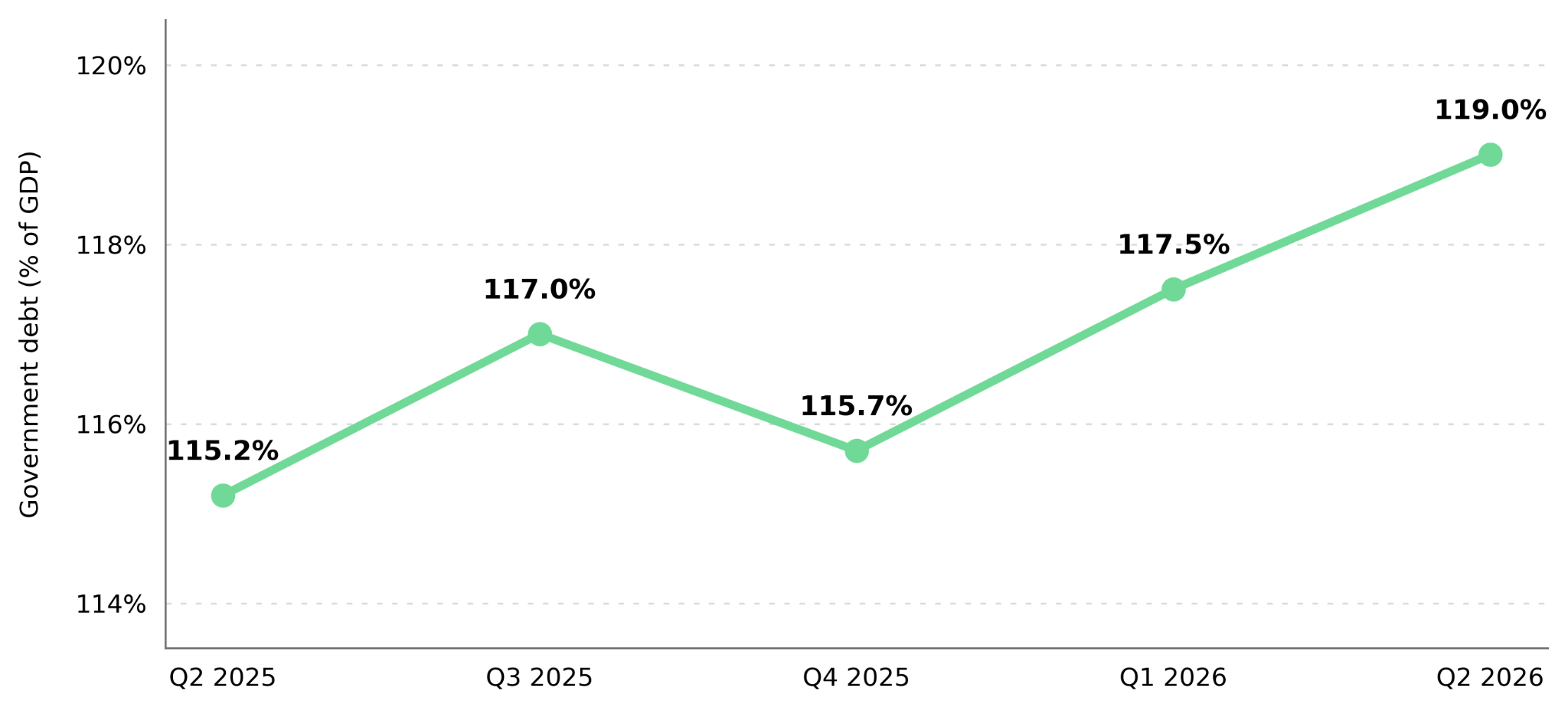
World Gold Council (WGC) reported that France's 30-year government bond term premium reached its highest level since the early 2000s, indicating greater compensation required to hold long-term sovereign debt. French government debt increased €59.6 billion during the second quarter to €3.596 trillion, or 119.0% of gross domestic product (GDP), from 117.5% in the previous quarter. Higher sovereign borrowing premiums can increase debt-service costs as France issues new bonds or refinances maturing obligations.
The Congressional Budget Office (CBO) estimated that the US fiscal 2026 deficit reached US$2 trillion, up US$218 billion from fiscal 2025, increasing federal borrowing requirements. Federal expenditures rose by US$386 billion, compared with a US$169 billion increase in revenue, widening the fiscal shortfall. Its sensitivity analysis estimated that interest rates sustained 50 basis points above its February 2026 baseline would add US$1.9 trillion to cumulative deficits through 2036, compared with US$6 trillion under a 150-basis-point increase.
Higher Treasury Yields Pressure Gold Despite ETF Inflows
The Fed raised its target interest-rate range by 25 basis points to 3.75%-4.00% on September 16, 2026, increasing the opportunity cost of holding non-yielding gold. US 10-year Treasury yield rose 53 basis points during September to approximately 5.3%, while the US Dollar Index gained 2%. Higher yields, dollar strength, and reduced futures positioning contributed to an 8.5% decline in gold prices to US$4,176 per ounce.
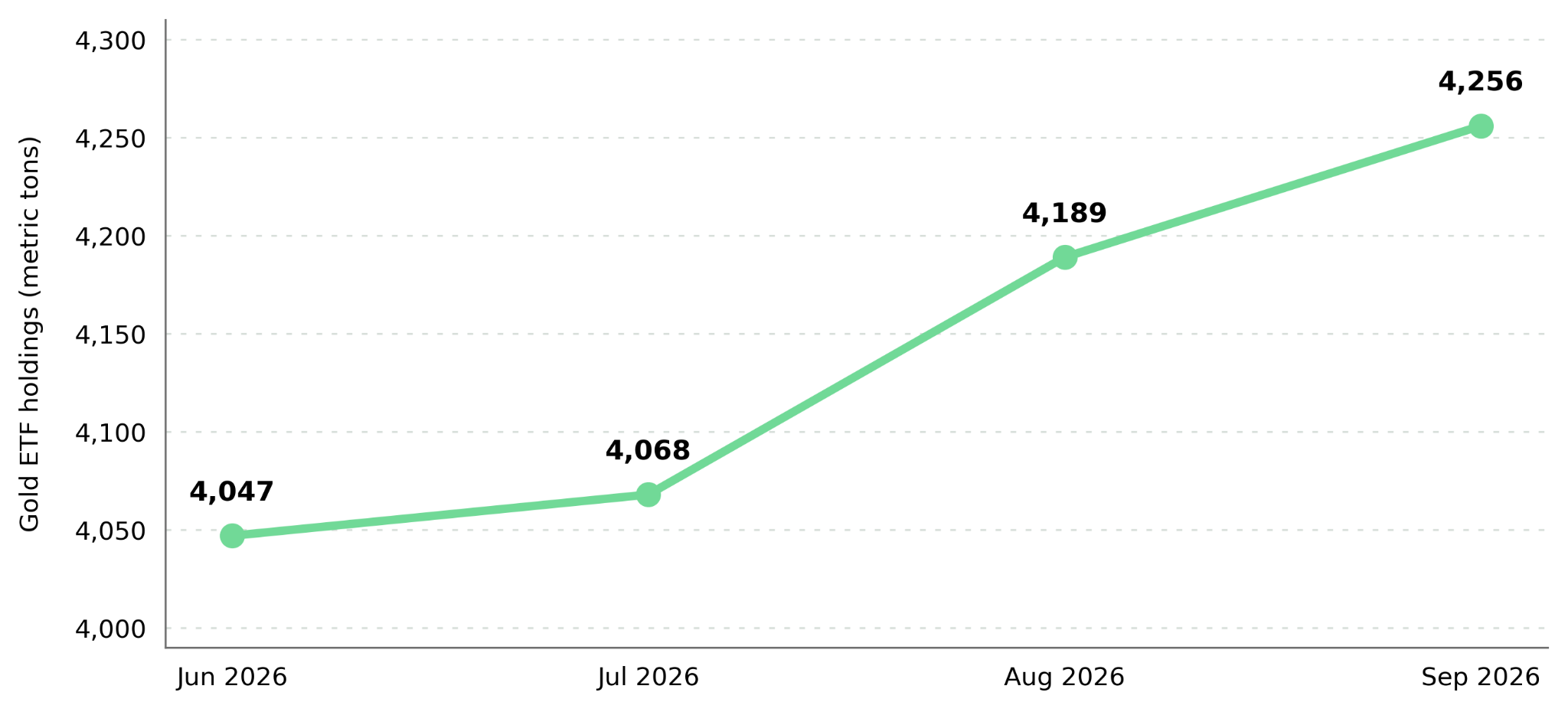
Despite these pressures, global gold exchange-traded funds (ETFs) attracted US$10 billion in inflows, equivalent to 67 metric tons, during September. UK-listed gold ETFs attracted 54 metric tons during the third quarter of 2026, exceeding the WGC's historical model estimate of approximately 18 metric tons by 36 metric tons. These additional UK inflows moved more closely with government bond term premiums beginning in July 2026.
The Bank for International Settlements (BIS) reported in September 2026 that US 10-year government bond term premiums rose approximately 10 basis points, accounting for around 40% of the increase in Treasury yields during its review period. BIS identified debt sustainability concerns, additional bond issuance, and interest-rate uncertainty as possible contributors to higher borrowing costs. While these pressures can strengthen gold's diversification appeal beyond Fed rate cuts, gold-mining equities depend on production volumes, operating costs, and capital spending to translate gold prices into financial returns.
Mine Ramp-Ups Drive Gold Supply Growth
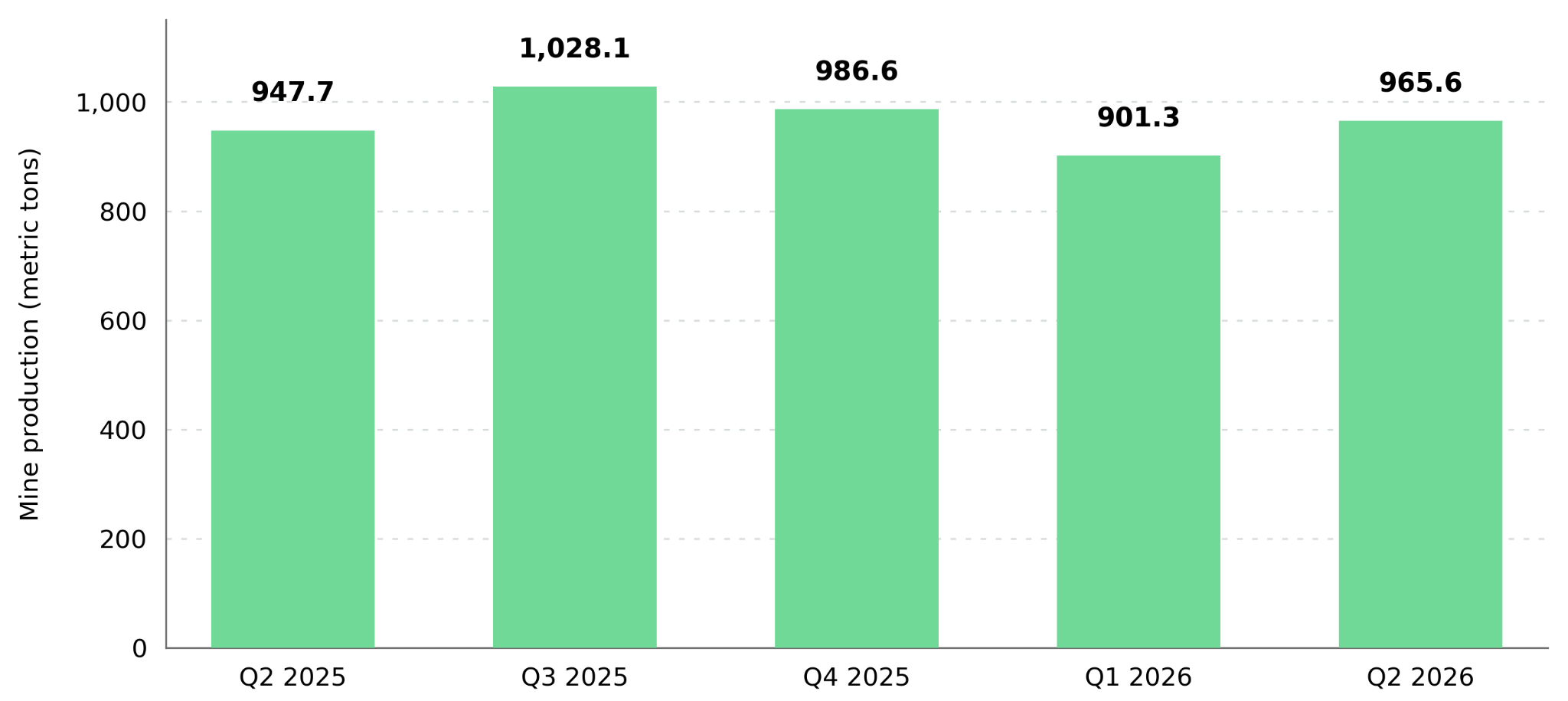
Global gold mine production increased 2% year over year to 966 metric tons in the second quarter of 2026 which is a record for the period. WGC identified mine ramp-ups in Canada and higher processing volumes in Burkina Faso as contributors to production growth, demonstrating how additional mining and processing capacity can increase gold output.
Higher Output Supports Sales Growth
TRX Gold increased fiscal 2026 gold production by 57% to 29,650 ounces, reaching the upper end of its annual guidance. The company is advancing a new 3,500-tonne-per-day grinding circuit at Buckreef alongside its existing 2,000-tonne-per-day operation, with cash generated from current production helping finance the expansion. The additional processing capacity provides room for higher gold output as mining volumes increase, supporting future revenue growth while reducing reliance on new equity financing.
Stephen Mullowney, Director and Chief Executive Officer of TRX Gold, explains how gold prices influence mine development decisions:
“Given the change in gold prices, it makes more sense to continue open-pit mining for longer before transitioning underground. This also defers underground capital expenditure, giving us more time to develop a proper plan and manage the risks associated with the transition.”
Expanding processing capacity creates opportunities for future gold production, while higher output from existing operations can support additional sales without waiting for new facilities. Growth in gold sales and upward revisions to production guidance provide more immediate evidence of a company's ability to increase revenue.
Mineros S.A. increased gold production by 14.0% to 62,565 ounces in the third quarter of 2026, while gold sales rose 11.7% to 61,281 ounces. Higher output at Hemco and improved recovery at Nechí supported a second increase in full-year production guidance to 235,000-245,000 ounces, from 220,000-240,000 ounces. Hemco also held stockpiled ore containing approximately 18,856 ounces of gold at September 30, providing additional material for future processing and gold sales.
Shared Mill Expansion Targets Higher Output Without Separate Plants
Expanding processing capacity through existing infrastructure can increase gold output without requiring separate facilities. Sharing a processing plant across multiple mines can reduce expansion costs while creating opportunities for higher production from existing operations.
Serabi Gold is targeting more than 53,000 ounces of gold production in 2026, supported by Coringa's ramp-up and expanded processing capacity at Palito in Brazil. The company plans to increase milling capacity from 650 to 900 tonnes per day by the fourth quarter of 2026, with an estimated US$5 million investment. Processing ore from both mines at Palito reduces the need for separate facilities, while US$65.7 million in cash and no debt as of June 30 provides financial flexibility to support further production growth.
Mike Hodgson, Chief Executive Officer of Serabi Gold, explains how resource growth supports higher gold production:
“We're doubling our production and we've gone from being a single-asset producer to a two-asset producer. We've been focusing on resource growth across both mines to maximize production and expand our plant.”
Mine Advancement Expands Future Production Potential
Global gold mine production reached 1,867 metric tons in the first half of 2026, up 3% year over year. Mines entering commercial production can add new sources of gold sales, while upgrades to existing processing facilities can accommodate additional ore and support future output growth.
Commercial Production Establishes New Sales Opportunities
New Found Gold achieved commercial production at Hammerdown effective August 19, 2026, establishing a source of operating cash flow. The operation reported average processing of 748 tonnes per day and gold recovery of 87.7%. Upgrades to the existing Pine Cove mill are also underway to improve gold recovery and accommodate future ore from Queensway, creating a pathway to additional production through existing infrastructure.
Beyond establishing commercial production, sustaining gold output requires identifying additional ore for future extraction. Drilling within existing underground operations can help define new mining areas, supporting longer-term production planning and potential output growth.
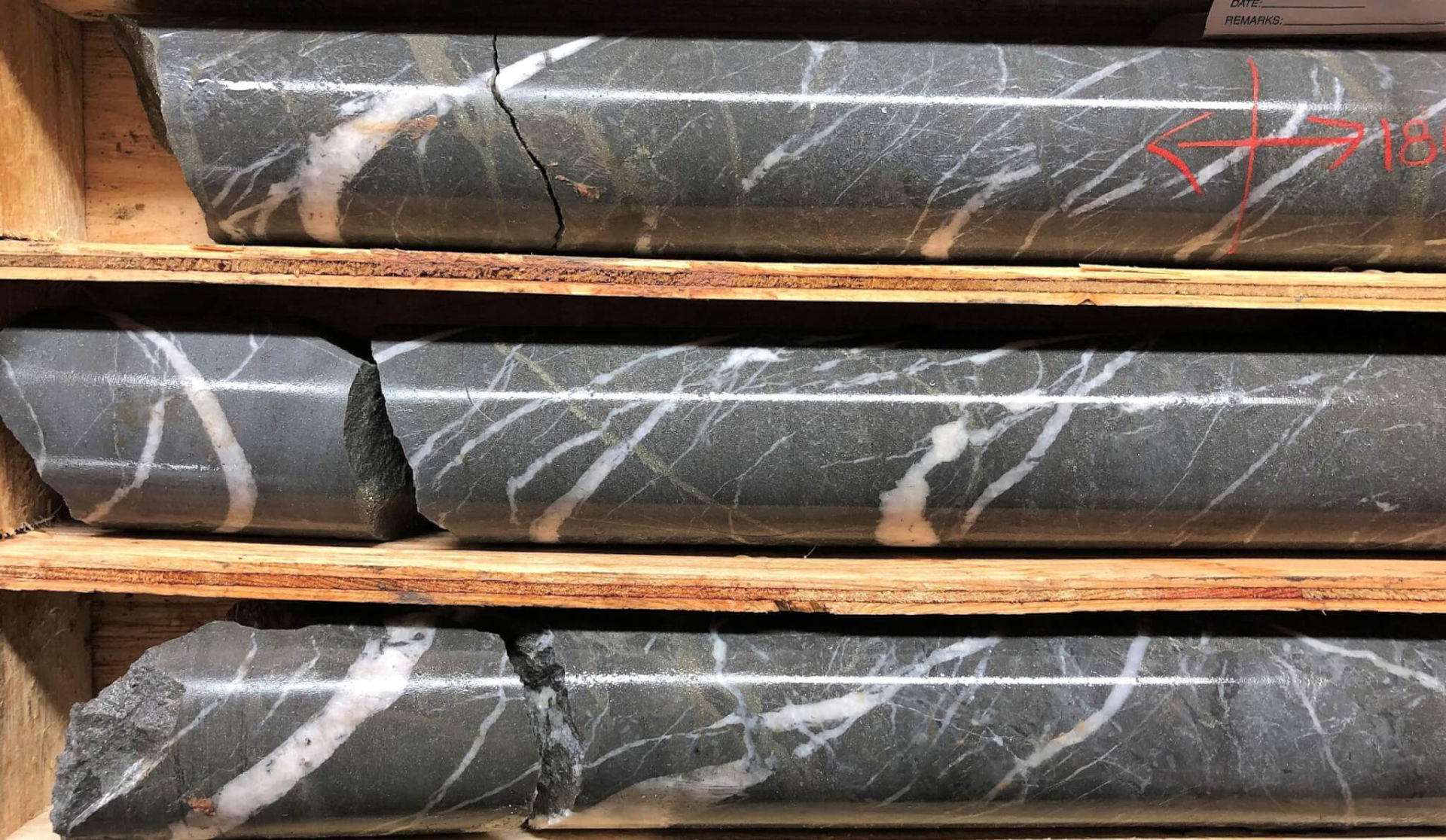
West Red Lake Gold Mines reported a high-grade drilling intersection of 176.04 grams per metric ton (g/t) gold over 5.3 meters at its Madsen Mine in Ontario. Additional high-grade results from the Austin 904 and 955 complexes are being evaluated for future mine plans. With existing underground infrastructure providing access to these areas, the drilling supports the potential to expand mineable gold inventory and improve future production planning.
Shane Williams, President and Chief Executive Officer of West Red Lake Gold Mines, explains how higher gold prices change mining economics:
“With the increasing gold price, the cut-off grade can come down further, allowing more material to be mined and enabling us to switch to long-hole mining. We've been able to process more material at a lower grade through the mill.”
Feasibility Studies Guide Mine Construction Decisions
Existing mines can use additional drilling results to strengthen future production plans, while new projects require defined economics and financing preparations before construction. Feasibility studies establish projected production and financial returns, while progress in engineering and permitting helps advance projects toward construction decisions.
Integra Resources combines gold production at Florida Canyon in Nevada with future growth potential at its DeLamar Gold-Silver Project in Idaho. DeLamar's December 2025 feasibility study projects average annual production of 119,000 gold-equivalent ounces during its first five years, establishing a potential source of additional revenue alongside existing operations. Continued progress in engineering, permitting, and financing preparations, with a federal environmental decision targeted for the second half of 2027, could bring the project closer to construction and support an expansion of its future production base.
Growing Government Debt Adds to Gold’s Appeal
CBO estimates that additional Treasury debt equivalent to 1 percentage point of GDP would raise the modeled US 10-year Treasury term premium by 2.8 basis points. Higher term premiums increase borrowing costs on newly issued government debt, strengthening gold's diversification appeal outside sovereign credit markets without requiring Fed rate cuts.
Gold ETF purchases continued despite higher Treasury yields and falling bullion prices, while additional UK inflows moved more closely with government bond term premiums beginning in July 2026. This pattern raises the possibility that concerns about government borrowing costs are contributing to gold demand beyond expectations for Fed rate cuts. Higher mine output can generate additional gold sales, while operating costs and capital spending determine how much of that revenue becomes cash flow.
The Investment Thesis for Gold
- Rising sovereign debt burdens and long-term government bond risk premiums provide an additional rationale for gold allocation beyond expectations for Fed rate cuts, reinforcing bullion's diversification role.
- Continued gold ETF purchases during restrictive monetary policy demonstrate that higher interest rates do not eliminate investment demand, although Treasury yields and currency movements continue to influence prices.
- Producers increasing saleable ounces can expand revenue, while realized gold prices, AISC, and sustaining capital determine how production growth contributes to cash flow.
- Expanding existing processing plants can accommodate additional ore without constructing separate facilities, creating opportunities for higher gold output when mining volumes and recovery rates support the investment.
- Commercially operating mines and producers defining additional underground inventory can improve future production visibility through consistent throughput, grade reconciliation, and mine planning.
- Feasibility studies establish projected production and financial returns, while engineering, permitting, and financing preparations determine how development projects progress toward construction and future revenue.
Rising sovereign debt premiums strengthen gold's investment appeal beyond expectations for Fed rate cuts, as bullion provides exposure without government repayment obligations. Continued gold demand despite higher interest rates reinforces its diversification role, while mining companies can benefit from expanding production, increasing processing capacity, and advancing projects toward future gold sales. The broader investment opportunity lies in combining gold's role outside sovereign debt markets with mining companies' ability to generate cash flow, expand production, and create value through additional gold output.
TL;DR
Rising sovereign borrowing costs in France and the US strengthen gold's diversification appeal beyond expectations for Fed rate cuts. Global gold ETFs attracted US$10 billion in September despite falling bullion prices and higher Treasury yields. UK-listed funds also recorded inflows exceeding historical model estimates, suggesting that fiscal concerns may be contributing to gold demand. Meanwhile, global mine production growth creates opportunities for producing companies to increase sales through processing expansions and higher output. Commercial production milestones, underground drilling, and advancing development projects offer additional growth potential, while operating costs and capital spending determine how increased production translates into cash flow.
FAQs (AI-Generated)
Analyst's Notes





Subscribe to Our Channel










%20(1).png)


Stay Informed