




Banyan Gold Advances AurMac Gold Project to Maiden PEA by Q4 2026


Advancing PEA and Permitting as 120,000m 2027 Drill Plan Takes Shape
- AurMac hosts 3.64 million ounces Indicated at 0.68 g/T and 4.98 million ounces Inferred at 0.58 g/T gold, supported by existing roads, a grid-connected power line and cell service.
- Banyan's maiden PEA is due in Q4 2026 and is intended as a conservative baseline to start permitting and government conversations, not as the project's final word.
- A C$58 million financing at C$2.00 per share, with Franco-Nevada subscribing for 10 million shares, is expected to take the treasury to around C$100 million.
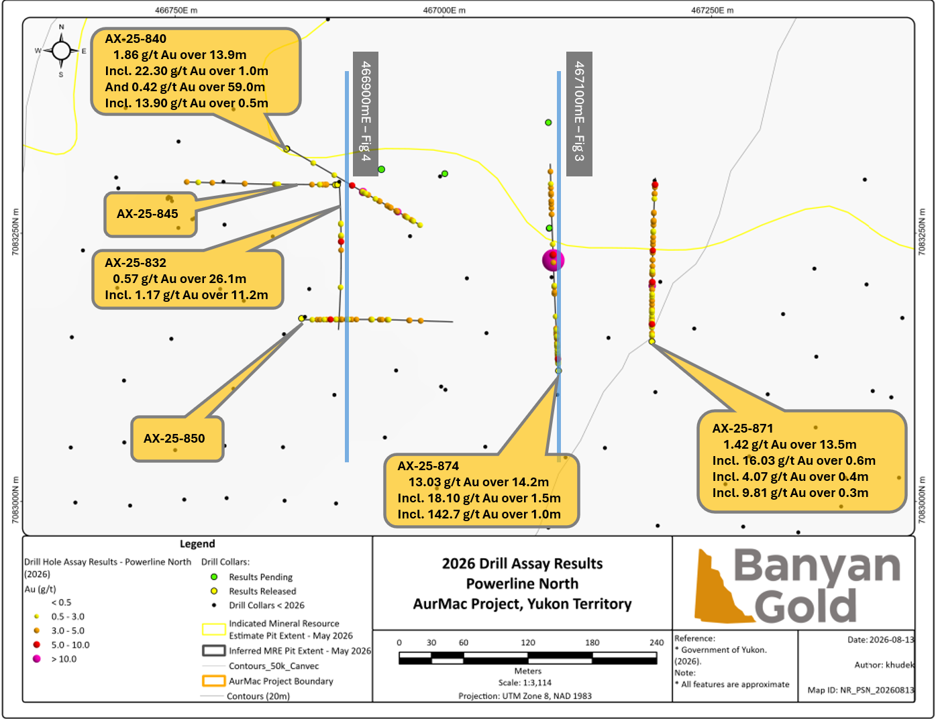
- Results returned 13.03 g/t gold over 14.2 metres between the Airstrip and Powerline deposits, which CEO Tara Christie says could reshape pit sequencing.
- Banyan plans 120,000 metres of drilling in 2027 and has made two discoveries at Nitra from the first two of 11 targets drilled this year.
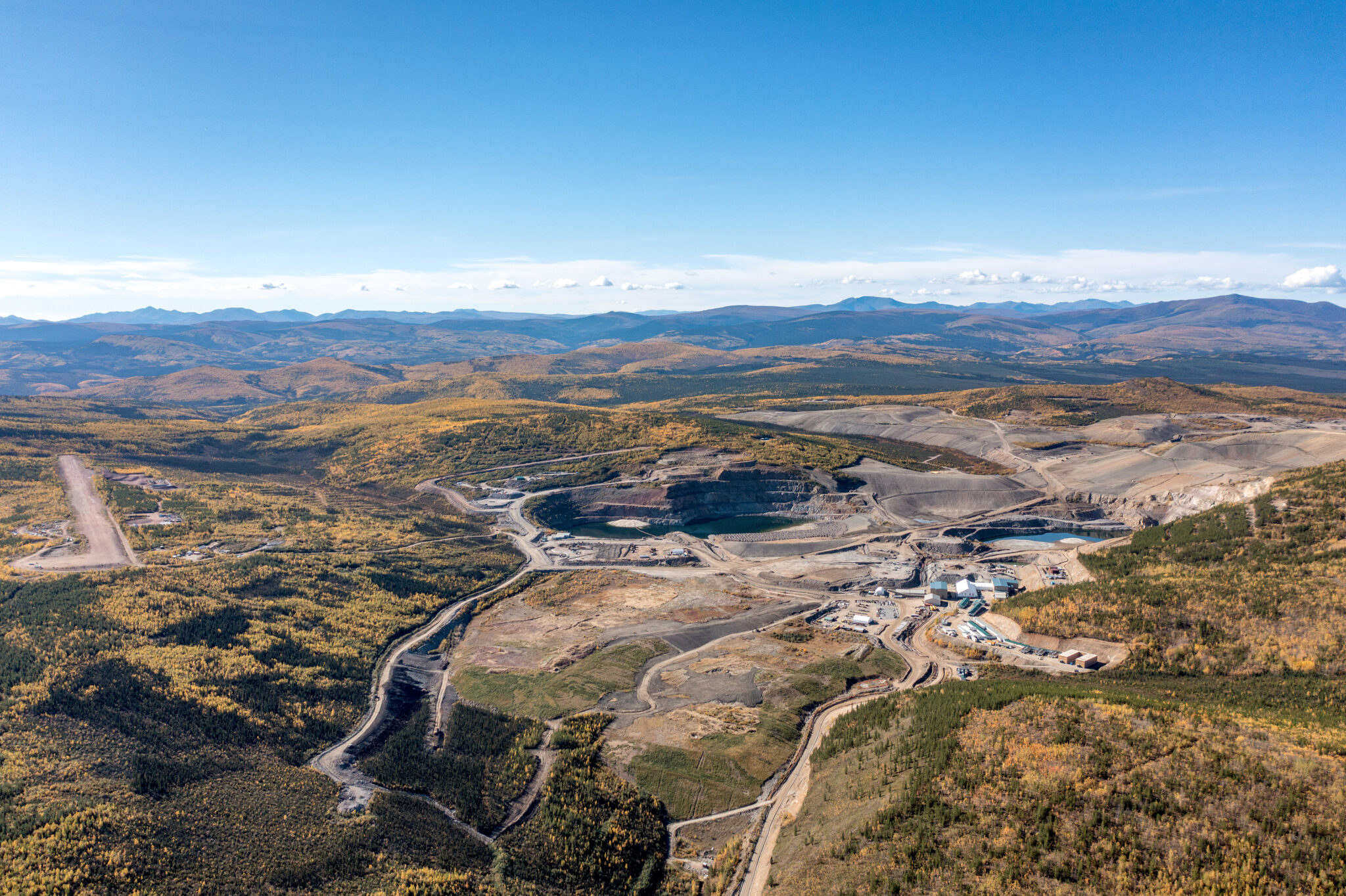
Banyan Gold Corp. (TSXV:BYN) is approaching a stage most junior explorers never reach. Its AurMac project in Canada's Yukon hosts a pit-constrained resource of 3.64 million ounces Indicated at 0.68 g/t gold and 4.98 million ounces Inferred at 0.58 g/t, set within one of the best-serviced districts in northern Canada. A maiden Preliminary Economic Assessment (PEA) is due in the fourth quarter of 2026, and a 70,000 metre drill programme is running alongside it. President and CEO Tara Christie explained why Banyan is publishing its first economic study now rather than waiting for this year's drilling to improve it. The company is reshaping itself from an explorer into a developer, at a time when gold trades above US$4,000 per ounce and Ottawa is prioritising projects that can drive the Canadian economy.
Drilling With the Mine Plan in Mind
The PEA is based on drilling completed up to the end of 2025. Everything drilled in 2026 has been designed around the pit shells that study will define. Roughly 60,000 metres of this year's programme at AurMac targets high-grade mineralisation for conversion, with some upgrading to Indicated and expansion in key areas. The aim is to lift grade, cut the strip ratio and improve the production profile across the first ten years of a potential mine life. One example sits in swampy ground between the Airstrip and Powerline deposits, an area left untested because it can only be drilled in winter. Results returned 13.03 g/t gold over 14.2 metres in that gap, including 142.70 g/t over 1.0 metre. Christie said the result could change the sequencing of the pits and may define a new starter pit. Banyan is ramping up to six drills this autumn and plans eight rigs from mid-January, with 100,000 metres at AurMac and a further 20,000 metres at its Nitra project scheduled for 2027.
PEA Study Ahead of Permitting
Christie acknowledged the argument for delaying the study until the 2026 results can be included. Banyan focused on a defined project footprint to begin meaningful conversations with communities, First Nations and governments ahead of permitting. It also gives the territorial government a basis to plan around power and roads. Other Yukon projects, such as Snowline Gold's, are already competing for that attention. Christie described the PEA as conservative. She expects it to assume throughput of around 35,000 to 40,000 tonnes per day, processed through a carbon-in-leach (CIL) circuit with gravity recovery, at about 90% overall recovery and roughly 40% from gravity. Power is one of the clearest optimisation levers. The PEA will assume self-generation from liquefied natural gas (LNG) and diesel, because grid supply cannot yet be counted on. The Yukon government's planned Whitehorse power centre expansion would add about 160 megawatts, which Christie said would be enough for the project.
Interview with Tara Christie, President & CEO of Banyan Gold Corp.
A Treasury Built for Execution
Banyan announced a C$50 million Listed Issuer Financing Exemption (LIFE) offering and a concurrent C$8 million private placement, both priced at C$2.00 per share, with Canaccord Genuity as lead agent. Franco-Nevada has agreed to subscribe for 10 million shares across the two tranches. The financing would leave Banyan with a treasury of around C$100 million, enough to execute through 2027 and into 2028. All but one of the largest shareholders participated pro rata. Franco-Nevada's equity stake follows its C$52.2 million purchase earlier this year of a legacy net smelter return (NSR) royalty over AurMac, which Banyan has the option to reduce to 1% for C$10 million.
Christie sees this as long-term alignment, since faster development brings its royalty income forward as she also commits own capital to the raise. Banyan was also added to the VanEck Junior Gold Miners ETF (GDXJ) widening its reach among passive and ETF investors.
"It shows that they're there for the long term. They would like to help us advance this project as fast as we can because that helps them realize their royalty earlier. So, that's there and they are strong technical team and certainly a great group to work with.
Building a Company That Can Build a Mine
Banyan is adding the skills a development-stage company needs. Patrick Langlois has joined as Vice President of Strategy and Corporate Development, and a Vice President of Engineering is being recruited. Baseline environmental and water work has run since 2021. Community engagement is practical rather than presentational. Banyan holds a monthly community meeting, spends about C$50,000 a month at the Mayo community grocery store and runs a shuttle bus so local day workers can commute around 20 minutes to site and sleep at home. On corporate strategy, Christie said Banyan is building the team that wants to develop AurMac itself. She also argued that the same de-risking work would earn a higher premium if a buyer did emerge.
"You can't sit around and wait to be bought because we're going to lose too much time value of money if we don't do all the steps and we don't get this started down the permitting path."
As a major shareholder, she said she would weigh any offer against the risk of Banyan becoming a single-asset producer.
Nitra: Adding a District Dimension
Banyan's greenfield team has moved to the 100%-owned Nitra project, about 25 kilometres west of AurMac, where the first two of 11 targets drilled in 2026 have produced discoveries. Results at Roaring Fork returned 1.62 g/t gold over 5.0 metres, including 17.80 g/t over 0.4 metres, Seattle Creek intersected 0.91 g/t gold and 27.01 g/t silver over 12.1 metres, including 5.70 g/t gold and 544 g/t silver over 0.5 metres. Christie said intrusive rock has also been identified. In her view, a satellite pit of 200,000 to 500,000 ounces above 1 g/t within trucking distance of a mill could significantly lift the grade and production profile. She also expects AurMac's next resource update to exceed 10 million ounces, a threshold she described as critical.
The Investment Thesis for Banyan Gold
- AurMac hosts 3.64 million ounces Indicated and 4.98 million ounces Inferred with road, grid-connected power line and cell phone access already in place, giving it an infrastructure advantage over more remote Yukon peers.
- The Q4 2026 PEA is designed as a conservative baseline, and the 2026 drilling was targeted to improve grade, strip ratio and early-year production in the studies that follow.
- Results such as 13.03 g/t over 14.2 metres in the gap between Airstrip and Powerline could reshape pit sequencing and warrants close attention in winter 2027 drilling.
- A treasury of around C$100 million on completion of the C$58 million financing, with Franco-Nevada as a subscriber, removes near-term funding risk through 2027.
- Nitra's two early discoveries add satellite-feed potential, with nine of 11 targets from the 2026 programme still to be reported.
- Key risks include a heavily Inferred resource, reliance on future grid power, permitting timelines and single-asset concentration.
- Catalysts includes PEA release in Q4 2026, the close of the financing, and an updated resource that management expects to exceed 10 million ounces.
Macro Thematic Analysis
Gold above US$4,000 per ounce has changed the economics of large, lower-grade open-pit deposits in stable jurisdictions, and the constraint is increasingly data rather than grade. AurMac illustrates the point. Its earlier drilling stopped at around 200 metres, so its pit shells at higher gold prices are bounded by the extent of drilling rather than by economics. Each additional metre of depth therefore carries more leverage than it would have done three years ago.
Christie was open about volatility, and that view explains why Banyan raised money well ahead of its PEA.
"I'm a personal believer that gold price is going up, but there could be bumps along the way. And so, the best thing for my shareholders is to make sure that we've got enough money to execute on what we want to do next year."
Jurisdiction is the second theme. Canada's federal government is prioritising projects that support national economic growth, and the Yukon is expanding its generating capacity. For developers, the scarce resource is regulatory and political attention, and several Yukon projects are now competing for it. Companies that establish a clear project footprint early, backed by baseline data and community relationships, are better placed to move through permitting when capacity opens up.
Capital is the third. Royalty groups are taking positions earlier in the project cycle, and index inclusion brings passive fund flows to juniors of Banyan's size just as development spending begins to rise.
TL;DR
Banyan Gold (TSXV:BYN) is preparing a maiden PEA for its AurMac project in the Yukon, due in Q4 2026, based on a resource of 3.64 million ounces Indicated and 4.98 million ounces Inferred. CEO Tara Christie calls the study a conservative waypoint needed to start permitting, community and government conversations, while 2026 drilling targets higher grade and lower strip ratios for later studies. A C$58 million financing at C$2.00, including Franco-Nevada, is expected to lift the treasury to around C$100 million. Christie is investing C$500,000 herself. Two early discoveries at Nitra and a 13.03 g/T intercept between the main pits add upside ahead of a planned 120,000 metre 2027 programme.
FAQs (AI Generated)
Analyst's Notes





Subscribe to Our Channel


Stay Informed


