




Selkirk Copper Plots a Fast-Track Minto Restart on C$186M Capex


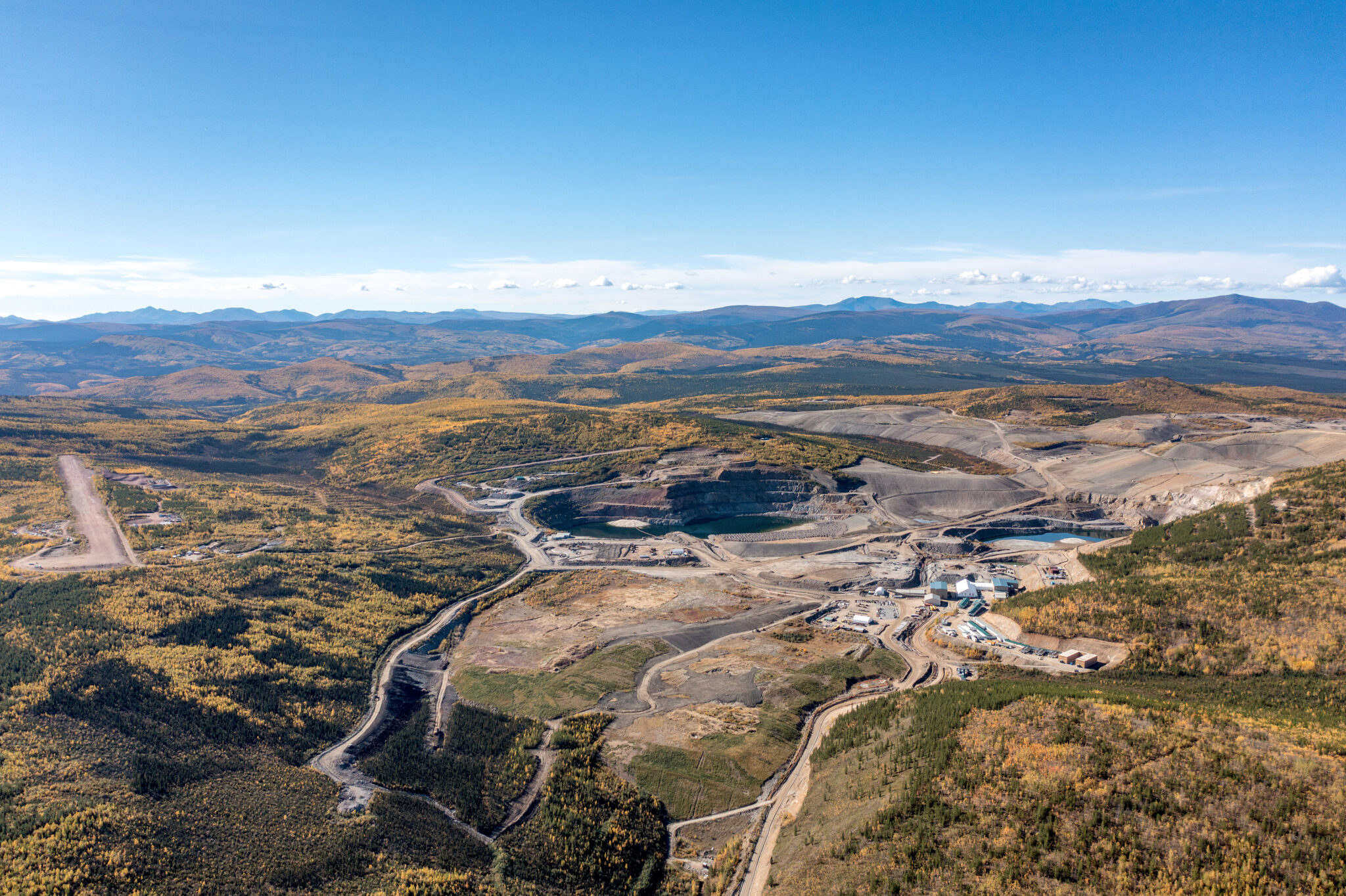
Selkirk Copper's Minto PEA shows a C$494M NPV on C$186M capex. CEO Colin Joudrie outlines the dewatering and feasibility path to 2028 copper output.
- Selkirk Copper's Minto PEA returns an after-tax NPV7% of C$494 million, a 47.8% IRR and a 1.9-year payback for initial capital of C$186 million at planning prices.
- More than $330 million of existing infrastructure supports a 13-year restart plan, with first concentrate targeted for the second half of 2028.
- The mine would produce a clean 38% copper concentrate with gold and silver credits, entering a market where smelters are competing for high-quality feed.
- The PEA mine plan draws on only around 18.4 million tonnes of a 47.8 million tonne M&I resource, and Phase 2 drilling will feed an updated MRE in Q1 2027.
- CEO Colin Joudrie identified government authorisation to begin a five-month dewatering programme as the gating item for the restart timeline.
Copper concentrate is becoming harder to secure. New smelting capacity in the Democratic Republic of Congo, Indonesia and India has outgrown mine supply, and benchmark treatment charges have fallen sharply as smelters compete for feed. Selkirk Copper Mines Inc. (TSXV:SCMI) is betting that a past-producing Yukon mine can reach that market within two years, rather than the decade a greenfield project would typically need.
After publishing a Preliminary Economic Assessment (PEA) for the Minto copper-gold-silver project, President and CEO Colin Joudrie set out a plan built on existing infrastructure, a feasibility study due to start within weeks and a partnership with the Selkirk First Nation. The PEA outlines a 13-year mine life for an initial capital cost of C$186 million. The company is targeting first concentrate in the second half of 2028.
Restarting a Past Producing Mine
Minto produced high-grade copper concentrate from 2007 until May 2023, before the asset went into receivership. The Selkirk First Nation acquired it through the bankruptcy process and vended it into Selkirk Copper through a reverse takeover. Joudrie said the restart leverages more than $330 million of above-ground investment made by prior operators. That base includes a 4,100 tonnes-per-day (tpd) mill with a semi-autogenous grinding (SAG) mill and two ball mills, a 400-person camp, a water treatment plant, an airstrip and a connection to the Yukon power grid.
The PEA confines all development to the boundary of the existing Quartz Mining Licence. Underground mining at Minto North, Minto East, Copper Keel and Area 118 supplies all mill feed in the early years. The Ridgetop and Area 118 open pits follow later in the mine life. New capital goes mainly into a three-stage crushing circuit, two gravity concentrators to lift gold recovery, a concentrate dryer and a later move to dry-stack tailings. Joudrie described the 13-year plan as the longest single mine life the asset has ever had.
The product is a clean concentrate grading around 38% copper, 12-18 g/t gold and 100-150 g/t silver, with negligible penalty elements. Peak output is 48,700 tonnes of concentrate a year, trucked to the Port of Skagway, Alaska, for shipment to smelters.
PEA Economics: Low Capital, Fast Payback
At planning prices of US$5.00/lb copper, US$3,600/oz gold and US$50/oz silver, the PEA returns an after-tax net present value at a 7% discount rate (NPV7%) of C$494 million. The after-tax internal rate of return (IRR) is 47.8% and payback is 1.9 years from first production. At spot prices of US$6.50/lb copper, US$4,300/oz gold and US$65/oz silver, the NPV rises to C$1,023 million, with a 78.2% IRR and 1.3-year payback.
Joudrie said initial capital came in below the company's earlier guidance of around C$225 million. The resulting NPV-to-capex ratio is 2.7:1 at planning prices. Sustaining capital, including closure, totals C$409 million over the mine life. Operating costs average C$95.77 per tonne milled. The company's presentation puts life-of-mine C1 cash costs at US$1.53/lb copper net of by-product credits.
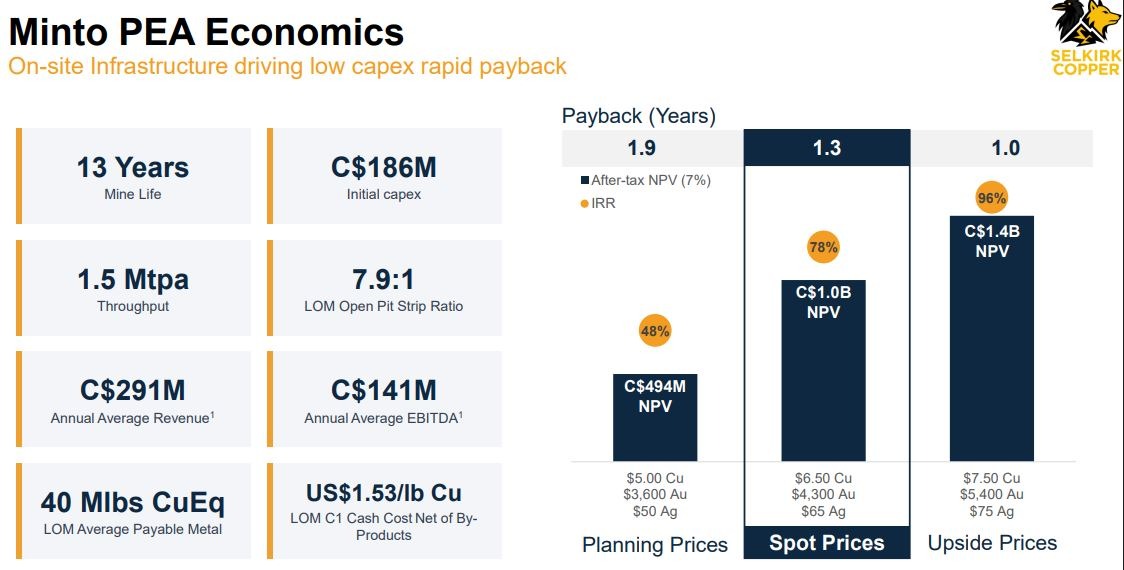
Two caveats apply. The capital estimate is an AACE Class 5 estimate, with an accuracy range of -50% to +100%. Pre-capex work such as dewatering, underground rehabilitation and ongoing water treatment sits outside the PEA as a sunk cost. Joudrie put that spend at about $20 million and said it is already budgeted. The economics are most sensitive to copper price, the CAD:USD exchange rate and copper recovery.
The prior offtake agreement and precious metals stream were removed in the bankruptcy. The company therefore holds full gold and silver exposure and an unencumbered offtake position, which it plans to test as a potential source of non-dilutive financing.
Resource Growth Feeds the Feasibility Study
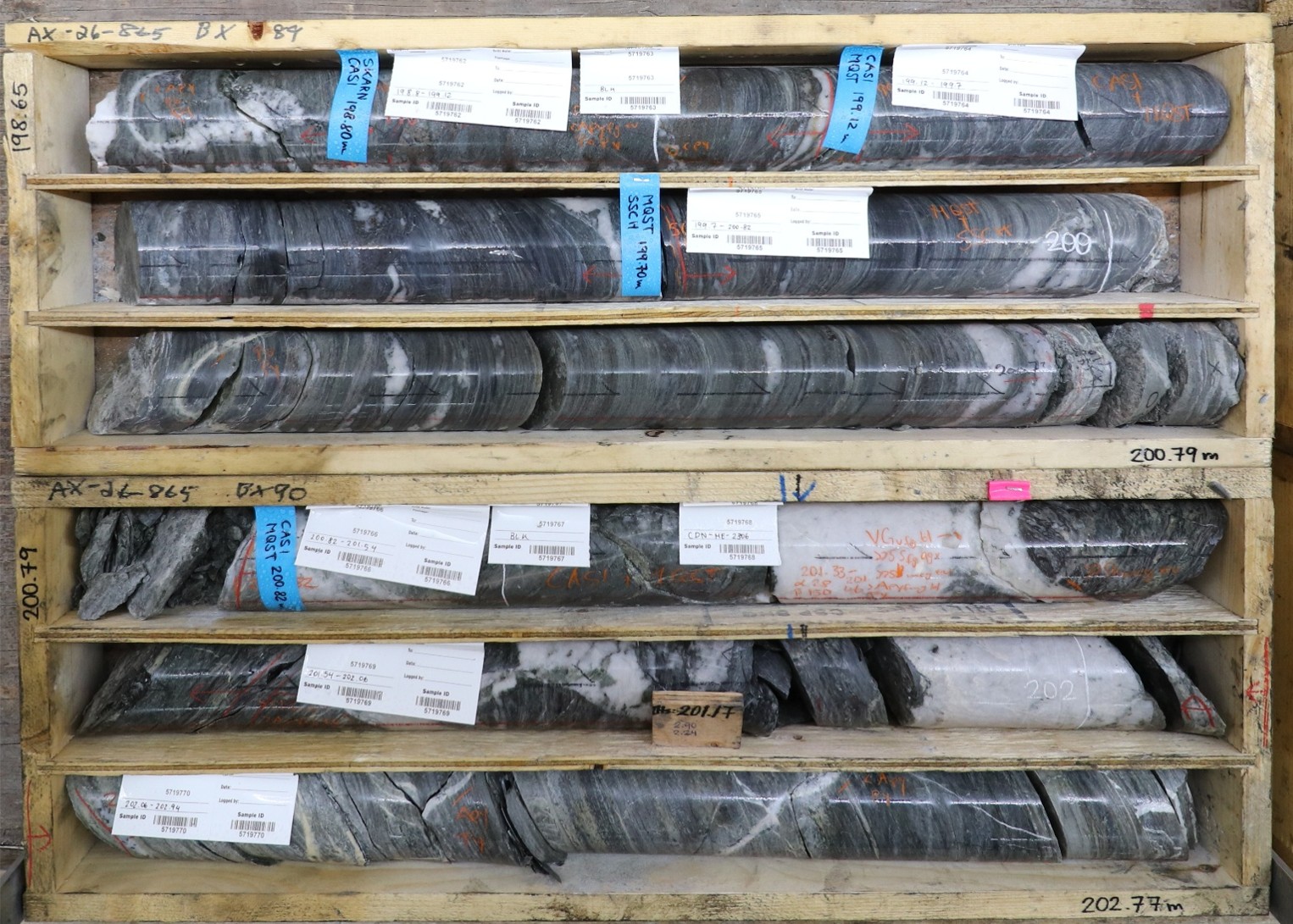
The 52,288-metre Phase 1 programme, completed in April 2026, underpins the 2026 Mineral Resource Estimate (MRE). It contains Measured and Indicated (M&I) resources of 47.8 million tonnes at 0.89% copper, 0.34 g/t gold and 3.2 g/t silver. That equates to 940 million pounds of copper, 530,000 ounces of gold and 4.97 million ounces of silver. Contained metal rose 182%, 184% and 188% respectively on the 2025 estimate. A further 16.9 million tonnes sit in the Inferred category.
The PEA mine plan draws on only around 18.4 million tonnes of mineable inventory. Joudrie said drilling on the roughly 50,000-metre Phase 2 programme is finished and running about two months ahead of schedule. Assays have been received for around 5,000 to 7,000 metres so far. The programme targets infill to upgrade material to Measured, plus extensions to known zones.
Phase 2 results will feed an updated MRE in the first quarter of 2027. The company will then move straight into feasibility without an interim PEA. Joudrie said the Feasibility Study starts in about four weeks and targets completion in mid-2027. It will include a full execution plan built with input from contractors, an approach led by VP Engineering Scott Fulton. Joudrie was clear that resource growth is upside rather than a requirement. He said he would be content if the feasibility mine plan simply held at 18.4 million tonnes.
Interview with Colin Joudrie, CEO, Selkirk Copper
Dewatering and Water: The Critical Path
The existing underground workings are flooded. The PEA states that achieving the planned production profile depends on timely dewatering, inspection and rehabilitation. Joudrie identified regulatory sign-off as the main constraint on timing.
"Our gating item is authorisation from the government to start the dewatering. I would have loved to have started this four months ago, but you know, we're in a process where this is an asset that went into receivership. It's new territory for everybody, including the government. They're working through it deliberately. We will get there, but it's about a five-month programme once we hit go."
Specialists have designed and costed the dewatering programme and presented it to government. Much of the pump and pipe work is already in place. The company aims to start pumping before the end of 2026 and to begin underground rehabilitation in the spring.
Joudrie was candid that water management at Minto has not been handled well historically. The restart plan adds capital, new systems and tighter measurement protocols. Amended permit applications are due in the fourth quarter of 2026 and are not expected to seek notable changes to existing discharge criteria. A restart decision is targeted for the second half of 2027, following Feasibility Study completion and receipt of the permit amendments.
The Selkirk First Nation Partnership
The Selkirk First Nation is the company's largest shareholder with around 18%, holds two board seats and receives a 1.5% net smelter return (NSR) royalty on payable metals. Joudrie cautioned against treating that alignment as a given.
"It's too easy to say, 'Oh, they're invested. They own 18%. Everything's rosy.' This is a continual investment by both parties, both cultures, both backgrounds, both people to learn to work together and to learn to trust. I don't want anyone to think that this is easy. It's important. It's probably more important than anything else we do."
He added that the First Nation had not known a restart was possible when it acquired the asset. For investors, the relationship shapes both the permitting pathway and the long-term social licence for a multi-decade operation.
The Investment Thesis for Selkirk Copper
- The PEA shows an after-tax NPV7% of C$494 million against initial capital of C$186 million, a 2.7:1 ratio at planning prices.
- Existing infrastructure worth more than $330 million compresses both the capital bill and the timeline to first concentrate, targeted for the second half of 2028.
- A clean 38% copper concentrate with gold and silver credits should command strong smelter demand in a tight concentrate market.
- The PEA mine plan uses only around 18.4 million tonnes of a 47.8 million tonne M&I resource, leaving room for growth in the Feasibility Study.
- Key risks include dewatering approval timing, permit amendments, a Class 5 capital estimate and a history of poor water management at the site.
- Investors should monitor government authorisation to start dewatering, which management aims to secure before the end of 2026.
- The Q1 2027 MRE update and mid-2027 Feasibility Study are the next re-rating catalysts.
Macro Thematic Analysis
The copper market has moved from a question of price to a question of quality. Demand from electrification, grid investment, electric vehicles and data-centre construction pushed copper prices to record levels in 2026. At the same time, a wave of new smelting and refining capacity in Africa and Asia has left processors competing for concentrate.
The effect shows up in treatment and refining charges. Benchmark treatment charges averaged US$78 per dry metric tonne between 2016 and 2023. Annual contract levels from 2024 to 2026 averaged US$33.8. That shift moves bargaining power towards miners, particularly those with clean, high-grade product that smelters can blend with lower-grade or more complex feed.
Joudrie said this is what investors now focus on.
"What they're more importantly asking is this market is short copper and it's very short the quality of copper concentrates that we will produce. 38% copper is very rare in the marketplace and we're doing it on a timeline that allows them to envision the prices we're seeing today for that production."
Timing is the second part of the argument. Most new copper supply requires permitting, construction and ramp-up measured in years, and much of it will not arrive before 2030. Commercial advisor Calgacus has assessed Minto's product as one of only a few high-grade concentrates likely to reach the market before then. A restart that reuses an existing mill, camp and access route can reach production inside the current price cycle. That differs from a greenfield project, whose economics depend on price assumptions a decade away.
The PEA's price sensitivity illustrates the leverage. Moving from planning prices to spot roughly doubles the NPV. Copper price remains the single largest driver of project value.
TL;DR
Selkirk Copper's Preliminary Economic Assessment for the past-producing Minto mine in Yukon outlines a 13-year restart with an after-tax NPV7% of C$494 million and a 47.8% IRR at planning prices, for initial capital of C$186 million. Existing infrastructure worth more than $330 million keeps costs low, and the mine would produce a clean 38% copper concentrate with gold and silver credits. CEO Colin Joudrie said government authorisation to begin a five-month dewatering programme is the gating item. An updated resource estimate is due in Q1 2027, a Feasibility Study in mid-2027 and first concentrate in the second half of 2028.
FAQs (AI Generated)
Analyst's Notes





Subscribe to Our Channel


Stay Informed


