




BP Silver Hits Project-Best 2,620 g/t at Cosuño, Funded Phase 3 Set for 2027


BP Silver drilled 12 meters at 441 grams per tonne silver at Jalsuri Northeast. Founder Tim Shearcroft explains the Pulacayo analog and Phase 3 plan.
- BP Silver made its third discovery at Cosuño in under a year, drilling 12 m at 441 g/t silver at the Jalsuri Northeast target.
- The Jalsuri Northeast discovery includes 1 m at 2,620 g/t silver, the highest grade drilled at Cosuño, and the structure remains open along strike and at depth.
- Pulacayo, 10 km south of Cosuño, hosted 640 Moz of silver below a barren lithocap, while Cosuño's lithocap is mineralised.
- BP Silver holds a 52% controlling interest in Cosuño and plans to reach 100% with a US$2.3 million payment in the third quarter of 2029.
- Induced polarisation (IP) and magnetic survey results due in early 2027 will set the targets for BP Silver's funded Phase 3 programme of at least 6,000 m at Cosuño.
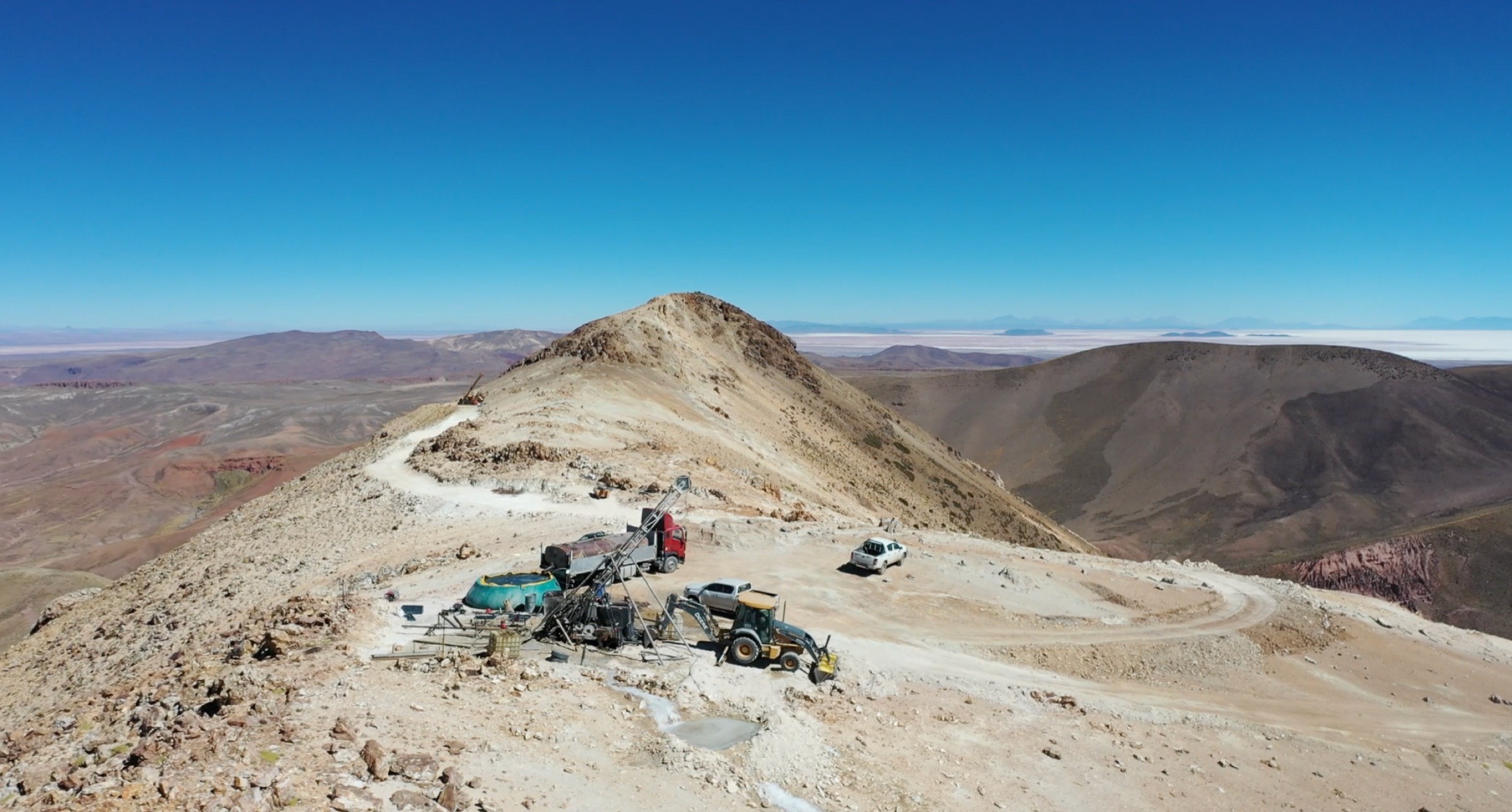
BP Silver Corp. (TSXV:BPAG) has made its third silver discovery in under a year at the Cosuño project in Bolivia. The company reported 12 meters (m) grading 441 grams per tonne (g/t) silver from 22 m downhole at the Jalsuri Northeast target. That interval includes 1 m at 2,620 g/t silver, the highest silver grade drilled at Cosuño to date. It came from the first two holes into a structure that outcrops for about 1 kilometer (km) and remains open along strike and at depth.
Speaking with Crux Investor in London, Founder and Chief Executive Officer (CEO) Tim Shearcroft described the result as one step in testing a large hydrothermal system on Bolivia's silver belt, 10 km north of the former producing Pulacayo mine. Phase 2 drilling has passed 4,000 m. Magnetic survey data is being processed, and an induced polarization (IP) survey is about two-thirds complete. The company says it has the funding for a Phase 3 programme of at least 6,000 m. Over the next 12 months, BP Silver is targeting the deeper part of a system it believes lies below Cosuño's mineralized lithocap.
Three Discoveries Along 3 km Trend
BP Silver went public with a short first-pass drill programme and then expanded its second. The work has produced intercepts in three separate targets.
Phase 1 comprised a little over 900 m, and 10 of its 11 holes hit mineralization, according to Shearcroft. Phase 2 was planned at 2,000 m and has since been expanded to more than 4,000 m because the team liked what it was seeing. Virtually every hole released to shareholders so far has been mineralized, he said.
The first discovery hole came in Phase 1 and the second in Phase 2, in different targets. Pocañita Chica, the furthest target, returned a 3 m feeder structure carrying high-grade silver with bismuth and antimony. Jalsuri North returned 10 m at 183.62 g/t silver and 0.59 g/t gold. Jalsuri Northeast lies about 3.5 km along trend from Pocañita Chica, on the edge of the system. BP Silver has identified 10 priority targets along the trend, and the largest, Pocañita Grande, has not yet been drilled.
Jalsuri Northeast Adds a Near-Surface Silver & Zinc Zone
The two Jalsuri Northeast holes were drilled from the same platform, with the second drilled at a steeper angle below the first. Both returned high-grade silver, which the CEO said confirms the discovery hole was not a one-off.
The shallower hole returned 7 m at 194 g/t silver, including 1 m at 511 g/t silver. The deeper hole returned the 12 m at 441 g/t silver interval inside a broader 32 m grading 185 g/t silver and 3.3% zinc. Silver grades increased with depth between the two holes. Zinc-rich zones start at surface, with the deeper hole returning 16.8 m at 6.6% zinc. Reported intervals are core lengths, and true widths have not been determined.

The zinc result addresses a market concern. Shearcroft said some investors had expected the zinc-heavy periphery of the system to carry little silver. The company does not yet know how much of the metal zoning is vertical and how much is lateral, but silver has followed zinc so far. Shearcroft also used the outcropping structure to illustrate scale. Assuming 1,000 m of strike, 500 m of depth, a 3 m width and 300 g/t silver, he put this one structure at about 42 million ounces (Moz). He stressed that Cosuño has no resource and that the exercise is forward-looking.
Interview with Timothy Shearcroft, CEO, Co-founder & Director of BP Silver Corp.
The Pulacayo Analogue & the Case for Depth
The larger target lies below the lithocap. Pulacayo, 10 km south of Cosuño, hosted 640 Moz of silver plus 200,000 tons each of lead and zinc in a vein system below a barren lithocap. At Cosuño, the lithocap itself is mineralized.
Founder and CEO of BP Silver, Tim Shearcroft, said the two sites look alike at surface:
"It's a virtually identical system. If you're standing on the Pulacayo mine or standing on Cosuño, you feel you're in the same place. It's a lot of the same rocks, a lot of the same alteration."
Shearcroft named Cerro Rico, on the same belt with the same style of mineralized lithocap, as the best analogue for Cosuño, while stating the company is not claiming a second Cerro Rico. Mineralized feeder structures at Cosuño may act as pathways toward deeper zones. He contrasted this with buried porphyry targets, where drilling can pass through 800 m of barren rock with no value along the way. Drilling toward depth at Cosuño cuts mineralized structures on the way down.
Ownership, Royalty & Capital Structure
BP Silver holds a 52% controlling interest in Cosuño. It earns the remaining 48% with a US$2.3 million payment due in the third quarter of 2029.
The vendor holds no royalty. A capped 2% net smelter return royalty is held by Shearcroft and co-founder Gonzalo Lemuz. The company can buy it back for US$2.5 million within 5 years of the start of drilling, or for US$5 million after that. Shearcroft said he set it up this way to limit founder shares and cheap stock and to protect the capital structure.
As of November 2026, BP Silver had a market capitalization of about C$52.3 million with roughly C$7.8 million in cash. Directors, management and advisors hold 22% of the company.
A Bolivian Operating Team
Shearcroft has more than 20 years of business experience and grew up around his family's contract drilling business, starting work on a rig at 12. He founded private exploration companies from 2012, including one whose Peru project ended up with a major, and co-founded BP Silver in 2020 with Chief Operating Officer Gonzalo Lémuz. He secured Cosuño after about 18 months of negotiation, following failed talks between the vendor and other companies.
Executive Chairman Dr. Mark Cruise previously served as CEO of New Pacific Metals, where he oversaw two Bolivian silver discoveries of more than 200 Moz each. Country Manager Hernán Uribe was New Pacific's country manager from 2016 to 2023 and sourced its Carangas project. Director Dr. Stewart Redwood is a specialist in Bolivian geology. Arturo Préstamo Elizondo, CEO of Santacruz Silver Mining, is an adviser and a significant shareholder.
Phase 3 Planning
Phase 2 assays, the magnetic survey and the IP results are due back in January or early February 2027. The technical committee will then layer drilling, channel sampling and mapping to set Phase 3 targets. Shearcroft said a larger Phase 3 may be needed and that the board will decide its size.
By the end of 2027, BP Silver is targeting deep holes of 400 to 800 m, if the IP data supports them, to locate the top of the system below the lithocap. The company then faces a choice. It can drill deep toward an inferred resource and a preliminary economic assessment, or focus on a near-surface 50 to 100 Moz. Shearcroft called 100 Moz the level at which mid-tier and senior producers take interest.
The Investment Thesis for BP Silver
- BP Silver has made three silver discoveries in under a year at Cosuño where every released hole has been mineralized.
- The first two holes at Jalsuri Northeast returned 12 meters at 441 grams per tonne silver, including 1 meter at 2,620 grams per tonne, the best grade drilled on the project.
- Pulacayo which is 10 kilometers south of Cosuño hosted 640 million ounces of silver below a barren lithocap, while the lithocap at Cosuño is itself mineralized.
- The company holds 52% of Cosuño and is targeting full ownership through a US$2.3 million payment in the third quarter of 2029.
- Phase 2 assays, magnetic data and induced polarization results due in early 2027 will set the targets for a funded Phase 3 programme of at least 6,000 meters.
- Cosuño has no resource or metallurgical work, so drill results and the depth test remain the measures of progress.
BP Silver offers exposure to a large silver system in an established district, with near-surface results to date and a depth test still ahead.
Macro Thematic Analysis
Precious metals prices were under pressure at the time of the interview. Shearcroft said the long-term investors he met in Zurich and London view silver's pullback as a correction, and he shares the view that prices will move higher over time.
He argued that juniors need to keep drilling through weak markets. He cited New Pacific's Carangas programme, where the company drilled about 81,000 m in roughly two years during a down market and had a resource in hand when conditions improved. Shearcroft said the investors now entering BP Silver hold the same view:
"The support is definitely there because the type of investors that are coming into this deal right now are longer term and they understand that you can't just drill when the market is good when you have $100/oz silver. If you do that, you're always going to be behind."
Bolivia supplies the other half of the case. BP Silver's deck lists Cerro Rico, San Cristóbal and Pulacayo among the major silver deposits of the Bolivian tin-silver belt, and the company describes Bolivian belts as underexplored compared with neighbouring countries that have similar geology. Shearcroft noted that geology does not stop at borders, and that Bolivia sits between Peru and Argentina, two major producers of multiple metals. Cosuño holds a 5-year community agreement to April 2028, and its drill permitting was completed in the fourth quarter of 2023. Jurisdictional and permitting risk remain part of any Bolivian investment case.
TL;DR
BP Silver has made three silver discoveries in under a year at Cosuño, Bolivia, most recently 12 meters (m) at 441 grams per tonne (g/t) silver, including 1 m at 2,620 g/t, at Jalsuri Northeast. Founder Tim Shearcroft compares Cosuño with Pulacayo, 10 kilometers south, where 640 million ounces of silver sat in veins below a barren lithocap. Cosuño's lithocap is itself mineralized. Phase 2 drilling has passed 4,000 m, geophysical results are due in early 2027, and a funded Phase 3 of at least 6,000 m follows. The company holds 52% and is targeting full ownership through a US$2.3 million payment in 2029.
FAQs (AI-Generated)
Analyst's Notes





Subscribe to Our Channel



Stay Informed


