




Silver's 40M-Ounce Hedging Drop Warrants Supply Investment to Cut Deficit


Silver faces a sixth consecutive annual deficit in 2026, with declining inventories and limited recycling gains reinforcing the need for mine investment.
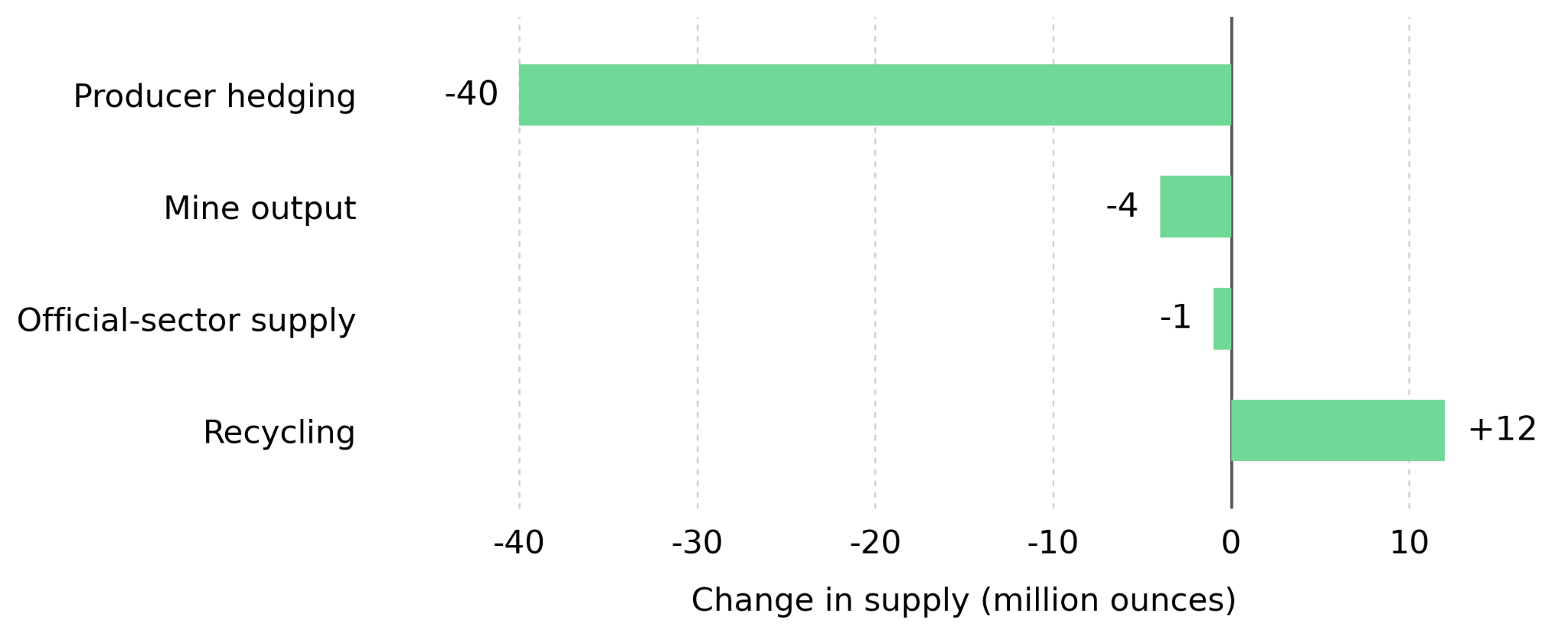
- The Silver Institute's November 12, 2026 outlook forecasts a 40-million-ounce decline in producer hedging's contribution to global silver supply, representing the largest negative contributor to the projected 3% annual supply contraction.
- The return to net producer de-hedging adds 20 million ounces to forecast silver demand, bringing the combined adverse change in hedging's contribution to the annual market balance to 60 million ounces.
- Global silver mine production is forecast to decline to 834 million ounces in 2026, with an additional 12 million ounces from recycling insufficient to offset reductions across other supply components.
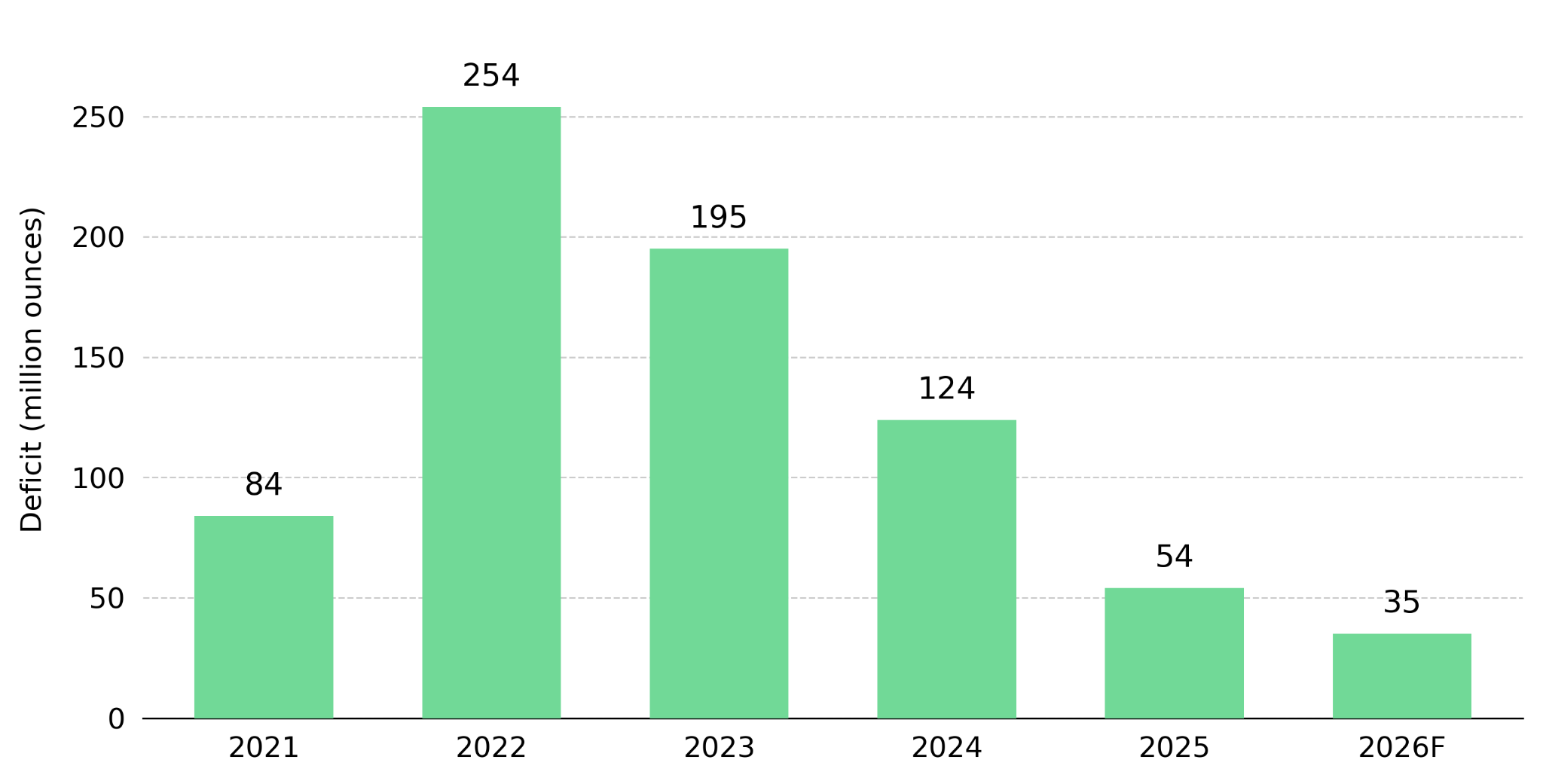
- Despite a forecast 5% decline in global silver demand, the market is expected to record its sixth consecutive annual deficit at 35 million ounces, extending cumulative supply shortfalls since 2021 to approximately 745 million ounces.
- Identifiable global silver inventories declined from 1.38 billion ounces in October 2025 to 1.34 billion ounces in October 2026, reinforcing the investment rationale for expanding physical supply rather than relying on existing inventories.
Producer De-Hedging Cuts Global Silver Supply by 40M Ounces
The Silver Institute's Interim Silver Market Review released on November 12, 2026, forecasts a 3% decline in global silver supply from 1.078 billion ounces in 2025 to 1.045 billion ounces in 2026. Producer hedging, which allows mining companies to protect future selling prices, accounts for the largest projected reduction in supply at 40 million ounces. New hedging contracts can bring silver into the market without increasing mine output.
The November review forecasts a reversal in producer hedging activity in 2026, with the reduction of existing hedge positions, known as de-hedging, adding approximately 20 million ounces to reported silver demand. Closing existing hedging contracts can require silver purchases, adding demand independently of industrial consumption. The combined reduction in supply and increase in demand from hedging activity alone worsened the projected silver market balance by 60 million ounces compared with 2025.
Limited Recycling Gains Increase Reliance on Existing Mines
Metals Focus forecasts global silver mine output to decline by 4 million ounces to 834 million ounces in 2026, with an additional 12 million ounces from recycling insufficient to offset reductions across other supply components. With mining accounting for approximately 80% of projected global silver supply, higher ore grades and improved operating efficiency can help address supply constraints without substantial investment in new infrastructure.
Americas Gold and Silver reported record silver production of 800,458 ounces in the third quarter of 2026, up 5% year over year, bringing output during the first nine months to 2.3 million ounces, a 19% increase. Higher ore grades at its Cosalá operations increased quarterly silver production by 28% to 415,879 ounces while all-in sustaining costs (AISC) declined from $29.45 to $25.21 per ounce sold. Higher silver prices and stronger operating performance at Cosalá have enabled the company to accelerate mine development at Galena, supporting future production growth.
Oliver Turner, Executive Vice President of Corporate Development at Americas Gold and Silver, discusses silver's historical resistance levels and price outlook:
"$50 silver was basically the resistance level for the last 50 years. Now that's become a floor… So I expect prices to go back up, but certainly at these prices, I think everybody's got to be pretty happy with what they're getting."
Rising Mine Costs Strengthen the Case for By-Product Revenue
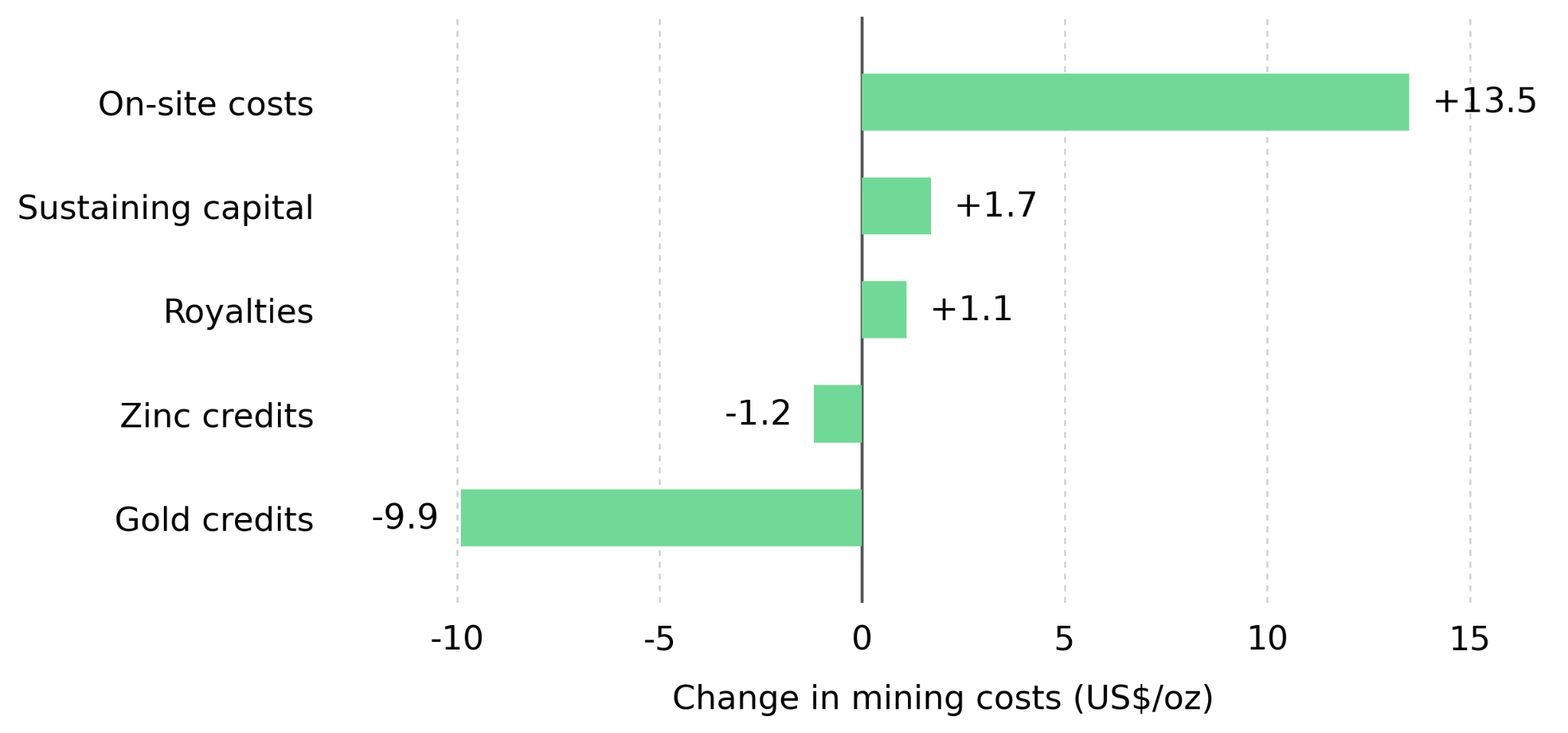
According to Metals Focus's Silver Mine Cost Service, average AISC across primary silver mines increased 47% year over year to $16.30 per ounce during the first half of 2026. Gold by-product revenues offset $9.90 per ounce in cost pressures, underscoring the importance of diversified metal revenues and cost competitiveness in assessing the economic viability of future silver supply.
Vizsla Silver has completed approximately 50% of engineering at its Panuco silver-gold project in Mexico, with approximately 85% of planned processing equipment ordered, advancing construction readiness. Its November 2025 feasibility study estimated payable production of 94.7 million silver ounces over a 9.4-year mine life, with an initial capital requirement of $238.7 million and an after-tax net present value at a 5% discount rate (NPV5%) of $1.8 billion, based on silver and gold prices of $35.50 and $3,100 per ounce, respectively. The company is targeting first silver production in the second half of 2028, with engineering and procurement progress advancing the project toward potential commercial production.
Higher Price Assumptions Expand the Scope for Resource Growth
The Silver Institute reports that average long-term silver price assumptions among six leading silver producers increased from $23.10 per ounce in 2024 to $27.60 in 2025, potentially expanding the volume of economically recoverable mineralization. Resource growth can also result from identifying additional higher-grade mineralization rather than relying solely on higher silver price assumptions.
GR Silver Mining intersected 35.45 meters grading 311 grams per metric ton (g/t) of silver at its San Marcial project in Mexico, extending known mineralization by 80 meters at depth. A separate intersection of 2.15 meters grading 1,164 g/t silver demonstrated further resource expansion potential beyond the existing mineral resource area. With access road upgrades nearing completion, the company expects to accelerate its 20,000-meter drilling program, targeting an updated mineral resource estimate by mid-2027 to assess the potential for expanding its silver resource base.
Eric Zaunscherb, President and Chief Executive Officer of GR Silver Mining, discusses industrial silver consumption and declining physical inventories:
"With regard to the industrial uses, we continue to see growth in silver consumption in photovoltaics, solar cells, and in EVs. So, I think that the outlook is pretty good for silver. Finally, I'd point out that silver physical inventories have declined dramatically."
Recurring Deficits Warrant Investment in Additional Mine Supply
Global silver demand is forecast to decline 5% to approximately 1.08 billion ounces in 2026, reflecting weaker industrial consumption and reduced jewelry and silverware purchases. Despite this decline, the silver market is forecast to record its sixth consecutive annual deficit at 35 million ounces, compared with 54 million ounces in 2025. Cumulative deficits of approximately 745 million ounces between 2021 and 2026 indicate that weaker demand alone has been insufficient to restore market balance.
Identifiable global silver inventories declined from 1.38 billion ounces in October 2025 to 1.34 billion ounces in October 2026, despite an 85-million-ounce increase in London vault holdings. Regional inventory gains therefore do not necessarily indicate an improvement in global silver availability. With the reversal in producer hedging projected to remove 40 million ounces from supply and add 20 million ounces to demand, capital allocation should prioritize mining assets with competitive costs and measurable plans to increase physical silver output.
The Investment Thesis for Silver
- The reversal in producer hedging strengthens the investment case for mining assets capable of expanding physical silver supply at economically viable costs.
- Producers with higher-grade ore and existing infrastructure can increase silver output without the capital costs of building new mines.
- Developers with completed feasibility studies and advanced engineering provide a stronger basis for assessing capital requirements and timelines for future silver output.
- Explorers identifying additional high-grade silver mineralization offer potential for resource expansion and future additions to mine supply.
- Continued silver deficits and declining inventories warrant capital allocation based on supply-demand conditions and mining economics rather than silver price appreciation alone.
The reversal in producer hedging exposes the limitations of relying on financial transactions to address recurring silver supply deficits. With above-ground inventories continuing to decline, investment in additional mining capacity offers a longer-term response to supply constraints. Capital allocation should prioritize assets with competitive economics and measurable progress toward increasing physical silver supply, providing exposure to future demand without relying solely on higher silver prices.
TL;DR
The Silver Institute forecasts global silver supply declining 3% in 2026, with reduced producer hedging removing 40 million ounces from supply and de-hedging adding 20 million ounces to demand. Despite a projected 5% decline in consumption, the market faces its sixth consecutive annual deficit at 35 million ounces. Declining mine output and insufficient recycling gains reinforce the need for additional physical supply. Rising mining costs increase the importance of higher-grade mineralization and by-product revenues in maintaining competitive economics. Capital allocation should prioritize mining assets with economically viable resources and measurable plans to increase silver output rather than relying solely on inventory drawdowns or higher commodity prices.
FAQs (AI-Generated)
Analyst's Notes





Subscribe to Our Channel








Stay Informed


