




Canyon Resources Advances World's Highest-Grade Bauxite Project Toward September Production


Canyon Resources targets Sept 2025 first bauxite shipment from world's highest-grade deposit (51% alumina), $200M free cash flow at 10M tons/yr, $820M rail upgrade funded.
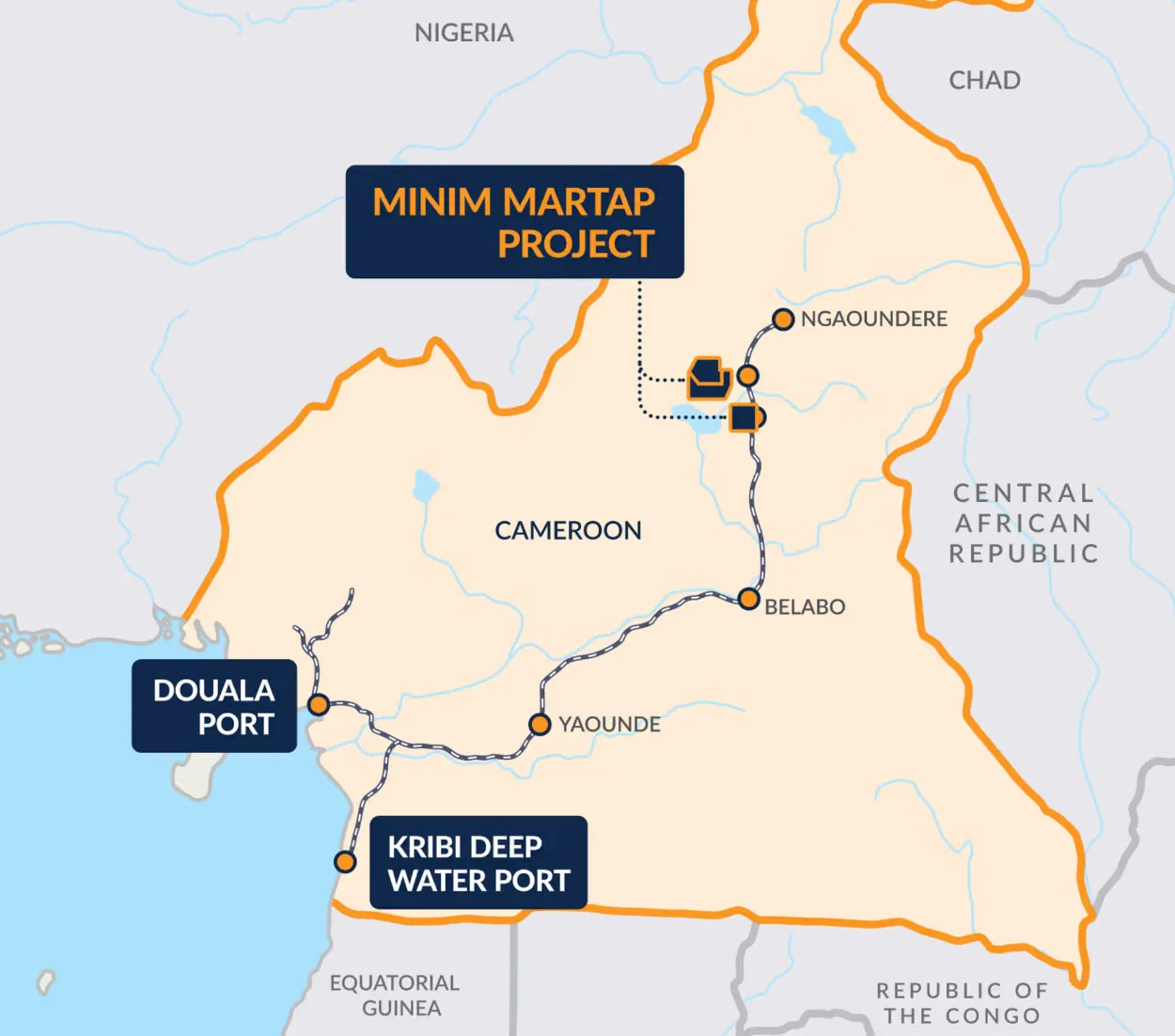
- Canyon Resources is developing the Minim Martap Bauxite Deposit in Cameroon, featuring 51% alumina and 2% silica content - believed to be the highest grade undeveloped bauxite deposit globally with over 1.1 billion tons of resource located 800km from the coast.
- First shipment targeted for late September 2026 following completion of road infrastructure (80% complete), locomotive delivery (arriving May-June), and trial mining commencing in coming weeks, with the project 50% complete and fully financed through year-end with $40M cash and $95M undrawn debt facility.
- Premium pricing advantage of $10-12 per ton above the Guinea standard GBIX price of $65/ton due to superior grade, targeting $76-78/ton sales price against $36/ton production costs to port, positioning for $200M annual free cash flow at 10 million tons per year production.
- Infrastructure-focused strategy with 80% of risk in logistics rather than mining, including acquiring ownership stake in Camrail (currently 9.1%, negotiating increase) and purchasing locomotives (7 arriving initially, 14 more needed), supported by $820M World Bank rail upgrade enabling production scale from 2M to 10M+ tons annually.
- Strategic offtake approach postponing agreements until after demonstrating product quality with first 50,000-ton trial shipment, then negotiating with North American, European, Middle Eastern, and Asian customers for 5-year offtake with prepayment facility to fund additional locomotive acquisitions.
Canyon Resources (ASX:CAY) is positioning itself as a significant new player in the global bauxite market as it advances the Minim Martap project in Cameroon toward first production. In an interview, Chief Executive Officer Peter Secker provided a comprehensive update on the company's development timeline, financing position, and strategic approach to entering the market. With bauxite prices experiencing upward pressure due to geopolitical tensions in the Gulf region and demand for high-grade feedstock remaining robust, Canyon's project represents a rare combination of exceptional ore quality and existing infrastructure that could accelerate its path to cash flow generation.
World-Class Grade Defines Competitive Advantage
The Minim Martap deposit stands out in the global bauxite landscape due to its exceptional grade profile. Secker emphasised that the project hosts 51% alumina content with just 2% silica, which he believes represents the highest grade undeveloped bauxite deposit in the world. The resource extends to over 1.1 billion tons located approximately 800 kilometers from the Cameroonian coast. This combination of quality and scale provides Canyon with a foundation for long-term production potential that extends well beyond the initial development phase.
The significance of this grade differential becomes apparent when examining the economics of alumina refining. Higher alumina content and lower silica levels directly reduce the consumption of caustic soda and energy requirements in the refining process. As Secker explained,
"the higher the alumina grade and the lower the silica grade means you consume less caustic. And it means that you don't require as much unit energy to make a ton of alumina."
This operational advantage for refiners translates into pricing power for Canyon, with the company expecting to receive a $10 to $12 per ton premium above the Guinea standard GBIX price.
September Production Target Approaches
Canyon is rapidly approaching production, with Secker outlining a detailed timeline for the coming months. The Surface miner arrived in-country several weeks before the interview and has been moved to Danielle Plateau, the 51% alumina area where initial mining will commence. Trial mining is scheduled to begin within weeks of the interview, with production mining expected to start in May or June. This will enable the company to build stockpiles at both the mine site and the railhead.
Road construction connecting the mine to the rail infrastructure is approximately 80% complete and will be finished within the next couple of months. The critical locomotive component of the logistics chain is progressing, with the first seven locomotives on a vessel bound for Cameroon and expected to arrive toward the end of May or early June. Following a one-month commissioning period, ore haulage from the railhead to the port is scheduled to begin in July. Stockpile building will continue through July, August, and September, culminating in the first shipment of approximately 50,000 tons at the target grade of 51% alumina and 2% silica toward the end of September or early October.
Fully Funded Path to First Shipment
The company's balance sheet reflects a fully financed path to first production. Canyon holds approximately $40 million in cash and maintains an undrawn debt facility of $95 million from AFG, a Cameroon bank. The total cost to build the project through first production is just under $100 million US, and Secker confirmed the company remains on budget. This financing package notably did not require Canyon to enter into any offtake agreements, providing strategic flexibility that Secker intends to exploit by demonstrating product quality before negotiating commercial terms.
Looking at the broader capital requirements, the subsequent phases of expansion will be funded primarily through cash flow generation and focused on locomotive acquisition. Each batch of locomotives - the second order requiring 14 units for mid-2027 delivery - will add approximately 2 to 3 million tons of annual capacity. Secker outlined the self-funding nature of this expansion: "as we start to generate cash flow, that cash flow will then go to fund the next locomotive delivery."
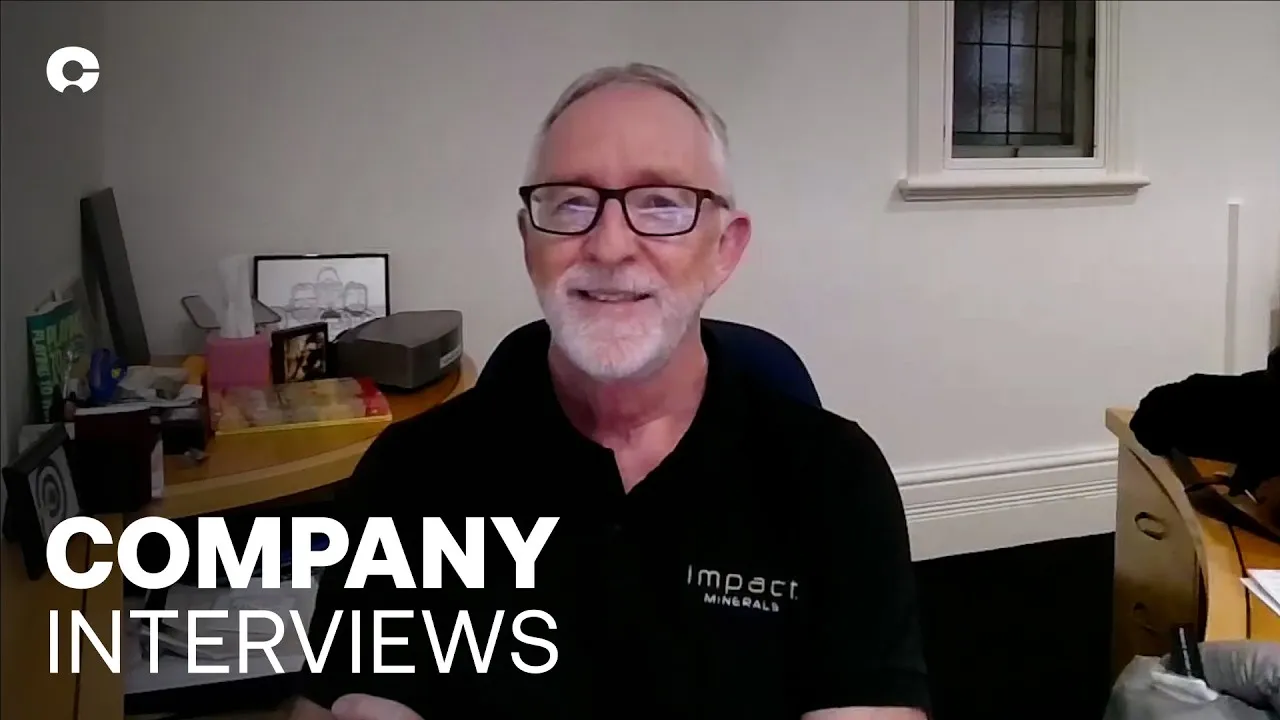
Interview with Peter Secker, CEO of Canyon Resources
Logistics Control Dominates Risk Profile
In characterising the project's risk profile, Secker provided a striking assessment: "if I had to rank it, and that's hard to do, I would say 80% [of the risk] is infrastructure." This observation reflects the direct shipping nature of the operation, which requires minimal processing beyond extraction. The critical path centers on the logistics chain - road, rail, and port - rather than complex metallurgical or processing challenges that would be typical of other miners.
Canyon has taken strategic steps to control this infrastructure risk. The company currently owns just over 9.1% of Camrail, the rail operator, and is in advanced negotiations to increase this stake significantly. Secker indicated these discussions are nearing completion and should be finalised within the coming months. This increased ownership provides operational involvement in the rail system that is fundamental to the project's economics. Camrail operates an 800-kilometer rail line supported by a World Bank facility of $820 million for infrastructure upgrades, designated as PQ2. This upgrade program, scheduled to commence construction in Q2 2027 and complete by end of 2029, will enable production to scale from the initial 2 million tons per year to 10 million tons per year or beyond.
Premium Pricing Above Guinea Standard
Current bauxite market conditions have been influenced by geopolitical developments, with Secker noting a 15% increase in bauxite prices in recent months due to events in the Gulf region. Once these factors stabilise, the Guinea standard GBIX price is expected to settle around $65 per ton. Canyon's premium grade positions it to capture $76 to $78 per ton, providing "quite a nice margin compared to the Guinea producers," according to Secker.
The company's cost structure supports attractive economics even at normalised pricing. Getting ore onto a vessel costs approximately $36 per ton, with an additional $20 per ton for transport to final destination. At $76 per ton sales price and 10 million tons annual production, Secker projects free cash flow of $200 million US. Energy costs, while subject to volatility from recent events in the Gulf, represent a manageable component of the cost structure, primarily limited to diesel fuel for locomotives rather than energy-intensive processing.
Strategic Offtake Timing Maximises Negotiating Position
Canyon has adopted a deliberate approach to offtake negotiations that deviates from typical project financing requirements. Rather than securing binding agreements during the development phase, the company plans to make its first shipment, demonstrate the actual quality of 51% alumina and 2% silica material, and then negotiate commercial terms from a position of verified performance.
The company is currently in discussions with potential customers across North America, Europe, the Middle East, and Asia. The target is to establish a 5-year offtake agreement in Q3 2026, following successful completion of the trial shipment. Importantly, Canyon is seeking prepayment facilities as part of these commercial arrangements, which would provide additional capital to fund locomotive acquisitions and production expansion. Given that Guinea is expected to produce approximately 200 million tons of bauxite in 2027 while Canyon will contribute just under 2 million tons - less than 1% of world supply - the company positions its high-grade material as a blending stock that allows refiners to optimise their feedstock mix and reduce overall production costs.
Stable Political Environment Supports Expansion Vision
Operating in Cameroon provides Canyon with several structural advantages for long-term development. The country conducted elections in October-November 2025, with the incumbent party reelected for another six-year term. Secker noted the government has been stable for 40 years and is "extremely supportive" of the Minim Martap project, viewing it as a model for resource investment in the country. This will be the first large-scale mining operation in Cameroon's history, creating alignment between government objectives and Canyon's development plans.
Looking beyond the initial bauxite production, Canyon has identified potential value-addition opportunities through downstream processing. The existing Alucam aluminum smelter, operating for 60 years, demonstrates Cameroon's established downstream capacity. The country currently has just under 1 gigawatt of installed hydropower capacity but possesses potential for 6 to 7 gigawatts. With hydropower costs potentially reaching 2 cents per kilowatt hour, the economics of alumina refining become compelling. Secker outlined two pathways for increasing value: scaling production from 10 million to 15 million tons per year, and value-addition to transform a $75 per ton bauxite product into $300 to $400 per ton alumina.
The Investment Thesis for Canyon Resources
- Exceptional asset quality: 51% alumina, 2% silica grade represents the highest-grade undeveloped bauxite deposit globally, commanding $10-12/ton premium pricing over Guinea standard
- Near-term cash flow inflection: First shipment scheduled late September 2026, with fully funded path to production ($40M cash, $95M undrawn facility vs. sub-$100M remaining capex)
- Robust project economics: $36/ton cost to port plus $20/ton freight against $76-78/ton realised price targets $200M annual free cash flow at 10 million tons production scale
- Infrastructure leverage: $820M World Bank-funded rail upgrade (PQ2) enables production expansion from 2M to 10M+ tons per year with minimal Canyon capital requirements
- Strategic logistics control: Increasing ownership in Camrail rail operator (from current 9.1%) provides operational control over critical value chain component
- Self-funding expansion model: Initial cash flow generation funds locomotive acquisitions (each batch adding 2-3M tons capacity), minimising equity dilution
- Flexible commercial positioning: No binding offtakes allows quality demonstration before negotiating terms, with prepayment facilities targeted to fund growth capex
- Political stability and alignment: 40-year stable government, first large-scale mining project creates strong support, established downstream aluminum industry provides value-addition pathway
- Modest market valuation: $288M market capitalisation against $200M potential annual free cash flow at full production represents significant valuation gap
- Portfolio diversification: Non-Guinea bauxite production addresses supply concentration risk, high-grade blending stock commands structural premium in tight market
TL;DR: Executive Summary
Canyon Resources is advancing Africa's highest-grade bauxite project (51% alumina, 2% silica) toward first production in late September 2026, fully funded with $40M cash and $95M undrawn debt facility against sub-$100M remaining costs. The company targets $76-78/ton realised pricing (premium to Guinea standard) against $56/ton all-in costs, projecting $200M annual free cash flow at 10 million tons production enabled by $820M World Bank rail upgrade, with initial 2M ton production self-funding locomotive-driven expansion through 2029 while maintaining strategic flexibility through postponed offtake negotiations until after quality demonstration.
FAQs (AI Generated)
The company wants to demonstrate actual product quality (51% alumina, 2% silica) with a 50,000-ton trial shipment before negotiating commercial terms, enabling stronger negotiating position and potential prepayment facilities to fund locomotive purchases and expansion.
Management characterises the risk as 10% mining-related and 80% infrastructure-focused, centering on logistics execution - road completion, locomotive delivery/commissioning, and rail operations - rather than geological or metallurgical uncertainties given the direct-shipping nature.
The company will use cash flow from initial production to fund locomotive acquisitions in batches, with each batch adding 2-3 million tons capacity. The $820M World Bank rail upgrade provides track capacity with minimal Canyon capital requirements.
The 51% alumina and 2% silica grade reduces caustic soda consumption and energy requirements in alumina refining compared to Guinea standard material, justifying a $10-12 per ton premium as a feedstock blending component.
First shipment is scheduled for late September 2025 at approximately 50,000 tons. With $76-78/ton revenue against $56/ton all-in costs, initial shipments generate positive cash flow, scaling as production ramps through year-end and into 2026.
Analyst's Notes





Subscribe to Our Channel




Stay Informed


