




Canyon Resources Races Toward Mid-2026 Production at Cameroon's First Major Bauxite Mine


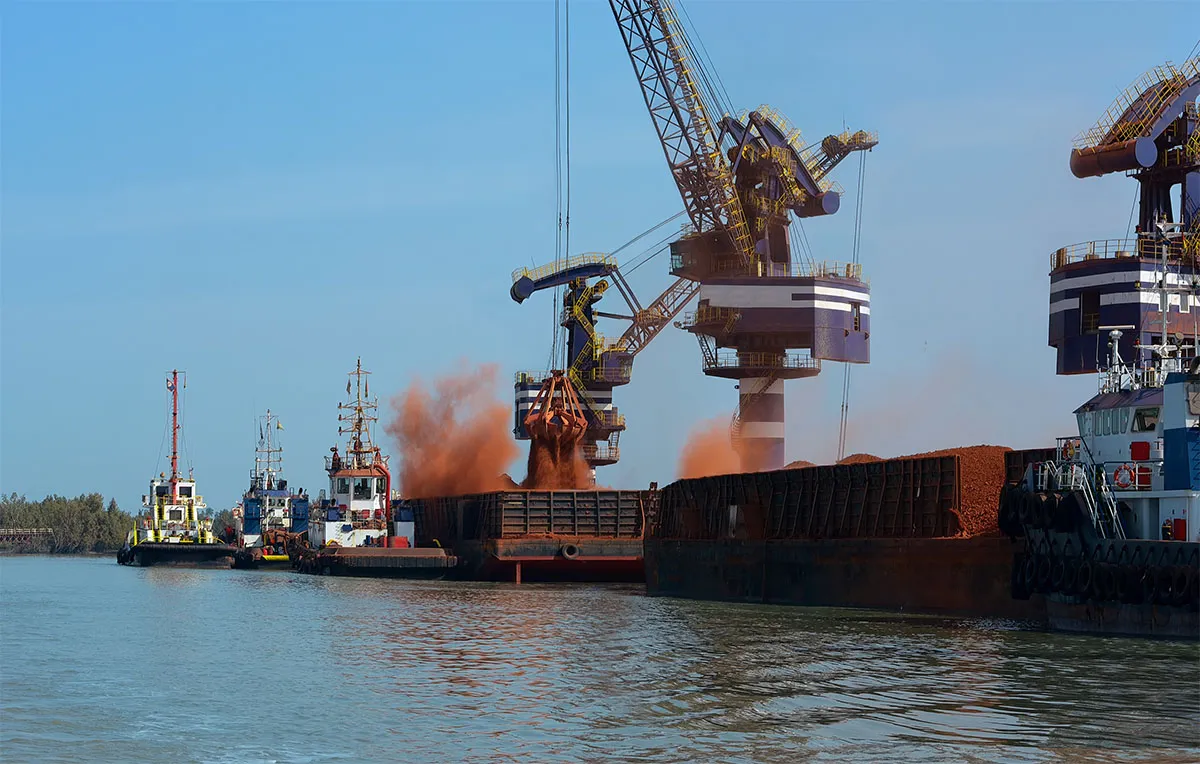
Canyon Resources targets mid-2026 first bauxite shipment from Cameroon, with premium ore commanding $25-30/ton margins scaling to $200M annual cash flow by 2031 via rail upgrades.
- Canyon Resources is developing the Minim Martap bauxite project in Cameroon, targeting first shipment in mid-2026 with a sub-100-million-dollar development cost and 29% IRR
- The project features premium-grade bauxite (51% alumina, less than 2% silica) that commands a $10 premium over Guinea's standard pricing, currently translating to margins of $25-30 per ton
- Infrastructure is the key unlock: initial 2-million-ton capacity scales to 10 million tons by 2031 as World Bank-funded rail upgrades complete, potentially generating $200 million in annual free cash flow
- All major equipment ordered with mining contractor mobilising in January 2026; locomotives arrive from China in February, with commissioning in March to enable April hauling operations
- Company raised equity to potentially increase Camrail stake from 9% to over 30% for operational control, while exploring downstream value-add including a feasibility study for an in-country alumina refinery
Canyon Resources (ASX:CAY) is executing one of the mining industry's most compressed development schedules, advancing from mining license to first production in under 18 months. CEO Peter Secker outlined the company's progress during an interview, emphasising that the Minim Martap bauxite project in Cameroon received its mining license in late 2024, completed its feasibility study mid-2025, and is now in full development mode with first shipment targeted for mid-2026.
The project's economics are compelling: a pre-tax NPV exceeding $800 million, 29% internal rate of return, and capital cost to first development of just $97 million. Operating costs of $35 per ton to port, position the project competitively in the global bauxite market. With a payback period of approximately three and a half years, Minim Martap represents a rare combination of modest capital intensity and robust returns.
Premium Product in a Supply-Constrained Market
The timing of Canyon's market entry appears particularly advantageous. Global bauxite demand remains strong, driven primarily by Chinese aluminum production, while Guinea - a dominant supplier - faces supply disruptions from recent policy decisions.
"Chinese demand for bauxite is strong. Guinea obviously have a few problems with some decisions they've made recently. So everybody is looking for an alternate source of bauxite and Minim Martap coming on stream mid next year... Perfect timing."
Minim Martap's bauxite quality provides additional competitive advantage. The ore grades at 51% alumina with less than 2% silica, meeting the specifications for premium bauxite. This quality differential translates directly to pricing power: while Guinea's standard bauxite currently trades around $70-72 per ton, Canyon expects to receive a $10 premium, achieving $81-82 per ton against their $35 cost base.
Infrastructure as the Value Unlock
The project's economics improve dramatically with scale, but infrastructure capacity initially constrains throughput. Canyon will commence operations at 2 million tons annually based on existing rail capacity, generating positive cash flow but operating below optimal efficiency. The company's longer-term value proposition hinges on World Bank-funded rail corridor upgrades totaling $820 million, which will expand capacity to 5 million tons by 2029 and 10 million tons by 2031.
"At 2 million tons a year, we're making money, but we'd like to make more. At 10 million tons, we're putting out $200 million of free cash.”
This five-fold production increase from initial capacity to full-scale operations represents the primary valuation driver for investors, transforming a profitable operation into a significant cash-generating asset.
The 800-kilometer rail route from the mine to the Port of Douala on the coast represents the project's critical path. Canyon has secured US$140 million in debt financing from AFG Bank Cameroon, notably without requiring an offtake agreement - unusual for project finance but reflecting lender confidence in bauxite market fundamentals.
Development Execution for Near-Term Milestones

Canyon's development plan centers on a tightly choreographed sequence of deliverables across the first half of 2026. The mining contractor, experienced in bauxite operations including work in Guinea, mobilises to site in mid-January. Road upgrades between the mine and rail connection point, commenced in July 2025, will complete by March, with full functionality by April despite some weather-related delays during the wet season.
The locomotives and rail cars ordered from China represent the critical equipment delivery.
"CRRC will put them on a boat in January. They'll be in Douala, the port, by the end of February. So we want those locos commissioned in March to be able to start hauling ore from the mine to the port in April, May."
This commissioning timeline creates the pathway to first shipment in June 2026. Port infrastructure leverages existing facilities at Douala, with Canyon expanding storage capacity to 200,000 tons. The operation will employ trans-shipping approximately 35 kilometers offshore to Cape-size vessels, as Douala lacks deep-water berths. Canyon plans to contract experienced trans-shippers with African bauxite operations experience, viewing this component as lower execution risk given the standardised nature of the work.
Interview with Peter Secker, CEO of Canyon Resources
Strategic Rail Investment to Gain Operational Control
Beyond utilising rail infrastructure, Canyon is negotiating to increase its Camrail equity stake from the current 9% to above 30%. This proposed investment, partially funded by the company's recent equity raise, reflects management's assessment that rail control represents essential strategic positioning for long-term success.
"At 35%, we would have a couple of board seats and we'd have some operational input into the project," Secker explained, emphasising the importance of influence over infrastructure that will enable the production scaling that drives project economics. The company currently holds one board position as a passive shareholder but seeks greater involvement as production grows from 2 million toward the modeled 15 million ton potential capacity.
This strategic positioning extends to downstream infrastructure development. Canyon views the potential rail link to the deep-water port at Kribi, south of their operations, as another opportunity to reduce costs by eliminating trans-shipping expenses - a significant component of current operating costs.
Market Optionality and Downstream Value Addition
While China dominates current bauxite consumption, Canyon's premium product quality creates marketing flexibility. Gulf refineries and India's growing bauxite demand represent alternative destinations, and the high-grade ore can serve either low-temperature refining processes or blend applications for refineries processing lower-grade material.
Canyon has deliberately avoided early offtake agreements, a flexibility enabled by their lender's market confidence.
"The debt provider AFG kindly didn't require an offtake. They like the bauxite market. So we didn't need to hurry into that offtake discussion."
The company plans to ship initial production into the spot market before negotiating long-term arrangements, potentially capitalising on current strong pricing.
Looking beyond mine development, Canyon is conducting a feasibility study for an in-country alumina refinery, scheduled for completion mid-2026. This reflects both Cameroon's desire to capture downstream value and broader African trends toward in-country processing.
"We would look in the midterm to see what we can do in the country to add value to bauxite," Secker indicated, though emphasising that the priority remains getting the mine operational and generating cash flow.
Government Support Plus First-Mover Advantages
As Cameroon's first major mining project, Minim Martap benefits from strong government support. The Prime Minister visited the site, and recent elections confirming the President for another five-year term provide political stability.
"Government support is strong. This is the first major mining project in Cameroon. They've been extremely supportive."
This first-mover status positions Canyon advantageously as Cameroon's mineral sector develops. The country hosts significant iron ore deposits, recently publicised rutile resources, and continuing gold and oil production. Infrastructure investments supporting Minim Martap, particularly rail upgrades and potential deep-water port connections create enabling infrastructure for future projects across multiple commodities.
Investment Timeline and Cash Generation
Canyon's value proposition to investors centers on an unusually compressed timeline from current development stage to cash generation. "We'll be generating cash by Q3 2026, which is nine months away," Secker stated, noting that the company has progressed from going "nowhere" two years ago to mining license, feasibility completion, and approaching production in rapid succession.
With all debt and equity financing secured, the company's focus shifts entirely to execution against published milestones: mining in Q1 2026, first bauxite delivery in Q2, and cash flow generation by Q3. For investors, the next six months represent the critical validation period for operational delivery ahead of the longer-term infrastructure-driven scaling that unlocks full value.
The Investment Thesis for Canyon Resources
- Near-term production catalyst: First shipment targeted mid-2026 (six months away) with all financing secured and major equipment ordered, creating clear near-term catalyst for valuation re-rating as execution risk converts to operational reality
- Premium product pricing power: 51% alumina/2% silica grade commands $10/ton premium over Guinea standard pricing, translating to $25-30/ton margins at current ~$81-82/ton realised prices against $35/ton operating costs
- Infrastructure-driven production scaling: Initial 2-million-ton capacity represents profitable baseline, but World Bank-funded rail upgrades enable production scaling to 5 million tons (2029) and 10 million tons (2031), with potential for 15 million tons - transforming cash generation from profitable to $200 million annual free cash flow
- Favorable market timing: Supply constraints from Guinea policy disruptions coinciding with strong Chinese demand create supply gap that Minim Martap is positioned to fill with premium-grade material as alternate source
- Strategic positioning in emerging mining jurisdiction: First-mover advantage in Cameroon's developing mineral sector with strong government support, potential infrastructure synergies across rail/port investments benefiting multiple future projects, and exploration of downstream value-add through alumina refining feasibility
- Compressed development timeline creates rapid cash conversion: Mining license to production in under 18 months represents unusually fast development cycle, with cash generation commencing Q3 2026 (nine months away) and payback period of 3.5 years positioning for rapid capital recovery
- Modest capital intensity relative to scale potential: $97 million development cost to initial production, with pre-tax NPV exceeding $800 million and 29% IRR on base case before considering infrastructure-enabled scaling economics
Macro Thematic Analysis
The global bauxite market faces structural supply-demand imbalance as Chinese aluminum production growth outpaces reliable supply additions. Guinea's dominant position (approximately 25% of global trade) creates concentration risk recently materialised through policy disruptions, accelerating buyer interest in alternate sources. Simultaneously, decarbonization trends favor aluminum's role in electric vehicles, renewable energy infrastructure, and lightweight transportation applications, supporting long-term demand growth.
Premium-grade bauxite attracts particular interest as refineries optimise efficiency and reduce processing costs. African bauxite development benefits from improving infrastructure investment, with multilateral development bank financing (World Bank's $820 million Cameroon rail commitment exemplifies this) de-risking logistics constraints that historically limited non-Guinea supply.
TL;DR: Executive Summary
Canyon Resources is executing an 18-month development timeline to bring Cameroon's first major bauxite mine into production mid-2026, targeting premium-grade ore (51% alumina) that commands $10/ton pricing premiums and delivers $25-30/ton margins against $35/ton operating costs. With all $140 million debt and equity financing secured and major equipment ordered, the company's near-term catalyst is Q2 2026 first shipment, followed by cash generation commencing Q3 2026. The longer-term value driver is production scaling from initial 2-million-ton capacity to 10 million tons by 2031 as World Bank-funded rail upgrades complete, potentially generating $200 million annual free cash flow and positioning Canyon as a significant alternative supplier during Guinea supply disruptions.
FAQs (AI Generated)
The debt provider AFG didn't require an offtake due to confidence in bauxite market strength. Canyon prefers establishing product quality reputation with initial spot market shipments before negotiating potentially more favorable long-term agreements from a position of demonstrated product delivery.
Locomotive delivery and commissioning represents the critical path - the locos must arrive from China by February, achieve commissioning in March, and enable ore hauling by April to meet the June first-shipment target. This 800-kilometer rail operation is essential infrastructure.
At 51% alumina content with less than 2% silica, Minim Martap's ore is premium grade compared to Guinea's standard product. This quality differential justifies a $10/ton price premium, as high-alumina, low-silica ore reduces refinery processing costs and improves yield.
Production scaling depends entirely on World Bank-funded rail capacity upgrades totaling $820 million. As this multi-year infrastructure program progresses, Canyon will expand from 2 million tons to 5 million (2029) then 10 million tons (2031), with 15 million tons modeled.
Moving from 9% to over 30% ownership provides board representation and operational input into rail operations that are critical to Canyon's scaling strategy. Greater control reduces dependency risk on infrastructure outside direct management, particularly important as production grows five-fold.
Analyst's Notes





Subscribe to Our Channel


.png)



Stay Informed


