New Found Gold Financing & Valuation: Debt Facility Extends Development Runway While Managing Shareholder Dilution


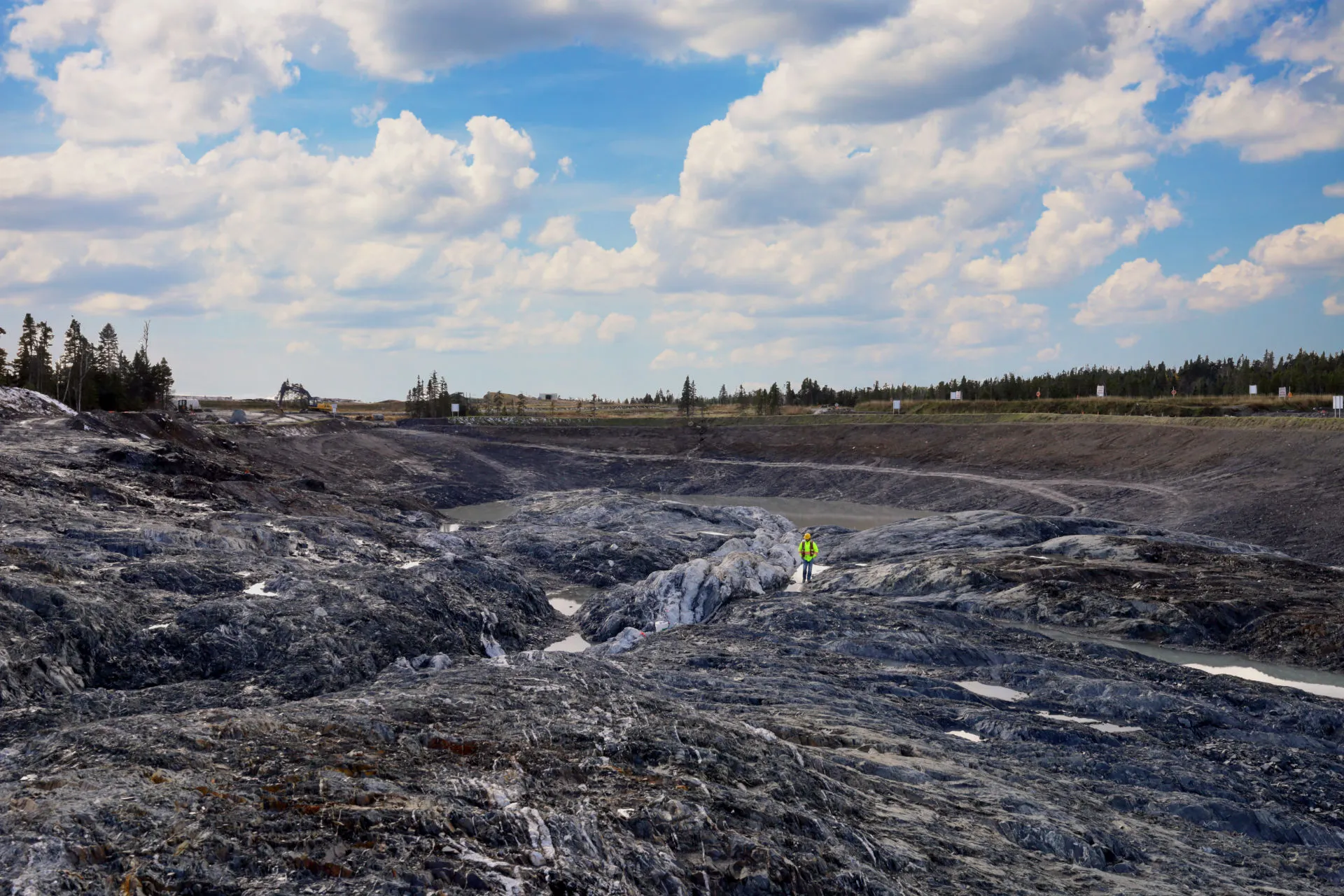
New Found Gold announced a US$75M debt facility from Nebari Natural Resources, extending Queensway funding runway while limiting shareholder dilution ahead of development.
- New Found Gold announced a proposed US$75 million senior secured loan facility from Nebari Natural Resources Credit Fund II, LP, including a US$50 million initial drawdown, an optional US$25 million tranche, and warrants priced at a 25% premium to the 20-day volume-weighted average price (VWAP).
- Financing will support early works at the Queensway Project, including long-lead equipment procurement, engineering, and expansion of the Pine Cove Mill.
- Queensway hosts a 1.25 million ounce indicated open-pit resource grading 2.25 grams per tonne gold, with a Preliminary Economic Assessment (PEA) projecting 1.5 million ounces of total production over a 15-year life of mine (LOM), generating an after-tax net present value at 5% discount (NPV5) of C$743 million and internal rate of return (IRR) of 56.3%.
- The Hammerdown Mine contains 187,000 ounces of measured and indicated resources and is targeting commercial production in the second half of 2026.
- Key catalysts include the Queensway Environmental Assessment submission around April 2026 and Hammerdown commercial production under the Hub and Spokes processing model.
Capital Structure Decisions in Gold Project Development
For companies with large discoveries but limited operating cash flow, equity financing preserves balance sheet simplicity but dilutes shareholders, while debt financing preserves ownership but introduces leverage and repayment risk. This dynamic is evident in the financing strategy of New Found Gold, which recently entered into a term sheet for a proposed US$75 million senior secured loan facility from Nebari Natural Resources Credit Fund II, LP, to support development of the Queensway Project, structured with an initial US$50 million drawdown, an optional US$25 million tranche, and warrants priced at a 25% premium to the 20-day volume-weighted average price (VWAP), limiting dilution while aligning lenders with long-term project value.
Director and Chief Executive Officer of New Found Gold, Keith Boyle, explained how this facility fits into the company’s broader development plan and ensures continued progress toward production:
"We want to keep the momentum we're on to get to cash flow. We've got to order some long-lead items, we want to do some early works, and we've got all the engineering to get completed so that we can keep that momentum, and get to cash flow by the end of next year."
The facility is structured as senior secured debt backed by first-lien security over company assets and guarantees from all subsidiaries, consistent with development-stage mining credit facilities and reflecting the collateral value of the Queensway Project asset base. Proceeds will fund Phase 1 early construction activities, long-lead equipment procurement, expansion of the Pine Cove Mill, and general working capital as the company advances development planning.
Market Valuation & Project Economics at Queensway
New Found Gold reports 344.1 million basic shares outstanding and 367.5 million fully diluted shares, with an approximate market capitalisation of C$1.3 billion. This capital structure reflects several financing events completed in 2025, including a C$63M bought deal and a C$20M private placement. The company also reported C$87M in cash and marketable securities as of September 2025. Additionally, 14.4 million existing warrants could generate approximately C$20M in additional proceeds if exercised, forming part of the near-term funding base ahead of large-scale development expenditures.
Queensway Project Economics
Queensway Project hosts a 1.25 million ounce indicated open-pit resource grading 2.25 grams per tonne of gold alongside additional high-grade underground indicated mineralisation. The Preliminary Economic Assessment (PEA) projects total gold production of 1.5 million ounces over a 15-year life of mine (LOM), generating an after-tax net present value at a 5% discount rate (NPV5) of C$743 million and an internal rate of return (IRR) of 56.3% at a gold price of US$2,500 per ounce, with initial capital expenditure (capex) estimated at C$155 million and life-of-mine all-in sustaining costs (AISC) of US$1,256 per ounce, supported by favourable metallurgy delivering 92% gold recovery through toll milling. Project sensitivity to commodity prices remains significant, with the estimated after-tax NPV5 rising to C$1.45 billion at a gold price of US$3,300 per ounce, representing an increase of approximately C$89 million for every US$100 per ounce rise in gold price.
Strategic Role of Hammerdown and Pine Cove Mill
The company's Hammerdown Gold Project provides an additional operational component to the development strategy. Hammerdown hosts 187,000 ounces in Measured and Indicated open-pit resources, with estimated after-tax free cash flow of C$243.3 million over a 13-year mine life. Commercial production at Hammerdown, commencing in 2026, is expected to introduce operating cash flow that complements external financing at Queensway.
New Found Gold’s 100% ownership of the permitted Pine Cove Mill and tailings facility allows the company to process ore directly and target first gold from Queensway Phase 1 by late 2027. This “Hub and Spokes” approach uses the existing mill to handle ore from multiple deposits, lowering initial capital needs and accelerating the path to production.
Boyle described the operational sequencing underway:
"We're ramping up Hammerdown so that'll generate some good cash at today's prices next year as well. It's all coming together nicely."
Peer Positioning Among Emerging Gold Developers
New Found Gold's C$1.3 billion market capitalisation sits at the lower end of a peer group ranging from C$0.9 billion to C$9.4 billion, which includes Integra Resources, McEwen Mining, Wesdome Gold Mines, Orezone Gold, Discovery Silver, and Artemis Gold. The discount relative to more advanced peers reflects Queensway's pre-construction status, but the project's 2.25 grams per tonne of gold open-pit grade and C$743 million NPV5 compare favourably on a fundamentals basis. The Nebari facility and anticipated Hammerdown cash flow are the near-term variables most likely to close that gap as the company advances toward construction.
Three-Pillar Financing Model & Institutional Shareholder Structure
New Found Gold has adopted a three-pillar financing model combining equity financing, including the 2025 bought deal and private placement, project debt through the Nebari facility, and future operating cash flow expected from the Hammerdown Mine, reflecting an industry approach to balancing shareholder dilution with project leverage.
The Hammerdown acquisition from Maritime Resources Corp. introduces a near-term cash-generating asset that could support development spending at the Queensway Project. The company’s capital structure is also supported by a concentrated institutional shareholder base led by Eric Sprott with approximately 19.9% ownership, alongside Merk Investments, CI Investments, and T. Rowe Price, which collectively hold more than 20% of shares and can influence market liquidity and access to future financing.
Milestones & Conditions for Valuation Re-Rating
For New Found Gold, valuation shifts are likely to be driven by operational and regulatory milestones that progressively reduce development risk at the Queensway Project. The submission of the Phase 1 Environmental Assessment application, expected around April 2026, represents the most immediate of these catalysts.
Boyle indicated the company expects the Phase 1 provincial review process to follow a timeline consistent with recent approvals in Newfoundland and Labrador:
"We're going to be submitting our Environmental Assessment permit probably in April, and with the way the Newfoundland and Labrador government is, they've been fantastic to work with. We would expect similar treatment to what Firefly got, where they got their Environmental Assessment done in 45 days.”
Early works and construction activities planned later in 2026, alongside procurement of long-lead equipment, represent the subsequent milestones in the development sequence. The ramp-up of steady-state production at the Hammerdown Mine during the first half of 2026, with ore processed at the Pine Cove Mill under the Hub and Spokes model, is expected to generate operating cash flow that complements existing financing. Project economics also remains sensitive to gold prices, with NPV5 increasing from C$743 million at US$2,500 per ounce to C$1.45 billion at US$3,300 per ounce, strengthening the economic case and influencing how institutional investors assess valuation relative to development peers.
The Investment Thesis for New Found Gold
- The Queensway Project hosts a 1.25 million ounce indicated open-pit resource grading 2.25 grams per tonne of gold, supported by additional high-grade underground indicated mineralisation, with the Preliminary Economic Assessment projecting total production of 1.5 million ounces over a 15-year life of mine, positioning the asset at the higher end of the grade spectrum among open-pit gold development projects.
- The Preliminary Economic Assessment outlines an after-tax net present value at a 5% discount rate of C$743 million and an internal rate of return of 56.3% at a gold price of US$2,500 per ounce, with initial capital expenditure of C$155 million and life-of-mine all-in sustaining costs of US$1,256 per ounce, supported by 92% gold recovery through off-site milling at Pine Cove.
- The proposed US$75 million senior secured loan facility provides structured project financing with a US$50 million initial drawdown and an optional US$25 million tranche, extending the development runway while limiting immediate equity dilution ahead of construction.
- The Hub and Spokes processing strategy utilises the permitted Pine Cove Mill to process ore from multiple deposits, reducing initial capital requirements and processing infrastructure risk while supporting the ramp-up of production from the Hammerdown Mine.
- Hammerdown hosts 187,000 ounces of measured and indicated open-pit resources with estimated after-tax free cash flow of C$243.3 million over a 13-year mine life, potentially providing internal funding that complements external financing for development of the Queensway Project.
Taken together, the combination of strong project economics, diversified financing through debt, equity, and future operating cash flow, and near-term operational catalysts such as permitting progress and Hammerdown production ramp-up will likely shape how investors assess New Found Gold’s valuation trajectory as the Queensway Project advances toward development.
TL;DR
New Found Gold has entered into a term sheet for a proposed US$75 million debt facility from Nebari to fund early development at the Queensway Project, extending its funding runway while limiting near-term shareholder dilution. Queensway’s economics include a 1.25 million ounce indicated resource, with a PEA projecting total production of 1.5 million ounces over a 15-year mine life and showing a C$743 million after-tax NPV5 and 56.3% IRR. 100% ownership of the permitted Pine Cove Mill supports Phase 1 first-gold by late 2027. Hammerdown production ramp-up in 2026 is expected to generate operating cash flow under the Hub and Spokes model. Key catalysts include the Environmental Assessment submission for Queensway around April 2026, early construction activities, and Hammerdown’s production ramp-up, which together will influence how investors assess the company’s valuation as development progresses.
FAQs (AI-Generated)
The debt facility from Nebari Natural Resources provides development capital for New Found Gold to advance the Queensway Project, funding early works, engineering, and Pine Cove Mill expansion.
Dilution is limited because the funding is primarily debt. Only attached warrants, priced at a 25% premium to the 20-day VWAP, could create future share issuance.
Queensway hosts 1.25 million ounces of indicated resources grading 2.25 g/t gold. A PEA estimates 1.5 million ounces of production over 15 years of mine life, with C$743M NPV5 and 56.3% IRR at US$2,500 gold.
Hammerdown contains 187,000 ounces of measured and indicated resources and targets commercial production in 2026, potentially generating cash flow to support Queensway development.
Key catalysts include the Queensway Environmental Assessment submission around April 2026, Hammerdown production ramp-up in 2026, and early construction activities later in 2026.
Analyst's Notes





Subscribe to Our Channel




Stay Informed