




Central Asia Metals; 7% Dividend, £56M Free Cash Flow Funds Growth While Secondary Project Turnaround Rebuilds Future Value


- Central Asia Metals delivered $230M revenue, $103M EBITDA (44% margin), and $56M free cash flow, paying a 12p dividend representing 7% yield at current share price
- The Kazakhstan copper operation produced 13,300 tons in 2025 with 75% EBITDA margins, though guidance moderates to 12-13k tons for 2026 as leach curves naturally tail off; license extension beyond 2034 being pursued based on outperformance
- North Macedonia lead-zinc mine underwent restructuring with 11% workforce reduction, cost controls, and hedging strategies after geological complexity impacted profitability; Q4 2025 showed improvement with guidance raised for 2026
- Company pursuing dual-track growth via early-stage exploration in Kazakhstan and acquisition of pre-feasibility stage development assets at significant discounts to NAV
- Dividend policy of 30-50% free cash flow provides shareholder returns while maintaining flexibility for M&A opportunities; completed $10M share buyback signals no imminent major acquisition
Central Asia Metals PLC, an AIM-listed base metals producer with approximately $400 million market capitalisation, faces a pivotal transition period as it seeks to balance robust cash generation from mature assets with the imperative to build its next generation of production. CEO, Gavin Ferrar’s recent interview provides investors with detailed insights into the company's operational performance, strategic priorities, and capital allocation philosophy as it manages two producing assets while pursuing growth through exploration and acquisition.
Robust 2025 Financial Performance Underpins Shareholder Returns
The company delivered a strong set of 2025 results announced March 19th, with revenues of $230 million and EBITDA of $103 million representing a healthy 44% margin. Free cash flow generation reached $56 million, enabling the company to distribute $28 million to shareholders via dividends representing 50% of free cash flow at the top end of the company's stated 30-50% dividend policy range.
This translated to £0.12 per share dividend, yielding approximately 7% at current share prices. The decision to pay at the maximum range reflected the absence of a major acquisition to deploy capital into during the period. Ferrar emphasised that the dividend policy serves dual purposes:
"If we make the commitment to say okay, we're going to pay 30% to 50% of our free cash flow to our shareholders every year, then we've got to basically as a business drive the underlying platform...that means by you know disciplined cost management, make sure the production targets are met."
The company also completed a $10 million share buyback program, having purchased shares into treasury before cancelling them, reducing the overall share count. Ferrar acknowledged the share buyback was initiated when management believed shares were undervalued, though like many mining stocks, the share price has declined 20-30% in the recent market downturn.
Kounrad: The Cash Engine with Finite but Extended Runway
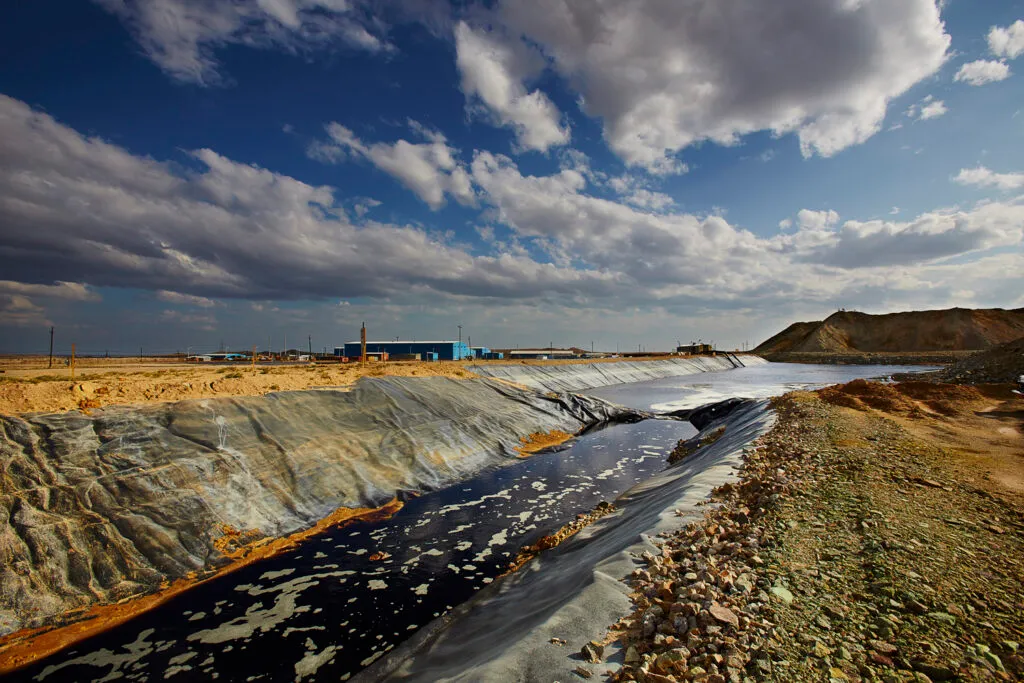
The Kounrad copper cathode operation in Kazakhstan remains the financial backbone of the business, operating at a remarkable 75% EBITDA margin in 2025. The operation treats approximately 600 million tons of Soviet-era waste dumps spread across roughly 1,500 football pitches, using a heap leach process with dilute sulfuric acid to extract copper that was uneconomic when originally mined between 1938 and 1996.
Production in 2025 reached 13,300 tons of LME-grade copper cathode, though guidance for 2025 moderates to 12,000-13,000 tons as leach curves naturally tail off after 14 years of operation since 2012. Ferrar explained the dynamic:
"These curves tail off, so the rate of recovery does slow down over time. We've been operating there since 2012, so 14 years of operation, so we are getting to that inflection point in the leech curves."
However, the operation has consistently outperformed expectations. The eastern dumps have yielded 13-14% more copper than originally forecast, with recovery rates of approximately 53% versus 45-50% expectations. The western dumps, now representing 85% of production, are similarly outperforming with recoveries above the 37-42% forecast range.
This outperformance provides a basis for potentially extending operations beyond the current 2034 license expiration. The company plans to compile performance data into a feasibility study for license extension application, supported by the employment of over 300 people in a deprived region. Ferrar noted the environmental benefits as well, as the leaching process prevents acid rock drainage that would otherwise allow heavy metals to leach into groundwater naturally.
SASA: Restructuring for Profitability After Geological Challenges
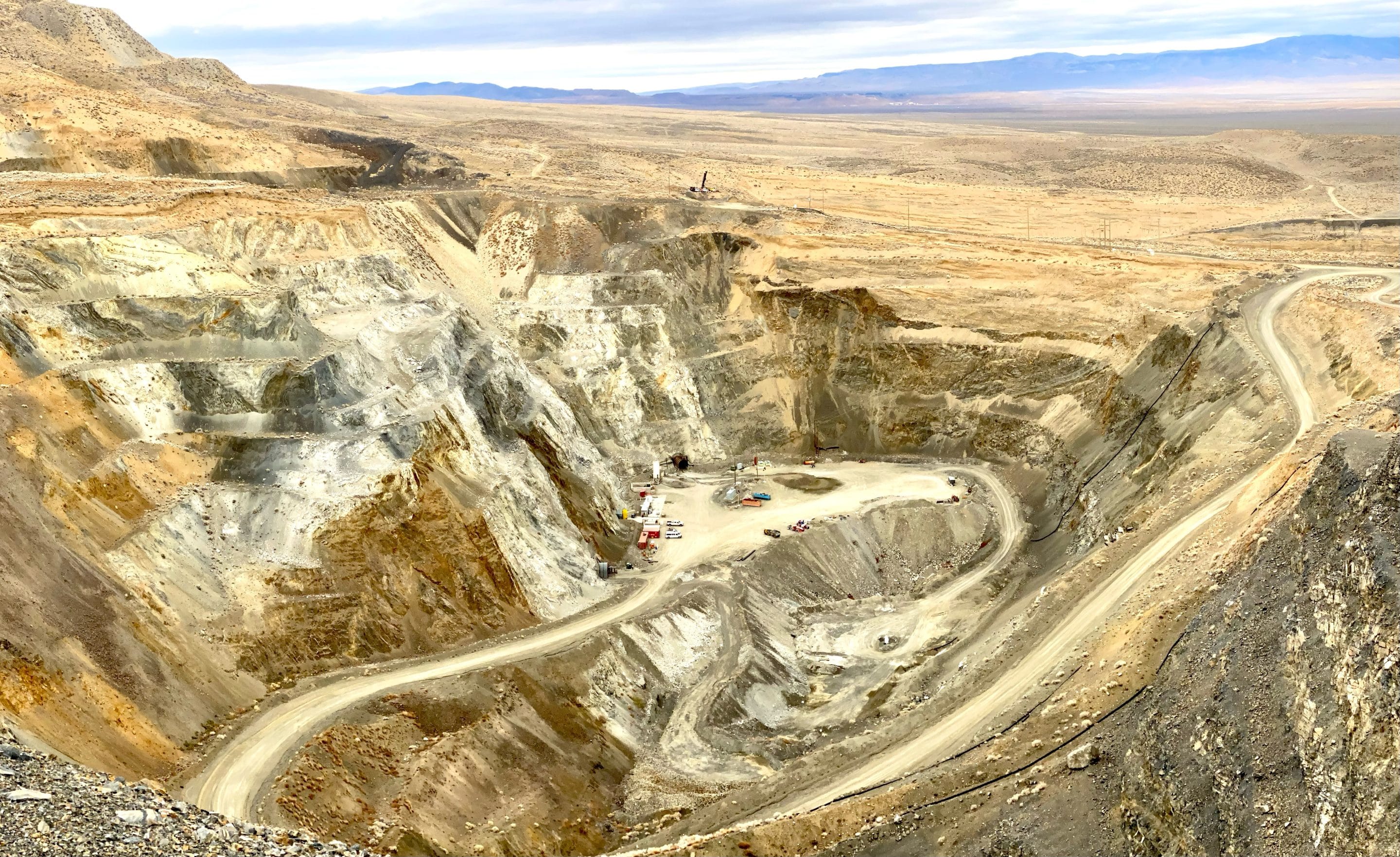
The SASA lead-zinc underground mine in North Macedonia, employing approximately 700 people, experienced significant operational and financial challenges in 2024 that required decisive management action. The core issue stemmed from unexpected geological variability as mining progressed to depth.
While the ore body was known to be narrow with depth, drill hole spacing of 25-50 meters failed to capture dramatic changes occurring over just 7-meter intervals in ore body shape, orientation, and grade. This created a planning and operational challenge that impacted both dilution and head grades.
Management responded with a comprehensive turnaround program including: enhanced geological information gathering and digitalisation; faster laboratory turnaround times; better integration between geological and mining software systems; implementation of new mining methods to reduce dilution; workforce reduction of approximately 11%; contract renegotiations and improved inventory management; and hedging of 50% of zinc production and foreign exchange exposure.
The operation showed clear improvement in Q4 2025, allowing management to raise guidance for 2026 to 800,000 to 820,000 tons throughput. An impairment was taken to reset the mine plan to only include profitable mineralisation through 2034, though Ferrar emphasised this represents a conservative baseline rather than the actual mine life expectation.
Treatment charge benefits of approximately $7 million from 2024 to 2025, with further improvements expected in 2026, provide additional margin support. The operation also hedged electricity prices through end-June 2026 to protect against European energy price volatility related to geopolitical tensions.
Interview with Gavin Ferrar, CEO of Central Asia Metals
Exploration Portfolio: Building the Next Generation
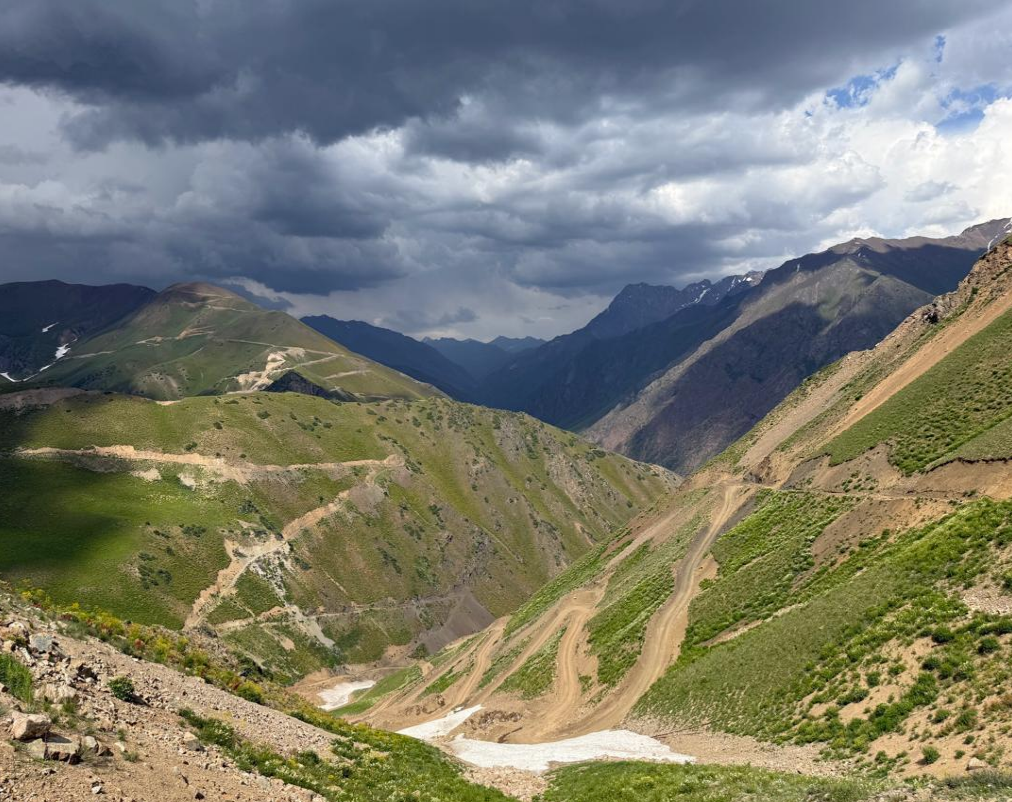
Central Asia Metals is pursuing early-stage exploration on two fronts to replenish depleting resources. In Kazakhstan, the company has assembled six exploration licenses with drilling planned on two licenses totaling approximately 5,500 meters in the 2026 summer season, plus a major geophysics program on a third to generate additional targets. Ferrar, a geologist by background, acknowledged the rapid progress:
"Going from a standing start two years ago to now having six licenses on the book, drilling on two of them in 2026...I think is a fantastic result."
The exploration team is properly incentivised, owning 20% of the business with conversion to a net smelter royalty upon discovery, at which point Central Asia Metals would own 100%.
While the 5,500-meter program is modest, Ferrar emphasised the company's financial flexibility to expand drilling mid-year if early results warrant, given the cash generation from operations. The company has already demonstrated discipline by dropping unpromising targets that looked interesting on satellite imagery but failed ground truthing.
At SASA, approximately half the exploration budget funds infill drilling to reduce geological surprises, while the other half targets depth and strike extensions. A January license extension enables construction of an exploration drive to better access the down-dip extension potential. Additionally, the satellite Golema Reka ore body containing 9 million tons of lower-grade resource is being evaluated for ore sorting technology to upgrade head grade to economic levels in a 12-month study program.
The Aberdeen project, where Central Asia Metals holds 33%, has just received £850,000 in additional funding for six drill holes, with four already sited. The team believes they are approaching the feeder zone to the mineralised system, which would represent economic grades. Ferrar noted every hole has intersected mineralisation, just not yet at economic levels.
M&A Strategy: Acquiring Development Assets at Deep Discounts
Beyond organic exploration, Central Asia Metals actively pursues acquisition of pre-feasibility to feasibility-stage development assets at significant discounts to net asset value. The strategy targets assets trading at 0.25x NAV that can be advanced to potentially 0.75x NAV or higher, generating 3x value even after capital deployment.
The company's 2025 pursuit of the Antler project illustrates both the opportunity and challenges. Central Asia Metals' initial offer valued Antler at approximately 0.24-0.25x NAV, consistent with market comps for pre-feasibility assets at 0.4-0.5x NAV. However, the company was ultimately outbid. The absence of a major acquisition enabled the share buyback and maximum dividend payout.
Ferrar suggested the dividend payment level serves as a "leading indicator" of M&A pipeline activity: paying at the top end of the range with no buyback signals no imminent acquisition, while paying at the lower end might indicate capital preservation for a pending transaction.
The company brings significant competitive advantages to development projects: operational experience in underground mining, open pit mining, hydrometallurgy, flotation, and modern tailings techniques; successful construction track record of Kounrad and two plants at SASA; and engineering capability to optimise designs for cost and production discipline from day one.
Target jurisdictions generally align with current operations in the Europe/Central Asia time zone plus Kazakhstan, though compelling assets in sensible jurisdictions like North America (as with Antler) receive consideration. The company seeks to diversify political risk while avoiding jurisdictions it considers too risky.
Capital Allocation Philosophy and Flexibility
Central Asia Metals' capital allocation framework balances three priorities: shareholder returns via dividends (30-50% of free cash flow); exploration to replenish resources; and M&A to acquire development assets that bridge the gap between early exploration and production. Ferrar characterised the dividend policy as creating accountability:
"The covenant with our shareholders really is we will return capital to you via that dividend policy provided we don't have a better place to deploy it."
This provides flexibility to reduce dividends if a compelling acquisition emerges requiring capital, while maintaining discipline on management to generate sufficient cash flow to support returns.
The company's clean balance sheet and cash generation provide multiple options without requiring equity raises that have historically diluted junior mining shareholders. This financial strength enables opportunistic M&A in a market where many targets have declined in lockstep with Central Asia Metals' own share price, maintaining relative affordability despite commodity price volatility.
Macro Environment: Energy Costs and Geopolitical Risks
The company faces macro headwinds from European energy price volatility and broader geopolitical tensions affecting commodity markets. However, its exposure is relatively contained. Kazakhstan operations benefit from local energy sources and minimal diesel usage (approximately $1.5 million annually on diesel for underground equipment), limiting impact from hydrocarbon price spikes.
At SASA, the company hedged electricity through June 2026 and hedged 50% of zinc production to protect margins during the turnaround period. Foreign exchange hedging addresses euro-based costs against dollar revenues. Ferrar noted the COVID pandemic experience prepared management for supply chain disruptions and input cost volatility, shifting from just-in-time to more strategic inventory management.
The recent Iran conflict prompted pre-positioning of hydrocarbon-based reagents for Kazakhstan operations, with adequate on-site storage to buffer near-term price pressures. Ferrar acknowledged energy prices represent the primary industry-wide risk, expressing hope for Middle East conflict resolution.
The Investment Thesis
- Proven Cash Generation: $56M free cash flow on $230M revenue demonstrates strong operational execution with 44% EBITDA margins and 75% margins at flagship Kounrad operation
- Attractive Shareholder Returns: 7% dividend yield at 50% free cash flow payout provides income while maintaining capital for growth; completed $10M buyback demonstrates capital discipline
- Low-Cost Copper Production: First-quartile cost position at Kounrad provides margin resilience and full commodity price exposure through unhedged production
- Operational Turnaround at SASA: Q4 2025 improvement following restructuring, cost controls, and hedging provides pathway to profitability; potential life extension beyond 2034 conservative timeline
- Multiple Growth Vectors: Six Kazakhstan exploration licenses with drilling underway; Aberdeen 33% stake approaching potential feeder zone discovery; active M&A pipeline targeting pre-feasibility assets at 0.25x NAV
- Technical and Execution Capability: Successful construction and operation track record de-risks development of acquired assets; experienced team incentivised through equity ownership in exploration entities
- Strategic Optionality: Clean balance sheet enables opportunistic M&A without dilutive equity raises; flexible dividend policy allows capital redeployment to higher-return opportunities
- Undervalued Relative to Fundamentals: Share price decline of 20-30% mirrors sector weakness despite strong operational performance, creating potential value opportunity for long-term investors
- License Extension Potential: Kounrad outperformance of 13-14% versus forecast provides technical basis for operations beyond 2034 license expiration, extending cash flow runway
- Jurisdictional Diversification: Kazakhstan and North Macedonia exposure with potential expansion into North America or similar stable jurisdictions reduces single-country political risk
The global energy transition and electrification mega-trend continues to drive structural copper demand, while geopolitical fragmentation creates supply chain vulnerabilities for critical base metals. Central Asia Metals operates at the intersection of these themes, extracting copper from legacy waste with minimal environmental impact while maintaining first-quartile cost positions that provide resilience through commodity cycles. The company's Kazakhstan operations particularly benefit from domestic energy sources, insulating margins from European energy volatility affecting competitors. Meanwhile, lead-zinc production from SASA serves battery and infrastructure markets experiencing sustained demand.
As Ferrar noted regarding copper pricing: "Who's not happy at $12,000 plus copper?" The fundamental supply-demand imbalance for base metals, combined with lengthening mine development timelines and permitting challenges globally, supports price floors that benefit low-cost producers with growth optionality. Geopolitical tensions paradoxically benefit well-positioned miners in stable jurisdictions, as investors and end-users prioritise supply security over marginal cost savings from riskier geographies.
TL;DR:
Central Asia Metals delivered strong 2025 results with $56M free cash flow enabling a 7% dividend yield while maintaining strategic flexibility for growth. The low-cost Kounrad copper operation (75% EBITDA margins) shows life extension potential beyond 2034 through operational outperformance, while SASA's Q4 turnaround following restructuring provides a pathway back to profitability. Multiple growth vectors include early-stage exploration across six Kazakhstan licenses, a 33% stake in Aberdeen approaching a potential feeder zone discovery, and an active M&A pipeline targeting pre-feasibility assets at 0.25x NAV. The company's proven operational execution, clean balance sheet, and flexible dividend policy (30-50% payout) position it to capitalise on sector weakness while generating shareholder returns through the transition period.
FAQs (AI Generated)
Unexpected geological variability between drill holes created ore body uncertainty affecting dilution and grades. Management responded with enhanced geological data collection, digitalisation, new mining methods, 11% workforce reduction, cost controls, and strategic hedging of zinc prices and forex.
Technically feasible based on 13-14% outperformance versus forecasts. The company employs 300+ people in deprived regions, creating economic incentive for government approval. Management compiling feasibility study data for license extension application with good prospects for success.
Targets pre-feasibility stage assets at 0.25x NAV with potential to drive to 0.75x through operational expertise. Proven construction and operational track record, clean balance sheet enabling non-dilutive funding, and disciplined cost management provide competitive advantages in asset development.
Dual approach: early-stage Kazakhstan exploration (6 licenses, 5,500m drilling) provides long-term optionality with team incentivised through 20% ownership, while M&A targets advanced-stage development assets avoiding discovery risk and shortening production timeline.
Kazakhstan operations use domestic energy sources with minimal diesel exposure ($1.5M annually). SASA hedged electricity through June 2026 and maintains strategic reagent inventory. First-quartile cost position at Kounrad provides a significant margin buffer against input inflation.
Analyst's Notes





Subscribe to Our Channel


Stay Informed


