




Abitibi Metals Shifts B26 Drilling Toward Resource Conversion & PEA Preparation


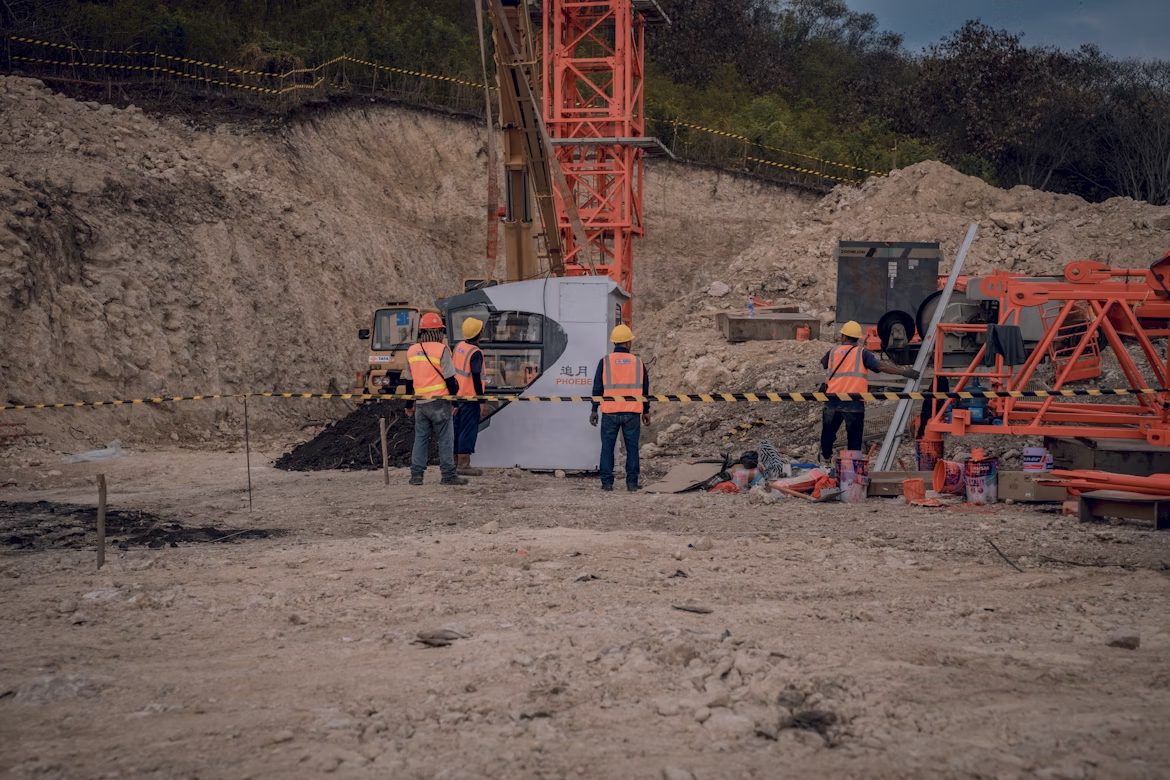
Abitibi Metals advances B26 toward PEA preparation with infill drilling, resource conversion, and over 80,000m of funded development work.
- Abitibi Metals is reallocating drilling priorities at B26 to balance expansion work with infill drilling required for preliminary economic assessment (PEA) preparation and resource conversion to the indicated category.
- Phase 4 drilling returned a 150-metre step-out intercept grading 2.71% copper equivalent over 7 metres within 1.81% copper equivalent over 15 metres, extending the Western Down-Plunge Zone at depth.
- The company is advancing metallurgy testing, geotechnical assessment, and feasibility groundwork alongside drilling as part of a transition to development-stage workstreams.
- A C$30.75 million strategic financing led by Discovery Silver, which closed on May 15, 2026 and resulted in Discovery Silver holding a 9.9% equity position, funds over 80,000 metres of drilling and supports targeted PEA delivery.
- Abitibi plans to release a full two-year plan in late May or early June 2026, outlining budget allocation and specific milestones through feasibility preparation.
Expansion Drilling Continues Alongside Resource Conversion Work
Abitibi Metals' (CSE: AMQ | OTCQB: AMQFF | FSE: FW0) reported a 150-metre step-out intercept in the Western Down-Plunge Zone during Phase 4 drilling, intersecting 2.71% copper equivalent over 7 metres within a broader interval of 1.81% copper equivalent over 15 metres. The intercept extends mineralisation at depth and supports management's thesis that the deposit continues beyond the current resource boundary.
The company is targeting specific infill areas where drill density remains wide in the inferred resource category. President and Chief Executive Officer of Abitibi Metals, Jon Deluce, explained the parallel objectives driving current drilling priorities:
"Our goal for Q1 is a PEA and an updated resource. The PEA is looking more near-surface, and what is the early payback of the deposit? And the resource is more open-ended at how big this deposit can be, and how does that tie into the overall mine life?"
Deluce noted that Phase Three drilling identified zones where grade and tonnage are believed to be understated, and additional infill work is planned to address these gaps ahead of the resource update. The B26 deposit currently hosts a combined 25 million tonnes grading 2.1% copper equivalent across measured, indicated, and inferred categories. Abitibi operates the project in partnership with SOQUEM, a subsidiary of the Quebec government.
PEA Preparation Drives Near-Term Technical Program
The company is preparing to deliver a PEA alongside an updated resource estimate. The PEA will focus on near-surface mineralisation and early-stage economics, requiring a strategic reallocation of drilling meters toward shallow infill targets rather than exclusively pursuing resource expansion at depth.
Deluce described the balance between competing technical objectives:
"We certainly still have a large expansion budget. We are looking at strategic infill targets, where, like with Phase Three, we're identifying areas that we believe are understated in terms of grade and tonnage as a result of the wide areas of drill density in the inferred category. So we're going to have a balanced budget between expansion and infill."
The 2027 drilling program will shift further toward infill work to convert inferred resources to indicated category in support of feasibility study requirements. Abitibi plans to complete over 80,000 metres of drilling as part of the multi-year technical program.
Beyond drilling, the company is advancing metallurgy testing and geotechnical work during the same period. These programs are designed to reduce technical risk ahead of feasibility-stage studies and provide the engineering parameters required for mine planning.
Strategic Financing Supports Multi-Year Development Plan
The C$30.75 million financing includes no warrants, maintaining uniform shareholder participation without price ceilings on equity appreciation. Discovery Silver's investment brings operational and permitting expertise accumulated through previous mine-building programs in Ontario, including the West Timmins and Detour Lake projects.
The financing closed on May 15, 2026, for gross proceeds of C$30.75 million, positioning Abitibi with treasury sufficient to advance the PEA, complete the 2026 drilling program, fund a significant portion of feasibility work, and pursue potential camp-wide acquisitions. Management highlighted Discovery Silver's track record in permitting, First Nations engagement, and securing government grants as key areas where the partnership will support project advancement and feasibility preparation.
Deluce characterised the institutional capital profile that the strategic investment is designed to attract:
"A lot of these pension funds and generalist funds are in; if they see an opportunity like this, they are in this for a long-term investment, seeing the vision of the company and where we want to go with it."
Quebec Polymetallic Asset in Established Mining Jurisdiction
The B26 project is located in Quebec, a jurisdiction that has attracted sustained institutional interest in copper and polymetallic assets. Recent consolidation activity in the Canadian copper-gold sector, including Eldorado Gold’s acquisition of Foran Mining, owner of the McIlvenna Bay copper-zinc project, in a transaction valued at nearly C$4 billion, has highlighted institutional demand for development-stage polymetallic deposits with scale.
Abitibi has grown the B26 resource to 25 million tonnes at 2.1% copper equivalent over approximately two and a half years of operation. The company's partnership with SOQUEM provides access to the Quebec government subsidiary's regional expertise and reflects ongoing provincial support for mineral exploration and development in the region.
Two-Year Development Plan Expected Late May
Abitibi plans to release a full two-year plan in late May or early June 2026, outlining budget allocation across expansion drilling, infill drilling, metallurgy, geotechnical work, and feasibility preparation.
Deluce confirmed the timing and scope of the forthcoming plan:
"Towards the end of May or early June, we are going to lay out a full two-year plan that involves where we're allocating our budget and what the specific deliverables are that the market can expect from that budget."
The plan will provide specific deliverables and milestones tied to the company's development objectives at B26. The C$30.75 million treasury positions the company to execute the multi-year technical program without near-term financing requirements, allowing management to focus on operational execution and project de-risking through the PEA and feasibility preparation phases.
FAQs (AI-Generated)
Analyst's Notes





Subscribe to Our Channel




Stay Informed






















