




Commodities Up, Miners Down: Olive Opens Its Liquid Book in a Risk-Off Market


Olive Resource Capital's Pelaez and Macpherson explain why miners fell as commodities rose in September, and which liquid producers they are buying now.
- Most commodities rose in September while every major resource-linked equity index fell, and Olive outperformed its reference indices.
- Olive Resource Capital executives attribute the split to a stronger US dollar, rising bond yields, expectations of further Fed hikes and headline-driven markets rather than weaker fundamentals.
- Olive holds about 10% cash, is deploying gradually and expects better entry points before US Thanksgiving, aiming to be fully deployed for a January rally.
- The fund disclosed its liquid book, including Ivanhoe Mines, Ero Copper, Valterra Platinum, K92 Mining, Albemarle, Freehold Royalties, Woodside Energy and GeoPark.
- Kinross Gold's strategic investment in Olive holding Aquitaine Metals reflects a trend of producers backing juniors earlier in the capital structure.
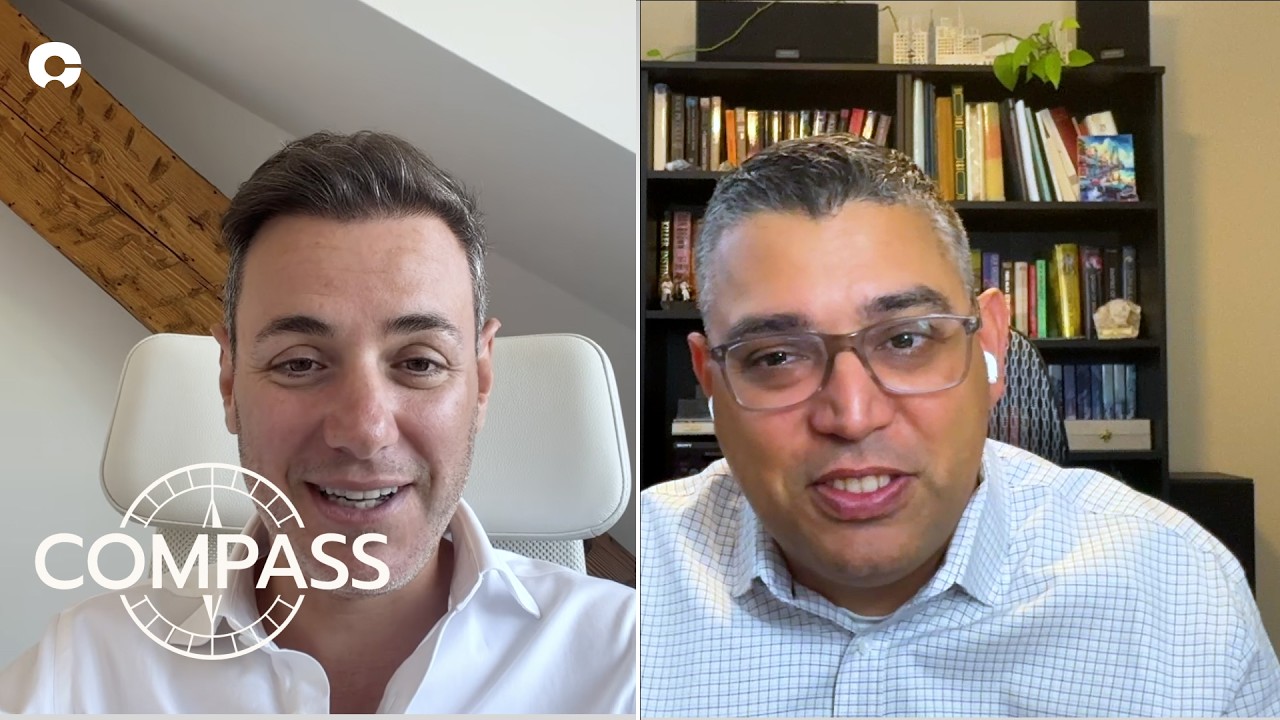
September delivered an unusual split for resource investors where most commodities finished the month higher, yet every major resource-linked equity index closed lower. Samuel Pelaez, President, CEO and CIO of Olive Resource Capital (TSXV:OC), and Derek Macpherson, Executive Chairman, explained why that gap has opened and how they intend to use it.
Rather than focusing on illiquid juniors, the pair walked through the full contents of Olive's liquid portfolio, which the fund does not usually disclose. The list spans copper, platinum group metals (PGMs), gold, lithium and a recently built energy sleeve. Their case is straightforward. When macro noise drags high-quality producers down alongside everything else, investors can gain commodity exposure through large, tradeable names without taking on the liquidity risk of a small-cap explorer.
September Performance
Olive published its September figures ahead of the recording, and both hosts acknowledged a difficult month. Pelaez stressed that the weakness was global and sector-wide. Olive outperformed the reference indices it tracks yet still finished lower. He described September as a complete reversal of August. The US dollar rallied, volatility rose and investors moved away from the riskier end of the spectrum. The striking feature was the divergence. The vast majority of commodities rose over the month, while resource equities fell across the board. Pelaez said there is little a manager can do in such periods beyond holding a portfolio strong enough to ride them out.
Commodity Gains
Macpherson offered one explanation for the split. Investors with serious capital to put into commodities increasingly buy futures directly rather than mining equities. That helps explain why copper is trading around its all-time highs while copper equities lag. He also pointed to market breadth. The S&P 500 is at or near record levels, but the gains are concentrated in semiconductors and AI-related technology. Mining is not grouped into that trade, even though data centres depend on the metals the sector produces.
Elsewhere, PGMs remain out of favour amid concerns about economic growth. Lithium has come off its lows, although Macpherson does not believe a sustained rally is yet in place. Pelaez added that several producers, including some outside Olive's portfolio, have reported strong Q3 production numbers. Share prices have not responded, which he attributed to macro volatility rather than operational weakness.
Precious Metals
Gold exposure came through two operating names. K92 Mining (TSX:KNT) remains one of Olive's favourite holdings. Pelaez admitted the fund has never owned enough of it to reach its top 10, although it consistently sits just below. He noted the single-asset risk, and Macpherson added the jurisdictional risk of Papua New Guinea. Both still regard the asset and management team as exceptional. K92 released its Q3 update on the day of recording, which Macpherson called another strong quarter from a classic underpromise, overdeliver operator. He said the company has now produced its millionth gold-equivalent ounce and expects the second million to come considerably faster.
Ero Copper (TSX:ERO) also carries meaningful gold leverage. Macpherson described it as a gold-heavy copper producer that has not sold away its precious metals upside, so its earnings benefit from strength in both metals.
Kinross Gold (TSX:K) and Alpayana closed a C$47.1 million strategic financing in Aquitaine Metals, a gold explorer in France, at C$7.50 per share. Macpherson said the company now holds around C$92 million in cash, and he expects the investment to lift Olive's October net asset value (NAV). He argued that producer backing matters most in countries less familiar with mining, where governments may doubt a junior's ability to take a project to production. Macpherson noted that Kinross has also invested in Sun Valley Minerals in Uruguay. Pelaez sees producers increasingly willing to invest earlier in the capital structure and to provide technical support, rather than waiting for large takeovers. That fits the broader producer interest the hosts observed at Beaver Creek, which Macpherson attributes to stronger balance sheets across the industry.
Macro Backdrop
Macpherson traced the risk-off move to late August, when US Federal Reserve Chair Kevin Warsh used his Jackson Hole speech to signal a renewed focus on inflation. The September rate hike that followed was largely priced in. Shortly afterwards, however, markets began assigning a high probability to as many as six further hikes over the next year. Macpherson considers that outlook overcooked. The more persistent concern is the long end of the bond market, where yields keep rising. He noted that bond markets are far harder to move than equity markets because of their size and depth.
Pelaez widened the lens. Bond yields are now rising in Europe as well, with France leading. Elections are approaching in the US, Spain and France. Energy prices remain elevated, which Macpherson attributed more to a shortage of Western refining capacity than to the Strait of Hormuz, where he believes the volatility shocks have largely passed. The result, in Pelaez's view, is a market driven more by headlines than fundamentals. September and October are also seasonally weak for resources.
Positioning
Olive is not rushing to deploy capital. The fund holds roughly 10% cash and is adding gradually, mainly to names it already owns and knows well. Pelaez expects better entry points in the near future. Macpherson sees opportunities between now and US Thanksgiving, possibly helped by tax-loss selling in select names. He tempered that view, noting that many investors who entered a year ago remain well in profit.
Olive's portfolio is split in two. The liquid book holds larger-cap names the fund can exit within a day. The fundamental book holds less liquid positions with higher torque, which has historically delivered better returns. For now, Macpherson said, the priority is the liquid side. The exception is a handful of fundamental names where Olive continues to build positions, which the hosts will discuss once those positions reach scale. Olive has gone into year end almost fully deployed to capture the typical January rally and financing activity.
Stock Selection Philosophy
Pelaez argued that macro-driven weakness offers a rare chance to buy tier-one producers at better prices:
"It's not often that liquid names give you a window to enter into them. When you have the potentially the best copper mine in the world and you get a window of opportunity to enter, you should take it."
That copper mine belongs to Ivanhoe Mines (TSX:IVN), a long-standing position Olive continues to add to. Macpherson said Ivanhoe holds one of the world's best copper mines and one of its best PGM mines, plus the Western Forelands exploration ground. Olive deliberately did not buy straight after Robert Friedland's Denver Gold Forum presentation, given his reputation as the industry's best salesman. Ero Copper is the second copper holding. Pelaez said its small, highly profitable Brazilian mines trade on an attractive multiple. He believes the market assigns no value to the Furnas project, which Ero is earning into from Vale Base Metals and which received a preliminary economic assessment (PEA) earlier this year. In his view, Furnas could nearly double Ero's revenue and be developed without new equity at current prices. Ero has outperformed strongly and now sits in Olive's disclosed top 10.
For PGMs, Olive holds Valterra Platinum (JSE:VAL), the Anglo American spin-out holding its South African PGM assets. Pelaez considers it the world's largest primary PGM producer, a position he expects Ivanhoe's Platreef to challenge around 2031. Macpherson explained the logic behind holding a major rather than a junior,
"If you want PGM exposure, you don't have to buy a little illiquid name to get that exposure and get that torque."
Valterra's London listing gives Olive revenue protection and the ability to exit quickly. Albemarle (NYSE:ALB) plays the same role in lithium. Olive also owns small caps in lithium and PGMs, held for company-specific catalysts.
The energy sleeve has three names. Freehold Royalties (TSX:FRU) holds royalties in Western Canada and the Permian Basin. Pelaez highlighted its high-quality operating partners, improving export routes for Canadian crude and a multiple well below that of metals royalty companies. Macpherson noted Franco Nevada (TSX:FNV) has long held oil and gas royalties. Woodside Energy (ASX:WDS) offers gas-weighted exposure through Australian LNG exports to Korea and Japan, plus US downstream assets. Macpherson expects buyers to diversify supply away from the Strait of Hormuz. GeoPark (NYSE:GPRK) brings Colombian production, access to Argentina's Vaca Muerta formation and a recently entry into Venezuela.
Key Takeaways
The episode's central message is that investors do not need to buy a C$10 million explorer to express a commodity view. During risk-off periods, high-quality liquid producers can fall alongside the rest of the sector despite rising metal prices and strong operating results. That creates entry points in companies such as Ivanhoe, Ero, Valterra and K92 that are rarely available.
Olive is positioning accordingly. It is holding cash, adding gradually and expecting better prices before US Thanksgiving, with the intention of being fully deployed for a January rally. The risks are clear. Further rate hikes, rising long-term bond yields and a cluster of elections could prolong the dislocation between commodities and equities. Producers backing juniors, as Kinross has done with Aquitaine Metals, suggests the industry's own capital sees value that the market has yet to recognise.
TL;DR
Most commodities rose in September while every major resource equity index fell, a split Olive Resource Capital attributes to a stronger US dollar, rising bond yields, expectations of further Fed hikes and headline-driven markets. Olive outperformed its reference indices but still finished lower. It holds roughly 10% cash and is adding gradually, prioritising liquid producers over juniors. Its liquid book spans Ivanhoe Mines and Ero Copper in copper, Valterra Platinum in PGMs, K92 Mining in gold, Albemarle in lithium, and Freehold Royalties, Woodside Energy and GeoPark in energy. The hosts expect better entry points before US Thanksgiving and see producer investments, such as Kinross backing Aquitaine Metals, as validation for quality juniors.
FAQs (AI Generated)
Analyst's Notes





Subscribe to Our Channel


.jpg)


Stay Informed


