China’s Export Cap Shifts Rare Earth Margin Toward Producers


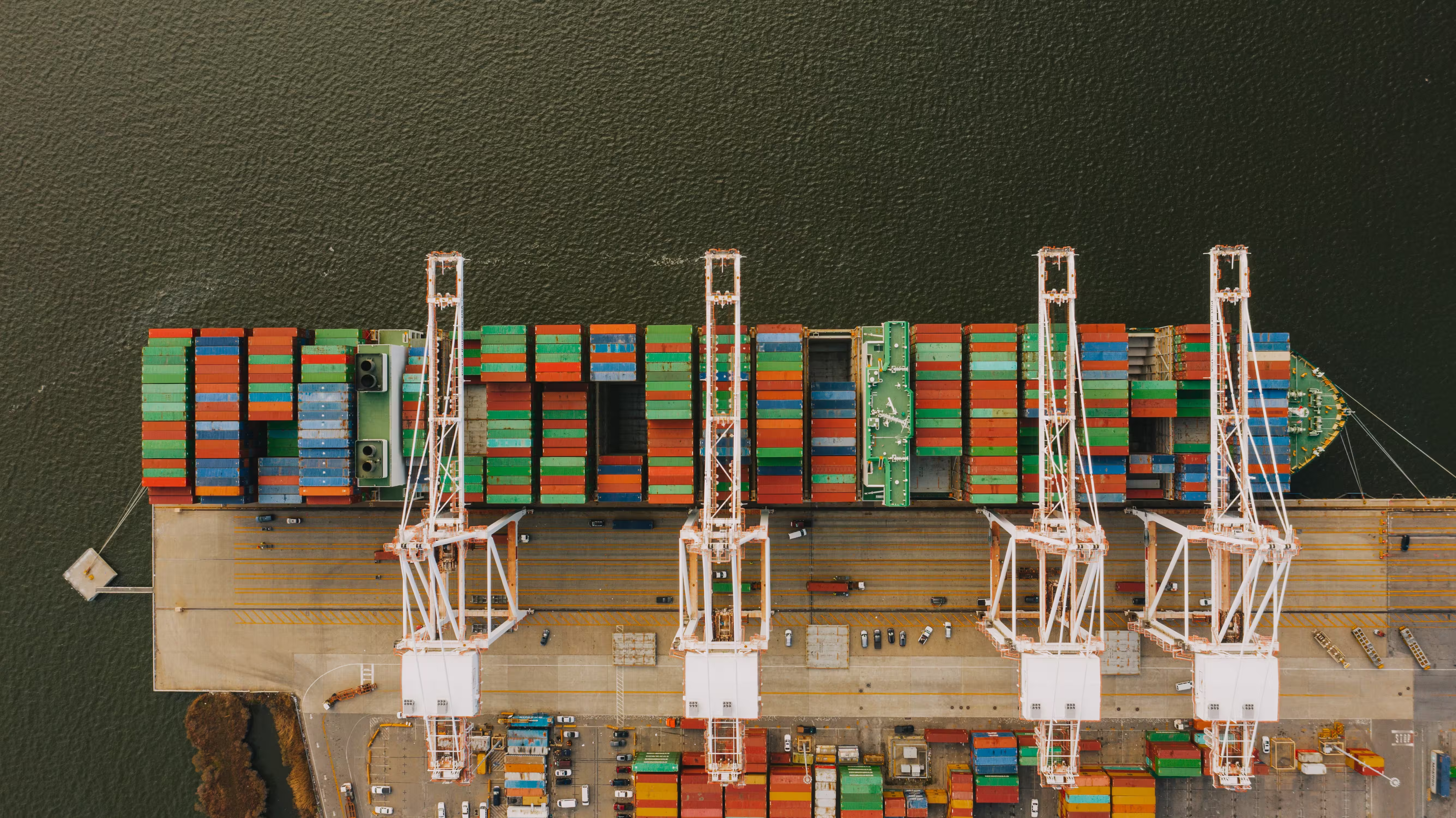
Outside China, only 27,000 tons of NdPr oxide output is projected against 58,000 tons of announced 2028 capacity, making commissioning a key valuation factor.
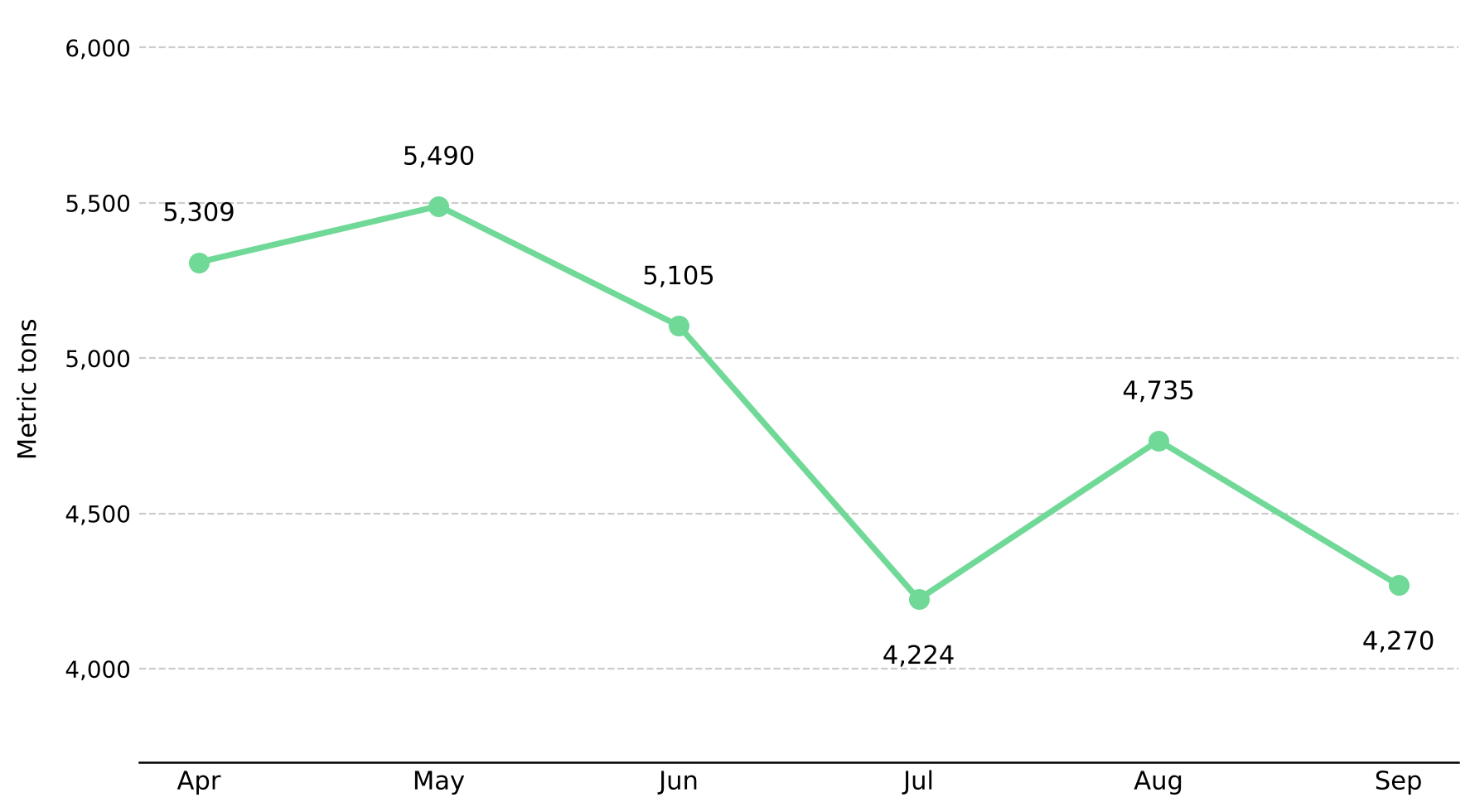
- China exported 4,269.8 tons of rare earths in September 2026, up 6.7% year over year but down 9.8% from August.
- Rare earth exports totaled 43,711 tons through September 2026, down 9.6% year over year, while January-August export value rose 53.5% as China's licensing controls restricted volumes and supported prices.
- September 2026 exports remained 22.2% below May's peak of 5,490 tons despite year-over-year growth, indicating no sustained supply recovery.
- China does not publish license approval rates, leaving monthly customs data released after shipments as the only reported measure of export volumes under licensing controls.
- Extending the suspension under Ministry of Commerce Announcement No. 70 before November 10, 2026 to January 10, 2027 could reduce supply risk and lower ex-China rare earth price premiums.
Export Licensing Leaves Nine-Month Rare Earth Exports Down 9.6%
China exported 4,269.8 tons of rare earths in September, up 6.7% year over year but down 9.8% from August. Nine-month exports fell 9.6% year over year to 43,711 tons.
September's year-over-year export gain reflects a restricted 2025 base, six months into China's licensing controls on seven rare earth elements. September exports remained 22.2% below May's peak of 5,490 tons. Meanwhile, January-August export value rose 53.5% year over year despite licensing restrictions on shipments.
Separation Bottlenecks Leave a 32,000-Ton Ex-China NdPr Shortfall
China accounts for about 84% of global neodymium-praseodymium (NdPr) oxide supply and rare earth separation capacity, compared with 61% of mine production. Limited separation capacity outside China leaves much of the concentrate mined abroad dependent on Chinese processing. Ex-China NdPr oxide supply is projected to fall roughly 32,000 tons short of demand in 2026. China's export license approvals therefore determine how much material reaches magnet manufacturers outside China.
China's April 2025 rare earth export controls remain in force, while the October 2025 expansion covering overseas producers and midstream technologies remains suspended under Ministry of Commerce Announcement No. 70 until November 10, 2026. Rare earth magnet exports to the US fell to 512 tons in August, down 20% from July and 13% year over year.
Commissioning Constraints Limit 2028 NdPr Output to 27,000 Tons
Outside China, announced NdPr oxide capacity could reach 58,000 tons by 2028, but projected output is only 27,000 tons, with commissioning constraints limiting average utilization to 74% through 2030. By 2035, planned separation capacity outside China remains below 40,000 tons, with magnet capacity near 18,000 tons. Fatih Birol, Executive Director of the International Energy Agency, described the higher cost of diversified supply as economic insurance against major supply risks.
Regional Pricing Creates Revenue Opportunities for Operating Separators
Non-Chinese magnet makers supplying automotive, wind, and defense manufacturers face ex-China NdPr oxide prices rather than Chinese domestic prices. S&P Global assessed NdPr oxide at $125 per kilogram on a cost, insurance, and freight (CIF) basis for North America on March 31, 2026. Commissioned separation plants outside China are positioned to benefit from sales into this separately priced market.
Producing separated oxide at full production capacity distinguishes operating separators from developers with only announced capacity. S&P Global estimates that prices of $75-$80 per kilogram could sustain 27,000 tons of output across more than 20 projects, compared with NdPr prices near $120 per kilogram by mid-2026.
China does not publish license approval rates, leaving monthly customs data released after each shipping month as the only reported measure of export volumes. Positions tied to the November 10 deadline risk losses if an extended suspension reduces the ex-China price premium. Developers without separated oxide production cannot convert higher assessed prices into near-term revenue.
Why Do Ex-China Prices Matter
China's licensing controls restrict rare earth export volumes beyond what demand alone would determine. September's year-over-year gain did not reverse the 9.6% decline in nine-month exports.
Restricted exports support higher ex-China oxide prices, creating revenue opportunities for operating separators rather than developers without production. Valuations of operating separators outside China should reflect ex-China NdPr oxide prices rather than rely solely on Chinese domestic benchmarks.
Higher ex-China prices could help finance new separation capacity, while delayed investment risks limiting magnet supply in the 2030s. Long-term capital can favor commissioned separators that generate revenue today over projects dependent on future production.
Analyst's Notes





Subscribe to Our Channel





Stay Informed