




Copper Hits Record High as US Tariff Delay Divides Producers


An overdue US tariff ruling is draining copper stocks outside America as mine output falls 1.1%, dividing producers by brand registration.
- LME three-month copper touched an all-time $14,533 a tonne on 8 September 2026, a fourth straight session of gains, after passing January's $14,527.50 peak the day before.
- COMEX stocks hit a record 695,624 tonnes against about 80,000 tonnes in February 2025, while Shanghai Futures Exchange stocks fell to 63,000 tonnes.
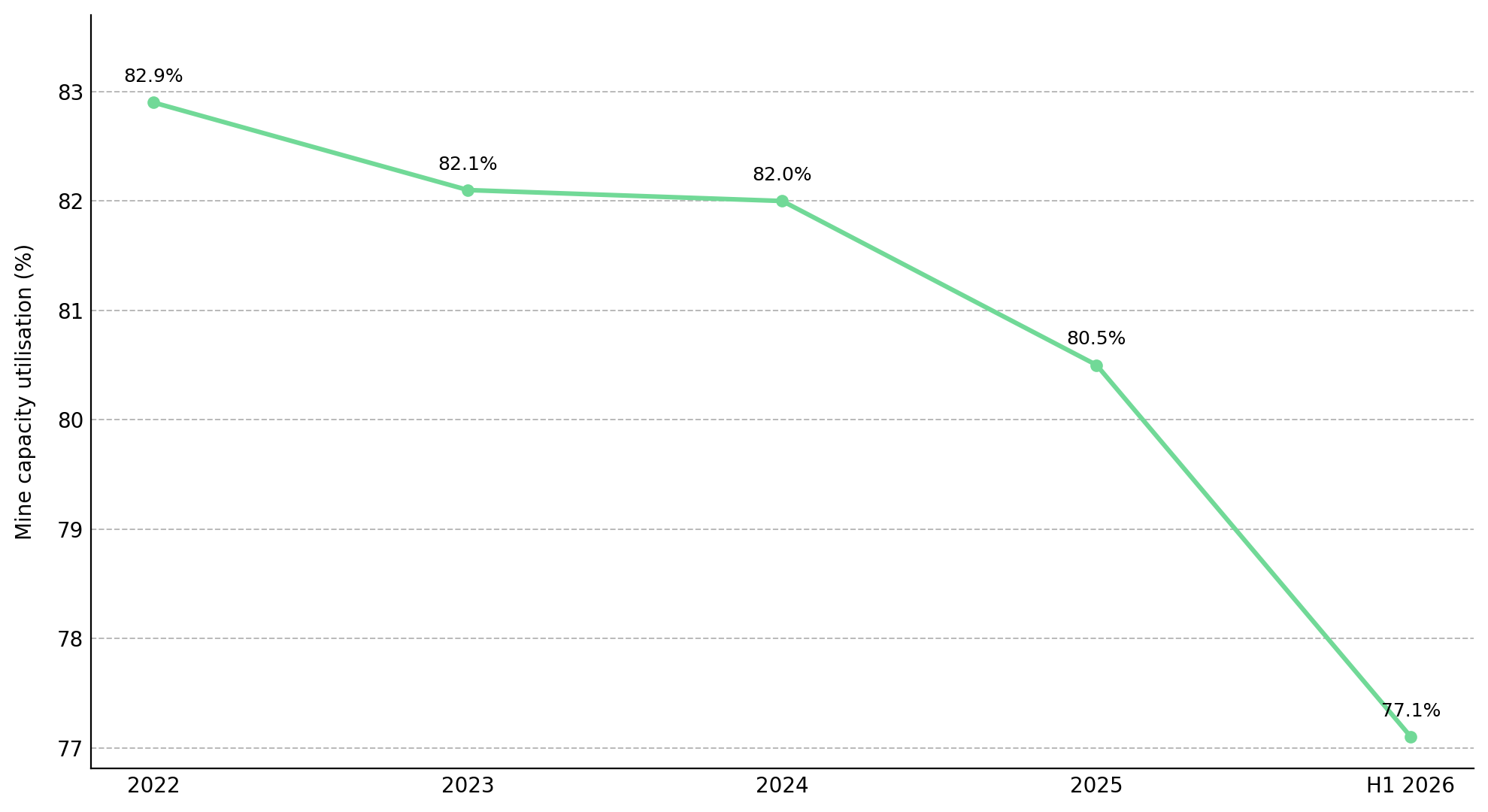
- World mine production fell 1.1% to 11.341 million tonnes in the first half of 2026, with mine capacity utilization at 77.1%, down from 80.5% in 2025.
- Producers with COMEX-registered brands realize the record price, and the durable value sits with permitted tonnes within reach of an existing mill.
- A tariff locks in the US premium, an exemption releases the stockpile, and LME stocks above 300,000 tonnes for 10 consecutive trading days would close the premium.
US Tariff Delay Lifts LME Copper to a Record $14,533 a Tonne
Benchmark three-month copper on the London Metal Exchange touched $14,533 a tonne, surpassing the previous peak of $14,527.50 in January. Copper gained roughly 17% in 2026 and about 47% over 12 months.
The price is set by where the metal sits, not by how much of it exists. Stocks in COMEX-approved warehouses reached a record 695,624 tonnes against about 80,000 tonnes in February 2025. Outside the US, Shanghai Futures Exchange stocks fell to 63,000 tonnes, 85% below the mid-March level, while 51% of LME warrants were canceled, marking more than 121,000 tonnes to leave the system.
Mine Output Falls 1.1% While US Warehouses Hold Metal Off the Market
World mine production fell 1.1% to 11.341 million tonnes in the first half of 2026, with capacity utilization at 77.1% against 80.5% for 2025 (ICSG Monthly Copper Bulletin). Plant stands idle for want of ore, with concentrate output down 2.6% as grade decline and weather hit Chilean mines. Chilean export value fell to $4.63 billion in August from $5.37 billion in July, leaving global mined output at risk of its first annual decline since 2017.
The US Commerce Department owed the White House its refined copper tariff review by June 30, and no decision has appeared two months on. Every week without a ruling pays traders to move cathode into US warehouses, draining the LME and pushing the cash-to-three-month spread above $430 a tonne in mid-August, its widest since 2021 (Reuters).
Overdue Tariff Ruling Keeps the Arbitrage Open and Non-US Stocks Thin
Neither the metal nor the ruling moves quickly. Cathode landed in New Orleans cannot be re-exported without surrendering the premium that paid for the freight, and grade recovery at a large mine runs on a multi-quarter timetable rather than a news cycle. Albert Mackenzie, copper analyst at Benchmark Mineral Intelligence, told Reuters:
"The longer there is uncertainty, the longer prices will remain elevated"
Copper Tariff Premium Splits Producer Margins by Brand Registration
The record print does not reach every producer equally. COMEX copper carried a premium of $400 to $600 a tonne over the LME price over the summer, so a producer with a COMEX-registered brand realizes a price a brand-restricted rival cannot reach. Congolese material, none of it COMEX-deliverable, clears at a $550 to $800 discount to cover freight, and US imports from the country hit a record 53,290 tonnes in July (Reuters).
Brand status and pricing basis sit in offtake terms and realized-price disclosure, not on a price screen, and the tariff ruling is binary, overdue, unpriced. Copper equities have repriced alongside the metal, so a walk-back marks down both the commodity and the multiple applied to it, leaving position sizing as the variable a retail holder controls.
What Lifts Copper Prices Without Lifting Producer Margins
A tariff deadline pulled metal into one country and left everyone else short. The shortage is one of location rather than supply and can reverse within weeks once metal moves back.
Gains went to holders of metal inside US warehouses and to producers whose brands clear on the US exchange. Mining equities rerated on the LME headline, which for many producers is not the price they bank, and that gap appears in realized-price disclosure at the next quarterly results rather than on a daily screen.
Capacity utilization at 77.1% says the plants are built, and the ore is not arriving, and that gap outlives the tariff. It rewards permitted tonnes within reach of an existing mill.
LME stocks recovering above 300,000 tonnes and holding for 10 consecutive trading days in the daily LME stock report would close the location premium and hand pricing back to mine supply.
Analyst's Notes





Subscribe to Our Channel





Stay Informed


