




India Builds Copper Smelters It Cannot Feed, Locking in Imports Past 2035



India plans 5Mt of copper refining capacity by 2030 but projects 95% concentrate import dependence, leaving a permanent new bidder in the seaborne market.
- India plans to build up to 5 million tonnes of refining capacity by 2030, while projecting to put copper concentrate import dependence near 95% in the same year.
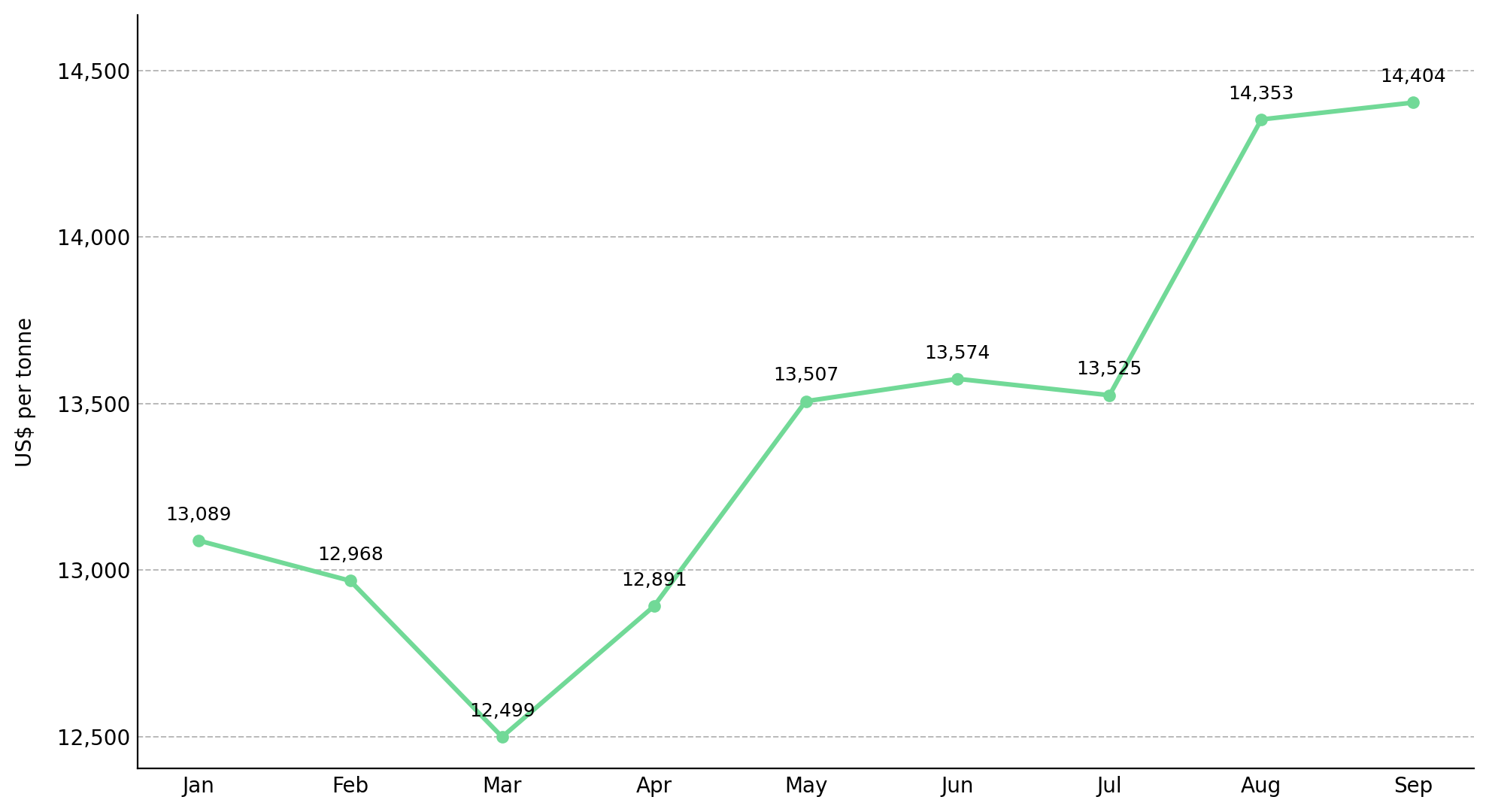
- India's Ministry of Mines reopened copper talks with Zambian officials on 26 August. LME copper settled at $14,378.50 per tonne on 4 September.
- Whether the Zambian acreage converts into mining rights or the talks stall again, the seaborne concentrate market tightens. Only the unit owners change.
- Nothing is signed, and the talks are confidential, while US August non-farm payrolls of 162,000 lifted the implied probability of a Fed rate hike to nearly 60%.
- India's concentrate shortfall runs past 2035 on the current project pipeline, which leaves overseas supply agreements and equity stakes as the route to units.
Copper Near Record Highs as India Reopens Zambia Supply Talks
India's Ministry of Mines held preliminary discussions with Zambian officials on 26 August about copper and critical minerals investment. The talks restart a process that stalled over mining rights across 9,000 square kilometers awarded to India last year.
India is the world's second-largest buyer of refined copper, and government projections put copper concentrate import dependence near 95% by 2030, Rahul Kanuganti, vice chairman of the Critical Minerals Association of India, told S&P Global Platts on 2 September. India is bidding for units it cannot mine at home.
India's Refining Buildout Outpaces Mine Supply, Locking In Concentrate Imports
India's Copper Vision Document envisages up to 5 million tonnes of refining capacity by 2030, while Hindustan Copper is targeting ore-mining capacity of 12.2 million tonnes a year by 2030, up from around 4 million. New smelters do not reduce dependence on imported concentrate unless domestic mine output grows at a comparable pace, on his account, and it does not. The refining capacity arrives first and buys the raw material to fill itself.
The gap holds for political reasons. Reuters reported in April that the talks had stalled over Lusaka's lack of assurances on mining rights, and one source said the 26 August meeting did not address that project. Khanij Bidesh India, the state vehicle for overseas mineral supply, is also screening Australia, Brazil, Canada, Russia, Indonesia and a project in Malawi, the search pattern of a buyer without a secured source.
Stalled Block Awards Leave Indian Smelters Bidding for Spot Concentrate
This does not resolve the headline timetable, because the identified domestic pipeline is not large enough to feed the capacity being built. Kanuganti set the limit in his interview with S&P Global:
"Reducing concentrate import dependence to below 80% by 2035 does not appear realistic."
Two outcomes follow, and they separate the mine owner from the converter. If the Zambian acreage converts into confirmed mining rights, India takes units off the seaborne market on long-term terms, and treatment and refining charges, the fee a smelter earns for turning concentrate into metal, stay at levels that hand margin upstream to the miner. If the talks stall again, India bids for the same tonnes against Chinese smelters, which lifts the price a near-production developer can command for uncommitted offtake and leaves Indian refiners carrying the charge risk instead.
Both paths tighten raw material, and the screen that tracks it is exchange inventory: LME copper stocks averaged 234,530 tonnes in September against 394,892 in May.
Rate Hike Odds Near 60% Cap Copper Upside as Concentrate Tightens
Margin compression hits converters first. SMM reported on 7 September that the cathode-to-scrap price gap widened, with secondary rod producers limited by tight inventory. Indian smelting and fabrication exposure sits at the squeezed end; concentrate producers holding uncommitted offtake sit at the other.
The test that sorts developers is proximity to production. The Federation of Indian Mineral Industries told Reuters on 1 September that Indian buyers should favor brownfield and near-production assets with long-term offtake, not greenfield ground. Hindustan Copper's 12.2 million tonne ore target faces the same timing question.
The outcome cannot be priced. The Zambia talks are confidential, nothing is signed, and the stalled acreage was not on the August agenda. Near-term risk runs the other way: US August non-farm payrolls rose 162,000, lifting the implied probability of a September Fed rate hike to nearly 60%.
Smelter Expansion Without Mine Supply Shifts Value Upstream to Concentrate
A refining buildout is a demand announcement. Conversion capacity can be commissioned inside a single political cycle; the mines that feed it cannot. A government declaring self-sufficiency through smelters is committing to buy more raw material.
Confirmation by India's Ministry of Mines of mining rights over the 9,000-square-kilometer Zambian award, with a production schedule. Equity units behind the buildout would remove the permanent Indian bid this case rests on.
The shortfall is raw material, and its owner captures it. Mine supply with uncommitted offtake belongs in the valuation, not a risk footnote. Rate risk sharpens the case rather than removing it: a hike that marks copper equities down leaves the concentrate deficit unchanged, a repositioning question for a fund on a multi-year horizon, not an exit.
Analyst's Notes





Subscribe to Our Channel






Stay Informed


