




Copper’s 20% Capacity Growth Outlook Sets Mine Funding Needs to 2030



Copper’s projected 20% capacity growth by 2030 creates funding needs across exploration, construction, and mine restart projects.
- Global copper mine capacity is projected to grow approximately 20% from 2025 to 2030, requiring investment in new projects and mine expansions.
- Concentrate operations account for roughly 80% of projected capacity growth, making processing facilities a major component of development spending.
- The Payne Institute uses a 26-project average capital intensity of US$22,359 per metric ton of annual capacity in 2024 dollars, providing a benchmark for construction funding requirements.
- 135 major copper discoveries awaiting production have yet to complete feasibility studies, creating opportunities to fund the work that establishes development costs and potential project returns.
- The World Bank Group announcement outlines US$19 billion in metals-and-minerals support for fiscal years 2026-2030, combining its own financing with private-capital mobilization.
Projected Capacity Growth Requires Upfront Mine Investment
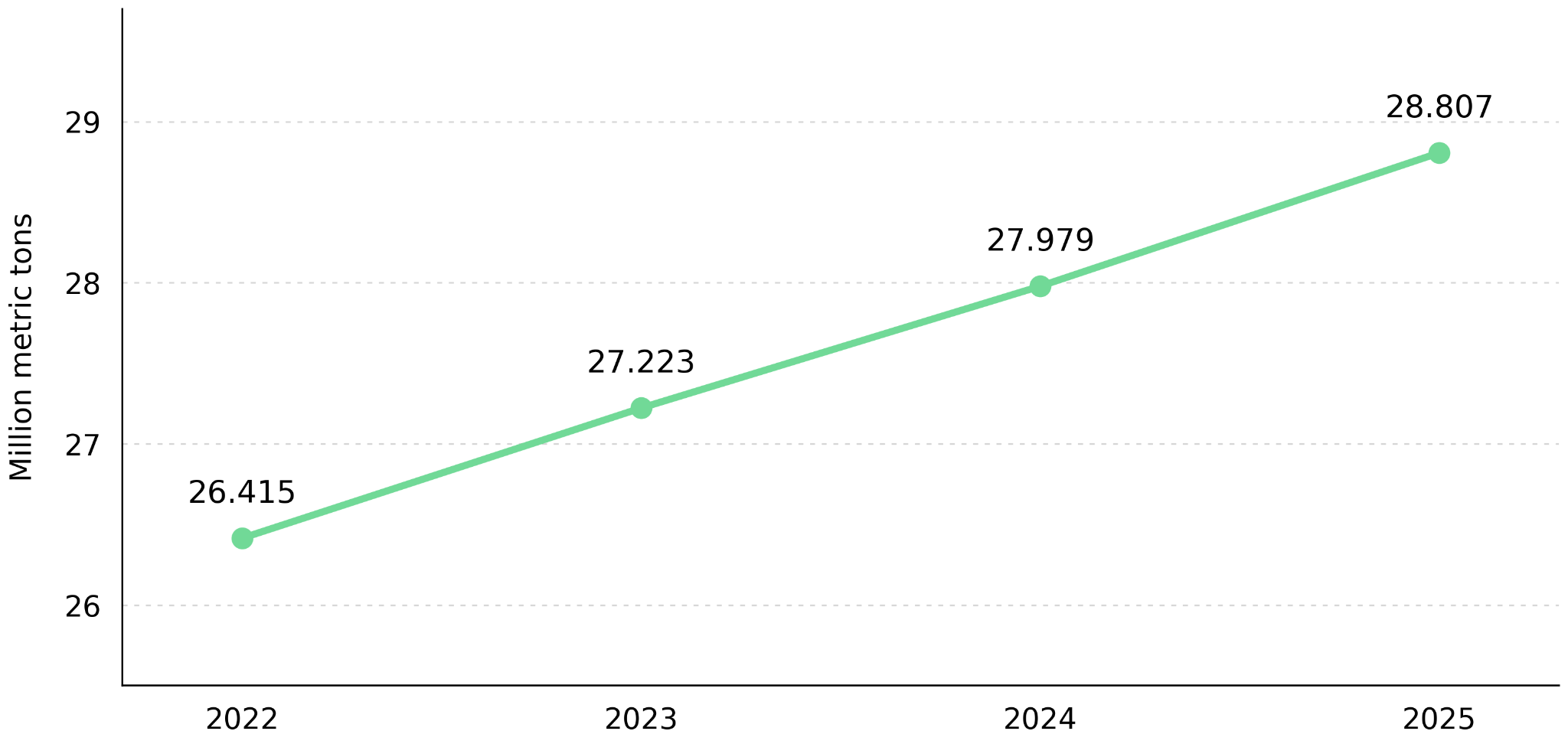
The International Copper Study Group (ICSG)’s World Copper Factbook 2026 projects global copper mine capacity rising from 28.8 million metric tons (Mt) in 2025 to 34.5 Mt by 2030. Delivering that additional 5.7 Mt, approximately 20% growth, requires capital for new mines, expansions, and supporting power, water, and transport infrastructure.
Concentrate operations account for roughly 80% of projected capacity growth, making ore-processing facilities a major component of development budgets. Processing tests establish how much copper can be recovered for sale, helping determine potential project revenue before construction funding is committed.
Spending by copper-focused companies increased 8% in 2025 while overall critical-minerals investment fell 9%, according to the International Energy Agency (IEA)’s Global Critical Minerals Outlook 2026.
Upfront Capital Costs Shape Financing Choices
The Payne Institute for Public Policy’s October working paper uses a 26-project average capital intensity of US$22,359 per metric ton of annual capacity, expressed in 2024 dollars. That upfront expenditure makes construction financing essential to advancing copper projects before operating revenue begins.
Marimaca Copper has secured Sprott Resource Lending’s investment committee backing for a proposed funding package of up to US$450 million, comprising US$425 million in debt and up to US$25 million in equity. The proposal is non-binding, with construction funding subject to definitive agreements and other conditions.
Royalty Acquisitions Retain a Share of Future Project Revenue
Capital allocation also extends to the rights attached to future copper revenue. Acquiring a royalty uses funding to secure an income interest in a project, making revenue ownership another consideration alongside construction costs.
Mogotes Metals has announced a binding offer to acquire the 1.5% net smelter returns royalty on Filo Sur, keeping the associated future royalty income within the group. Payment would be split equally between cash and shares, with completion targeted for December 29, subject to approvals and other conditions.
Limited Mine Development Creates a Need for Exploration Capital
S&P Global Market Intelligence’s October review identifies 165 major copper discoveries awaiting production, including 135 without completed feasibility studies and only 17 at construction or preproduction. This limited advancement creates a funding requirement for drilling that establishes deposit scale before more detailed development work.
Cobra Resources has extended the mineralized corridor at Manna Hill to almost three kilometers following a shallow copper discovery at Shadow Rose. Drilling returned 111 meters at 0.63% copper from a depth of four meters. The mineralized corridor remains open to further growth, with additional drilling planned.
Rupert Verco, Chief Executive Officer and Managing Director of Cobra Resources, discusses limited copper exploration and current development activity:
“There's not a lot of copper exploration; there's very little copper development at the moment. We know what the mid tiers want to see, so that's what we're going to set out to do.”
Supply Constraints Make Resource Conversion a Funding Priority
Alongside expanding the known copper footprint, drilling must establish the resource estimates used in subsequent economic studies. Spending on resource definition helps determine how much mineralized material can be assessed for potential development.
Abitibi Metals Corp is advancing drilling at B26 to expand the deposit and improve resource confidence ahead of an updated mineral resource estimate (MRE). Drilling returned 60.2 meters at 1.08% copper, including 9.2 meters at 3.42%.
Copper Supply Constraints Increase the Need for Feasibility Studies
Economic studies build on resource estimates to assess development costs and potential project returns. Funding the drilling required for these studies connects resource-definition spending with the financial assessment needed before construction decisions.
Fitzroy Minerals plans a further 3,300 meters of drilling at Buen Retiro to improve resource confidence and support a pre-feasibility study (PFS) targeted for the second quarter of 2027. A separate 5,000-meter sulfide drilling program tests the potential for further growth.
Merlin Marr-Johnson, Chief Executive Officer of Fitzroy Minerals, discusses copper production challenges and potential supply shortages:
“Production growth within Chile and in fact globally is difficult; this is a very mature industry; it's struggling to maintain production. There are many other houses and groups who are forecasting a copper crunch.”
Mine Output Declines Increase the Need for Restart Capital
Global copper mine production fell 0.9% in January-September 2026, including a 1.9% decline in concentrate output, according to the ICSG. Mine-capacity utilization fell to 77.0% from 80.6% a year earlier. Restart investment offers a complementary route to future supply by directing capital toward the reuse of existing mining and processing infrastructure.
Selkirk Copper has signed a binding term sheet for proposed US$30 million convertible-debt financing to advance exploration, development, and restart preparations at Minto. Existing assets include mining infrastructure and a processing plant rated at 4,100 metric tons per day.
Public Finance Expands Funding Options for Mine Development
The IEA’s Global Critical Minerals Outlook 2026 records approximately US$65 billion in advanced-economy public-finance commitments for critical minerals in 2025, more than four times the 2023 level.
Canada’s First and Last Mile Fund (FLMF) offers up to C$1.5 billion through 2030 for critical-mineral development and supporting infrastructure. Applications are by invitation, and eligible spending includes mine-site development, transportation, energy, and Indigenous participation.
The WBG’s October 16, 2026 announcement targets US$19 billion in metals-and-minerals support across fiscal years 2026-2030, combining its own financing with private-capital mobilization. The International Finance Corporation (IFC) provides investment financing, while the Multilateral Investment Guarantee Agency (MIGA) provides guarantees to manage project risk.
Funding Terms Shape Shareholder Returns From Capacity Growth
The ICSG’s projected 5.7 Mt increase in copper mine capacity by 2030 requires construction capital for new mines and expansions. The 135 major discoveries awaiting feasibility studies also offer scope to finance the drilling and engineering needed to establish development costs and potential project returns.
The WBG is targeting US$19 billion in metals-and-minerals support across fiscal years 2026-2030, combining its own financing with private-capital mobilization. Financing terms determine debt-service obligations and ownership dilution, linking the cost of development capital to the future copper cash flow attributable to each share.
The Investment Thesis for Copper
- Developers that align construction budgets, committed funding, and repayment schedules can finance development while managing cash requirements before production begins.
- Explorers with funded drilling and processing tests can establish the resource confidence and recovery estimates needed to assess development costs and potential revenue.
- Access to reusable processing plants, power, and transport can limit the infrastructure that must be built and financed before production.
- Aligning permits, engineering, and construction funding helps match major spending commitments to work that is ready to proceed.
- Debt terms, equity issuance, and royalty ownership affect how much future project cash flow remains attributable to existing shareholders.
- Public financing can cover infrastructure expenditure, while guarantees can attract private capital by transferring specified project risks to the guarantee provider.
Copper’s expansion creates a long-term opportunity to finance the conversion of mineral resources into productive assets. Funded resource work, economic studies, and construction provide a route toward operating cash flow, while reusable infrastructure and public financing broaden the options for bringing projects into operation. The investment case rests on companies that connect this progress with disciplined spending and funding terms that preserve existing shareholders’ participation in future project returns.
TL;DR
The International Copper Study Group (ICSG) projects approximately 20% growth in copper mine capacity between 2025 and 2030, requiring capital for new mines, processing facilities, and infrastructure. With 135 major discoveries awaiting feasibility studies, funding needs also extend to drilling and project evaluation. Restarts provide another route to future supply through existing assets. Public financing and guarantees broaden funding options, while debt terms, equity issuance, and royalties affect future cash flow per share. The investment case centers on funded technical progress, construction readiness, and preserving shareholders’ participation in potential project returns.
FAQs (AI-Generated)
Analyst's Notes





Subscribe to Our Channel














Stay Informed


