




Copper Use Climbs 1.4% as Mine Output Falls, Backing Future Supply


Copper use rose 1.4% as mine output fell 0.9% in January-August 2026, supporting investment in future mine supply.
- Apparent refined copper use rose 1.4% in January-August 2026 while mine production fell 0.9%, supporting the case for developing additional mine supply.
- Mine capacity increased 3.7% during the same period, but utilization fell from 80.5% to 77.0%, showing that added capacity did not translate into higher production.
- Recycled material supplied approximately 34% of copper use in 2025, leaving primary copper to serve roughly two-thirds of the market.
- The International Energy Agency (IEA) forecasts almost 4,800 gigawatts (GW) of renewable capacity additions during 2026-2031, 57% more than in the preceding six years, supporting copper demand from wiring and electrical equipment.
- London Metal Exchange (LME) copper spot prices fell 0.86% in October 2026, compared with a 13.23% decline in the broad copper-miners index, showing that mining shares lost substantially more value than the metal
Copper Consumption Growth Expands the Market for Future Supply
The International Copper Study Group (ICSG) reported that apparent refined copper use rose 1.4% to 18.960 million tonnes in January-August 2026, while mine production fell 0.9% to 15.220 million tonnes. China accounted for approximately 59% of global refined consumption, with usage there increasing 2.8%.
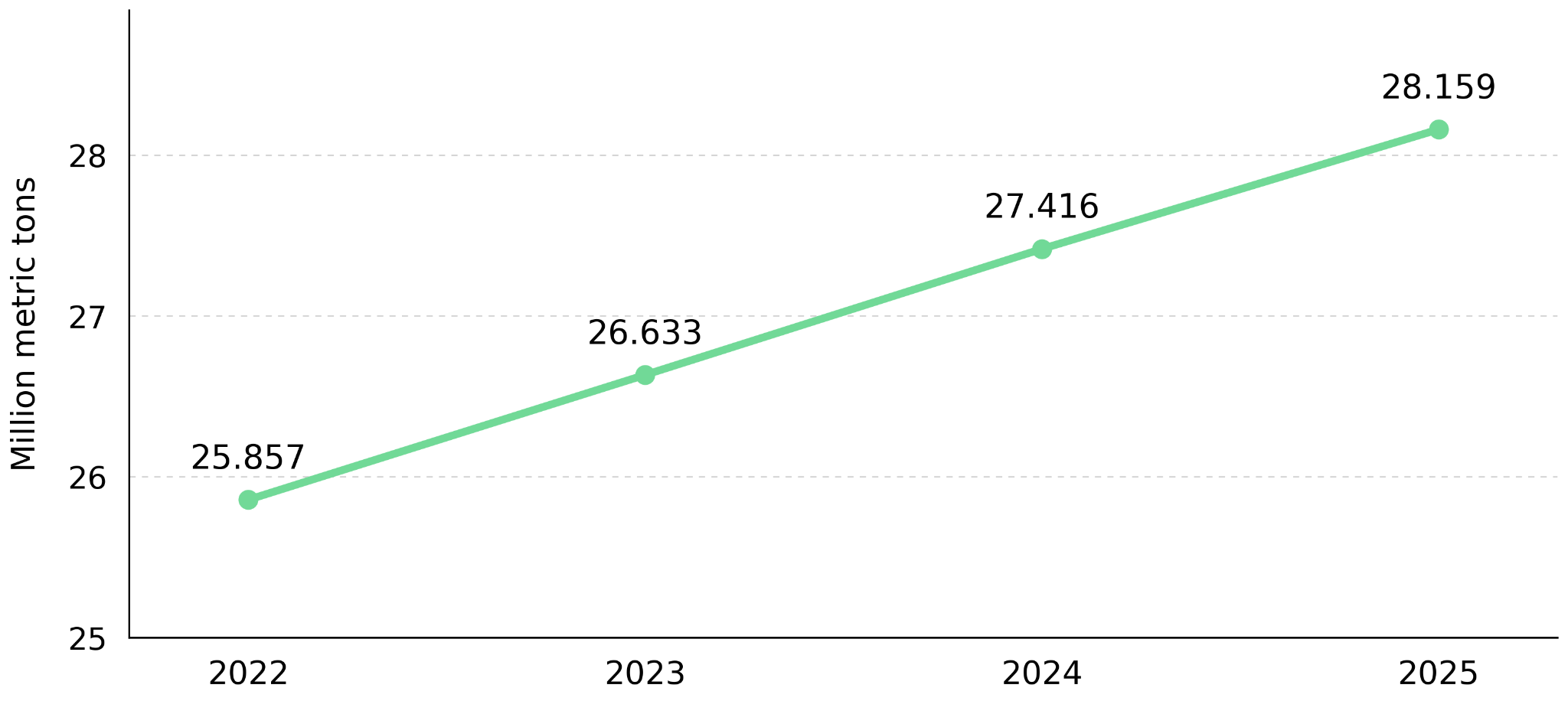
The IEA’s forecast includes almost 4,800 GW of renewable capacity additions during 2026-2031, 57% more than in the preceding six years. Building these power systems supports copper demand through cables, electrical equipment, and grid connections, providing a multiyear construction market for copper suppliers.
In Southeast Asia, electricity’s share of final energy consumption rose from 12% in 2000 to 25% in 2025, while electric cars accounted for around 30% of new car sales in the first half of 2026. Greater use of electricity in transport and other applications supports copper demand from vehicles, charging stations, and power networks.
Recycled Copper’s One-Third Share Supports Primary Supply Investment
Global refined copper production rose 1.7% in January-August 2026, with primary refined output increasing 1.0% and scrap-based refined output increasing 5.3%. Refined production exceeded apparent usage by 218,000 tonnes during the period.
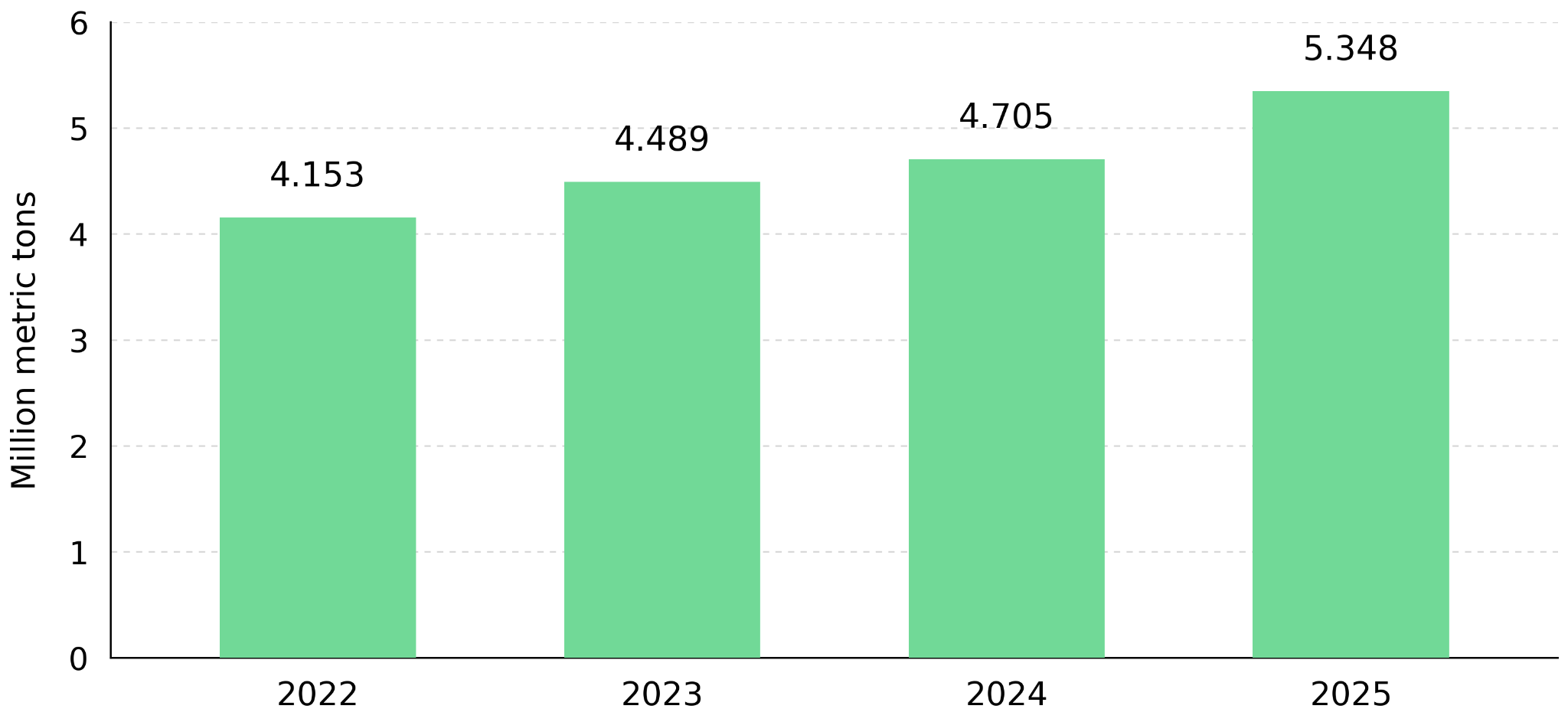
Recycled copper supplied approximately 11.8 million tonnes in 2025, or 34% of total copper use, including metal refined from scrap and scrap melted directly by manufacturers. Copper remains in buildings, power networks, and industrial equipment for decades, delaying its return as scrap and sustaining a role for primary mine supply as consumption expands.
Lower Mine Utilization Increases the Value of Construction Preparation
Mine capacity increased approximately 3.7% in January-August 2026, while utilization fell from 80.5% to 77.0%. Mine revenue depends on copper produced and sold, so production forecasts need to account for operating rates as well as installed capacity.
Marimaca Copper confirmed grid-connection authorization for the Marimaca Oxide Deposit and a preliminary power purchase agreement (PPA) framework for 100% renewable electricity. The estimated all-in power cost is close to the feasibility-study assumption of US$93 per megawatt-hour (MWh), with flexible purchase terms during startup. These arrangements define a key operating-cost input as engineering and financing work continues toward a construction decision.
Planned Capacity Growth Supports Copper Restart Assessments
The ICSG projects annual copper mine capacity rising from 28.8 million tonnes in 2025 to 34.5 million tonnes in 2030. Restart studies assess whether existing facilities can add production and identify the spending required to return them to service.
Selkirk Copper filed the independent preliminary economic assessment (PEA) technical report for its wholly owned Minto project on November 5, 2026, providing a technical basis for restart planning. Existing assets include mining infrastructure and a processing plant with capacity of 4,100 tonnes per day. The Selkirk First Nation indirectly holds a controlling equity stake in the company.
Drilling Results Guide Copper Resource Expansion
World copper reserves increased from 433 million tonnes in 2000 to 980 million tonnes in 2025. Exploration, technological advances, and changing economic conditions can convert resources into reserves considered economic to mine, replenishing the supply base as copper is extracted.
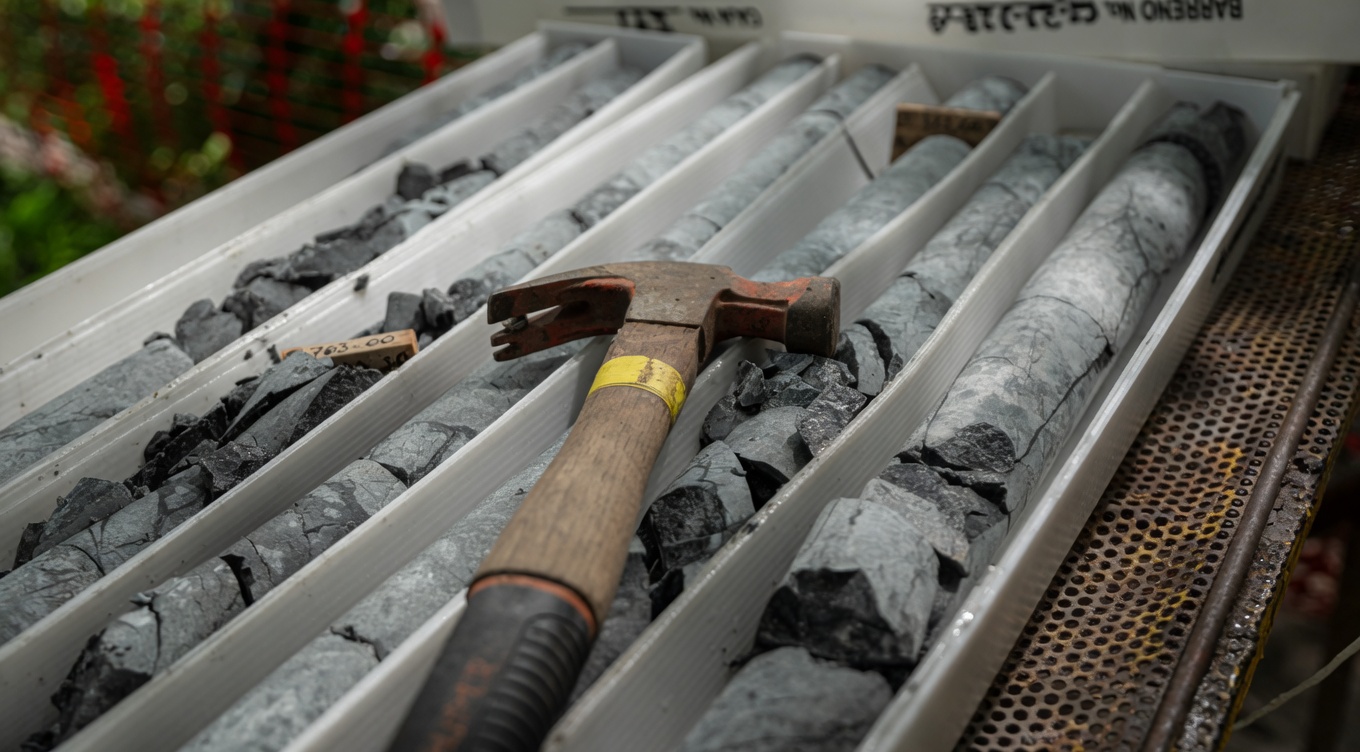
Abitibi Metals reported 1.08% copper over a 60.2-meter drilled interval at B26, including 3.42% over 9.2 meters. These results support confidence in the deposit’s continuity and growth potential. The announced program includes plans for up to three drill rigs through the remainder of 2026 to test extensions and strengthen the resource base ahead of a future update.
Jon Deluce, President and Chief Executive Officer of Abitibi Metals, highlights investor demand for copper with grade:
“I think it's very motivating to us that there is a huge demand for copper and copper investments, especially with grade, and still a lot of markets that we need to hit.”
Lower Concentrate Output Supports Testing Additional Copper Targets
Copper concentrate production fell 1.9% in January-August 2026, reducing newly mined raw material available to smelters. Drilling additional prospects tests the extent of mineralization and helps determine where further exploration spending should be directed.
Cobra Resources reported 0.48% copper over a 22-meter drilled interval from 10 meters depth, 100 meters south of the Shadow Rose discovery hole. The announcement outlined follow-up holes targeting depths of 250 meters and confirmed drilling had begun at Netley Hill, testing copper potential beyond the initial discovery.
New Copper Targets Broaden the Future Supply Pipeline
Mongolian copper concentrate production increased approximately 20% in January-August 2026 as new mining capacity increased output, according to the ICSG. Developing future sources of copper starts earlier, with targeted drilling that tests potential deposits and guides spending toward areas with stronger geological evidence.
Fitzroy Minerals identified nine untested targets at Buen Retiro and confirmed a 5,000-meter drilling program had started. The targeting study combines subsurface imaging with earlier drilling results to rank locations for further drilling and guide exploration spending.
Demand Growth Supports Assessment of Copper Project Economics
The ICSG’s October 14, 2026 market forecast puts refined copper usage at approximately 29.3 million tonnes in 2027. Project studies assess production costs and development spending, while royalty agreements determine the share of sales revenue paid to royalty holders.
Mogotes Metals’ October 26, 2026 binding offer to acquire the 1.5% net smelter returns (NSR) royalty on Filo Sur would retain any future payments under that royalty within the group. Its September 22 exploration plan targets up to 20,000 meters of drilling at Filo Sur and up to 50,000 meters at Beskauga, with a Beskauga PEA targeted within 12 months of that announcement.
Copper Use Growth Supports Investment in Future Mine Supply
Apparent refined copper use rose 1.4% in January-August 2026 while mine production fell 0.9%, supporting investment in additional primary supply. Recycled material supplied approximately 34% of total copper use in 2025, leaving mined copper to serve roughly two-thirds of the market. The combination of expanding consumption and mining’s substantial supply share gives new copper projects a commercial role alongside recycling.
Refined copper usage is projected to grow 1.5% in 2026 and 2.5% in 2027, extending that demand outlook beyond the reported period. Meanwhile, mine capacity increased 3.7% during January-August 2026, but utilization declined from 80.5% to 77.0%, showing that capacity additions alone did not deliver higher output. Together, these figures focus the investment case on projects whose infrastructure arrangements and economic assessments establish a credible schedule and cost for bringing additional copper to market.
The Investment Thesis for Copper
- Developers advancing engineering and permitting provide a clearer basis for estimating construction spending and potential production schedules.
- Explorers that establish grades and mineralization continuity supply the evidence needed to estimate resources and assess potential mine scale.
- Operating-cost estimates based on defined power and processing requirements help assess the margin between copper selling prices and production costs.
- Existing infrastructure provides a base for assessing equipment reuse and the additional capital required to bring a project into operation.
- Financing plans matched to project budgets make remaining funding requirements and potential shareholder dilution easier to assess.
- Copper demand from electricity networks, transportation, and industrial equipment supports a long-term market for additional primary supply alongside recycling.
Copper demand from electrification and industrial investment supports a long-term role for additional mine supply alongside recycling. Developers and explorers provide exposure to that demand before production begins through resource definition and preparation for construction. The investment opportunity lies in recognizing where this work establishes a route from copper in the ground to future sales and operating cash flow.
TL;DR
Apparent refined copper use rose 1.4% in January-August 2026 while mine production fell 0.9%. Recycling supplied about 34% of copper use in 2025, with long product lives delaying metal’s return as scrap. Electrification and industrial investment support demand for additional primary supply. The article examines how developers and explorers prepare that supply through drilling, infrastructure agreements, restart assessments, and economic studies. Project costs, funding requirements, and ownership of future cash flows provide the basis for assessing these opportunities before production begins.
FAQs (AI-Generated)
Analyst's Notes





Subscribe to Our Channel












Stay Informed


