




Discovery Efficiency Emerges as a Key Valuation Driver in Junior Silver Mining


Discovery efficiency is reshaping junior silver valuations, with cost per ounce emerging as a key metric driving re-ratings, capital allocation, and investor focus.
- Junior mining valuations have historically been driven by resource size, but tighter equity markets and rising exploration costs are elevating a new institutional benchmark: discovery cost per ounce.
- Capital-efficient operators are shifting toward step-out drilling programmes targeting largely untested geophysical anomalies, supported by ground chargeability surveys and three-dimensional geological modelling, directly reducing the metres required to add each incremental ounce.
- GR Silver Mining reports a discovery cost of CAD$0.17 per ounce and over 4,000 ounces of silver equivalent per metre drilled at its Plomosas project, figures the company states lead its peer group, with only 20% of the delineated chargeability anomaly tested to date.
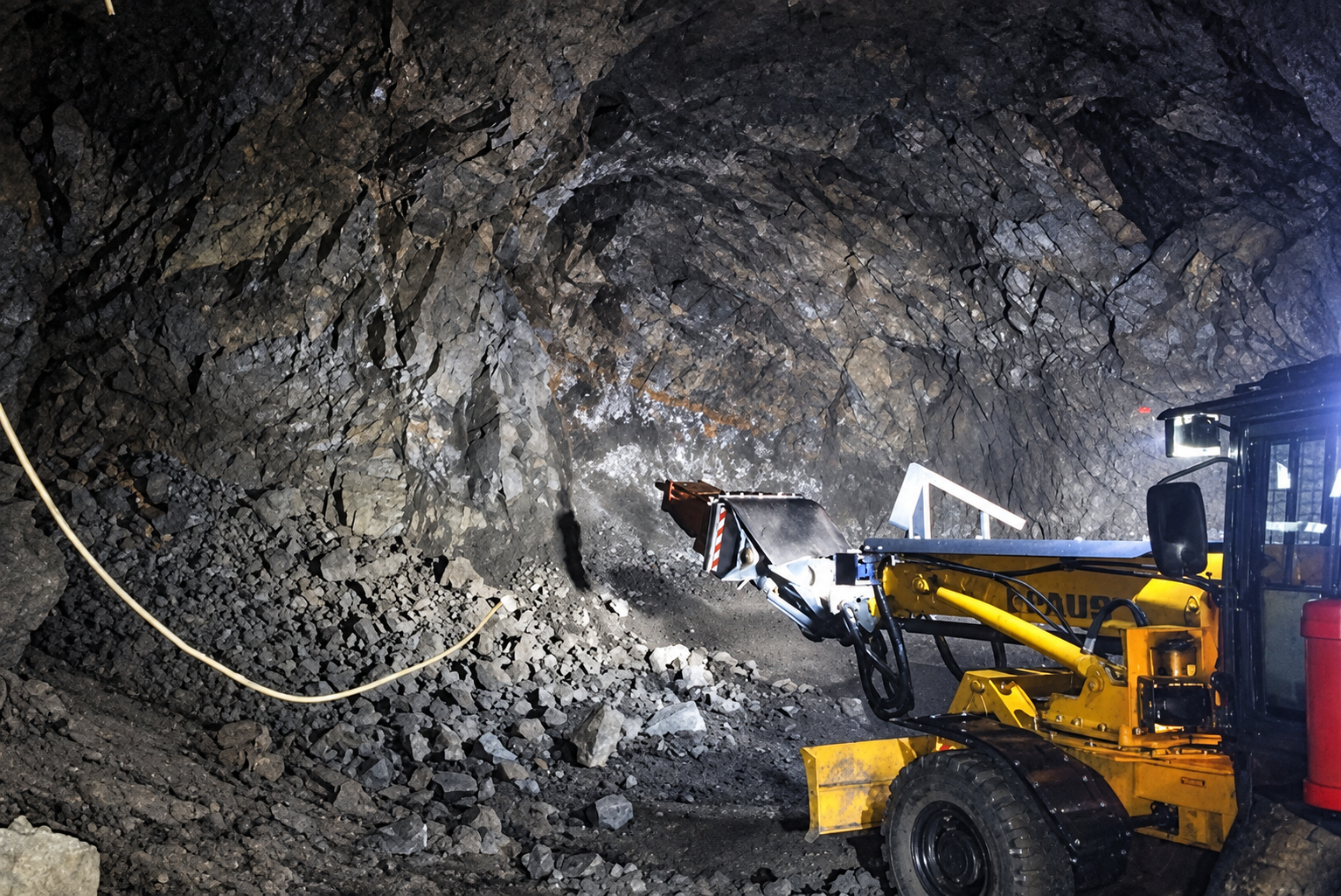
- The Plomosas project's brownfield infrastructure, including 7.4 kilometres of existing underground development and access to 21 Bulk Sample Test Mining (BSTM) areas, reduces capital expenditure relative to a comparable greenfield project at the same stage.
- For GR Silver, discovery efficiency metrics convert to market capitalisation gains only once a resource update formally captures new ounces, making the planned 2026 mineral resource estimate (MRE) update and maiden preliminary economic assessment (PEA), both targeting the second half of the year, the inflexion points at which the company's efficiency metrics are expected to be reflected in its valuation.
A Shifting Valuation Framework
For most of the past decade, junior mining valuations have been anchored to resource size. In a capital environment defined by tighter equity windows and rising exploration costs, that framework is being challenged by a new metric gaining traction in institutional due diligence: the cost of discovery per ounce.
Discovery cost has always been calculable. What has changed is its perceived relevance. As the silver market draws renewed institutional capital and margin scrutiny intensifies, exploration efficiency is increasingly being treated as a proxy for management quality and long-term project economics. This shift carries particular significance in Mexico's Sierra Madre Occidental, where wide, high-grade silver-dominant breccia systems can generate high ounce yields per metre drilled, and where companies are beginning to quantify, at the project level, what that efficiency looks like.
Industry Context
The exploration efficiency problem in mining is well established. For most junior explorers, discovery costs rise as a project matures: early targets sit near the surface, but as programmes advance, drill targets move deeper, and the metres required to add each incremental ounce increase. Rising fuel, labour, and equipment costs compound the pressure across most jurisdictions.
The mechanism behind low discovery cost matters as much as the metric itself. A company drilling wide mineralised intervals consistently delivers more ounces per metre than one chasing narrow veins, and wide intervals at shallow depth carry additional advantages in future mining method selection and capital intensity. Companies that sustain low discovery costs across multiple drill programmes are increasingly viewed as outliers worth closer attention.
Silver's broader market context reinforces the urgency. Silver's dual role as a monetary and industrial metal, with applications across energy transition technologies, has kept institutional capital active in the sector, and sophisticated investors building silver leverage baskets are scrutinising not just ounce counts but how those ounces were found and at what cost.
Emerging Practices & Industry Progress
The most visible response to the efficiency imperative has been a shift toward step-out programmes directed at partially or largely untested geophysical anomalies, rather than blanket infill drilling that adds confidence to existing resources but rarely adds new ounces economically. This approach demands a more rigorous upfront investment in geophysical interpretation, with ground chargeability surveys, three-dimensional geological modelling, and integration of historical underground data now standard tools among operators serious about exploration efficiency. The result is a drill programme designed to prioritise high-confidence step-out targets over speculative holes, directly reducing the metres required to add each incremental ounce.
Brownfield settings have emerged as a particularly attractive context for this strategy. A past-producing mine site brings pre-existing access, permitted infrastructure, and historical underground workings that provide direct observation of mineralisation style at depth. For companies able to couple a brownfield platform with an adjacent, largely untested discovery, the combination of low infrastructure cost and high geological knowledge translates directly into lower discovery cost per ounce.
Remaining Challenges
Executing a step-out programme efficiently requires more than geological insight. Permitting timelines across many Latin American jurisdictions remain a material risk, and companies operating in states with heightened security concerns face the added complexity of maintaining multiple access corridors and close relationships with government and communities. Capital constraints compound these pressures: a large-scale step-out programme requires sustained, uninterrupted funding, and companies forced to pause mid-programme lose not only time but continuity in the geological model-building process, increasing the risk that step-out targets are sequenced incorrectly or abandoned before the resource boundary is fully defined.
The structural lag between exploration success and market re-rating means discovery efficiency metrics only convert to market capitalisation gains once a resource update formally captures the new ounces, making the timing of the mineral resource estimate update a material valuation event.
Company & Project Examples
GR Silver Mining (TSXV: GRSL | OTCQX: GRSLF | FRA: GPE) has emerged as one of the more closely watched examples of discovery efficiency in the junior silver space. The company's Plomosas project, situated on the Durango-Sinaloa border in Mexico's Sierra Madre Occidental, hosts a consolidated resource of 134 million ounces of silver equivalent across two areas: the San Marcial silver deposit at 68 million ounces of silver equivalent and the Plomosas mine area, a past-producing underground mine acquired from First Majestic Silver, at 66 million ounces of silver equivalent.
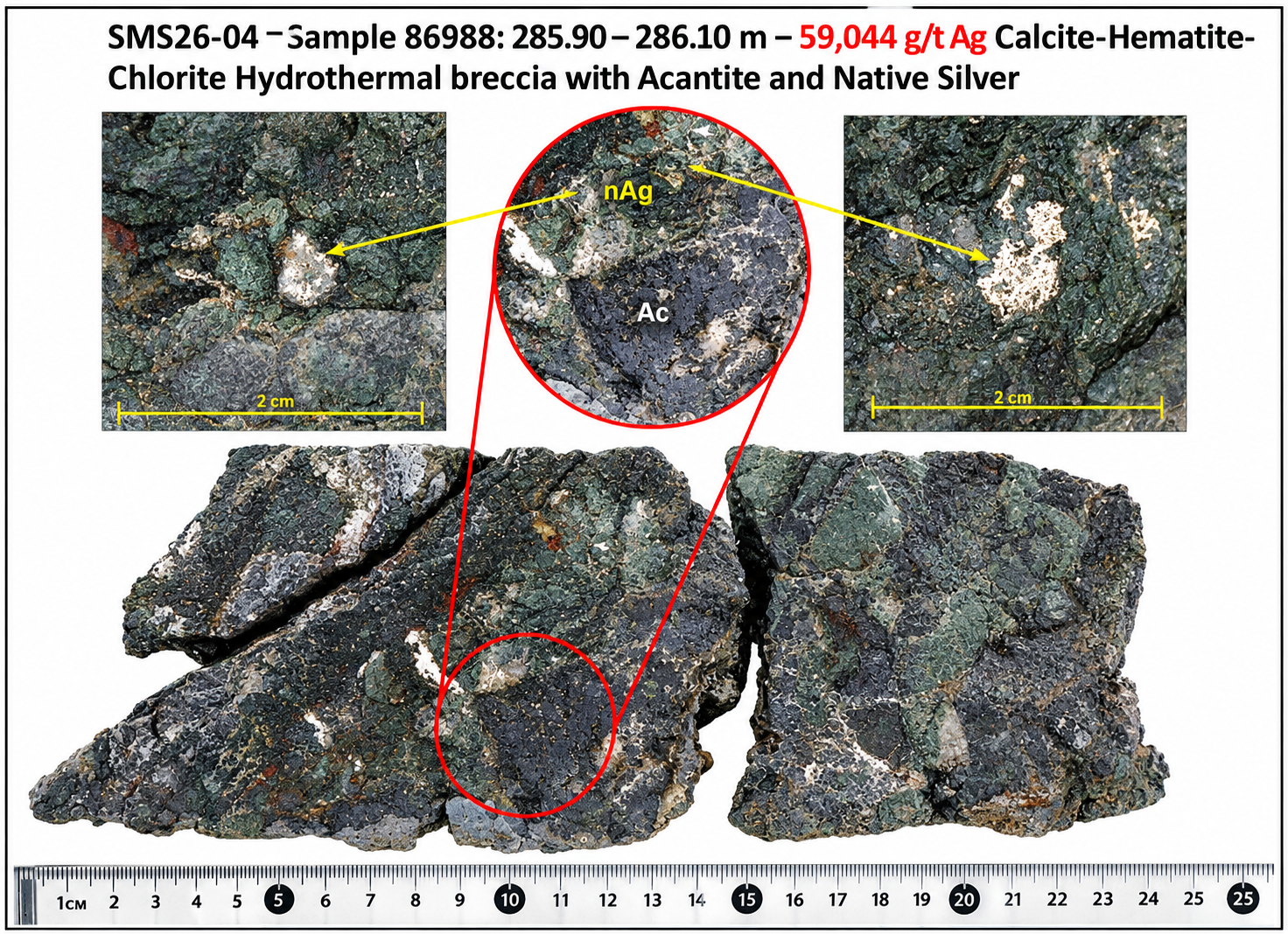
GR Silver's reported discovery cost of CAD$0.17 per ounce sits materially below peer group metrics, driven by wide silver-dominant breccia intervals at San Marcial, including a step-out hole of 75 metres at 260 grams per tonne silver. The company reports over 4,000 ounces of silver equivalent per metre drilled, a figure the company states leads its peer group, with only an estimated 20% of the delineated ground chargeability anomaly tested to date.
The Plomosas mine area adds a second dimension to the efficiency case. The site's 7.4 kilometres of existing underground development, surface infrastructure, power lines, and active permits eliminate capital expenditure that a greenfield project would otherwise require at this stage. Access to 21 underground areas for Bulk Sample Test Mining (BSTM) provides a path to early production-scale knowledge without sinking new development workings, and metallurgical test work recently completed returned lead concentrate grades reported above one kilogram of silver per tonne.
Regional & Jurisdictional Perspective
Mexico is the world's largest silver-producing country, accounting for approximately 24% of global mine supply in 2023, according to the Silver Institute's World Silver Survey 2025. The regional geology of the Sierra Madre Occidental is structurally well-suited to the wide breccia-hosted silver mineralisation that underpins low discovery cost strategies. However, the jurisdictional environment has become more complex.
Active federal policy discussions around mining royalties have pushed operators to build fiscal contingency planning into their long-term mine plans. Security conditions in parts of Sinaloa have added operational complexity, prompting some companies to establish alternative access corridors; GR Silver has responded by securing two separate road access routes to the Plomosas project, one from Durango and one from Mazatlan, Sinaloa.
Community relations and social licence represent a parallel, and often more durable, form of risk management. Companies with long-standing operational presence in the Sierra Madre are generally better positioned to maintain continuous access, and the brownfield nature of the Plomosas site, with its existing community relationships and production history, is a material advantage in this context.
Industry Outlook
The growing investor emphasis on discovery cost reflects a broader maturation in how the junior mining sector is evaluated. As structural demand for silver across energy transition applications continues to attract institutional capital to the sector, the companies that can demonstrate they are finding ounces efficiently are increasingly positioned to command a valuation premium over those that rely on resource scale alone.
Discovery cost metrics become most actionable when resource update cycles bring new ounce counts to market and preliminary economic assessments translate those figures into project-level net present value (NPV) analysis. For GR Silver, the planned 2026 mineral resource estimate (MRE) update and maiden preliminary economic assessment (PEA), both targeting delivery in the second half of the year, represent the inflexion points at which efficiency metrics are most likely to be reflected in market capitalisation.
More broadly, the industry appears to be moving toward a framework in which discovery cost per ounce, ounces per metre drilled, and capital efficiency ratios are treated as leading indicators of project quality rather than secondary footnotes. For junior silver companies in established mining districts, the challenge will be sustaining those metrics as programmes scale, and the companies that can do so systematically, rather than on the strength of a single discovery hole, are likely to find themselves at the centre of a re-rating cycle as institutional demand for silver exposure expands.
FAQs (AI-Generated)
Analyst's Notes





Subscribe to Our Channel



Stay Informed






