




Serabi Gold Enters Next Growth Phase Backed by Cash


Serabi Gold: debt-free Brazilian producer; 44K oz in 2025; targeting 100K oz via Coringa expansion; $65M cash; 20% dividend; 1.5M oz resource potential
- Serabi Gold increased production from 38,000 oz in 2024 to 44,000 oz in 2025 with an ASIC of $1,816, generating $30M in cash and ending the year with $50M in the bank
- Company eliminated ~$20M debt in Q1 2026 and accumulated $65M cash by quarter-end; projecting $60-100M free cash flow in 2026 depending on gold prices
- Grew resources from 1M to 1.4M oz in 2025; targeting 1.8-2M oz by end 2026 with $15M exploration budget and 30,000 meters of drilling annually
- Environmental study unanimously approved by indigenous groups; full permit expected late 2026/early 2027, enabling plant expansion
- Implementing 20% of cash flow dividend policy; exploring disciplined M&A opportunities in the Americas focused on near-term production assets
Serabi Gold CEO Mike Hodgson presented a compelling update at the 121 Mining Conference in London on May 11, 2026, outlining a transformation from survival mode to strategic growth. In the last few years, the London AIM-listed Brazilian gold producer has delivered meaningful production growth, strong cash generation, and a debt-free balance sheet - positioning the company to pursue expansion and potential acquisitions while maintaining shareholder returns.
Operational Momentum Builds Financial Strength
Serabi Gold delivered 44,000 ounces in 2025, representing a 16% increase from the prior year's 38,000 ounces. The company achieved an all-in sustaining cost (ASIC) of $1,816 per ounce against an average realised gold price of $3,451 for the year.
This operational performance translated to approximately $30 million in cash generation, with the company closing 2025 with $50 million in the bank and EBITDA of roughly $79 million. First quarter 2026 results continued the positive trajectory, with cash balances growing to approximately $65 million despite the elimination of nearly $20 million in debt during January and February.
2026 Guidance Signals Robust Cash Flow
For 2026, Serabi Gold has provided production guidance of 53,000-55,000 ounces with an expected ASIC in the $2,000 range. The ASIC increase reflects substantial investments in exploration ($15 million) and pre-production capital for the Coringa expansion. Despite these investments, Hodgson projects the company will generate between $60-100 million in free cash flow for 2026, depending on gold price realisations, given the company's debt-free status and approximately $2,000 per ounce margin at current gold prices.
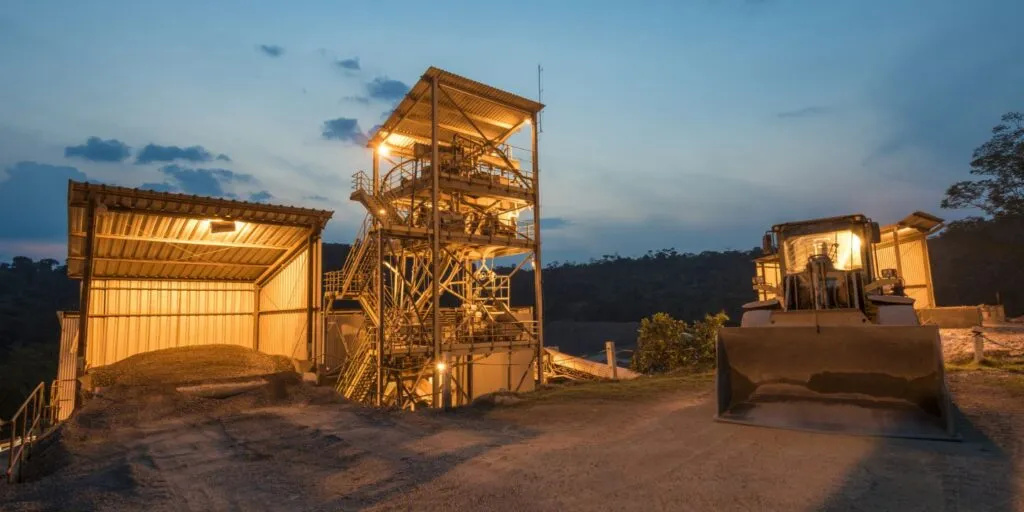
The company's processing plant is currently operating at maximum capacity, processing virtually all ore from Coringa and some material from Palito. Without plant expansion, production cannot meaningfully exceed the 55,000-ounce level, making the resource expansion and permitting efforts critical to future growth.
Resource Expansion Drives Future Potential
Resource expansion represents a core strategic priority. In 2025, Serabi grew its total resource base from 1 million ounces to 1.4 million ounces. The company is targeting 1.8-2 million ounces by the end of 2026 through an aggressive drilling campaign utilising six drill rigs and approximately 80 exploration personnel. The program will deliver approximately 30,000 meters of drilling annually at a cost of roughly $15 million.
The Coringa deposit presents particular upside potential. The resource at Coringa expanded from 500,000 ounces to 800,000 ounces in the recent update. Hodgson highlighted the exploration opportunity:
"I look at Coringa and think that it can easily be a 1.5 million ounce deposit alone."
The deposit features an 8-kilometer strike length of mineralised structure, of which only 1.5 kilometers has been drilled, plus an additional 20 kilometers of geochemical anomaly that remains completely untested.
Interview with Mike Hodgson, CEO, Serabi Gold
Coringa Permitting Breakthrough
A significant de-risking event occurred with the unanimous approval of the environmental and indigenous study (ECI) by the affected indigenous groups. This milestone followed three years of engagement and represents a critical step toward securing the final operating permit for Coringa. Hodgson indicated that legal counsel expects the full permit to be awarded before the end of 2026 or early 2027.
The company has taken a confident stance on the permitting outcome, already initiating plant expansion work that will be ready in 2027. This includes relocating one of the ball mills from Coringa to Palito. The decision to commit capital before receiving final permits reflects management's confidence based on the positive indigenous engagement and historical operating presence in the region.
Capital Allocation Balances Returns and Growth
Serabi has announced a dividend policy of returning 20% of cash flow to shareholders, with the first payment based on 2025 cash flow to be distributed following the AGM. The company intends to maintain this policy for 2026, providing shareholders with direct returns while retaining capital for growth initiatives.
Beyond dividends and organic growth, management is actively evaluating M&A opportunities, though with a disciplined approach. The company has expanded its geographic search to include the broader Americas while maintaining a preference for Brazilian opportunities that would leverage existing in-country infrastructure and expertise. Acquisition criteria focus on near-term production or producing assets, with flexibility regarding underground versus open-pit operations.
The company views its organic growth potential through resource expansion at existing operations as providing optionality that eliminates pressure to pursue value-destructive acquisitions for scale.
Expansion Potential and Production Targets
While current plant capacity limits production to approximately 55,000 ounces annually, Serabi sees a pathway to potentially 100,000 ounces with expansion. The ultimate production level will be determined by the resource drilling results through the end of 2026, which will inform reserve estimates and sustainable production profiles.
Hodgson indicated that expanding production is "perfectly doable" from a mining perspective, requiring additional underground development faces and equipment but no fundamental technical barriers. Both Coringa and Palito have expansion potential, with Coringa representing the larger opportunity. The company characterises Coringa as "a series like four little mini mines" that can be expanded by developing additional zones.
The relatively low capital intensity of the expansion - benefiting from the existing process plant infrastructure acquired with Coringa - positions Serabi to fund growth from operating cash flow while maintaining the dividend policy and balance sheet strength.
Shareholder Base Evolution
The company's shareholder register has undergone significant evolution from a concentrated structure with two 25% shareholders who occasionally had conflicting views. The current structure is "more democratic" with Starboard, a São Paulo-based investment group, representing the largest institutional position while maintaining a supportive, non-board role. Sarabi reportedly represents Starboard's best-performing investment over the past year.
The stock trades with healthy liquidity of 500,000-1 million shares daily on the London AIM market, with a mix of smaller London institutions and larger retail shareholders. Management would welcome additional institutional participation but views the current structure as significantly improved from the historical concentrated ownership. Serabi reportedly represents Starboard's best-performing investment over the past year.
The Investment Thesis for Sarabi Gold
- Cash Generation Machine: Debt-free producer generating projected $60-100M annual free cash flow with 55,000 oz production at ~$2,000/oz margins; $65M cash on balance sheet provides financial flexibility
- Resource Expansion Optionality: Targeting resource growth from 1.4M oz to 1.8-2M oz by end 2026; Coringa has 1.5M oz potential alone with only 1.5km of 8km strike length drilled plus 20km of untested anomaly
- De-Risked Permit Path: Indigenous study unanimously approved; full Coringa permit expected late 2026/early 2027 enabling plant expansion to potentially 100,000 oz annually
- Shareholder-Friendly Capital Allocation: 20% of cash flow dividend policy; $15M annual exploration investment; disciplined M&A approach focused on accretive near-term production assets
- Low-Risk Expansion Profile: Existing process plant infrastructure dramatically reduces expansion capital; underground mining expertise in high-grade selective operations; proven operational team
- Leveraged to Gold Price: Average realised price of $3,451 in 2025 vs current ~$4,000+ spot provides significant margin expansion; each $100/oz increase adds ~$5.5M annual cash flow
- Valuation Dislocation: Trading as AIM-listed junior despite mid-tier cash generation and balance sheet strength; limited peer set in London market may create inefficiency
Macro Thematic Analysis
Serabi Gold's positioning in Brazil offers strategic relevance as global capital seeks politically stable, mining-friendly jurisdictions outside traditional Western markets. Brazil's established mining framework, coupled with Serabi's demonstrated ability to navigate indigenous consultation and environmental permitting, provides a template for responsible resource development in emerging markets.
The company's 20-year regional commitment and unanimous indigenous approval demonstrate that patient stakeholder engagement can unlock resources while maintaining social license. As gold's monetary role expands amid dedollarisation trends and central bank accumulation, established producers with growth optionality and strong cash generation represent compelling exposure to the monetary metals thesis.
TL;DR: Executive Summary
Serabi Gold has transitioned from operational survival to strategic optionality, delivering 44,000 oz in 2025 with strong margins and eliminating debt while accumulating $65M cash. The company projects $60-100M annual free cash flow in 2026 while investing $15M in exploration targeting 1.8-2M oz resources by year-end, with Coringa's 8km strike (only 1.5km drilled) offering 1.5M oz standalone potential. The unanimous indigenous approval de-risks the critical Coringa permit expected late 2026, enabling plant expansion to potentially 100,000 oz annually, while management pursues disciplined M&A and returns 20% of cash flow to shareholders.
FAQs (AI Generated)
Analyst's Notes





Subscribe to Our Channel

Stay Informed






















