




Fed Uncertainty Puts Gold's 15% August Gain at Risk



Gold falls 0.9% after a 15% August rally as Fed uncertainty tests support, while record central bank buying strengthens the contrarian case.
- Spot gold fell 0.9% to $4,616.62 per ounce by 0927 GMT on August 26, 2026, ending a three-session rally.
- The decline followed a 15% August gain that put gold on track for its best month since September 1999.
- On August 25, 2026, IG market analyst Tony Sycamore said buyers could support pullbacks before gold tests $4,900 to $5,000 per ounce.
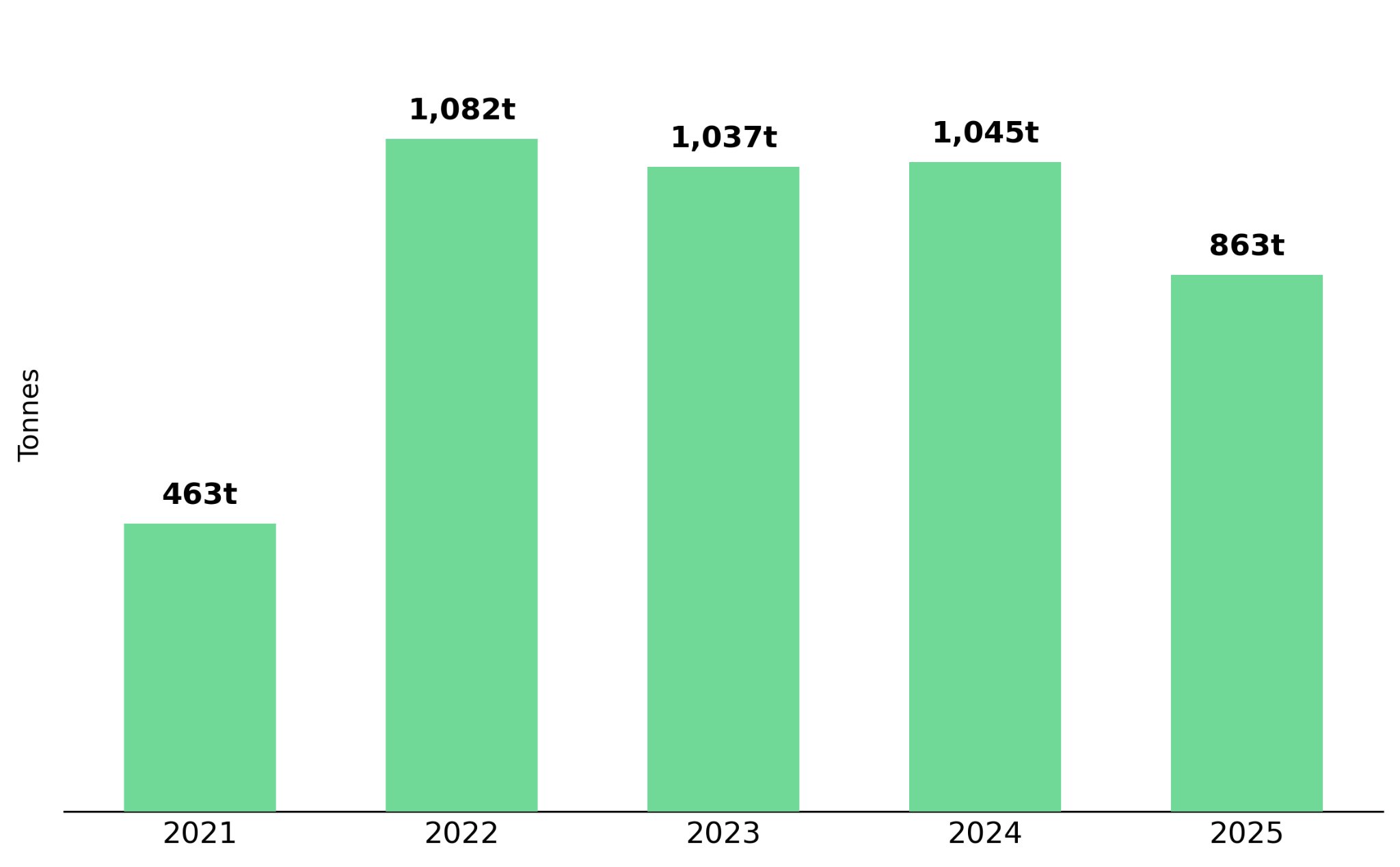
- On July 30, 2026, the World Gold Council reported that central banks bought a record 289 metric tons in Q2 2026, five times the Q1 total, as prices fell.
- A close below the June 2026 low of $3,942 per ounce would invalidate the contrarian case by showing that rate pressure outweighs safe-haven demand.
PCE Caution Cuts Gold 0.9%, Testing Demand After a 15% Rally
Spot gold fell 0.9% to $4,616.62 per ounce, while US futures declined 0.5% to $4,672.10, as traders took profits before the PCE inflation report. The pullback ended a three-session rally triggered by the US Treasury Department’s bond buyback announcement but followed a 15% August gain, gold’s strongest monthly performance since September 1999.
Tradu.com senior market analyst Nikos Tzabouras attributed the decline to profit-taking after the extended rally and caution over inflation data that could shift Fed rate expectations.
Softer Inflation Lifts Fed Hold Odds to 64%, Supporting Gold
The US-Iran conflict pushed oil and inflation expectations higher, lifting real rates and driving non-yielding gold to $3,942 per ounce in its worst quarter in 13 years. Softer inflation data has since reduced rate-hike risk, with traders pricing a 64% probability that the Fed holds rates steady in September.
That shift lowers gold’s opportunity cost and supports a contrarian recovery despite the June selloff. Warsh’s Jackson Hole remarks could reinforce this case, while new US tariffs on Canadian cars and raw materials could revive inflation pressure and weaken it.
Jackson Hole Signals Set Gold’s Path Between $3,942 & $5,594
Warsh’s Jackson Hole remarks could shift the Fed’s September rate outlook, leaving the CME FedWatch Tool’s 64% hold probability open to revision. IG market analyst Tony Sycamore said buyers could support pullbacks as gold approaches resistance at $4,900 to $5,000 per ounce.
Base case: If the Fed holds rates steady, lower opportunity costs could push gold toward $4,900 to $5,000 per ounce.
Bull case: If Warsh signals policy caution, gold could break $5,000 and move toward its $5,594 record.
Bear case: If PCE inflation exceeds forecasts and raises the current 36% hike probability, gold could retreat toward $3,942 per ounce.
Falling Gold Prices Draw Record 289-Metric-Ton Central Bank Demand
Physical bullion and gold ETFs track spot prices without the operating leverage of mining equities, limiting the effect of a 0.9% daily decline. Bar and coin demand reached a 12-year high in 2025 and accounted for about 25% of global gold demand despite record prices. Central banks reinforced this contrarian buying pattern by purchasing a record 289 metric tons in Q2 2026, five times the revised Q1 total of 57 metric tons, as prices fell.
Dealer credibility remains a greater barrier than market timing, leading the World Gold Council and British Standards Institution to establish an eight-part assurance standard. Because Warsh’s policy signal and the Fed’s 64% hold probability could change, buyers can manage exposure against the $3,942 downside level and the $4,900 to $5,000 resistance range.
What Investors Should Watch Before Reassessing Gold Exposure
Gold’s contrarian case depends on the CME FedWatch Tool’s 64% probability that the Fed holds rates steady in September. If that probability holds, stable rates would limit gold’s opportunity cost and support bullion, gold ETFs, and gold-focused equities.
A close below $3,942 per ounce would invalidate the case by showing that real rates and oil-driven inflation outweigh safe-haven demand. Monitor the PCE inflation report and Warsh’s Jackson Hole remarks, and reassess exposure if the September rate-hike probability rises above 36%.
Analyst's Notes





Subscribe to Our Channel


Stay Informed


