




Cobra’s Manna Hill Footprint Grows as Two New Copper Skarns Emerge


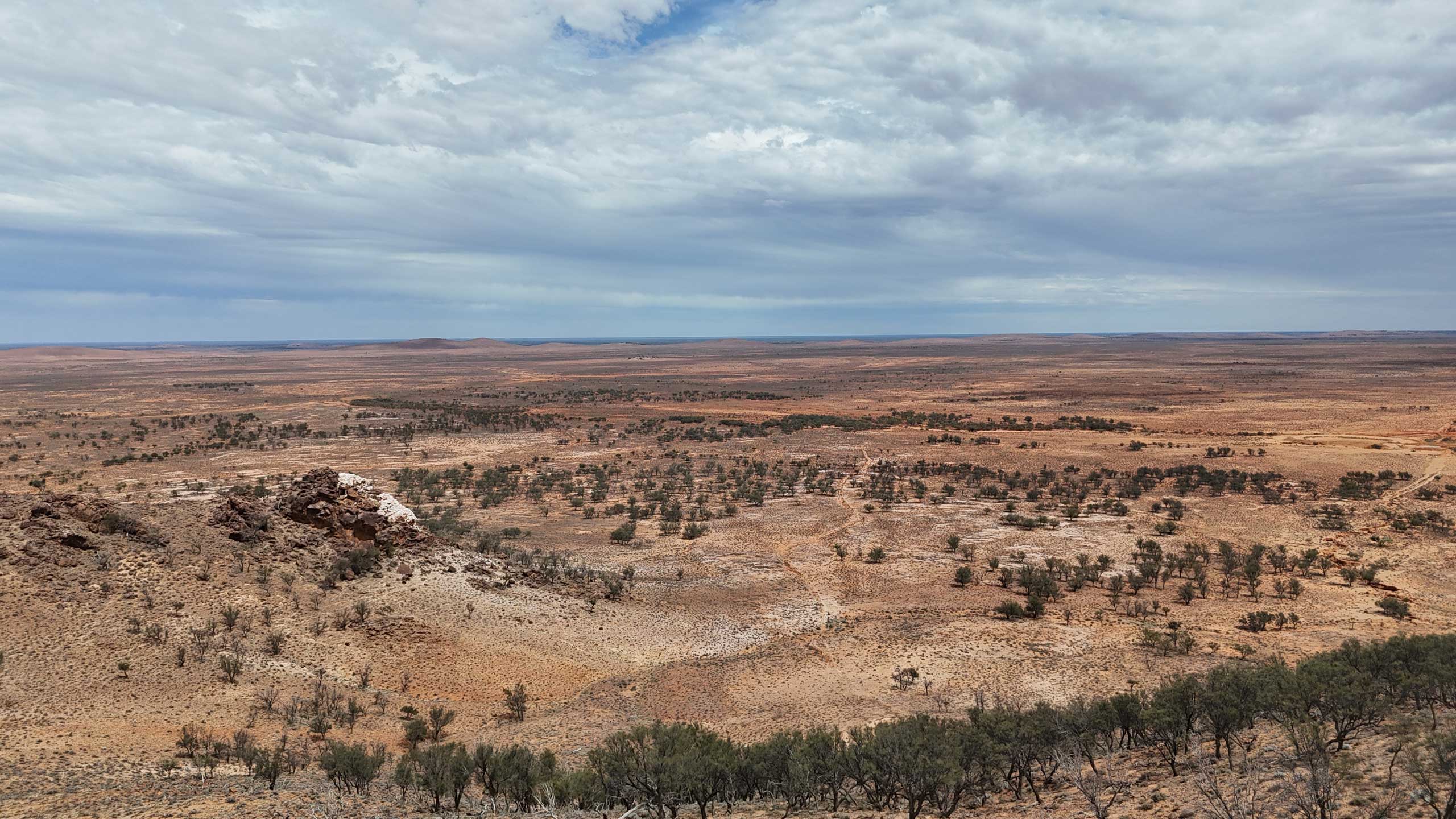
Cobra Resources extends Blue Rose copper to 2.2km and finds two new skarns at Manna Hill, South Australia. Assays due in 4-6 weeks will test grade.
- Cobra Resources has extended copper anomalism at Blue Rose by 600m to beyond 2.2km of strike, based on visual and pXRF observations.
- Two new skarn units, Shadow Rose and Neptune Rose, have returned copper in previously undrilled ground, with up to 60m of continuous anomalism in each of two Shadow Rose holes.
- Only 23 of up to 58 holes are completed and all three zones remain open.
- First laboratory assays are expected within four to six weeks and will determine whether the visible copper carries economic grade.
- Management plans to build a shallow skarn inventory before funding deeper porphyry drilling, aiming to limit shareholder dilution.
New copper supply is hard to find. Few large, shallow copper projects are moving through exploration in stable jurisdictions, and the producers that need them are competing for a short list. That backdrop gives weight to early signs of scale at Cobra Resources plc (LSE:COBR), which is exploring the Manna Hill Copper Project in South Australia's Nackara Arc.
On 8 October 2026, the company reported that slim-line reverse circulation (RC) drilling had extended copper anomalism at its Blue Rose prospect a further 600m west, to beyond 2.2km of strike. It also identified copper in two skarn units that had never been drilled, named Shadow Rose and Neptune Rose. These observations come from visual logging and handheld portable X-ray fluorescence (pXRF) readings. Laboratory assays are still pending. Managing Director and CEO Rupert Verco spoke to Crux Investor about what the drilling shows, what it cannot yet show, and how Cobra plans to fund a larger discovery without heavy dilution.
What the Drilling Has Shown So Far
Before this programme, Cobra had confirmed copper mineralisation along 1.6km of strike at Blue Rose. Verco said mineralisation had been intersected to depths of around 300m. Earlier assayed intersections include 47m at 2.2% Cu and 0.76 g/t Au from 11m in historic hole RABR822. The company's January 2026 drilling added 74m at 1.02% Cu and 0.25 g/t Au from 70m in hole MHRC0018.
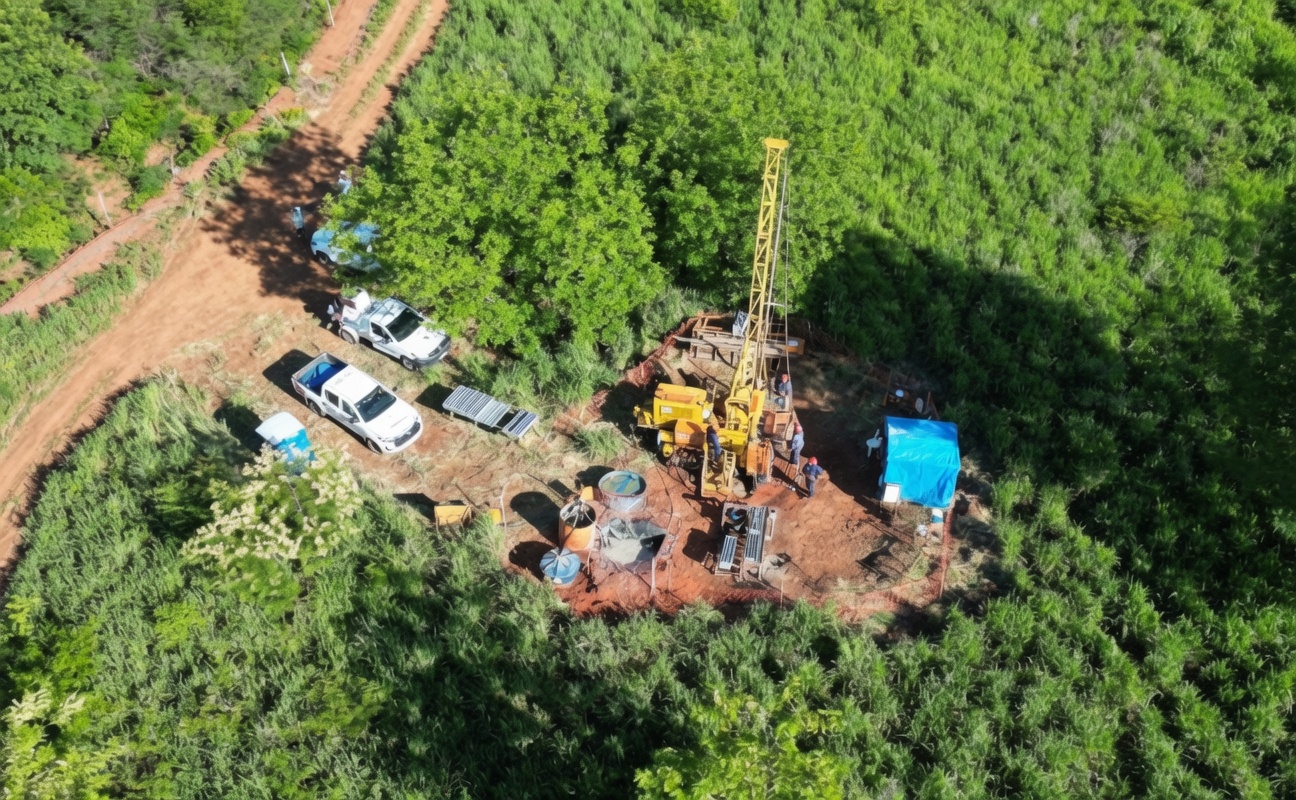
The current programme has completed 23 holes for around 2,000m. Up to 58 holes are planned. Three areas stand out.
At Blue Rose West, hole MHRC0029 intersected anomalous copper over 32m from 52m. Chips from 66m to 68m in the same hole contain coarse chalcopyrite and pyrite. This step-out is what lifts the corridor beyond 2.2km.
Shadow Rose sits about 300m south of Blue Rose. Two holes there returned intervals of up to 60m of continuous copper anomalism each. MHRC0025 logged strong copper oxides from 10m to 50m and copper sulphides to 70m. Verco said the two holes are 100m apart and show similar anomalism.
Neptune Rose lies around 500m north and is interpreted as a northern fold limb of the Blue Rose host unit. MHRC0024 intersected anomalous copper sulphides from 56m to 62m and again between 104m and 114m.
All three zones remain open.
Reading Visual & pXRF Results With Care
Cobra has not reported any grades from this programme. Its announcement states that visual observations are qualitative and that pXRF readings are semi-quantitative. Neither is a substitute for laboratory assays.
Verco explained that the company uses pXRF to validate what its geologists see in the drill chips. He acknowledged that readings from RC samples can be variable. In his view, the trends and anomalism broadly reflect where the grade sits. He said he hopes the programme will deliver results similar to those reported in March.
First assays from ALS Laboratories in Perth are expected within four to six weeks. Verco noted that laboratory turnaround in Australia is currently slow.
This is the main near-term uncertainty. Strike length and visible copper show geological continuity. They do not confirm economic grade or width. All reported intervals are downhole lengths, and true widths are expected to be narrower.
Interview with Rupert Verco, CEO & Managing Director of Cobra Resources
The Geological Case for Scale
The new targets came from specific geological work. A gravity survey completed last year identified a change in rock density that Cobra calls a gravity edge anomaly. Verco said the anomaly correlates well with the known mineralised skarn, and the company followed it along strike. Neptune Rose was generated from that work.
Shadow Rose came from a different route. Field mapping of creek outcrops and reanalysis of historic shallow air core holes, which returned around 0.1% copper at 8m to 10m depth, pointed to a repeat of the host unit. Cobra's drilling has since intersected strongly anomalous copper from about 10m.
All three zones are hosted in calc-silicate units. Verco described these units as the chemical trap that pulls magnetite and copper out of rising hydrothermal fluids. Field mapping and earlier diamond drilling indicate the skarn is close to vertical and continuous to depth. The company believes structures cutting across the skarns control the higher-grade zones.
Below the skarn, Cobra interprets a larger porphyry system. Its earlier diamond drilling logged more than 50m of hydrothermal breccia, anhydrite veining and copper associated with potassic alteration at depth.
Cobra has set out large ambitions for the project. Verco said the board believes the shallow skarn system could deliver more than 1 million tonnes of contained copper. He added that a porphyry discovery could take that figure above 5 million tonnes.
Strategy: Inventory First, Porphyry Later
Deep porphyry drilling is expensive, and funding it now would mean issuing shares at today's valuation. Cobra's approach is to sequence the work. Asked how the company would manage the cost of chasing a porphyry, Verco set out the order of priorities:
"What we're demonstrating through this program is let's build up a copper inventory of this shallow [skarn] mineralization, show the scale potential that that can be and that can help lead us, one, to vector in on that [porphyry] but, two, to do that [porphyry] exploration when we have much greater market valuation and we are minimising that dilution to shareholders."
The current campaign also covers Anabama Hill and Netley Hill, two porphyry targets elsewhere on the tenure. Verco said success there would turn Manna Hill into a province-scale opportunity rather than a single-pit project. Learnings from those targets in different host rocks will also feed back into vectoring at Blue Rose.
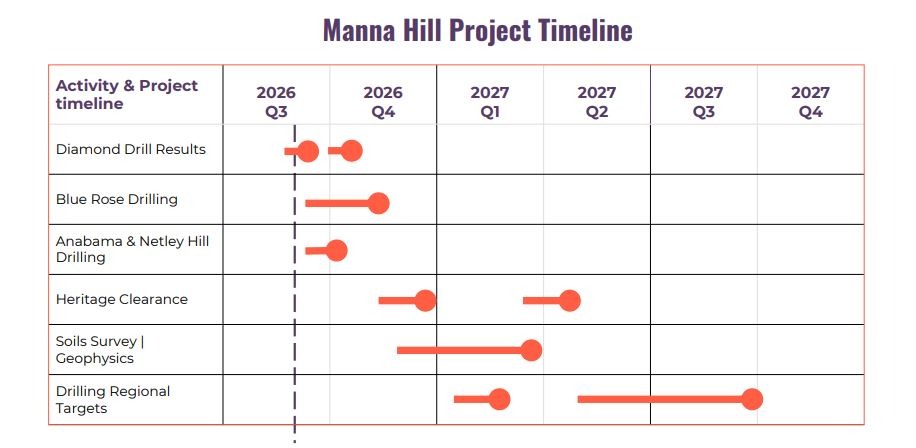
Metallurgy is at an early stage. Preliminary testwork returned good results for standard sulphide flotation. Verco said more work is needed on the oxide material, including whether it could be blended into a flotation circuit. Further metallurgical testing is planned once drilling supports a resource estimate.
Investment Thesis for Cobra Resources
- Cobra has extended copper anomalism at Blue Rose to beyond 2.2km of strike and found copper in two new skarn units, all of which remain open.
- Earlier assayed intersections, including 74m at 1.02% Cu from 70m, show the Blue Rose skarn can host thick, near-surface copper.
- No grades have been reported from the current programme, so the scale case rests on visual and pXRF observations until assays arrive.
- Monitor first assays, expected within four to six weeks, for confirmation that Blue Rose West and Shadow Rose carry grades comparable to earlier Blue Rose results.
- Watch drilling on the eastern side of Shadow Rose, more than 2km from current holes, for evidence that the system connects along strike.
- Results from Anabama Hill and Netley Hill will test whether Manna Hill is a multi-target district rather than a single deposit.
- The inventory-first strategy aims to limit dilution, but further capital will be needed to reach a resource estimate and to test the porphyry at depth.
Macro Thematic Analysis
Copper's supply problem is less about today's production than about what comes next. Years of underinvestment in exploration and development have left a thin pipeline of projects capable of becoming mines. Verco said Cobra's own analysis of the sector found very little coming through.
That scarcity changes how developers think about scale. The mid-tier producers most likely to buy or fund new projects are looking for assets large enough to support meaningful production. Verco pointed to Sandfire Resources, which has agreed to earn into the Kalkaroo copper project held by Havilah Resources, north of Manna Hill. He said that transaction is aimed at bringing on around 50,000 tonnes per annum of copper production.
"There aren't many mid tiers out there at the moment. There's just not a lot of assets that can support that kind of scale. So for us it's about filling that market demand and that market need and we think we have the asset that can deliver that."
South Australia adds context. The state already hosts Olympic Dam, Prominent Hill and Carrapateena, and has an established mining permitting framework. Verco also drew a geological comparison with Cadia in New South Wales, where copper-gold skarns sit above a major porphyry system.
The investment case for explorers in this environment has shifted from "is there copper?" to "is there enough of it, close enough to surface, to matter to a buyer?" Shallow mineralisation can support lower strip ratios in an open-pit scenario, which affects capital intensity. That is why Cobra is prioritising strike length and footprint before depth. Whether the market rewards that approach will depend on grade, which only assays can confirm.
TL;DR
Cobra Resources has extended copper anomalism at Blue Rose, part of its Manna Hill Copper Project in South Australia, by 600m to beyond 2.2km of strike. Drilling also found copper in two new skarn units, Shadow Rose and Neptune Rose, including up to 60m of continuous anomalism in each of two Shadow Rose holes. All results are visual and pXRF observations, not assays, and first lab results are due in four to six weeks. Only 23 of up to 58 holes are complete. CEO Rupert Verco plans to build a shallow skarn inventory before funding deeper porphyry drilling, to limit dilution. Grade confirmation is the key near-term catalyst.
FAQs (AI Generated)
Analyst's Notes





Subscribe to Our Channel






Stay Informed


