




Governments Absorb the Critical Minerals Funding Gap Left by Diversified Miners, Signaling a Capital Handoff


Governments and development finance institutions are absorbing the critical minerals funding gap left by diversified miners exiting titanium and rare earths.
- Diversified miners are concentrating capital on iron ore, copper, aluminium and lithium, leaving titanium, graphite and heavy rare earth elements outside their core commodity portfolios and shifting large-scale project funding toward governments, development-finance institutions and specialist developers.
- China's administered rare earth concentrate price fell for the first time in eight quarters, while export-facing rare earth oxide prices increased across key products, leaving buyers outside China facing higher purchase costs despite lower domestic concentrate pricing.
- Roughly 90% of global platinum group metal reserves are concentrated in Southern Africa, increasing supply concentration risk and raising the strategic value of projects in alternative jurisdictions that can diversify future supply.
- The International Energy Agency estimates that $60 billion of investment across rare earth mining, refining and magnet manufacturing will be required by 2035 to meet projected demand, highlighting the scale of the funding gap governments and development-finance institutions are increasingly filling.
- Government financing and development-finance institutions are increasingly replacing diversified miners as the primary source of development capital for many critical mineral projects, reflecting a broader shift in funding as major miners concentrate investment on fewer large-scale commodities.
Capital Markets Favor Iron Ore, Copper & Lithium, Cutting Finance for Critical Minerals
Diversified mining companies are concentrating capital on a narrower group of commodities, leaving many minerals designated as critical by Western governments outside their core investment portfolios. Rio Tinto illustrates this strategy, with its public portfolio centered on iron ore, copper, aluminium and lithium. Titanium, sourced from natural rutile, together with graphite and heavy rare earth elements, falls outside that portfolio despite being designated as critical minerals by the US government, shifting funding responsibility toward governments, development-finance institutions and specialist developers. Platinum group metals (PGM) face a different challenge: while they remain part of diversified mining portfolios, investment is concentrated on extending aging operations rather than developing new greenfield mines, limiting the pipeline of future supply outside established producing regions.
Diversified miners are narrowing their commodity portfolios because capital markets favor commodities that support large production volumes, scalable project economics and deep, liquid capital markets. Many critical minerals instead rely on specialized processing routes, dedicated offtake agreements with a limited number of end users, and markets too small to absorb the project scale typically pursued by diversified miners. Those characteristics make many critical mineral projects less competitive for internal capital allocation, even when individual projects can generate attractive economic returns. As a result, titanium, graphite, rare earth, and PGM projects increasingly rely on governments, development-finance institutions and specialist developers to advance exploration, construction, and production.
Major Producer Exits Malawi Rutile Project, Proving State Capital Now Required
Global natural rutile production has declined from 750,000 metric tons to 500,000 metric tons over the past five years as mature operations deplete and new projects struggle to reach development, a process complicated by land access requirements, permitting timelines and upfront capital. Graphite carries a different constraint: low-cost production is concentrated in China, leaving buyers outside China dependent on a dominant, lower-cost supplier. New non-Chinese titanium and graphite supply depends on projects reaching construction, with capital and offtake commitments that diversified miners are providing less readily.
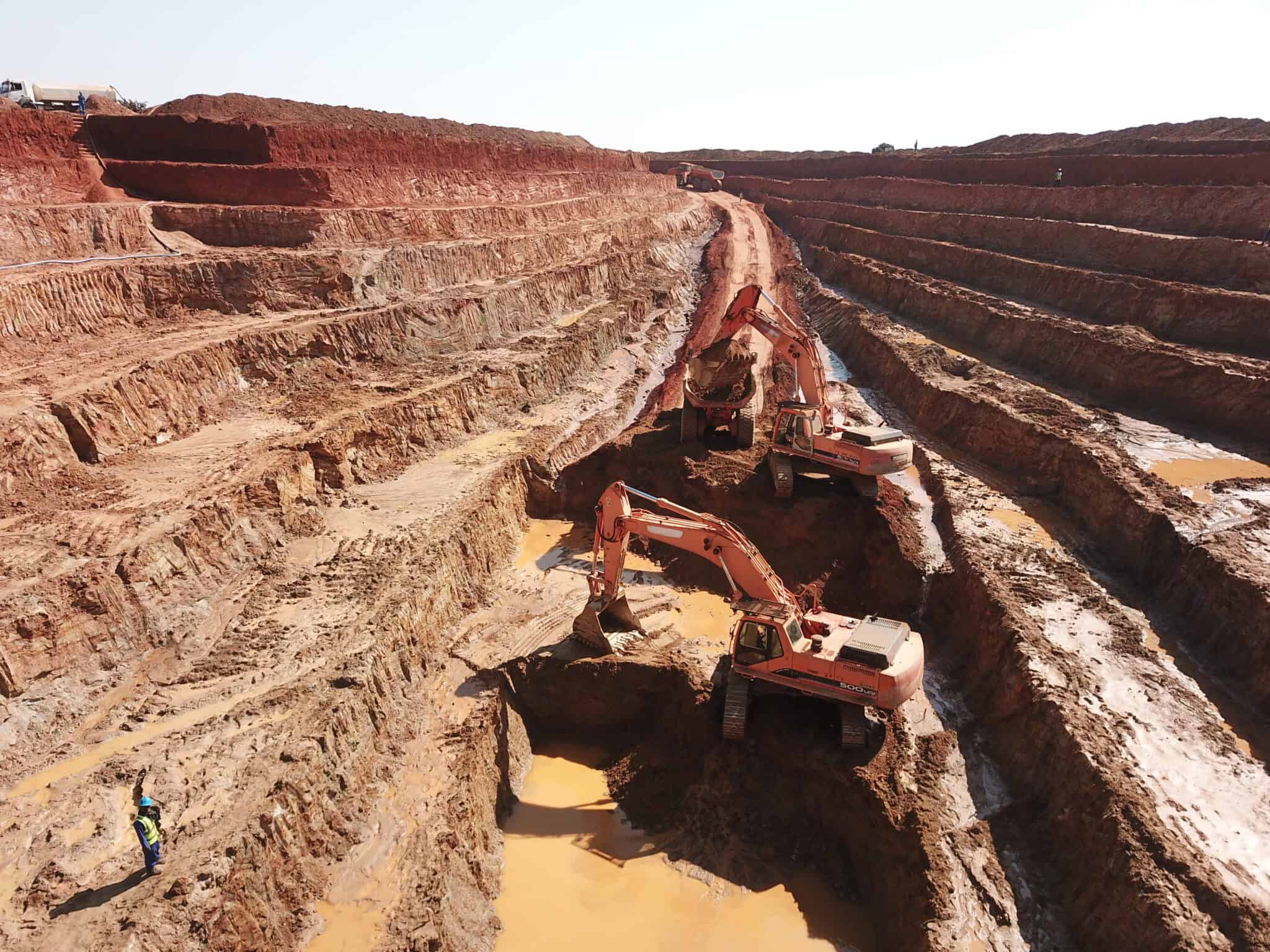
Sovereign Metals announced on July 8, 2026, that Rio Tinto would not exercise its option to become operator of the Kasiya Rutile-Graphite Project in Malawi, citing changes to its titanium portfolio rather than the project's economics. Rio Tinto contributed technical expertise to Kasiya's Definitive Feasibility Study (DFS) through a joint technical committee and pilot mining program, validating the project before deciding not to proceed as operator. Following Rio Tinto's decision, Sovereign said it would continue advancing Kasiya independently while expanding financing discussions with the International Finance Corporation (IFC), development finance institutions, and export credit agencies.
Ben Stoikovich, Chairman of Sovereign Metals, explains graphite's global supply cost dynamics:
"In 2023, natural graphite demand was 1.6 million tonnes, but global known resources exceeded 800 million tonnes. China produces about 75% of global supply at an average production cost of $257 per tonne. Kasiya is at the bottom end of the real cost curve, and we'll always be able to sell graphite into the market at healthy margins."
$60 Billion Rare Earth Shortfall by 2035 as Private Capital Withdraws
The International Energy Agency (IEA) estimates that meeting projected rare earth demand will require $60 billion of investment across mining, refining and magnet manufacturing by 2035. Under the IEA's base-case forecast, ex-China magnet rare earth demand is projected to increase by roughly 50%, from approximately 43 kilotonnes of rare earth elements in 2025 to approximately 65 kt by 2035. Meeting that demand requires investment across the entire supply chain, not just new mines, because commercial processing, oxide separation, and downstream metal and alloy production each require dedicated technical capabilities and capital. The scale and complexity of those investments help explain why governments and development-finance institutions are playing a larger role in funding rare earth supply chains.

Energy Fuels is expanding from a uranium producer into an integrated rare earth supply chain, with government-backed financing supporting a portion of that transition. Near-term growth capital expenditure of $400 million to $450 million is backed by approximately $300 million in identified government funding, including Office of Strategic Capital (OSC) loans and grants, leaving a funding gap of $100 million to $150 million. Medium-term growth capital expenditure is estimated separately at $1.3 billion to $1.4 billion. The company has also disclosed a $725 million OSC loan that remains conditional and unfunded, part of a broader government funding effort intended to support monazite processing capacity at the White Mesa Mill, the only US facility with existing commercial monazite processing capability, ahead of separation into neodymium-praseodymium (NdPr), dysprosium (Dy) and terbium (Tb) oxides.
Mark Chalmers, Chief Executive Officer of Energy Fuels, discusses competing with China's rare earth supply chain:
"The big challenge for the US government is competing with China's rare earth supply chain. We've put all these pieces together, from mining through alloys. To compete with China, you have to have all those steps. You can't be missing a step in the middle."
Beijing's Administered Concentrate Prices Fall, but Overseas Buyers Pay More for Oxides
China's domestic rare earth concentrate prices and export-facing rare earth oxide prices are no longer moving together. China Northern Rare Earth's Q3 2026 concentrate transaction price fell 0.62% quarter-on-quarter to 38,565 yuan per tonne, marking its first quarterly decline since Q4 2024. Viewed in isolation, that decline would normally reduce input costs for China's downstream rare earth industry. However, export-facing free-on-board (FOB) oxide prices increased during the same week, with praseodymium oxide rising $2.50 per kilogram, neodymium oxide $3 per kilogram, terbium oxide $40 per kilogram, and dysprosium oxide $4 per kilogram. As a result, lower domestic concentrate prices are not translating into lower purchase costs for buyers outside China, highlighting the disconnect between China's administered domestic pricing and export market pricing.
The pricing gap reflects the different pricing mechanisms governing China's domestic concentrate market and its export-facing rare earth oxide market. China's concentrate transaction price is a state-administered domestic transfer price rather than a market-clearing price, so it reflects industrial policy instead of global supply and demand. As a result, lower domestic concentrate prices do not indicate what buyers outside China will pay for separated rare earth oxides in export markets. This two-tier pricing system gives domestic, government-backed supply chains more predictable input costs, while import-dependent buyers remain exposed to export price volatility. Those buyers also face regulatory risk after China's Ministry of Commerce (MOFCOM) formalized enforcement of its export control regime in 2026, increasing compliance costs alongside pricing uncertainty.
Southern Africa Holds 90% of PGM Reserves, Elevating Brazil Project Value
Approximately 90% of global PGE reserves are located in Southern Africa, leaving platinum group metals exposed to geographic supply concentration rather than the state-administered pricing that shapes China's rare earth market. Since 2016, several major South African platinum operations have closed or suspended production, leaving only two major greenfield PGE projects worldwide expected to enter production in the near term. That combination of reserve concentration and limited new mine development strengthens the strategic case for PGE projects in alternative jurisdictions, although few are advanced enough to contribute meaningfully to near-term global supply.

ValOre Metals is advancing the Pedra Branca PGE project in Ceará State, Brazil, as an exploration-stage source of geographically diversified supply. The project hosts a 2022 NI 43-101 Inferred Resource of 2.2 million ounces of platinum, palladium and gold within 63.3 million tonnes grading 1.08 grams per tonne across seven near-surface resource zones.
Nick Smart, Director and Chief Executive Officer of ValOre Metals, outlines geographic diversification in platinum group metals:
"When you've got a platinum group metals market that is this concentrated, with so much production coming from South Africa, Zimbabwe, and Russia, there's a geopolitical risk from a consumer perspective. There will be a desire to diversify where those metals come from. We've seen that across a number of critical metals, and PGEs are critical metals."
Sovereign & Institutional Backing Replaces Corporate Investment, Making Asset Maturity Key
Titanium, graphite, rare earths, and platinum group metals are all experiencing the same shift in development funding as diversified miners narrow their commodity portfolios. Diversified miners are concentrating capital on a small group of large-volume commodities, while governments and development-finance institutions are providing development capital across a broader range of critical minerals needed for defense, electrification and industrial supply chains. As a result, access to development capital is becoming increasingly dependent on government-backed financing, making project stage, financing progress and commercial execution more important differentiators than commodity exposure alone.
Project stage remains the primary determinant of risk across the critical minerals sector. Resource maturity, funding position and offtake certainty vary widely across projects, and an Inferred Resource without an economic study carries a fundamentally different risk profile from a project supported by a completed DFS or existing production revenue. The funding trends across titanium, graphite, rare earths and platinum group metals show that government-backed financing is becoming increasingly important to project development, but financing alone does not determine investment quality. Technical maturity, financing progress and commercial execution remain the primary differentiators between companies.
The Investment Thesis for Critical Minerals
- As diversified miners reduce capital allocated to titanium and graphite, project developers are increasingly relying on binding offtake agreements and development-finance institutions to fund project development.
- China's domestic concentrate prices no longer predict export rare earth oxide prices, leaving import-dependent buyers exposed to higher purchase costs despite lower domestic concentrate prices.
- Rare earth developers need integrated supply chains spanning mining, processing, separation and alloy production because competing with China's fully integrated rare earth industry requires more than new mine supply.
- Reserve concentration in Southern Africa strengthens the strategic case for alternative-jurisdiction platinum group metal projects, although few have advanced beyond the exploration or development stage to contribute meaningfully to near-term supply.
- Project stage is a stronger determinant of investment risk than commodity exposure because exploration, development and producing assets differ in financing progress, technical maturity and offtake certainty.
- Government financing is increasingly replacing diversified miner development capital for many critical mineral projects, but identified government funding should be distinguished from committed capital when financing remains conditional or unfunded.
A single portfolio decision by a diversified miner is less important than what it signals about capital allocation across the critical minerals sector. Many critical minerals designated by Western governments are increasingly being financed outside the traditional major-miner capital cycle through government balance sheets, development-finance institutions and specialist developers. That shift expands the range of financing opportunities, but project stage, funding certainty and jurisdiction remain the primary factors distinguishing higher-quality projects from higher-risk ones. As governments play a larger role in funding critical mineral projects, financing progress, technical maturity and commercial execution will become increasingly important factors in determining which projects advance toward production.
TL;DR
Diversified mining companies are narrowing their portfolios toward iron ore, copper, aluminium and lithium, leaving titanium, graphite, rare earths and platinum group metals increasingly reliant on government funding. Rio Tinto's exit from operating Sovereign Metals' Kasiya rutile graphite project in Malawi illustrates this shift, though the project's economics are unchanged. The International Energy Agency estimates a sixty billion dollar rare earth investment gap through 2035, with Energy Fuels relying on government backed financing, including a conditional Office of Strategic Capital loan. China's rare earth pricing is also diverging from export oxide prices, raising costs outside China. ValOre Metals is advancing an early stage Brazilian project as Southern Africa's reserve concentration raises the value of diversified platinum group supply.
FAQs (AI-Generated)
Analyst's Notes





Subscribe to Our Channel





.png)



.png)
.png)



Stay Informed



