




Guinea's Power Shortage Blocks Smelting, Delaying New Aluminum Supply Past 2030


Electricity accounts for 30% of smelting costs, making long-term power contracts a key margin advantage as new alumina refineries come online.
- Guinea was targeting five alumina refineries producing 7 million to 8 million tonnes annually by 2030, potentially expanding alumina supply ahead of new aluminum smelting capacity.
- Guinea generates about 1,000 MW against 5,000 to 10,000 MW needed for industrialization, limiting new aluminum capacity as a 750,000-tonne smelter alone requires 11.1 TWh annually.
- Alumina refining can run on imported fuel, but smelting requires uninterrupted electricity, allowing alumina supply to expand while delaying new aluminum production beyond 2030.
- Alumina was quoted at US$373 a tonne Free on Board (FOB) Western Australia on October 8, 2026, with lower prices favoring smelters holding contracted power, as electricity accounts for about 30% of smelting costs.
- Guinea’s first-half bauxite exports falling below the 99.8 million tonnes recorded in the first half of 2025 would challenge expectations for lower alumina prices.
Power Shortages Delay New Supply Despite $3,000 Aluminum
Government and industry officials at African Mining Week identified costly, unreliable electricity as a barrier to local refining and smelting, delaying potential aluminum supply growth. Aluminum traded at US$3,008.50 a tonne, down 8.77% over the month but up 8.43% over the year, keeping prices above US$3,000 despite the recent decline.
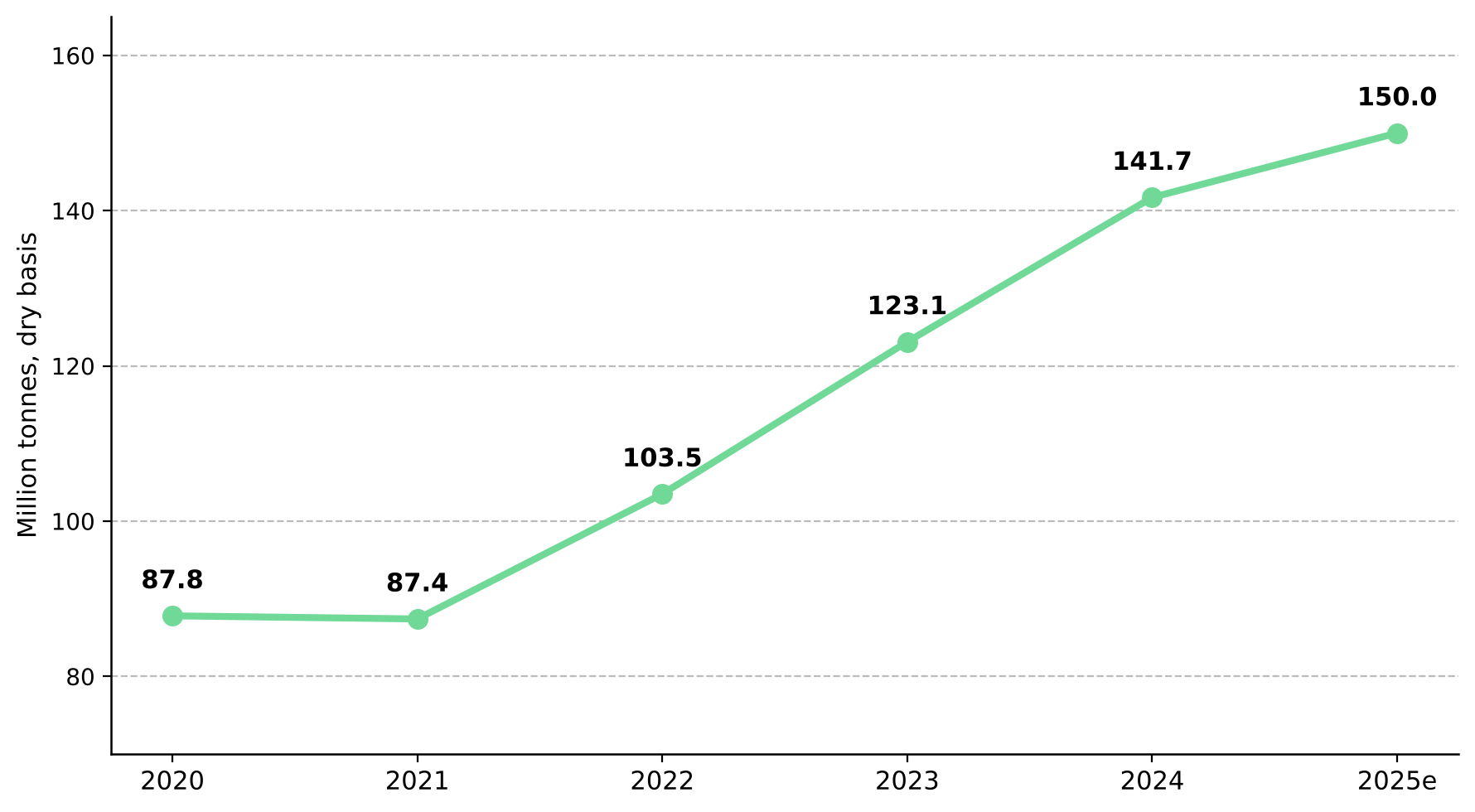
Guinea mined an estimated 150 million tonnes of bauxite in 2025, accounting for 34% of global output of 440 million tonnes, but refined only 360,000 tonnes of alumina, or 0.24% of global production of 150 million tonnes. This gap leaves room to expand domestic refining without immediately adding aluminum metal supply.
Guinea's 1,000 MW Output Limits New Smelting Capacity
Alumina refining can use imported gas, coal, or oil, but smelting requires uninterrupted electricity, consuming 14,821 kWh per tonne or 11.1 TWh annually for a 750,000-tonne plant. Guinea generates about 1,000 MW, mostly from hydropower, exporting electricity to Senegal, Gambia, and Guinea-Bissau during rainy months but importing from Ivory Coast or Senegal during dry months, limiting reliable power for new smelters.
Guinea is seeking investment in gas, coal, and nuclear power to support aluminum smelting but lacks domestic coal, prompting proposals to import it from South Africa or Mozambique on ships arriving to load bauxite. Seasonal hydropower cannot reliably support smelters, where power outages can freeze smelting pots and halt production, delaying new aluminum supply.
Tenfold Power Cost Rise Shuts South African Ferrochrome Smelters
South Africa has fewer than 12 of its 66 ferrochrome smelters operating after power costs rose roughly tenfold since 2008, despite holding over 70% of known chrome reserves, while China leads global ferrochrome production. Daouda Diakite, Senior Adviser to Guinea's Mines Minister, identified infrastructure, particularly energy, as the main obstacle to expanding domestic mineral processing.
Low-Cost Power Contracts Protect Smelter Margins
Aluminum smelters paying grid or market electricity rates face higher costs than those with long-term power contracts. With electricity accounting for about 30% of production costs, high power prices can outweigh savings from cheaper alumina, favoring smelters with secured, low-cost electricity.
Long-term power contracts protect aluminum smelters from electricity price swings, but their expiry can threaten production. South32 planned to place Mozal Aluminium on care and maintenance around March 15, 2026, when its power contract was due to expire, after electricity price negotiations stalled and drought reduced hydropower supply. The planned shutdown carried one-off costs near US$60 million, highlighting power agreements rather than aluminum prices as the deciding factor.
Guinea has not set a timeline for potential bauxite export restrictions, while unexpected electricity tariff increases could threaten grid-dependent smelters. Holding a single African smelting asset concentrates the risk of losses from production suspensions, favoring operations secured by long-term, low-cost power contracts.
Why Could Supply Delays Lift Smelter Valuations
Guinea can refine bauxite into alumina using imported fuel, but insufficient electricity limits new aluminum smelting capacity. Proposed export restrictions, tax holidays, and mining rights could support refinery expansion without adding equivalent metal supply, favoring existing smelters with secured, low-cost power.
New African alumina refineries could lower input costs for smelters with long-term, low-cost power contracts, while electricity shortages delay competing aluminum supply. However, Guinea's 34% share of global bauxite production creates supply concentration risks that could affect refiner valuations.
Delayed investment in African smelting could limit future aluminum supply outside China, supporting valuations for existing smelters with secured, low-cost power.
Analyst's Notes





Subscribe to Our Channel



Stay Informed


