




Aluminum Trades $275 Above Futures as Surplus Stays Undeliverable


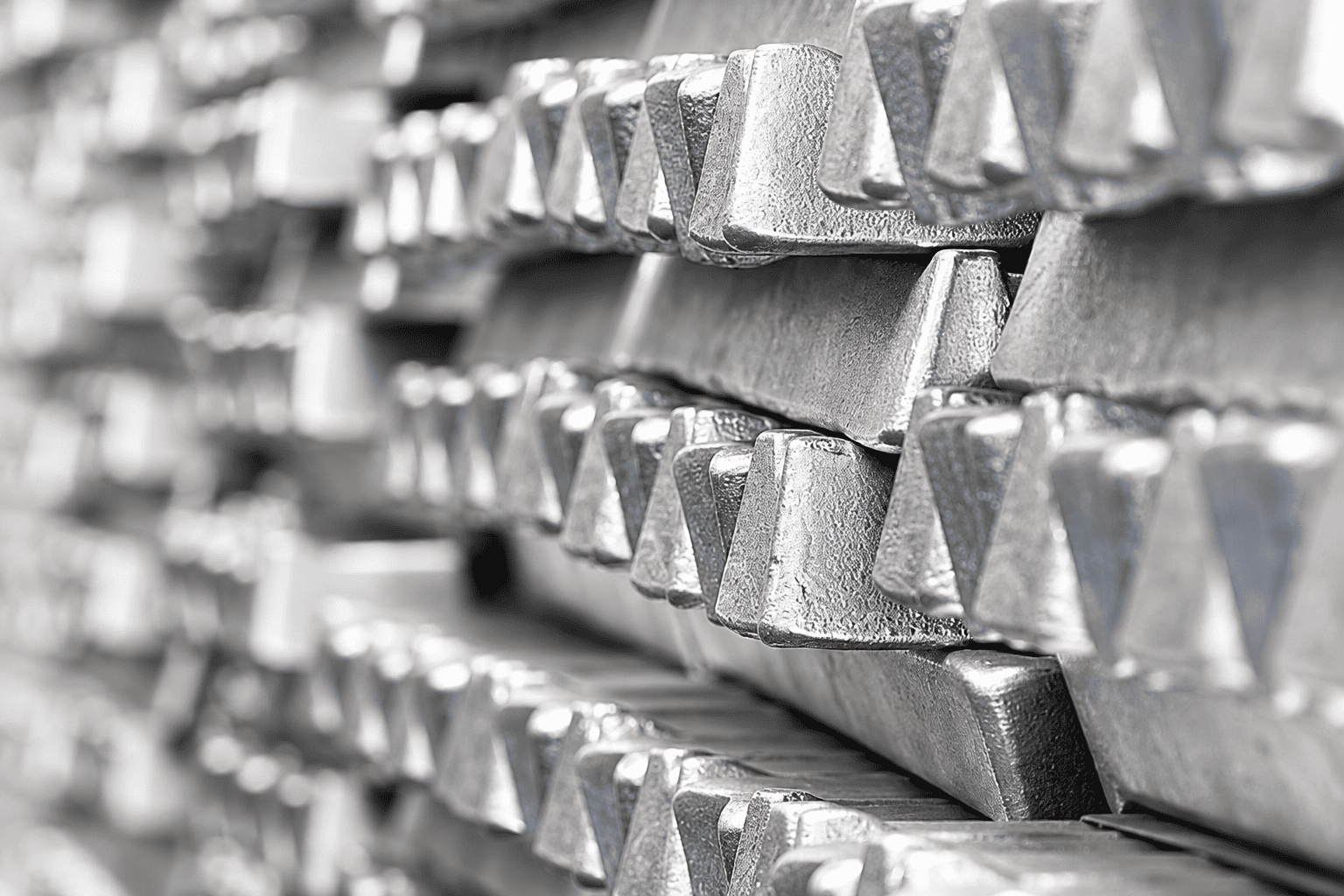
LME aluminum stocks hit their lowest since 1990 as Russian metal leaves and new Indonesian supply awaits approval, favoring producers with deliverable metal.
- Cash aluminum on the LME traded $275 a ton above three-month metal on Nov 16, the tightest spread since the 1988 and 1990 squeezes, Reuters reported.
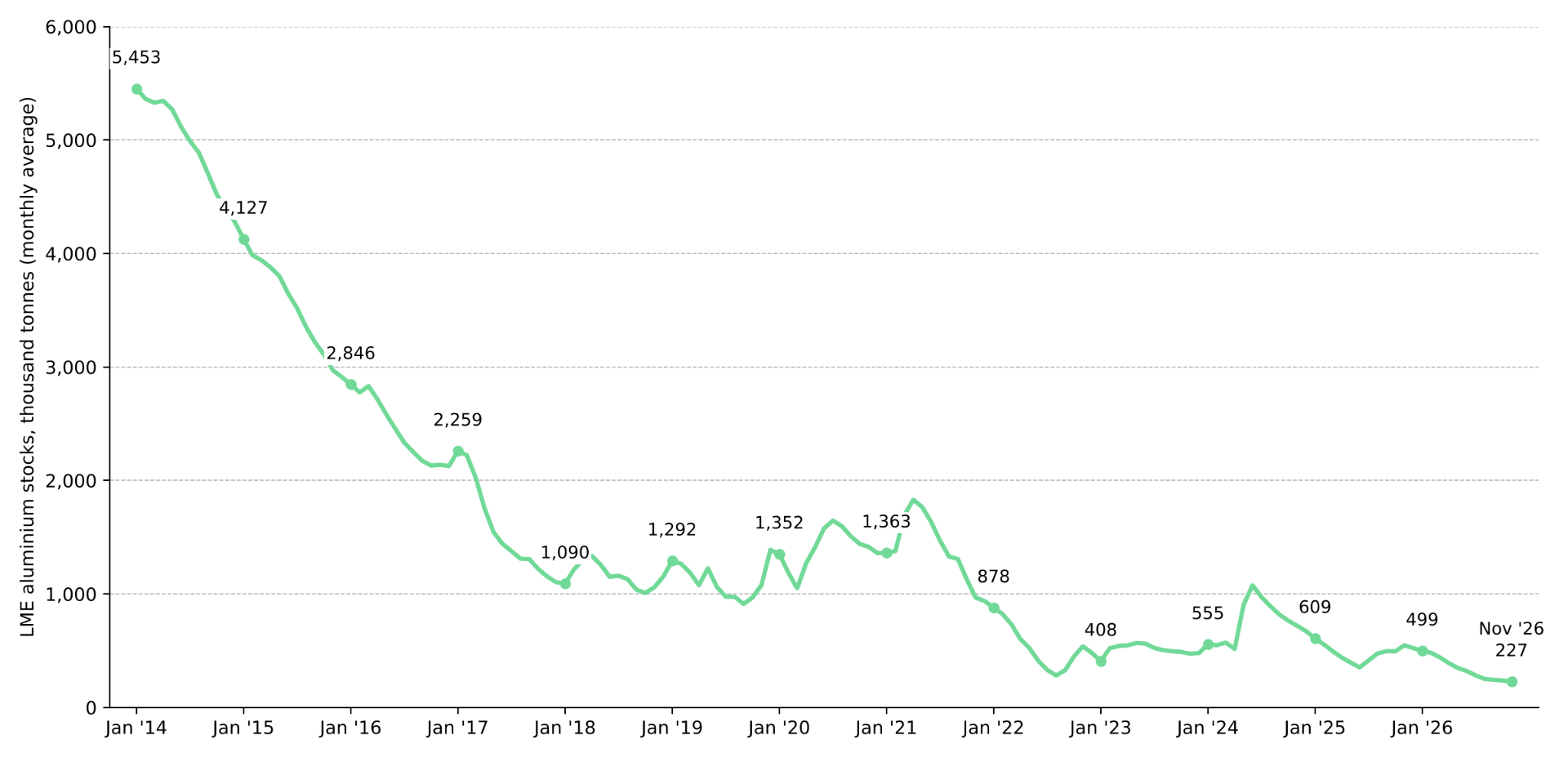
- LME stocks have fallen 239,400 tons since the Iran war began cutting Gulf supply in late February. Nearly all remaining warranted metal is Russian, and it is now leaving too.
- Three-month aluminum trades near $3,000 a ton, its pre-war level, because the market prices a 2027 surplus from Chinese exports and new Indonesian smelters.
- Neither surplus source can settle an LME contract. Chinese exports are semi-finished products, and no new Indonesian brand is registered for delivery.
- LME approval of the pending HCAI brand, covering 480,000 tons of annual output, could start to reverse the shortage.
Gulf Supply Loss Drains LME Stocks to Lowest Level Since 1990
Cash aluminum on the London Metal Exchange (LME) traded at a $275-a-ton premium over three-month metal on Monday, Nov 16, Reuters reported. A cash price above the forward price, known as backwardation, marks a premium for metal available now. The spread is the widest since the squeezes of 1988 and 1990, and LME stocks sit at their lowest since 1990.
The loss of Gulf smelter exports since the Iran war began in late February pushed Western buyers onto the exchange as the supplier of last resort. LME registered inventory has fallen 239,400 tons over the period, and total stocks stood at 224,150 tons on Nov 13. The tom-next spread, the cost of rolling a position by one day, hit $31.73 a ton last week.
Russian Metal Leaves LME While New Supply Cannot Qualify for Delivery
The metal left in LME warehouses is almost entirely Russian. Of the 216,950 tons on warrant at the end of October, meaning metal backed by exchange title documents and ready for delivery, all but 50 tons were Russian brands produced before the April 2024 US and UK sanctions, per Reuters. Russian metal, banned in the US and shunned by many Asian buyers, was assumed to stay put, yet 17,175 tons have been canceled for load-out so far in November. Off-warrant stocks held in LME sheds fell to 51,631 tons, the lowest since reporting began in 2023.
The supply forecast to fix the shortage cannot reach the exchange. China's higher exports ship as semi-manufactured products, which do not qualify for LME delivery. Output from new Indonesian smelters bypasses the market because none holds an LME-registered brand. PT Hua Chin Aluminum Indonesia applied in May to list its HCAI brand, representing 480,000 tons of annual production, and the application remains pending.
Brand Approval Delay Keeps the Premium Until Indonesian Metal Qualifies
Higher prices alone cannot shorten the queue. Participants told Fastmarkets the backwardation should pull deliveries into the exchange, but cited pending brand registrations and depleted Chinese stocks as limits.
Three-month metal near $3,000 a ton, its pre-war level, prices the consensus outcome: Chinese exports and Indonesian output turning the 2026 deficit into a 2027 surplus. The counter-scenario rests on deliverability, not tonnage. In the relief scenario, off-warrant metal at Rotterdam, which rose from 10,501 tons to 33,037 tons on Nov 11, enters the warrant system after the November prompt and narrows the spread. In the tighter scenario, Russian cancellations keep outpacing new deliveries and the warrant base shrinks again into December.
The LME daily warehouse stock report decides between the two, through whether on-warrant tonnage rises after the Nov 18 prompt date. LME approval of the HCAI brand is the reversal trigger, and no approval date has been set. Approval opens a route for Indonesian metal onto the exchange and compresses the cash premium Western producers with registered brands now capture.
Shortage Favors Registered-Brand Producers and Raises Costs for Buyers
European buyers carry the highest cost. The Rotterdam duty-paid premium fell 12.6% to $470-500 a ton on Nov 13, Fastmarkets assessed, yet remains elevated. Semi-fabricators buying at cash plus premium absorb the cost, while short holders pay the backwardation on every roll. Primary producers selling registered-brand metal into Western markets collect both premiums.
The test within the producer cohort is whether a smelter can add deliverable tonnes inside the shortage window. Rio Tinto signed a 50-megawatt power contract on Nov 17 to restart a fourth production line in New Zealand: idled capacity with secured power returning to supply. Hua Chin shows the opposite position, with capacity earning no LME premium until its brand is registered.
Registered Metal Sets Aluminum Value Into 2027
Aluminum now carries two prices for two different products. The three-month price values tonnes forecast to exist next year. The cash price values tonnes deliverable today, and the deliverable pool has shrunk to a Russian remnant now leaving the exchange.
Value has moved to primary producers selling registered metal into Western markets, and away from consumers buying at spot. Surplus forecasts built on Chinese semi-finished exports and unregistered Indonesian capacity overstate the supply able to settle a contract. Brand registration belongs in a producer valuation as a pricing asset.
Indonesian brand approval converts forecast tonnage into deliverable tonnage and removes the premium. The lasting advantage sits with low-cost producers holding registered brands, positioned for both the shortage and the surplus after it.
Analyst's Notes




Subscribe to Our Channel




Stay Informed


