




Carney-Xi APEC Deal Extends Chinese Steel Tariff Relief for Canadian Mines



Canada's APEC-week deal with China could lower mine construction costs through steel and aluminum tariff relief if contracts permit qualifying imports.
- On November 17, 2026, Canada agreed during APEC week to extend relief from its 25% surtax on eligible Chinese steel and aluminum through December 31, 2028, potentially reducing material costs for qualifying mine construction projects.
- Canada will add 23 steel and 9 aluminum tariff items to its relief list where domestic supply is insufficient or unavailable, lowering duties on eligible imports while retaining the 25% surtax.
- The 2027-2028 relief window gives qualifying mine projects two construction seasons to source eligible steel and aluminum at lower duties, supporting more predictable construction budgets.
- Canada has not identified the 32 additional tariff items or their relief rates, leaving mine developers unable to calculate potential savings from the expanded measures until those details are published.
- If Canada removes a tariff item from the relief list, future imports could face the full 25% surtax, increasing construction costs for affected mine projects.
Shenzhen Agreement Extends Metals Tariff Relief Through 2028
Prime Minister Mark Carney and President Xi Jinping agreed during APEC week in Shenzhen to extend relief from Canada's 25% surtax on selected Chinese steel and aluminum through 2028 and add 23 steel and 9 aluminum tariff items, potentially reducing costs for qualifying mine projects. In exchange, China will suspend additional tariffs on Canadian pork and seafood products whose 2024 exports totaled about C$400 million.
Canada grants relief only where domestic producers cannot supply the product in sufficient quantities, allowing qualifying mine projects to import those materials at reduced duties while other covered goods retain the 25% surtax.
Domestic Supply Gaps Allow Selective Duty Reductions
Before Shenzhen, Canada offered full or partial relief from its 25% surtax across 66 product-specific and 49 company-specific tariff lines, adding 7 steel, 2 aluminum and 4 steel derivative products in January. Product-specific relief applies to all importers of eligible goods, while Canadian businesses importing unlisted products can request exceptional relief, providing another potential route to lower mine procurement costs.
Canada can amend the relief list as domestic production changes, making lower import duties for mine projects dependent on continued eligibility. Blair Dickerson, President of the Canadian Steel Producers Association, said the group accepts exemptions for products Canadian mills cannot manufacture.
US Trade Representative Jamieson Greer tied potential US tariff relief for Canadian steel and aluminum to safeguards against foreign metals entering the US through Canada. Canada also applies a 50% surtax to steel imports above quotas set at 20% of 2024 volumes for countries without free trade agreements. That charge takes precedence over the Chinese steel surtax, potentially limiting savings from the new relief.
Canada's Trade Diversification Expands Mine Sourcing Options
The arrangement could reduce specialty-steel import duties for some of the 138 mining-related projects listed in Natural Resources Canada's 2024 inventory. Prime Minister Mark Carney connected Canada's wider trade partnerships to economic sovereignty at the APEC Summit in Shenzhen:
"Sovereignty is built on strength at home and diverse partnerships abroad. Everything we achieved this week, two new free trade agreements, expanded trade with China, stronger ties across Asia and Europe, reinforces that goal"
Flexible Contracts Can Reduce Steel Import Costs
Canada's earlier remission list covered specified steel wire, stainless steel sheets and plates, and pipe, creating potential savings on eligible mine construction purchases. China's finished-steel exports rose from 66.9 million metric tons in 2021 to 119.0 million metric tons in 2025, an increase of approximately 78%.
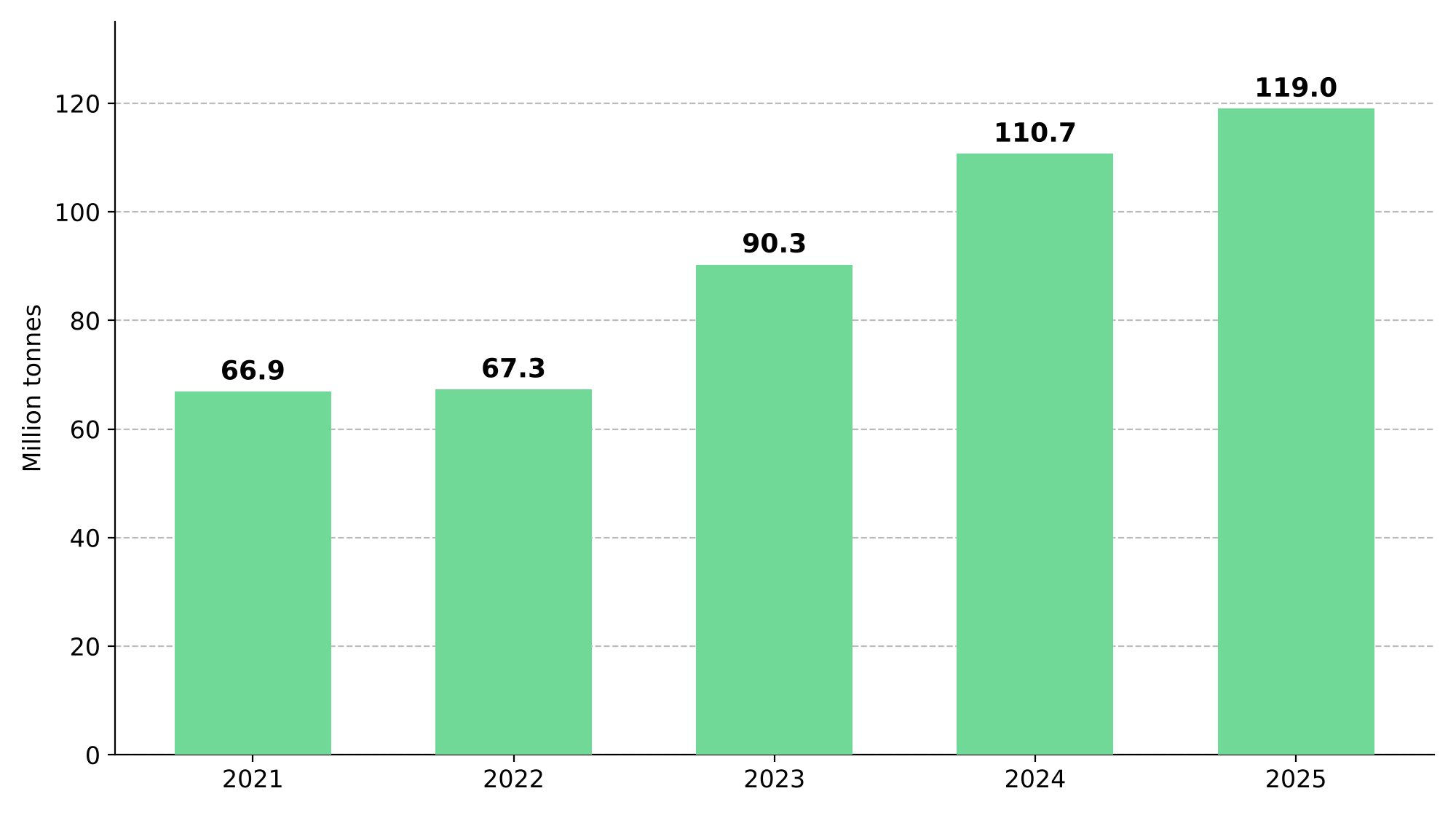
Construction-stage developers cannot quantify savings from the announced additions until Ottawa identifies the products and contractors confirm they can switch suppliers. Since steel is only one construction input, the duty reduction neither fixes its market price nor eliminates overruns in other project costs. Pre-construction budgets that assume relief continues beyond 2028 could understate future funding needs, increasing the risk of shareholder dilution.
Which Mines Could Reduce Future Funding Needs
Lower import duties can reduce a mine's future funding requirements when eligible steel purchases produce verified savings in its construction budget. The benefit depends on product coverage, contract flexibility, and delivery before the relief expires.
Funded, construction-ready projects have the clearest path to capturing those savings. Projects without confirmed eligibility or delivery schedules cannot yet justify lower funding assumptions, while budgets relying on relief beyond 2028 face greater financing risk.
Analyst's Notes





Subscribe to Our Channel




Stay Informed


