




Hormuz Finally Reopens, Restoring Oil Flows & Putting the $75 Brent Floor in Focus



US-Iran accord reopens Hormuz, returns Gulf oil supply, and puts Brent's $75 support level at the center of the market outlook.
- Oil tankers resumed transiting the Strait of Hormuz after a US-Iran interim accord, pushing Brent crude to $78.31 a barrel and WTI to $76.14.
- A 14-point memorandum of understanding establishes a 60-day negotiation period, mandates toll-free passage, targets full transit capacity within 30 days, and could return more than 85 million barrels of stranded Gulf oil to the market.
- If Hormuz flows continue to recover, Gulf exports could return to pre-war levels by end-July. If supply disruptions continue, Brent could find support near $75 a barrel.
- Traders are delaying directional bets until tanker traffic normalizes, limiting conviction behind further moves in crude prices.
- Continued Israeli strikes on Hezbollah in Lebanon could collapse the ceasefire and push Brent back toward $79.85.
Stranded Gulf Barrels Re-Enter Global Oil Markets
Brent crude fell 54 cents, or 0.68%, to $78.31 a barrel, while WTI slipped 46 cents to $76.14 as tankers resumed transiting the Strait of Hormuz following the US-Iran interim accord. The decline reversed part of the previous session's rally, when Brent settled at $79.85 after Vice President JD Vance warned Israel against further attacks in Lebanon.
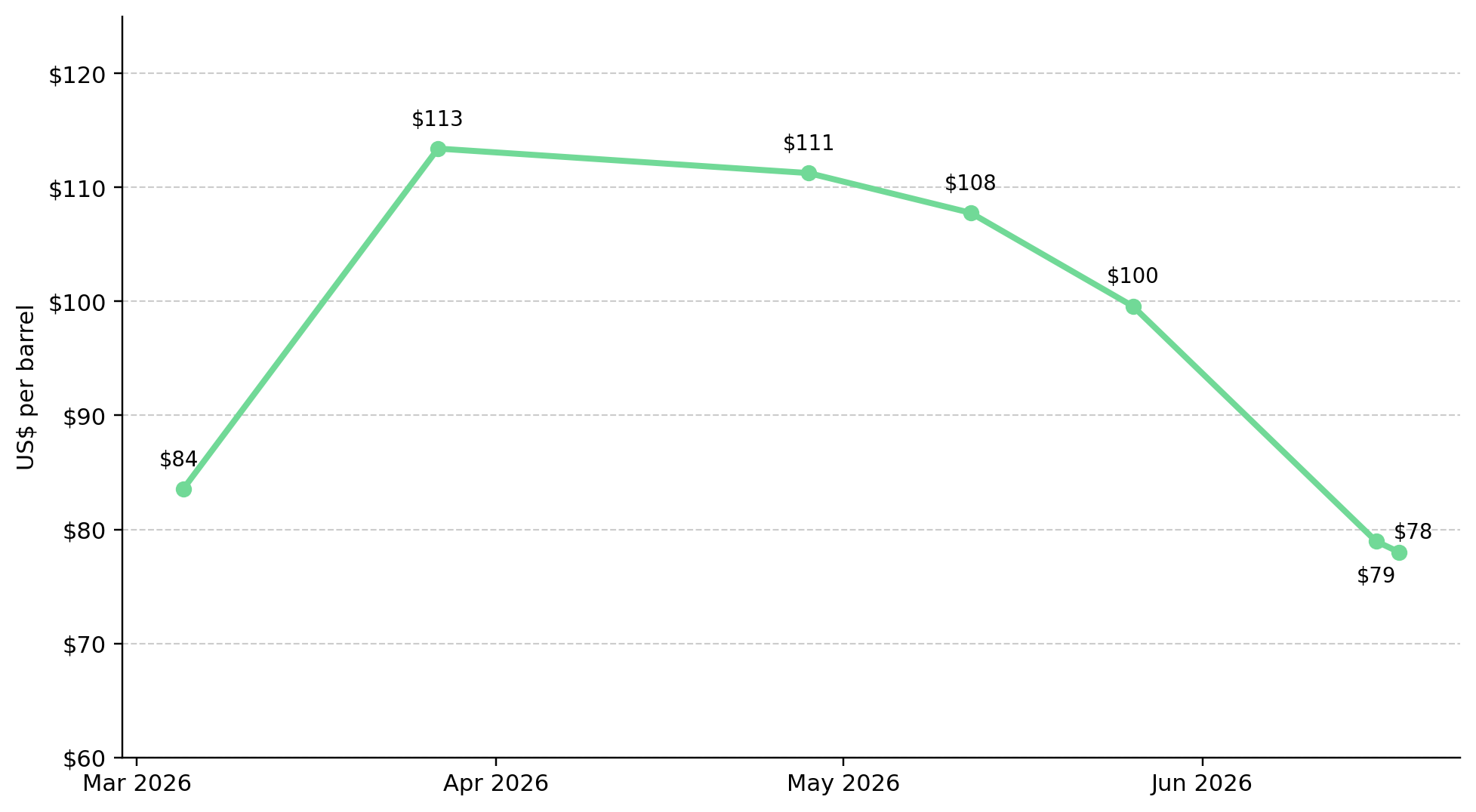
The resumption of transit removes a major supply bottleneck because roughly 20% of global oil flows through the strait. The accord could return more than 85 million barrels of stranded Gulf oil to the market and reopen Iranian crude exports, increasing near-term supply.
Oil Transit Recovers While Lebanon Conflict Tests Ceasefire Stability
Three Saudi-flagged tankers carrying 6 million barrels of crude transited the strait within hours of the accord, while Kuwait lifted force majeure notices and Iraq began restoring oilfield production.
The US-Iran 14-point memorandum of understanding establishes a 60-day negotiation period, requires toll-free passage, and targets full transit capacity within 30 days. Because the accord depends on regional compliance, continued Israeli operations against Hezbollah could undermine the ceasefire and push oil prices higher again.
Physical Supply Recovery Remains Unproven as Oil Outlooks Diverge
Oil prices may remain volatile until tanker traffic demonstrates that shipping routes have normalized. According to KCM's Tim Waterer, traders remain cautious until tanker movements normalize, limiting confidence in further declines in crude prices.
If the US-Iran accord holds and Hormuz flows increase by 13 million barrels per day, Gulf exports could return to pre-war levels by end-July and crude production could recover by October. If the deal holds but supply disruptions continue and demand remains firm, Brent could find support near $75 a barrel.
The EIA Weekly Petroleum Status Report remains a key indicator of market tightness. For the week ending June 12, commercial crude inventories fell 8.3 million barrels to 418.2 million, leaving stocks 6% below the five-year average.
Refiner Margins Remain Sensitive as Markets Await Physical Confirmation
US refinery inputs averaged 17.2 million barrels per day and operated at 96.7% of capacity, leaving refiners and transport-fuel suppliers exposed to margin swings as stranded Gulf crude returns to market.
Again Capital's John Kilduff said the oil market remains sensitive to supply changes, meaning returning Kuwaiti and Iraqi output must be weighed against US crude inventories that recently fell 8.3 million barrels.
Israel's ongoing conflict with Hezbollah leaves the ceasefire vulnerable to renewed disruption. Rather than trading the 60-day negotiation timeline, investors should watch tanker movements and delivery data for evidence that supply flows have normalized. According to Kilduff, the market is already pricing in a full recovery, so any shortfall in transit capacity could push oil prices higher.
Inventory Tightness Supports Oil Prices While Ceasefire Failure Risks a Reversal
Oil prices can remain in the mid-$70s if Hormuz trade returns to normal within the next few months. Under that scenario, Brent could find support near $75 a barrel, supported by US crude inventories that remain below historical averages and total product supplied of 20.6 million barrels per day over the past four weeks.
An Israeli escalation in Lebanon could undermine the 14-point accord and reverse the recent decline in oil prices. A breakdown would again threaten roughly 20% of global oil transit and could push Brent back toward $79.85, increasing refiner input costs and transport fuel prices.
The EIA Weekly Petroleum Status Report, particularly the 5.1 million barrels per day of crude imports, provides a key indicator of whether stranded Gulf oil is returning to destination markets.
Analyst's Notes





Subscribe to Our Channel





Stay Informed


