




Strikes on Iran-Backed Forces Push Brent Above $87 & Test Whether Mining Cost Fears Are Overpriced


US and Saudi strikes lifted Brent above $87 as Hormuz risks supported oil, favoring low-cost miners despite higher fuel costs.
- Brent crude rose 3.6% to $87.13 a barrel and WTI gained 3.5% to $82.06 after US and Saudi strikes on Iran-backed groups in Iraq and an intercepted Iranian missile attack on US forces increased supply risk.
- Tehran's rejection of Oman's proposal for joint management of the Strait of Hormuz reduced the likelihood of normal shipping flows, reinforcing support for higher oil prices.
- DBS Bank said Brent now has an $80-per-barrel floor even if tensions ease, targeting an $80 to $100 trading range that keeps fuel costs elevated.
- BMO Capital Markets, using Wood Mackenzie data, estimates a 10% rise in oil prices increases mining costs by 4.2% for iron ore, 3.5% for copper, and 2% for gold, creating cost gaps that may favor miners with lower fuel exposure or stronger operating efficiency.
- The Fed announces its rate decision today, while CME FedWatch assigns a 70% probability to rates remaining at 3.5% to 3.75%, setting up two macro catalysts that could create selective opportunities instead of broad sector weakness.
Iran Conflict Pushes Brent to $87.13 & Tests Mining Cost Resilience
Oil rose more than 3% after the US and Saudi Arabia struck Iran-backed groups in Iraq following an intercepted Iranian missile attack on US forces, increasing supply disruption concerns. Brent rose 3.6% to $87.13 a barrel and WTI gained 3.5% to $82.06 as traders priced a higher geopolitical risk premium.
US crude inventories fell by about 3.3 million barrels, tightening near-term supply and reinforcing higher oil prices. Traffic through the Strait of Hormuz remained limited while 39 ships used the Bab el-Mandeb route, indicating supply chains are adapting rather than stopping, a distinction that may favor mining companies with fuel hedges or lower operating costs over broad sector selling.
Hormuz Shipping Risks & OPEC+ Supply Limits Keep Oil Prices Elevated
Tehran rejected Oman's proposal for joint management of the Strait of Hormuz, reducing the likelihood of normal shipping flows and supporting higher oil prices. UBS analyst Giovanni Staunovo said renewed military strikes and Iran's stance on Strait of Hormuz shipping continued to support elevated oil prices.
The US Strategic Petroleum Reserve held 311.4 million barrels, down 22.6% from a year earlier, leaving less emergency supply available if disruptions continue. OPEC+ is targeting a three-month pause in output increases from October, limiting additional supply and increasing the value of miners with lower fuel intensity, stronger energy hedges, or higher operating margins if oil remains elevated.
Brent Above $80 Rewards Low-Cost Miners Despite Geopolitical Risks
Oil prices may remain elevated if geopolitical risks continue. DBS Bank's Suvro Sarkar said Brent has an $80-per-barrel floor even if tensions ease, targeting an $80 to $100 trading range. Higher fuel costs would pressure energy-intensive miners but could widen the cost advantage for producers with fuel hedges, electrified fleets, or low-cost operations, creating selective opportunities even if oil remains elevated.
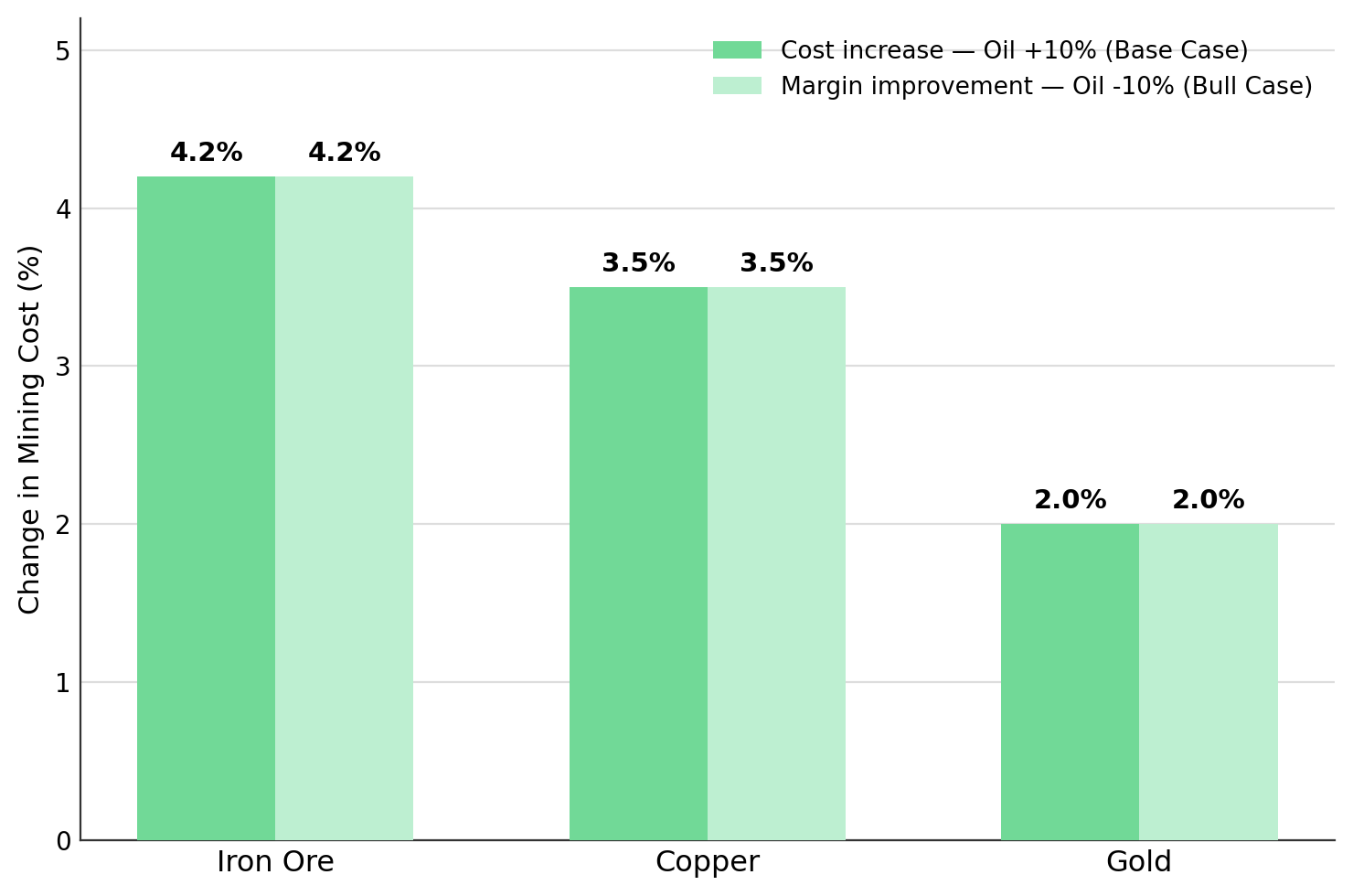
Base case: Strait of Hormuz shipping remains constrained through the Fed's decision, keeping Brent between $80 and $100 a barrel. Higher fuel costs would continue to pressure energy-intensive miners while favoring producers with fuel hedges, electrified fleets, or lower operating costs through third-quarter reporting.
Bull case: OPEC+ resumes output growth or a durable ceasefire reduces supply risk, pulling WTI toward the low $70s and lowering mining fuel costs. Lower oil prices could improve margins by about 4.2% for iron ore, 3.5% for copper, and 2% for gold producers next quarter.
Diesel at $5.13 Increases Mining Costs & Rewards Fuel-Efficient Operations
US retail diesel reached $5.134 a gallon, up 34.7% year over year, increasing haul-truck and power generation costs at mine sites. BMO Capital Markets estimates a 10% rise in oil prices increases mining costs by 4.2% for iron ore and 3.5% for copper. Higher fuel costs do not affect every miner equally.
Railveyor said more mining companies are evaluating electrified haulage systems to reduce diesel costs, while BMO Capital Markets said mines in Africa and the Americas have lower oil-price sensitivity than operations in Europe and Asia. Those differences may create opportunities for miners with lower fuel exposure, stronger operating efficiency, or established fuel hedging even if oil prices remain elevated.
Not All Miners Survive $80 Brent the Same Way
DBS Bank's call is stark: Brent holds an $80-per-barrel floor unless Strait of Hormuz shipping returns to normal. That's bad news for fuel-intensive operations, but not everyone loses equally. Miners with fuel hedges, electrified fleets, or lower oil-price exposure in Africa and the Americas are sitting on a real cost advantage over diesel-dependent operations in Europe and Asia, and that gap widens the longer Hormuz stays constrained.
There's an upside case, too: if OPEC+ resumes output growth or Hormuz shipping normalizes, lower oil prices could hand margin relief to the very miners now underperforming on high fuel costs. Until that shift happens, fuel exposure and operating efficiency, not broad sector sentiment, are what will separate winners from laggards. The EIA Weekly Petroleum Status Report and CME FedWatch remain the indicators to watch for the next move.
Analyst's Notes





Subscribe to Our Channel


Stay Informed


