




Resolute Mining Targets 500,000oz Gold Output by 2028 as Doropo Project Ramps Up


Resolute Mining (ASX:RSG) CEO Chris Eger details the Doropo build, ABC's expanded resource, and the plan to top 500koz gold output by 2028.
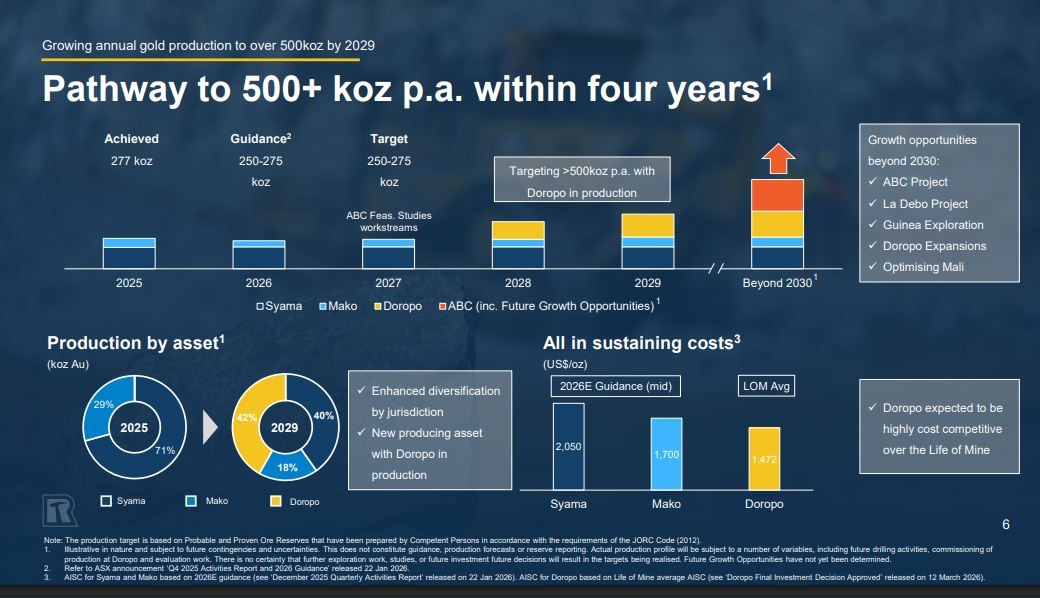
- Resolute Mining is targeting a step-change in scale, growing gold production from a 2026 guidance range of 250,000-275,000oz to over 500,000oz annually within four years as the Doropo project in Côte d'Ivoire enters production.
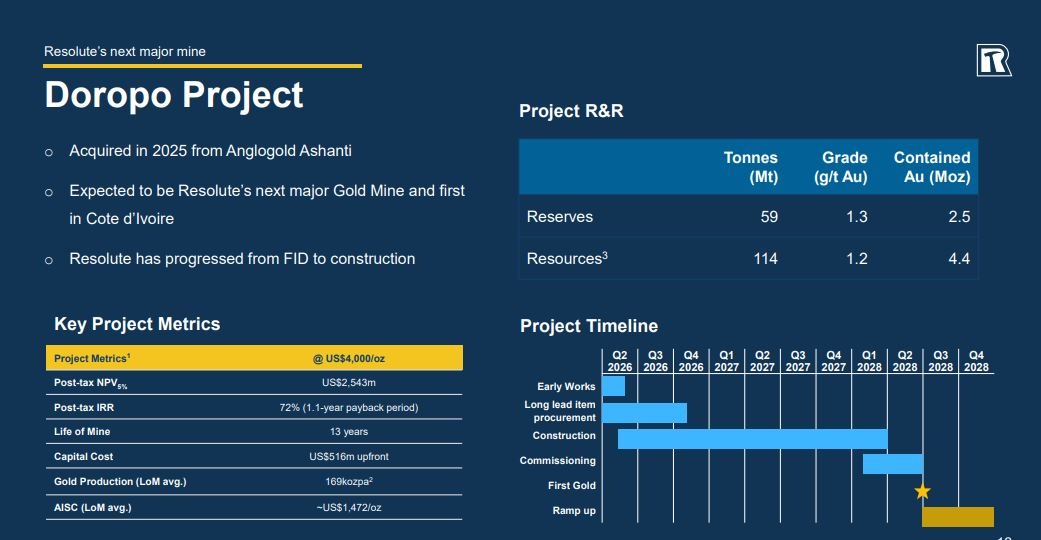
- Doropo construction is underway and on schedule for first gold in H2 2028, underpinned by a post-tax NPV of US$2,543 million, a 72% IRR and a 1.1-year payback period at a US$4,000/oz gold price.
- CEO Chris Eger says the region's rising fiscal take, with the cash split shifting from roughly 50/50 to 60-65% in governments' favour, reflects a broader African trend rather than resource nationalism specific to Mali.
- An expanded ABC project resource of over 3.0 million ounces, up from 2.2 million ounces, positions the deposit as a candidate to become Resolute's fourth West African mine, with feasibility studies targeted for completion by the end of 2027.
- Resolute trades at a discount to peers on a price-to-net-asset-value basis (0.4x) and on an enterprise-value-per-reserve-ounce basis (US$172/oz, the lowest in its peer group), which management attributes to execution uncertainty and Mali-specific geopolitical risk that should ease as Doropo comes online.
Gold has spent 2026 trading near record highs, and few regions illustrate the trade-off between margin and risk better than West Africa. Resolute Mining (ASX:RSG) sits squarely in that story: a Mali-anchored producer that has spent the past two years diversifying into Côte d'Ivoire and, more recently, Senegal and Guinea. The company has a history stretching back more than three decades as an African gold explorer, developer and operator, and today runs four assets across four countries: Syama and the depleting Mako pit provide current production, while Doropo and the ABC project in Côte d'Ivoire carry the growth mandate. CEO Chris Eger explained how the company plans to more than double annual production from a 2026 guidance range of 250,000-275,000 ounces to over 500,000 ounces within four years, and why he believes the market is still underpricing that growth given where the pipeline now stands.
Financial Position
Resolute's H1 2026 numbers show a business generating substantial cash at current gold prices. Revenue reached $585 million, EBITDA came in at $331 million and operating cashflow totalled $197 million, lifting net cash to $317 million and available liquidity to $426 million. Cash and bullion alone increased by over $108 million across the half. Group all-in sustaining costs (AISC) of $2,327/oz compare against an average realised gold price of $4,712/oz, a wide enough margin that Eger says the business is now largely self-funding its growth pipeline. Within the second quarter specifically, the company paid $15.3 million in VAT, with $10.2 million of VAT mandates utilised in Senegal, alongside $63.5 million of combined capital and exploration expenditure as development activity ramped up. Full-year 2026 capital expenditure guidance sits at $310-360 million.
Post quarter-end, Resolute secured $155 million of local bank facilities, with a further $105 million expected by the end of Q3 2026, adding debt capacity without relying on international lenders, many of whom Eger says have exited the region over perceived jurisdictional risk. Management describes the existing balance sheet, operating cashflow and local debt as sufficient to finance Doropo's construction under current market conditions, without needing to tap equity markets.
Syama: The Cash Engine, Now Fully Sulphide
Syama, located 300km southeast of Bamako in southern Mali, remains Resolute's largest asset and combines both underground and open-pit mining, giving the operation experience running a roster-based underground mine alongside refractory ore processing. 2026 guidance sits at 195,000-210,000oz at an AISC of $1,950-2,150/oz against a resource base of 9.1 million ounces. A multi-year capital programme, the Syama Sulphide Conversion Project (SSCP), is converting the plant to handle 100% sulphide ore now that the original oxide feed has depleted, lifting processing capacity to 4.0 million tonnes per annum via a modified oxide comminution circuit and an upgraded roaster. Commissioning is expected through the remainder of 2026 at a capital cost of $40 million.
Asked whether Syama is now self-sufficient, Eger's answer was unambiguous: yes. The asset carries only around $10 million of working-capital debt, even under a more onerous Malian fiscal regime introduced since late 2024, funded through local banks that understand the operating environment better than international lenders would. Eger notes the asset has had a tougher second quarter than planned because of supply-chain disruptions, but believes Syama should comfortably produce between 200,000 and 220,000 ounces annually once conditions stabilise, having delivered 180,000 ounces in the prior year.
That fiscal regime is worth dwelling on, because it is the single biggest swing factor in how the market prices Resolute relative to peers. Mali was among the first West African jurisdictions to raise royalty rates, a trend Eger says is now spreading to Ghana and being discussed elsewhere on the continent. Security has also been a live issue: convoy attacks in October and November 2025 targeting fuel supply chains, followed by the killing of the country's defence minister in April 2026, both disrupted supply chains and delayed contractor mobilisation tied to planned maintenance work. Eger visited Mali two weeks before this interview and described the situation as improving, though he was careful to note it remains subject to change. He points to a track record of regular, productive engagement with government officials across all of Resolute's operating jurisdictions as a reason for confidence, and says he does not see nationalisation becoming a near-term threat to the business over the next couple of years, while acknowledging that view could shift with circumstances on the ground.
Interview with Chris Eger, CEO & Managing Director of Resolute Mining
Doropo: The Next Major Mine
Resolute's growth case rests heavily on Doropo, the Côte d'Ivoire project acquired from AngloGold Ashanti in 2025. Construction broke ground in March 2026 and is tracking to first gold in H2 2028, following an updated definitive feasibility study completed last year and a final investment decision approved in March 2026. The project economics, based on a US$4,000/oz gold price, show a post-tax net present value (NPV) of US$2,543 million, a 72% internal rate of return (IRR) and a 1.1-year payback period, against an upfront capital cost of US$516 million. Reserves of 2.5 million ounces sit within a 59-million-tonne, 1.3g/t reserve base, drawn from a wider 114-million-tonne, 1.2g/t resource of 4.4 million ounces. Life-of-mine average production is guided at 169,000oz per annum over 13 years at an AISC of around US$1,472/oz, with the plant processing 4.9 million tonnes of fresh ore annually across multiple pits, targeting around 200,000oz in its first four years of operation, among the more cost-competitive builds in the peer set.
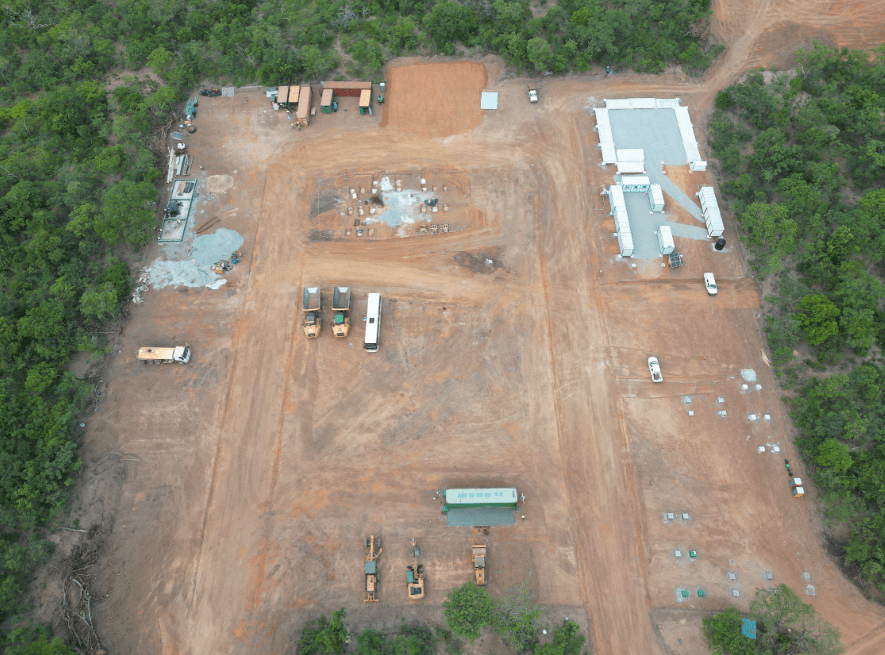
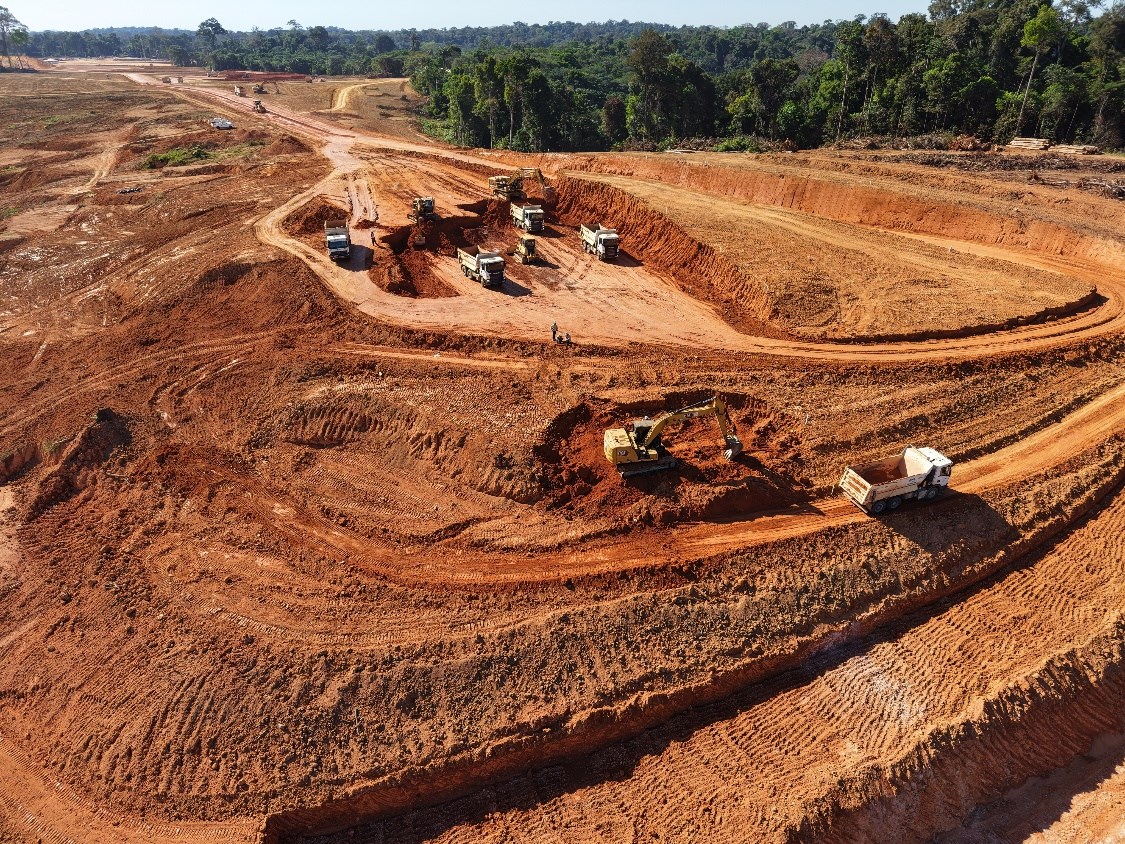
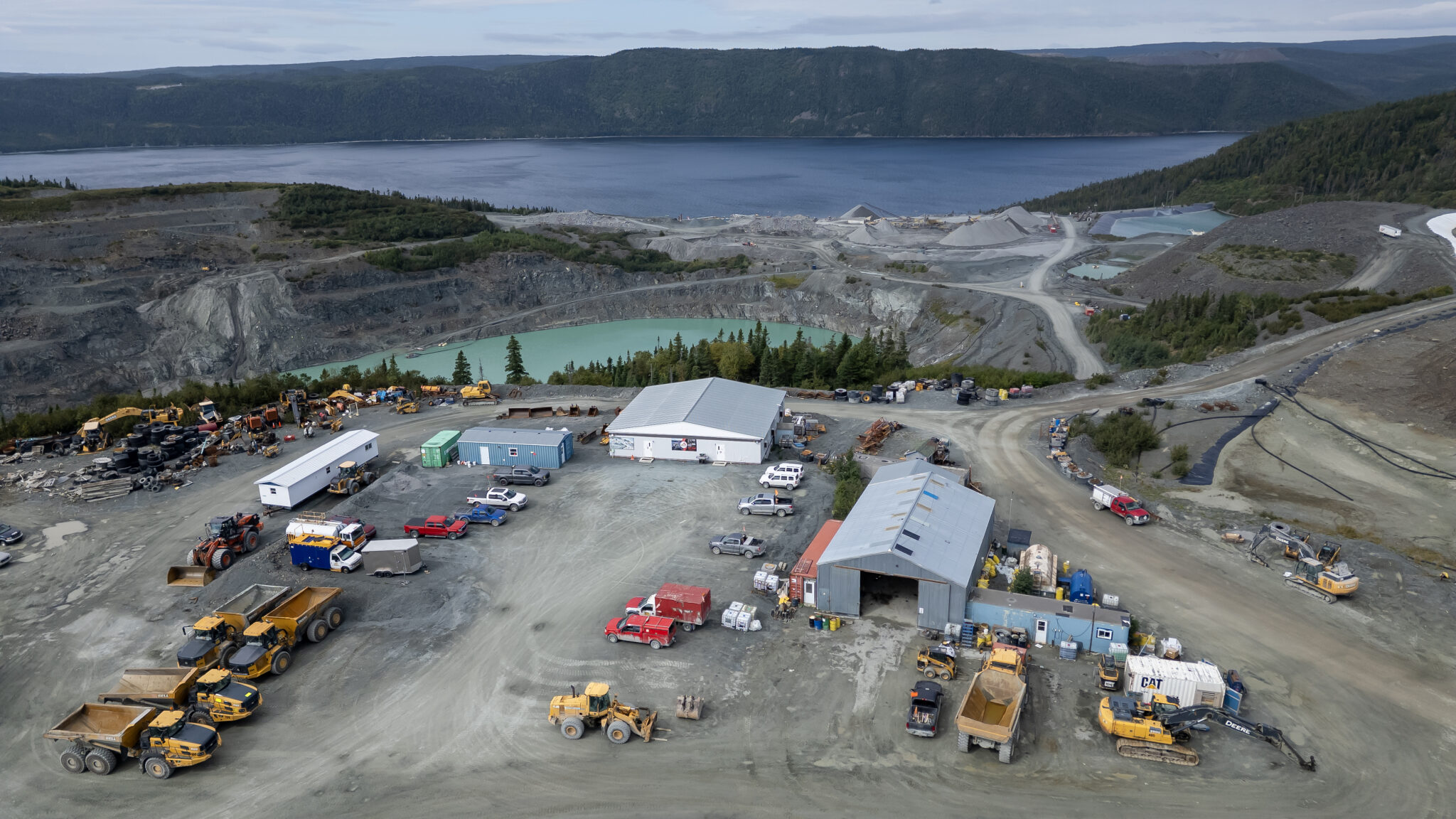
By late July 2026, the company had cleared 74 hectares at the process plant site, built over 20km of access roads, mobilised more than 40 pieces of heavy equipment and awarded key long-lead packages across crushing, milling, carbon-in-leach (CIL) and the oxygen plant, with no lost-time injuries recorded since construction began. Eger is confident the resource can grow materially:
"We can easily be north of 3.5 to 4 million ounces, which will then create the abilities to possibly increase the capacity of the plant."
Planned activities for the remainder of 2026 include upgrading site access and accommodation infrastructure, progressing water bores and related infrastructure, commencing civil and concrete works on the CIL ring beam and mill and crushing areas, starting power infrastructure works, and awarding execution contracts for plant installation, shipping logistics and the magazine and emulsion plant. Up to 30,000m of further exploration drilling at Doropo, targeting the Vako and Kilosegui prospects, is also planned for the second half of 2026.
Senegal and the ABC Growth Pipeline
At Mako in Senegal, open-pit mining ended in June 2025 and the operation is now processing stockpiles, having delivered 31,100 ounces at an AISC of $1,605/oz in H1 2026, in line with guidance, and guiding 55,000-65,000oz for the full year at an AISC of $1,600-1,800/oz. The Mako Life Extension Project (MLEP) is designed to bridge that gap by bringing the Tomboronkoto and Bantaco satellite deposits into the existing processing hub, extending mine life by seven years to 2033. The combined resource underpinning that extension totals 927,000 ounces, split between 444,000 ounces at Tomboronkoto and 365,000 ounces at Bantaco, alongside 118,000 ounces of existing stockpiles. Tomboronkoto mining is contingent on relocating a village that sits above the deposit, a process Eger says has community and government support. First ore from that deposit is targeted for 2028, with Bantaco, which carries lower grade but fewer permitting complications, mined first from 2027. For the remainder of 2026, Resolute plans to submit the Tomboronkoto mining permit application and agree resettlement action plan terms, alongside validating the Bantaco environmental and social impact assessment following its public hearing, both steps needed to secure mining permits for each deposit.
The most significant newsflow of the half came from the ABC project, also in Côte d'Ivoire, where an updated mineral resource estimate released in July 2026 lifted the inferred resource to over 3.0 million ounces at 1.19g/t Au, up from 2.2 million ounces at a higher grade, following 31,000m of drilling across 149 holes in H1 2026, comprising 124 reverse-circulation holes for 23,473m and 25 diamond holes for 7,645m. That resource splits into 1.29 million ounces at Kona Central and 1.72 million ounces at Kona South, both of which remain open along strike and at depth, with Moya and Windou identified as new potential growth targets nearby. A US$15-25 million work programme has been approved to progress feasibility studies and a mining application, targeted for completion by the end of 2027, with an 80,000m drilling programme underway using seven rigs, increasing to more than eleven rigs in the third quarter of 2026. Eger sees ABC becoming Resolute's fourth West African mine, built by the same team once Doropo construction wraps up.
Valuation Versus Peers
Despite the growth pipeline, Resolute trades at a discount to its West African peer group across every metric benchmarked. Its price-to-net-asset-value (P/NAV) multiple of 0.4x sits below Montage (0.9x), Endeavour (0.8x) and Perseus (0.7x), and roughly in line with Fortuna, Predictive, B2Gold, West African, Orezone and Galiano, ahead only of Allied Gold at 0.3x. On enterprise value per reserve ounce, Resolute's US$172/oz is the lowest in the comparable set, against a group high above US$1,200/oz for Montage, and on enterprise value per resource ounce its US$63/oz is likewise the lowest, compared with figures as high as US$815/oz elsewhere in the peer group. Sell-side coverage spans seven brokers with price targets ranging from A$1.55 (Macquarie) to A$3.05 (Canaccord), with ratings weighted toward Buy or Overweight. Eger attributes the valuation gap partly to historical execution uncertainty and partly to geopolitical risk concentrated in Mali, which currently represents around 60% of the company's near-term production value. As Doropo ramps up toward 2029, that figure is expected to fall toward 40%, with Mako and Doropo each contributing meaningfully alongside Syama, a shift management expects to narrow the valuation gap over time.
Investment Thesis for Resolute Mining
- Executable pathway from 250,000-275,000oz in 2026 to over 500,000oz annually by 2028/2029, underpinned by Probable and Proven Reserves rather than exploration upside alone
- Doropo construction is fully funded from existing cash, cashflow and local debt, removing near-term equity dilution risk
- ABC's expanded 3.0Moz resource offers a fourth-mine growth option beyond the current guided pipeline, with feasibility due by end-2027
- Mali's fiscal and security environment remains the key swing factor for sentiment. Monitor further royalty or security developments as a re-rating risk
- Syama's SSCP commissioning through H2 2026 is a near-term catalyst for confirming full sulphide processing capacity
- Valuation discount (0.4x P/NAV, lowest EV/oz in peer group across both reserves and resources) offers re-rating potential if execution continues on schedule
- Guinea MoU with state-owned Nimba Mining Company, alongside an 83km² reconnaissance authorisation in the Siguiri Basin, represents early-stage optionality in a fourth jurisdiction, not yet reflected in near-term guidance
Macro Thematic Analysis
Gold's 2026 rally, which began climbing in early 2025 and has since stabilised around $4,000/oz, has been a tailwind for every West African producer, but it has also changed the terms of the conversation with host governments across the continent. Eger frames the shift plainly:
"I think there is a new norm of higher fiscal terms that are being implemented across all of Africa. The cash pie that used to be more 50/50 split between mines and governments is now being probably 60-65% governments to the mining operators. But with the higher gold price environment we have today, we're all making a lot more money as well."
Eger is explicit that he does not view this as resource nationalism in the sense seen elsewhere, including parts of South America. He instead frames it as governments seeking what they consider a fair share of a considerably larger pie, driven by a genuine need to fund national development. That reframing matters for how investors should read royalty increases in Mali, Ghana and elsewhere: not necessarily as a one-off shock, but as governments negotiating a larger share of a much bigger pie while margins for operators remain historically wide. For a company like Resolute, with three producing or near-producing jurisdictions and a fourth, Guinea, in early-stage exploration, that dynamic is a live variable in every project's economics, and one that management appears to be underwriting into its long-term planning rather than treating as a temporary shock.
TL;DR
Resolute Mining CEO Chris Eger laid out a plan to more than double gold production from 250,000-275,000oz in 2026 to over 500,000oz annually by 2028/2029, driven by the Doropo project in Côte d'Ivoire (first gold H2 2028, post-tax NPV of $2,543 million, 72% IRR). Syama in Mali remains self-sufficient and is completing its sulphide conversion project this year, while an expanded ABC resource of over 3.0 million ounces positions it as a potential fourth mine. Resolute trades at the bottom of its West African peer group on most valuation metrics, a gap Eger expects to close as Doropo comes online and geographic risk diversifies away from Mali.
FAQ (AI-generated)
Analyst's Notes





Subscribe to Our Channel





.jpg)
Stay Informed






















